Mercury Retrograde: Real or Fake, and What Is Actually Happening?
Your phone freezes during a payment, the meeting link fails, and someone says it before you can: Mercury retrograde.
That joke is exactly why people search mercury retrograde real or fake. They are not always asking for blind belief. Many are asking where the astronomy ends, where the symbolism begins, and where personal responsibility still belongs.
The clean answer is more interesting than “yes” or “no.” Mercury retrograde is real as an apparent sky event, not real as proof that a planet is personally sabotaging your messages. Yet the phrase survives because it gives people a compact way to talk about timing, review, delay, and the strange human habit of making meaning from recurring disruptions.
The Part of Mercury Retrograde That Is Actually Real
Mercury retrograde is not fake in the simple sense. The visible event exists.
NASA describes planetary motion as one of the old puzzles of astronomy: planets sometimes seem to move backward across the sky, a motion now called retrograde. That strange motion helped push astronomers away from an Earth-centered model and toward orbital mechanics.
The key word is “seem.” Mercury is not slamming into reverse like a car. It keeps orbiting the Sun.
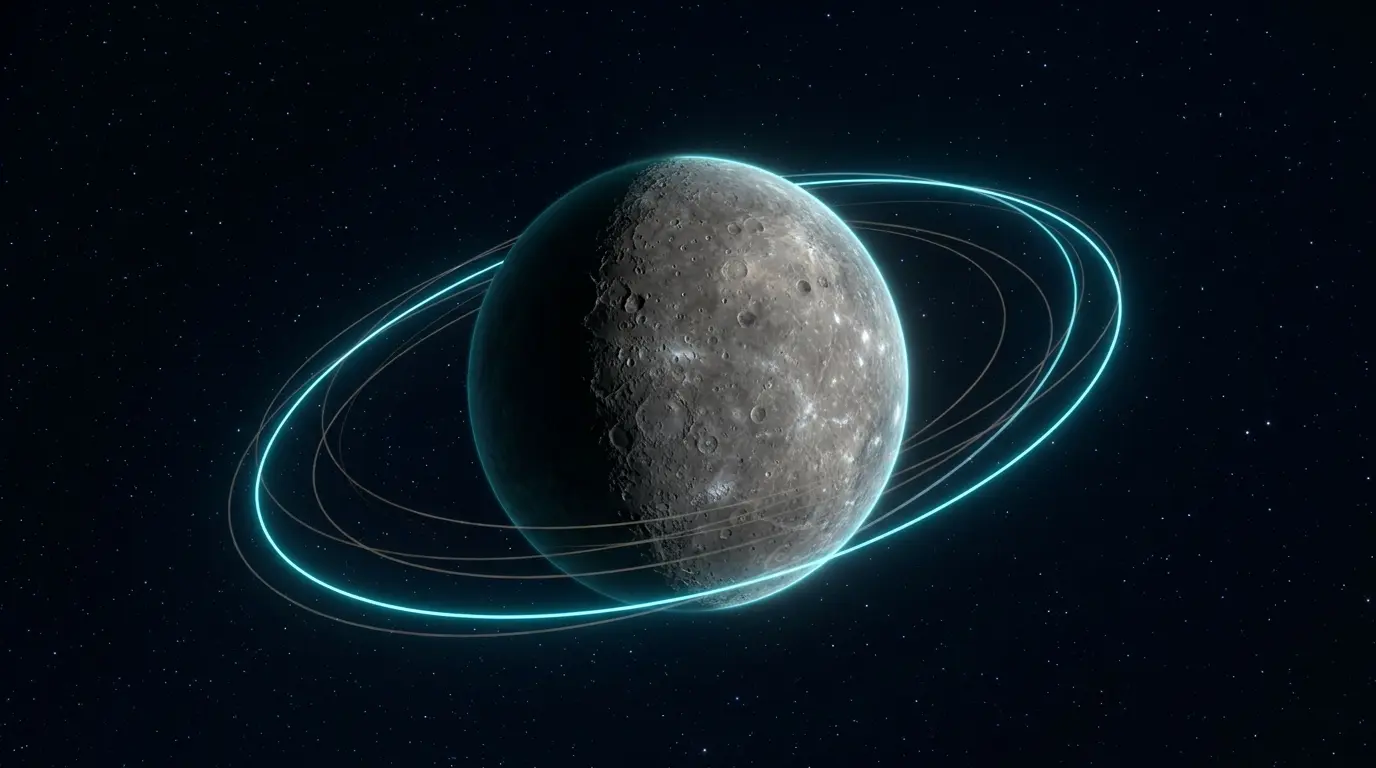
From Earth, though, Mercury can appear to slow, stop, and move backward against the background of stars. The Planetary Society calls this apparent retrograde motion, meaning the change is caused by perspective, not by Mercury changing its actual path through space.
Apparent motion is real; backward motion is not
Think of two runners on a curved track. If one runner moves faster and passes another, the slower runner may seem to slide backward from that moving point of view. Both runners are still moving forward.
Mercury creates a more compact version of that visual trick because it orbits between Earth and the Sun. NASA notes that Mercury is the fastest planet, circling the Sun every 88 Earth days. Its speed is part of why it seems so slippery from our viewpoint.
So if the question is mercury retrograde real or fake, the first receipt is clear: real as an astronomical appearance, fake if someone means Mercury physically reverses through space.
That matters because the honest answer protects both sides. It does not mock the sky event, and it does not exaggerate it into cosmic control.
Why “Fake” Is the Wrong Word for a Symbolic Calendar
Calling Mercury retrograde “fake” can be too blunt. It treats every layer of the topic as if it must pass the same test.
Astronomy asks one kind of question. Did Mercury appear to move backward from Earth’s perspective? Yes.
Astrology asks a different kind. Could that period carry symbolic meaning around communication, planning, revision, and unfinished business? Some people use it that way, but that is interpretation, not measurable proof.
Daily life asks a third question. Did your email fail because Mercury did something to your laptop? National Geographic notes that the link between Mercury retrograde and happenings on Earth is largely rejected as pseudoscience.
This is where many articles get lazy. They either laugh at believers or sell certainty. Both miss the more useful middle.
For readers searching mercury retrograde real or fake, this distinction matters because “fake” is too flat for a topic with astronomy, folklore, and personal meaning stacked together.
When a date becomes a lens
A calendar can shape attention without controlling reality. Tax season, birthdays, anniversaries, eclipses, and holidays all change what people notice.
Mercury retrograde can work the same way. If a person already associates Mercury with speech, contracts, devices, and travel, the retrograde period becomes a lens for reviewing those themes.
That does not make every delay mystical. It means the date gives the mind a symbolic frame.
This is close to why people are drawn to clock patterns. The repeated cue becomes meaningful because the person pauses around it, not because the cue automatically proves a hidden command.
The danger of turning timing into blame
The useful symbolic question is not “What did Mercury do to me?” It is “What kind of mess am I suddenly noticing?”
That question keeps the reader grounded.
If a flight is delayed, the airline still matters. If a message is unclear, the words still matter. If a decision feels rushed, the timing may be worth reviewing, but Mercury does not erase choice.
That is the second receipt: symbolic timing may highlight a theme, but it should not become a substitute for responsibility.

Before the Memes, Mercury Was Already Strange on Clay Tablets
Mercury retrograde did not begin with memes about broken phones.
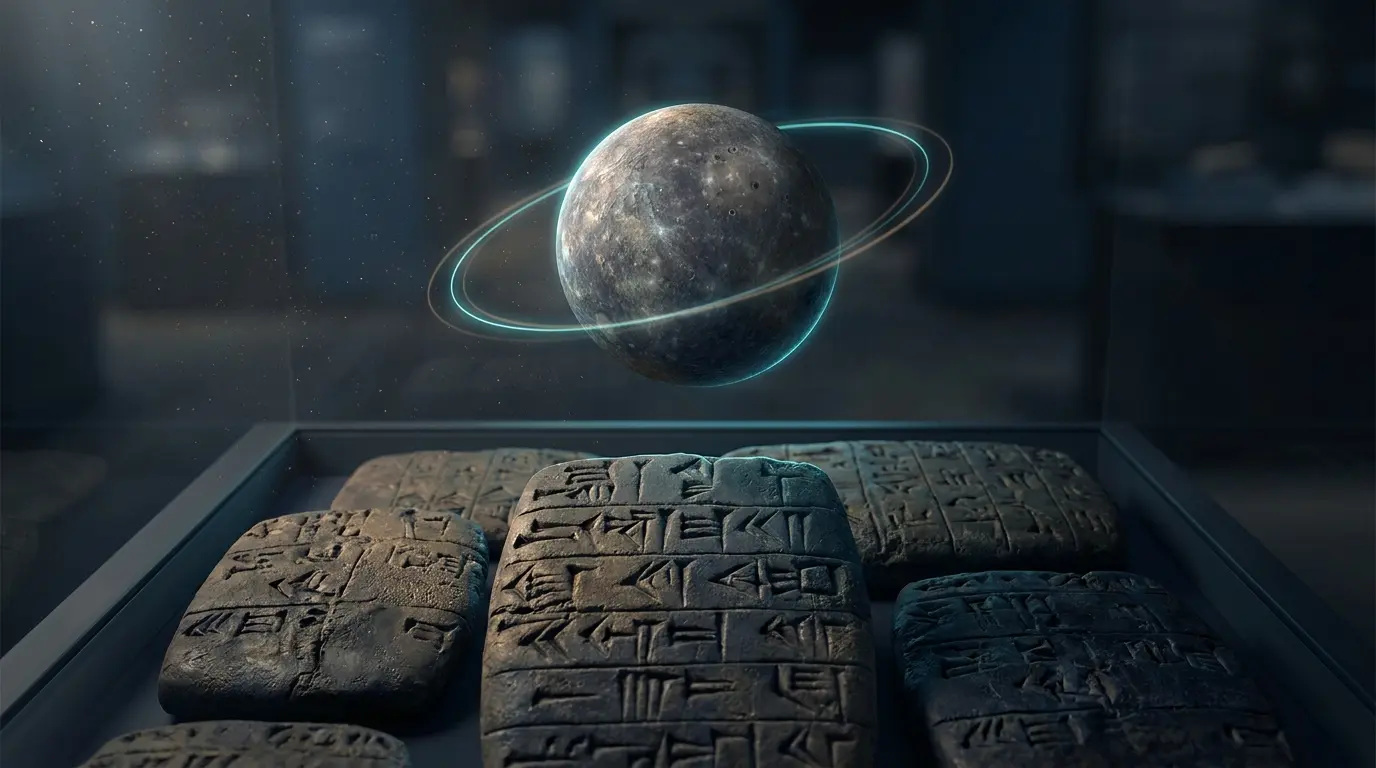
National Geographic reports that Babylonian astronomers probably documented Mercury retrograde around the 7th century B.C. They etched astronomical diaries into clay tablets, including detailed observations of planetary motion.
That detail matters. The oldest layer of this topic is not “Mercury ruined my Wi-Fi.” It is careful sky-watching.
Those observers lived inside a different worldview. National Geographic explains that, in Babylonia, planets and stars were viewed as manifestations of gods, and celestial motions were read as signs about king or country.
Individual horoscopes came later, around 400 B.C. That means Mercury retrograde began as a public, sky-based omen system long before it became a personality meme.
The Babylonian layer most articles skip
The most interesting detail is also the strangest. According to historian Mathieu Ossendrijver, quoted by National Geographic, the Babylonian name for Mercury meant something like “the jumpy one.”
That is not modern branding. It is an ancient observational nickname.
Mercury really does behave oddly to the naked eye. It stays close to the Sun from our viewpoint, appears in morning or evening light, and can seem to loop back on itself.
The clay tablet layer changes the tone of the whole article. Mercury retrograde is not just a modern excuse. It is an old human encounter with an object that looked restless in the sky.
Still, that does not prove the planet controls your inbox.
It proves something subtler: humans have been watching Mercury’s odd timing for a very long time, then translating that oddness into meaning.
That is similar to the tension inside a coincidence question. The event may be real, the timing may feel charged, and the interpretation still needs proportion.
For a mercury retrograde real or fake article, this historical layer keeps the answer from becoming shallow skepticism.
How to Read Mercury Retrograde Without Handing It the Wheel
The best way to read Mercury retrograde is to stop forcing one verdict onto every claim.
If someone asks mercury retrograde real or fake, ask what they mean by “real.” Real in the sky? Yes. Real as proven cause of failed technology? No. Real as symbolic timing for review? Possibly, if used as reflection rather than authority.
That separation keeps the article safe, useful, and honest.
Ask what kind of claim is being made
A clean reading starts with three receipts.
First, the sky receipt. Mercury appears retrograde from Earth during certain periods. That is astronomy.
Second, the meaning receipt. Astrologers and spiritually curious readers may interpret the period as a time to revisit communication, agreements, travel, devices, or unresolved conversations. That is symbolism.
Third, the behavior receipt. The reader still has to look at what actually happened. The missed email, unclear promise, late payment, or impulsive text has details.
This is where mercury retrograde real or fake becomes less useful than “Which layer am I talking about?”
The same event can contain all three layers. A retrograde date can be real, the symbolic theme can feel relevant, and the practical cause can still be ordinary.
Use the timing as review, not permission to avoid responsibility
Mercury retrograde works best as a review label, not a blame label.
Before sending a tense message, reread the actual words. Before signing something, check the date, amount, name, and obligation. Before assuming a delay means doom, look for the boring explanation first.
These actions are not generic spiritual advice. They belong to Mercury’s symbolic territory: messages, timing, agreements, routes, devices, and revisions.
If the same issue repeats every retrograde season, do not only ask what Mercury means. Ask what part of the system keeps being fragile.
That is where a symbolic pattern can become practical. A recurring invoice problem may point to bad organization. Repeated miscommunication may point to vague language. Travel stress may point to overpacked timing.
A sign that never changes anything can become another form of delay. That is why the idea of repeated signs matters here: noticing a pattern is not the same as responding to it.
So, is mercury retrograde real or fake? The better answer is layered.
Mercury retrograde is real as an apparent motion. It is not verified as a physical force behind every glitch, breakup, delay, or awkward text. It can still be useful as a symbolic checkpoint if the reader keeps the meaning proportional.
The Sky Can Be Real Without Owning Your Week
Mercury retrograde deserves neither blind fear nor lazy dismissal.
The planet is real. The apparent motion is real. The Babylonian fascination was real. The modern memes are real, too, even when they exaggerate the point.
What is not proven is the leap from “Mercury appears to move backward” to “Mercury made my week collapse.”
That leap is where responsibility disappears.
A more useful view keeps three things separate: what the sky is doing, what the symbol may represent, and what the situation actually requires from you.
The next time Mercury retrograde appears on the calendar, do not hand it the steering wheel. Use it like a weather report for communication habits: check the route, read the message twice, confirm the detail that would be annoying to fix later.
That is enough.
Interpretive note: This article is informational, symbolic, and reflective. It does not claim that astrology can diagnose, treat, predict, or medically explain personal events.




Alex Turner
Alex Turner is the author behind Signs of Universe, a website focused on dreams, spiritual meanings, and symbolic signs. His approach combines research and intuitive interpretation to help readers understand the subtle messages that appear in everyday life.