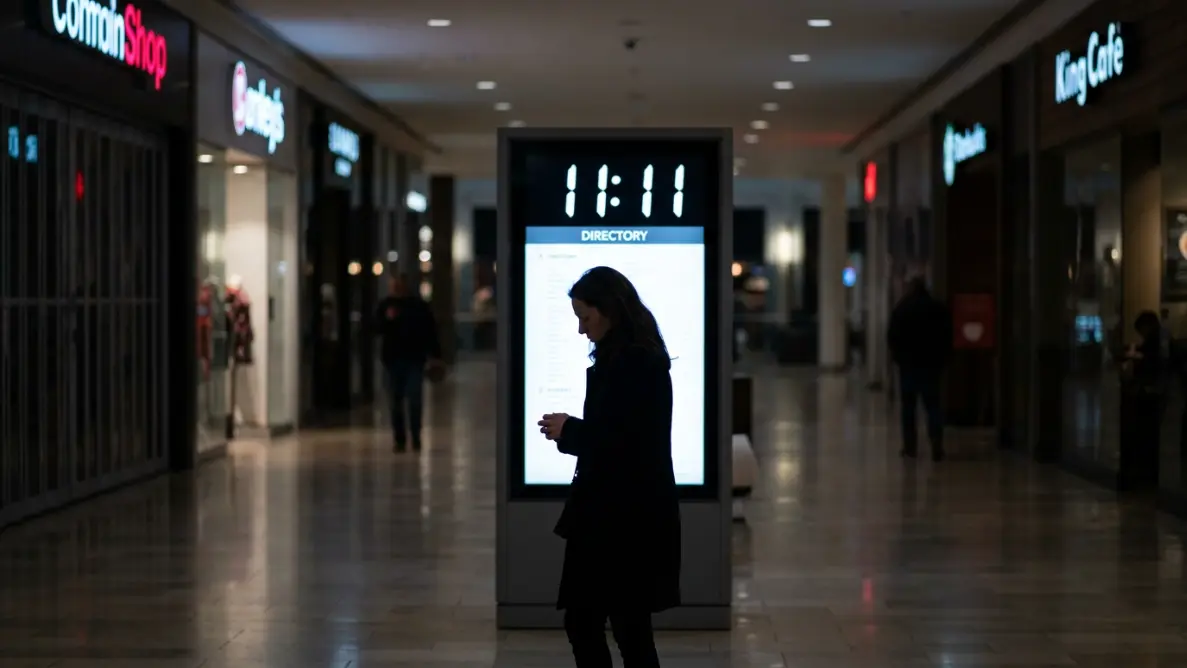
Why Do I Keep Seeing 11:11 When I Think About Someone From the Past?
Seeing 1111 when thinking of someone from the past can feel like a powerful sign, but the real meaning may be more emotional than mystical.
The moment someone from your past crosses your mind and the clock reads 11:11, something specific happens: the emotional charge freezes for a second. Suddenly, the memory isn’t just a memory. It has a timestamp. It feels chosen. And that feeling — of being chosen by a number — may be doing more work than the number itself.
Whether this is a meaningful signal tied to an unresolved bond, a trick of emotional timing, or something that sits uncomfortably between both, the answer depends less on what 11:11 means in general and more on what that specific person still means to you, why the memory showed up uninvited, and what you’ve been avoiding doing about it since the last time you noticed the clock.
The Comfortable Version: 11:11 as Cosmic Confirmation
This is the interpretation that spreads fastest. You think of someone, you glance at the clock, and 11:11 stares back. The immediate reading: the universe noticed. The connection is real. They might be thinking about you too.
There’s a reason this version is popular. It gives the memory a purpose. It transforms a moment of quiet longing into something that matters — something external, validated, almost official. In numerological traditions, the number 1 is associated with beginnings — much like the balance people read into seeing 222 everywhere. Four of them together suggest amplification. A moment that feels briefly charged.
And within that framework, the reading makes internal sense. If you believe that clock-based number patterns carry meaning, then seeing 11:11 at the exact moment a specific person crosses your mind feels like more than a coincidence. It feels designed.
But here is where it gets complicated.
This interpretation only works if you’ve already decided the answer before the question. If you’re thinking of someone you miss, and 11:11 appears, you don’t interpret it as “let go.” You interpret it as “hold on.” The number becomes a mirror for the emotional state you were already in — not a message arriving from outside of it.
That doesn’t make the experience meaningless. But it does raise a harder question: are you reading the sign, or is the sign reading you?
The Uncomfortable Version: A Memory Loop Disguised as a Sign
Here is the part nobody posts about online.
You check the time repeatedly throughout the day. Most of those glances register nothing. 9:43. 2:17. 6:08. Gone instantly. But when you’re already in a specific emotional state — when someone from the past has surfaced in your mind — your attention sharpens. The filter changes. And when the clock happens to land on 11:11 during that window of heightened awareness, the number doesn’t create the feeling. It catches it mid-flight.
Psychologist Dorthe Berntsen at Aarhus University in Denmark has spent decades researching what she calls involuntary autobiographical memories — memories of personal events that surface spontaneously, without any conscious effort to recall them. Her research, published in Philosophical Transactions of the Royal Society B (2021), found that these uninvited memories occur more than twice as frequently as voluntary ones and tend to carry stronger emotional impact at the moment they appear.
That matters here. Because when you think about someone from the past and then see 11:11, the sequence may not be “number appeared → memory triggered.” It may be the reverse: the memory arrived first, uninvited, and reshaped what you were willing to notice.
This doesn’t debunk the experience. It reframes it.
If the memory surfaced on its own — not because you chose to think about that person, but because something in your environment quietly activated it — then the question isn’t whether 11:11 is a sign. The question is why that person keeps showing up in your involuntary memory at all. What hasn’t been processed. What still has weight. The number may just be the surface where something deeper briefly becomes visible.

What Changes When the Person Is Gone vs. When They Chose to Leave
Not every “someone from the past” carries the same charge.
There is a difference — a structural one — between thinking of a person who died and thinking of a person who left. Both produce absence. But the texture of that absence is completely different, and that texture changes what 11:11 could possibly mean to you.
When the person is dead, the bond has no future tense. There is nothing to do, no call to make, no reconciliation to attempt. The 11:11 in this case often functions as a moment of contact — not with the number, but with the grief itself. Some traditions interpret repeated number patterns during mourning as signs that the deceased is still connected in some way. Whether or not that is true, the emotional function is real: the number gives the griever permission to feel the presence of someone who can no longer be present. It becomes a ritual of acknowledgment, not a call to action.
When the person is alive but gone — an ex, a friend who vanished, someone who chose distance — 11:11 operates differently. Here, the number doesn’t just acknowledge the bond. It agitates it. Because there IS something you could do. You could reach out. You could confront the silence. And if you keep seeing 11:11 instead of doing any of that, the pattern may not be a sign pointing you toward them. It may be a sign pointing you toward your own avoidance.
This distinction matters because most articles about seeing 11:11 when thinking of someone treat every version of “someone from the past” as interchangeable. They’re not. A grief-related number pattern carries a different weight than a longing-based one. One asks you to receive. The other asks you to decide.

Five Questions Before You Decide What 11:11 Meant
Before you assign meaning to the pattern, run it through these:
Were you thinking about the person before you saw the number, or did the number come first? If the memory was already active, the number didn’t summon it. It landed on a stage that was already set. That changes the entire dynamic between signal and coincidence.
If the clock had read 10:47, would you have stopped? If the answer is no, then what you’re responding to is the symmetry of 11:11, not its content. The number is aesthetically satisfying — four identical digits, a visual palindrome. That symmetry catches attention even without spiritual significance. Noticing a satisfying number during an emotional moment is not the same as receiving a message.
What do you want the sign to mean? This is the question most people skip. If you want it to mean “reach out,” that’s not the number talking. That’s your own desire wearing a numerical costume. If you want it to mean “they’re still connected to you,” that desire existed before the clock confirmed it.
If the sign said “let go,” would you accept it with the same conviction? Most people who see 11:11 and feel validated by it would not feel equally validated if the same number told them to walk away. That asymmetry reveals something important about how meaning gets assigned.
When was the last time you did something concrete about this person — without waiting for a sign first? If the answer is “I haven’t,” then the pattern of seeing 11:11 may not be pointing you toward them. It may be pointing you toward the gap between what you feel and what you do. That gap is where an energetic pull toward someone often lives — not in the number, but in the hesitation around it.
Frequently Asked Questions
Does seeing 11:11 mean my ex is thinking about me?
There is no verifiable way to confirm that. Some spiritual interpretations suggest that repeated number patterns indicate mutual energetic awareness between two people. What can be observed, though, is that the belief itself changes behavior — if you assume they’re thinking of you, you start scanning for more evidence, which produces more “signs.” The loop feeds itself.
Why do I only notice 11:11 and not other times?
Because 11:11 is visually distinctive. Four identical digits create a pattern that the brain registers as significant even before any spiritual meaning is applied. Combined with the emotional state of thinking about someone, that visual distinctiveness is enough to make the moment feel selected rather than random. You probably saw 10:22 and 3:48 the same day and don’t remember either.
Can 11:11 appear as a sign from someone who passed away?
Many grief traditions interpret repeated numbers during mourning as a form of continued connection. Whether this reflects an external signal or an internal need to maintain the bond, the emotional reality is the same: the number becomes a container for the relationship that no longer has a physical space to exist. Some researchers describe this as part of what psychologists call continuing bonds — the natural process of maintaining an emotional relationship with someone who has died, rather than severing it completely.
The Number Was Never the Message
Everything that matters about seeing 11:11 when thinking of someone from the past happens in the three seconds after you notice it. Not the number itself. The number is just a surface.
What crosses your mind in those three seconds — relief, longing, guilt, warmth, dread, hope — that is the actual content. The 11:11 didn’t generate it. It exposed it. And if the same feeling keeps surfacing every time the pattern appears, then the pattern isn’t telling you something new. It’s telling you something you already know and haven’t acted on.
Maybe the person needs to be contacted. Maybe they need to be released. Maybe what needs attention isn’t them at all, but the version of yourself that existed when they were still around.
The clock will show 11:11 again tomorrow. The question is whether you’ll still be using it as a reason to feel something instead of a reason to do something.
The reflections in this article explore symbolic, emotional, and psychological interpretations of seeing 11:11 while thinking about someone from the past. They are not clinical assessments, diagnostic conclusions, or guarantees about what any number pattern means. Memory, grief, and longing operate differently in every person. If the weight of an unresolved bond is affecting your daily life, a conversation with a qualified professional may offer more than any number on a clock.




Alex Turner
Alex Turner is the author behind Signs of Universe, a website focused on dreams, spiritual meanings, and symbolic signs. His approach combines research and intuitive interpretation to help readers understand the subtle messages that appear in everyday life.