
What Does It Mean to Find a Coin Right When You Think About Money?
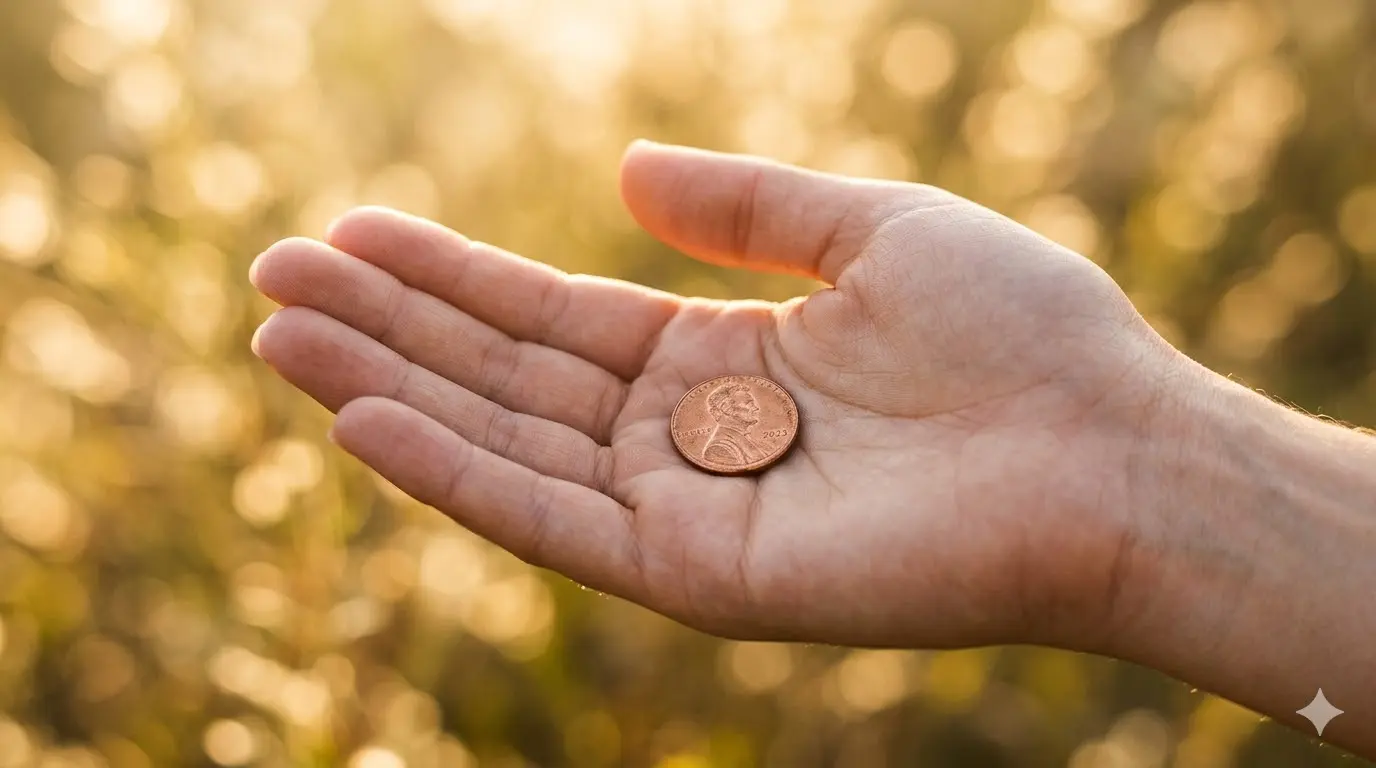
You’re walking down the street, mentally calculating your bills, wishing things were a little easier — and then you look down. A coin. Right there. Shining like it was waiting for you.
It sounds small. But if you’ve ever had this happen, you know it doesn’t feel small. It feels like something.
In this article you’ll discover:
- Why finding a coin when thinking about money feels so significant
- The concept of synchronicity and what Carl Jung said about moments like this
- Spiritual interpretations from cultures around the world
- What the coin’s value — penny, dime, quarter — might symbolize
- The law of attraction connection and what to do next
- A grounded scientific perspective to balance the conversation
Is It Just Coincidence — Or Something More?
Most people brush it off. They pick up the coin, pocket it, and move on.
But some moments stick with you. Especially when the timing feels too perfect to ignore.
Jung used the term synchronicity for coincidences experienced as meaningfully connected without a demonstrated causal link. It is an interpretive idea from analytical psychology, not proof that an external force arranged the events.
A careful Jungian reading asks what the event means to the observer and which associations it activates. It should not be simplified into “Jung proved the universe communicates through objects.”
Finding a coin exactly when money is on your mind? That’s a textbook synchronicity experience.
Why This Moment Feels So Personal
When you’re stressed about finances, your mind is tuned in to anything money-related.
That heightened awareness makes a coin on the ground feel like a direct response — almost like an answer to an unspoken question.
Whether you believe that’s spiritual, psychological, or purely coincidental, the feeling is real. And it’s worth exploring.
Spiritual Interpretations Across Cultures
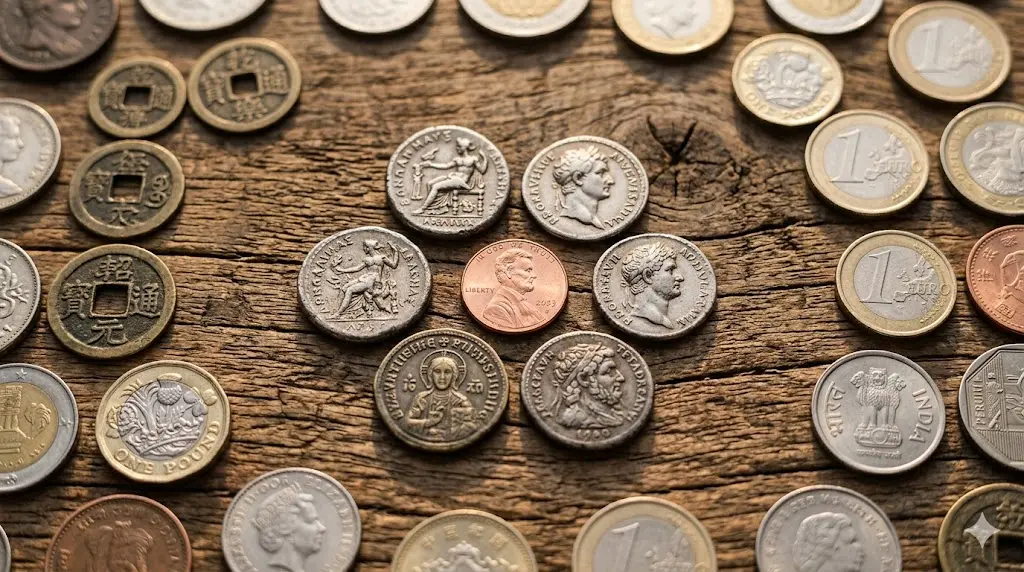
Long before psychology gave us the word “synchronicity,” people around the world were already paying attention to found coins.
The meanings vary — but the sense that coins carry messages is nearly universal.
Ancient Beliefs and Folklore
In ancient Rome, coins found on the ground were considered gifts from the gods — particularly from Mercury, the deity of commerce and good fortune.
Greeks tossed coins into sacred springs as offerings, believing the gods would grant wishes in return. Finding one near water was seen as a divine nod.
In many European folk traditions, a coin found face-up means luck is coming your way. Face-down? Best to leave it alone — or flip it over for the next person.
Native American and Indigenous Perspectives
Cultural specificity matters
Coin beliefs are not interchangeable across “Native,” “Asian,” or “Eastern” cultures. A credible cultural claim names the community, period, object, and source. When those details are missing, this article will describe the idea as contemporary folklore or personal practice instead of borrowing authority from a broad cultural label.
For historical orientation, the Smithsonian’s National Numismatic Collection documents early Chinese money forms. Museum evidence can establish what an object is and when it circulated; it cannot establish what a coin found today spiritually predicts.
Claims about “Indigenous traditions” should not collapse hundreds of distinct nations, languages, and ceremonial systems into one belief. Without a named community and a reliable source, the responsible approach is to avoid assigning a universal spirit-message meaning to found coins.
A person may connect a discovery with an ancestor or guide within their own tradition. That is a personal or community-specific interpretation; the coin itself cannot verify who sent it.
Eastern and Asian Perspectives
Round coins with square holes have long histories in East Asia, and museum collections document many examples. Their physical form and monetary history are factual; broad claims that all Chinese culture treats every found coin as prosperity or protection need more specific sourcing.
Finding one unexpectedly is considered an omen of incoming abundance. Many people carry found coins as talismans for wealth.
Feng shui practices sometimes use coin imagery in prosperity arrangements, but stumbling on modern currency does not establish that money is “flowing toward you.” Keep the symbolism separate from a financial forecast.
A related body-based version of the same reading appears in the left palm itching superstition, where the receiving hand carries the money signal instead of the ground.
What the Coin’s Value Might Mean
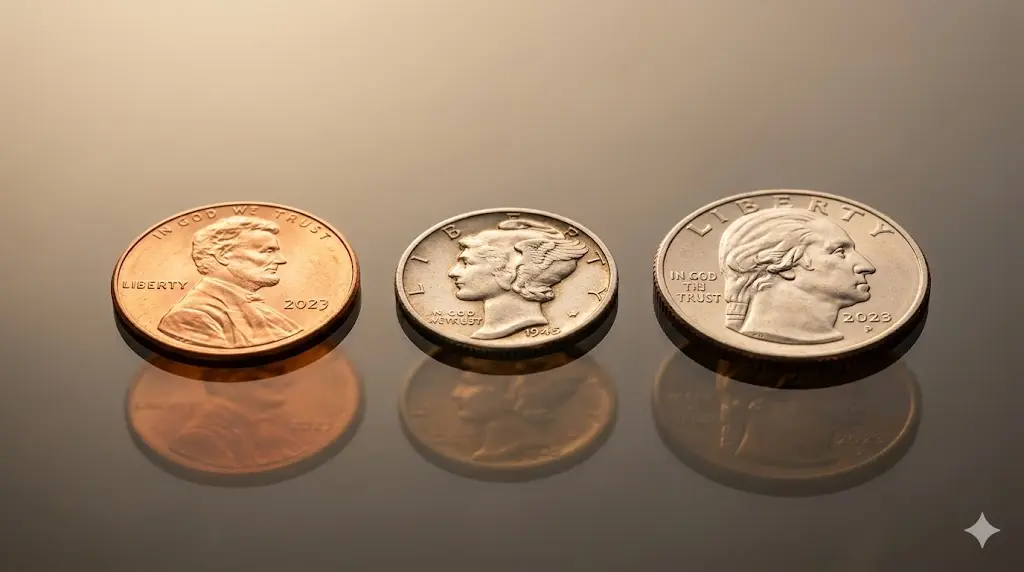
A coin’s denomination changes its monetary value and personal associations, not a verified spiritual message.
Use denomination as a prompt: What does one cent, ten cents, or twenty-five cents mean in your own memory? Do not treat a lookup table as a message from the universe.
Finding a Penny
The penny is the most commonly found coin, and its meaning is layered.
Pennies are often used in modern sayings about luck or remembrance, but a found penny cannot establish divine support. Its meaning may come from repetition, family stories, or the exact thought you were having.
The phrase “find a penny, pick it up, all day long you’ll have good luck” isn’t just a children’s rhyme. It reflects a deeply embedded cultural belief that pennies are lucky messengers.
Spiritually, a penny is often interpreted as a reminder: you are supported, even in small ways.
Finding a Dime
Dimes are smaller and quieter — which is exactly why many people consider them the most meaningful coin to find.
In spiritual communities, dimes are widely associated with messages from deceased loved ones. The belief is that those who’ve passed leave dimes as gentle signs that they’re still present.
A dime can feel especially meaningful if it is tied to a person or recurring family story. Timing can create emotional significance without proving that the event was arranged.
Finding a Quarter
Quarters carry more weight — literally and symbolically.
A similar question of repair versus release appears with a loose button found in an unexpected place.
A quarter has higher face value than a penny or dime, but it does not predict a larger life change. If “change” comes to mind, identify the actual decision you are facing rather than forecasting an event.
Some traditions suggest that a quarter found face-up signals a decision that needs to be made — and that you already know the right answer.
Heads or Tails?
This detail matters more than most people realize.
- Heads up = luck, positive energy, a green light from the universe
- Tails up = some traditions suggest leaving it for someone else, or flipping it over to create good luck for the next finder
Signs From Loved Ones Who Have Passed
Of all the spiritual interpretations around found coins, this one resonates most deeply with people.
The belief that deceased loved ones send coins as signs is widespread — and deeply comforting.
Why Coins?
The theory is that spirits communicate through the physical world in subtle ways. Coins are small, easy to place, and impossible to ignore when they show up in the right moment.
Many people report finding coins in strange places — inside a closed drawer, on a freshly cleaned surface, or in a spot they just walked past — right after thinking about someone who passed.
What Makes a Coin Feel Like a Message?
It’s rarely just the coin itself. It’s the combination:
- You were thinking about them
- The coin appeared somewhere unusual
- It’s a denomination they were known to collect or mention
- The timing felt impossible to explain
Some bereaved people experience found objects as comforting continuing bonds with the deceased. Comfort is real as an experience, but this article cannot claim what grief counselors “often note” without a source or determine that the deceased caused the event.
The Law of Attraction Connection
If you’re familiar with the law of attraction, finding a coin at a financial moment fits perfectly into that framework.
The core idea is simple: what you focus on, you attract. And coins — as physical symbols of money — carry energetic weight.
Coins as Confirmation of Abundance Thinking
When you find a coin right as you’re thinking about money, many practitioners of the law of attraction see it as a confirmation signal.
Your attention may have been primed by money worries, making the coin easier to notice. Money-related symbols do not always feel reassuring; the same pressure can make seeing 888 stir financial anxiety, which is why the reader’s actual reaction matters more than a stock “abundance” meaning. A spiritual reader may still choose to receive the moment symbolically, but it is not tangible proof that the universe responded.
The coin’s face value is not the important part of the reflection. What matters is the money concern it brought to attention and whether that concern can be translated into a concrete check or decision.
What to Do When You Find One
How you respond matters, according to this perspective.
- Feel grateful immediately. Say thank you, out loud or silently.
- Don’t dismiss it. Picking it up and pocketing it with awareness is an act of receiving.
- Set an intention. Hold the coin and briefly visualize the financial situation you want to improve.
- Keep a coin journal. Note when, where, and what you were thinking. Patterns may surprise you.
The Science Behind the Feeling
Here’s where we take a breath and look at this through a different lens — because both perspectives deserve space.
Confirmation Bias and Pattern Recognition
Human perception is highly sensitive to patterns and relevance. That helps us navigate the world, but it can also make a coincidence feel designed when no causal link has been established.
When money is already on your mind, related cues become more noticeable. A coin that would normally blend into the pavement may stand out because it matches the active concern.
This is called confirmation bias: we notice and remember the hits, and forget the misses.
Does That Make It Less Meaningful?
Not necessarily. Many psychologists argue that the meaning we assign to experiences is what shapes our emotional reality.
If the thought was about money, use a money action
A symbolic moment should not guide spending, borrowing, investing, gambling, or debt decisions. Before acting, use account records and a realistic plan. The Consumer Financial Protection Bureau toolkit offers practical tools for tracking income, bills, debt, and goals.
Try a five-minute translation: write the exact money thought you had, sort it into fact or fear, identify the missing number, and find that number. “I will never catch up” becomes “my next three bills total X and available funds total Y.” The coin can start the check; the numbers make the decision.
If the coin interrupts anxiety and helps you pause, that emotional shift matters. It does not by itself prove a neurological benefit, guarantee abundance, or replace action on the financial concern.
The experience can be meaningful without deciding whether it was supernatural. Use the pause to name the worry, check the facts, and choose one proportionate next step.

What Does It Mean to Find a Coin When Thinking About Money?
Whether you lean spiritual, scientific, or somewhere in between, here’s a simple practice to make the most of the moment.
A Simple Ritual for Coin Finders
Step 1 — Pause. Don’t just grab it and move on. Take one breath.
Step 2 — Notice. What were you thinking about? What were you feeling?
Step 3 — Choose a personal meaning. If “abundance” is helpful, define it as attention to available resources, not a promise that more money is coming.
Step 4 — Convert symbolism into evidence-based action. Check a balance, record an expense, schedule a payment, or review one budget category. The coin becomes a cue for agency rather than a financial prediction.
Step 5 — Record. Keep a notes app entry or a small journal. Over time, you’ll start to see patterns.
Many people find that this simple practice — just pausing and being intentional — changes how they relate to money on a deeper level.
❓ FAQ — What Does It Mean to Find a Coin?
Q: What does it mean when you find a penny on the ground? A: It may mean nothing beyond ordinary chance, or it may activate a personal association with luck, thrift, or remembrance. The timing can feel supportive, but the penny cannot prove that someone is watching over you.
Q: Is finding a coin a sign from a deceased loved one? A: Some people interpret it that way, especially when a denomination or date has personal significance. Treat that as a comforting belief, not verifiable communication, and do not let it replace grief support when grief is overwhelming.
Q: What does heads up versus tails up mean? A: “Heads up is lucky” is a superstition, not a property of the coin. If you use the orientation as a prompt, decide in advance what question it represents rather than changing the meaning to fit the outcome.
Q: What does it mean spiritually when you keep finding coins? A: Repetition may increase personal significance, but it can also reflect attention and common exposure. Record where and when it happens, then ask what the pattern helps you notice without claiming that guides sent it.
Q: What should I do when I find a coin? A: Pick it up with gratitude and intention. Pause, notice what you were thinking, and let the moment serve as a small reset — from scarcity to openness. Some people keep found coins in a special jar as a symbol of accumulating abundance.
A Final Thought 🪙
That coin you found wasn’t just loose change.
Maybe it felt like a wink from the universe; maybe attention met an ordinary object at the right emotional moment. You do not need to settle the metaphysics before choosing a useful response.
What matters is what you do with the moment. A small found coin can become a touchstone — a reminder that abundance shows up in unexpected ways, and that you’re paying attention.
The next time it happens, pause. Breathe. Receive.
And maybe check what you were thinking about, just before you looked down.
Have you ever found a coin at a meaningful moment? Share your story in the comments — you might be surprised how many people have had the exact same experience.
⚠️This article presents symbolic, spiritual, and cultural interpretations of finding coins. The content is reflective and exploratory in nature and does not constitute professional psychological, financial, or spiritual advice. Interpretations vary across traditions and individuals.




Alex Turner
Alex Turner is the editorial pen name used for articles published on Signs of Universe. The website covers dreams, symbolism, and cultural interpretations for informational and reflective purposes. Alex Turner is not a medical, mental health, scientific, or spiritual authority.


You May Also Like

Spiritual Meaning of Dreaming Falling Into the Void: Discover the Universe’s Signs When You Wake Up Before Hitting the Ground

Dreaming of Your Childhood Home Repeatedly: Memory Echo or Inner Self Calling You Back?