Left Palm Itching: Why So Many Cultures Link It to Money Coming In
The itch on your left palm was not invented by grandmothers. It was written into English by Shakespeare in 1599 — as an accusation of greed, not a promise of luck. Everything the modern superstition tells you is a translation error four centuries in the making.
If you searched left palm itching spiritual meaning, the short answer is this: most Western folk traditions read a brief, unexplained itch on the left palm as money coming in, because the left is called the receiving hand. That is the surface. Below it, three different cultures read the same sensation three different ways, and one of them means the opposite.
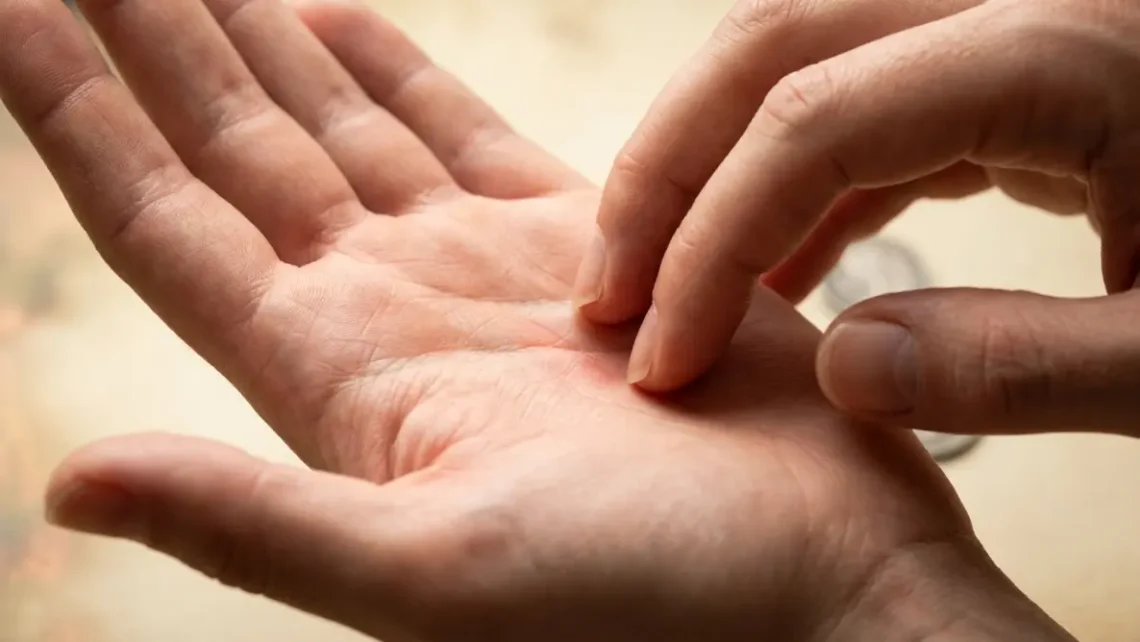
A note before going further: if the itch is persistent, red, scaly, blistered, or comes with visible skin changes, that is a dermatological signal (eczema, contact dermatitis, or an allergic reaction are common causes) and belongs to a doctor, not a folk reading. This article is about the fleeting, unexplained kind — the itch that appears once, cannot be traced to soap or wool, and leaves without a mark.
What follows is the origin of the money reading, the reason the left specifically became the receiving hand, and the three cultural readings that split the sign in different directions.
The Sixteenth-Century Sentence That Started the Money Connection
Julius Caesar, Act 4, Scene 3. Brutus is arguing with Cassius inside a tent. He says:
“Let me tell you, Cassius, you yourself / Are much condemned to have an itching palm, / To sell and mart your offices for gold / To undeservers.”
Read it slowly. Brutus is not congratulating Cassius on incoming wealth. He is calling him corrupt. In Elizabethan English, an itching palm meant a palm that had to be scratched with coins — a hand hungry for bribes. The metaphor was dermatological, unflattering, and precise: greed as an involuntary itch you could not stop yourself from scratching, and the only cure was money changing hands.
That is where the association between palm-itching and money enters written English. Not folklore. Court corruption in a play about a Roman assassination.
The strange part is what happened next. Somewhere between 1599 and the Victorian era, the meaning quietly inverted. “Itching palm” stopped being an accusation and became a prophecy. The scratched-with-coins detail survived, but the moral charge flipped. What used to describe someone who wanted money now described someone about to receive it.
Nobody officially made this change. It happened in kitchen conversations, in market stalls, in the mouths of fortune-tellers who worked the fairs — the same kind of ambient revision that turns “break a leg” from a curse into a blessing. This is worth pausing on. The reading that fills every spiritual blog today (“your left palm itches, money is coming”) is not the ancient meaning. It is the polished-up version of an insult.
The same pattern of “small physical timing coincidence read as financial luck” shows up in coin-timing coincidences, where the sign is external rather than bodily but the reading rhymes: something small, unexplained, and financially charged shows up at the edge of attention, and the mind reaches for a narrative.
Why the Left Palm — and Not the Right — Became the Receiving Hand
The rule most Western folk sources repeat is short: left to receive, right to give.
Where does that come from?
The clearest trail runs through Romani (Gypsy) fortune-telling in early modern Europe. Romani palm readers used a phrase you still hear today — “cross my palm with silver.” The client had to place a silver coin in the reader’s palm before the reading could begin. Silver had a reason. In folk belief across much of medieval Europe, silver was the metal that repelled ill influence and locked in truth. The coin was not payment. It was activation.
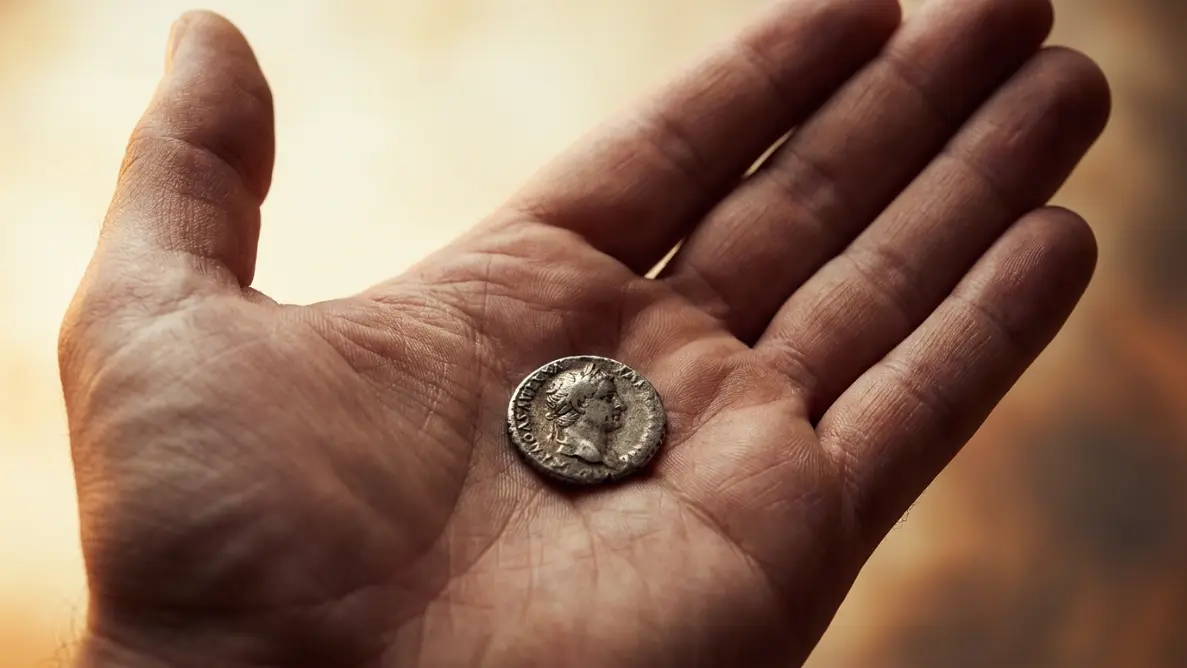
Over time, the palm and silver became braided together in the popular imagination. A palm that itched became a palm that “wanted” silver — that is, wanted to be crossed, activated, filled. The left one specifically inherited this reading for two reasons folk traditions rarely spell out.
First, the Latin word sinister originally just meant “left,” but by the medieval period it carried the connotation of receiving, hiding, and the concealed side. The right side gave and acted publicly; the left side received and stored.
Second, hermetic and occult diagrams from the Renaissance forward assigned polarity to the two hands. Right was solar, active, giving. Left was lunar, passive, receiving. Whether you buy the underlying framework or not, this diagrammatic split leaked into everything from tarot to palmistry to folk medicine. By the time the itchy-palm superstition took its modern shape, the left hand had been the “receiving hand” for three or four centuries of accumulated symbolic weight. The right was where you handed silver over. The left was where silver landed.
How Left Palm Itching Splits Across Cultures
The modern claim that “left palm itching means money” is really a Western folk average. It hides the fact that three major traditions read the sensation in noticeably different directions — sometimes even opposite ones. A similar pattern shows up in the way ear-burning superstitions split left and right into paired opposites, with each side carrying a specific social meaning.
The Chinese Reversal
Chinese folk traditions treat the itching hand as a gendered signal. In many regional readings, an itchy left palm on a man predicts money leaving — the hand is opening to release wealth — while for a woman the same itch predicts money coming in. In other regions, the pattern is exactly inverted.
The reason people give for the reversal is not arbitrary. It ties back to older diagrams of qi flow through the hands, mapped in traditional Chinese medicine. Male and female bodies were considered to run energy in opposite polarities through the extremities. A woman’s left hand pulled energy in; a man’s left hand pushed it out. So the same sensation produced opposite forecasts depending on who was feeling it.
You can accept or reject the underlying model. The point is that the Chinese reading was never a lazy copy of the Western one. It came from a different anatomical map, which is why it points in a different direction.
The Indian and Roma Palmistry Framing
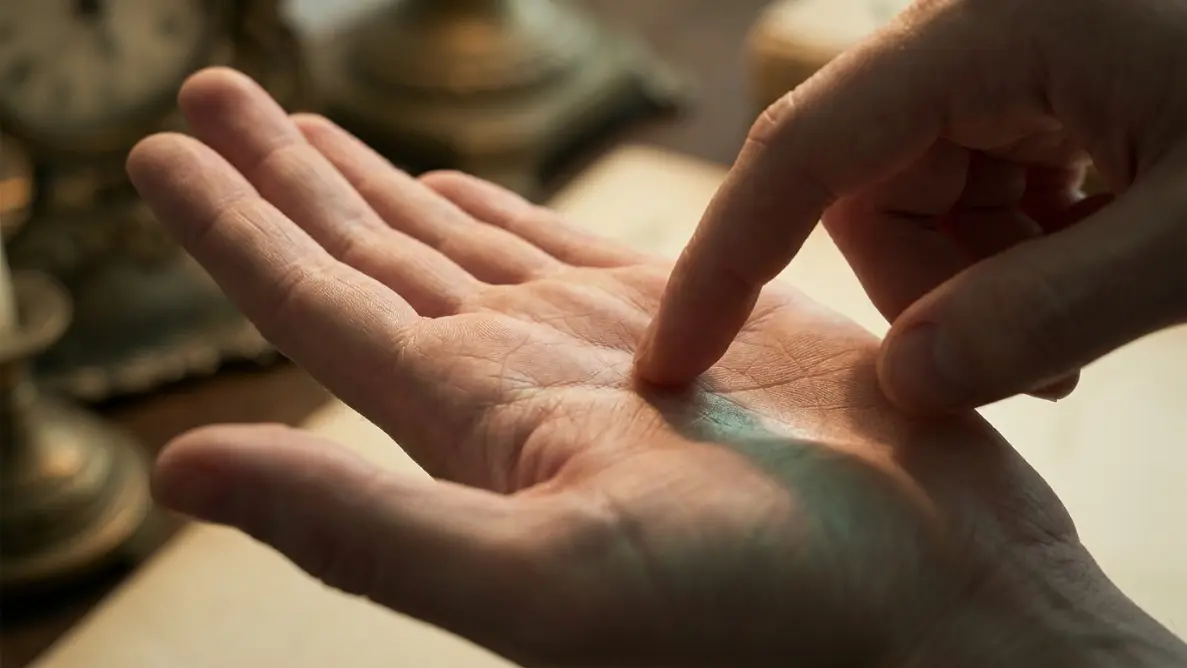
Two very different traditions — Vedic Indian palmistry and Roma chiromancy — share a structural rule: in a right-handed person, the left palm is the hand you were born with, and the right palm is the hand you have made.
Left is fate, karma, inheritance. Right is choice, action, cultivation. (For a left-handed person, the assignment is often flipped, though not every school agrees.)
An itch on the left palm in this framing does not mean generic wealth. It means something is arriving from outside your effort — inheritance, unexpected help, a return on something you did not plant. A settlement, a gift, a stroke of external good weather. The right palm itching, in the same tradition, points to money that will come as a result of what you have been actively doing.
This is a subtler reading than “cha-ching, money is coming.” It asks the person to distinguish between wealth they built and wealth that arrived.
The Caribbean and Afro-Diasporic Reading
Several Afro-Caribbean folk traditions carry a nearly opposite reading. In parts of the Caribbean, an itch on the left palm can signal a debt approaching, an obligation returning, or money that will have to be paid rather than received. Some Hindu regional readings agree with this — the left palm as a signal of outflow, not inflow.
The logic is worth noting. In traditions where the left hand is considered the hand that handles what is impure or informal — the hand not used for greeting, eating, or making promises — an itch on the left points to informal exchanges: debts, favors owed, quiet transactions the right hand would not touch. So the money reading persists, but its direction flips.
Questions People Ask About Left Palm Itching
Does it matter if only the center of my left palm itches instead of the whole hand? Yes, in most folk readings. The center of the palm — the hollow, not the fingers or wrist — is the point most traditions treat as the “money spot.” An itch confined there carries more weight than one that spreads across the fingers or up the wrist.
What does it mean if both palms itch at the same time? Older superstitions read this as a wash: money coming in and money going out at roughly the same time, or a large transaction ahead where both flows are involved. Some readings interpret it as a signal of a purchase or debt about to be settled.
Is the money reading different for men and women? In Western folk traditions, no — the same reading applies. In Chinese folk traditions, yes, and often in opposite directions. In some Hindu regional readings, the sign is stronger for men. If gender-specific readings feel arbitrary, remember that they come from older energy-flow diagrams, not from modern folk logic.
Should I scratch it or leave it alone? The folk rule is: scratch it on wood or on a coin, not on your other hand. Scratching against your right hand is said to “transfer” the sign — the receiving hand loses what was arriving. This is symbolic advice, not physiological. If the itch is real and persistent, the honest answer is to check whether it is a skin condition first.
What Every Reading Shares Beneath the Surface
Strip away the specifics and every version of the left palm itching spiritual meaning — Shakespearean, Romani, Chinese, Indian, Caribbean — follows the same structural pattern.
A small, unexplained body signal. A moment of open expectation. A cultural narrative that gives the expectation a shape.
The itch is real; the meaning is inherited. What the reader supplies is which inheritance to trust. That is why the same brief tingle can predict money coming, money leaving, an inheritance, a debt, or a bribe — depending on which tradition raised you.
This is where the honest physical distinction belongs. A brief, unexplained itch that appears once on the center of the left palm and leaves without a mark is the folk-omen territory. A persistent itch, especially one that comes with red patches, dry cracked skin, blistering, or spreads to the fingers, is the territory of hand eczema, contact dermatitis, or reaction to soap and hand sanitizer. Roughly one in ten people in the United States has some form of hand eczema at some point. The math alone means most persistent palm itches are not signals of anything but skin.
The blog covers other body signals with their own specific intentions, and it helps to keep them separate. Ear-burning superstitions point to someone talking about you. An eye-twitching omen is read as an event coming — good or bad, depending on side and tradition. The palm has a narrower job in folk grammar: it points at receiving. Not gossip, not events. Something arriving.
That narrow job is why the sign has survived so many centuries of reinterpretation. Receiving is one of the few things every human being can be told is imminent without having to prove it right away.
The Next Time Your Left Palm Starts to Itch
You will feel it, probably at the center of the palm, brief and small. You will remember the superstition before you remember Shakespeare. But knowing the left palm itching spiritual meaning — not just the money promise but where it came from — changes what you do with that reflex.
Notice which reading you reach for first — money coming, money going, debt returning, gift arriving. That reflex is your cultural inheritance more than any prediction about the next week. See if the itch has anything visible to go with it. If it does, that is a different conversation, one for a dermatologist. If it does not, you have a small unexplained sensation and a very old habit of naming it.
Whether or not any silver actually arrives, you now know what generations of readers before you were doing when they scratched their palm and waited. They were also just waiting.
This article offers symbolic and cultural interpretation of a folk sign that has been read many ways for many centuries. It is not medical advice, financial guidance, or a claim that any specific outcome will follow the sensation described. If the itch on your palm is persistent or accompanied by skin changes, please talk to a clinician.



Alex Turner
Alex Turner is the editorial pen name used for articles published on Signs of Universe. The website covers dreams, symbolism, and cultural interpretations for informational and reflective purposes. Alex Turner is not a medical, mental health, scientific, or spiritual authority.