Right Eye Twitching Spiritual Meaning for Women and Men
Right eye twitching has no single universal spiritual meaning. Depending on the tradition, it may be interpreted as good news, conflict, heightened attention, or a warning—and some systems give different meanings for women and men. Medically, eyelid twitching is commonly associated with fatigue, stress, caffeine, eye strain, or irritation, so physical causes should be considered first.
Behind every one of those searches is someone sitting at their desk, driving to work, or lying in bed at 2 AM, feeling their right eyelid flutter for the third time that day and thinking: okay, this has to mean something.
A medical explanation deserves priority because an eyelid twitch is a bodily event. A person may still find a cultural story interesting or personally meaningful, but that symbolic layer should not override symptom duration, severity, associated weakness, vision changes, or professional medical guidance.
What Does Right Eye Twitching Mean Spiritually?
Before jumping into specific cultural interpretations, there’s something worth understanding about why the right eye matters at all in spiritual traditions — because it’s not arbitrary.
Some symbolic systems map the right and left sides of the body differently, but the associations are not universal. Meanings change across religious, medical, astrological, and folk traditions, and modern internet lists often blend systems that developed separately. The article therefore treats laterality as cultural context, not as proof that the right side governs the future or external events.
In some paired symbolic systems, the left side is associated with receptivity or inward attention. Other traditions use different associations or none at all. This contrast is useful only when the specific tradition is named and its interpretation is clearly labeled as belief.
That receiving-side logic also shows up in the left palm itching money superstition, where a brief tingle on the receptive hand is read as something arriving from outside your effort.
A right-eye twitch should not be treated as a message simply because it happens on one side. Laterality matters in some folk systems, while medicine evaluates the muscle involved, triggers, duration, and accompanying symptoms. Those are two different frameworks and should not be presented as equivalent evidence.
That distinction matters enormously for interpretation.
Why the Right Eye Specifically
Some modern spiritual interpretations describe the right eye as receiving information about outward action or a future decision. That idea is not shared by every tradition and cannot be inferred from the muscle movement itself.
Terms, stories, and symbols attached to the right eye vary across South Asian, Chinese, Egyptian, and contemporary spiritual sources. Placing all of them into one system would erase important differences. The Eye of Ra, for example, has its own Egyptian religious history and should not be used as medical or predictive evidence for an eyelid twitch.
Some folk traditions interpret a right-eye twitch as an incoming message or change. That is an attributed belief, not a mechanism demonstrated by the twitch. The responsible question is what the tradition says, followed by the separate question of what may be physically causing the symptom.
Whether that something is good or bad depends heavily on which tradition you consult. And the answers might surprise you.

Right Eye Twitching in Hindu and South Asian Folklore
Hindu and South Asian folk interpretations of eye twitching are often described as gender-specific, but accounts vary by region, language, family tradition, and astrological source. They should be presented as cultural beliefs rather than as a single authoritative Hindu rule or a diagnostic system.
Online articles frequently connect detailed eye-twitch tables with Samudrika Shastra, a broad South Asian tradition of interpreting bodily features and signs. Direct support for many modern hour-by-hour or gender-specific lists is inconsistent, so this article does not present those lists as quotations from a single ancient text.
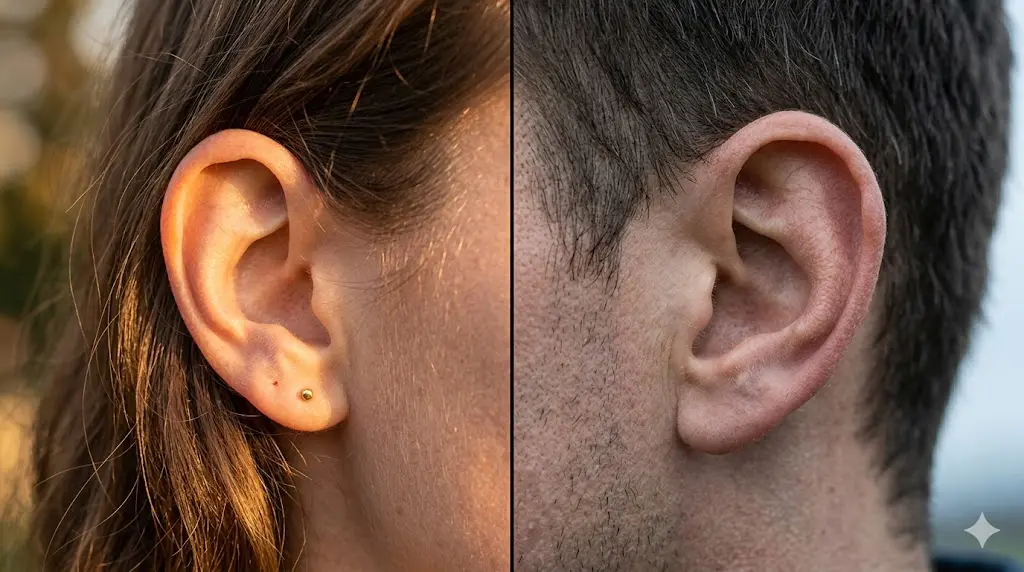
What It Means for Women vs. Men
In some popular South Asian interpretations, a right-eye twitch for a man is labeled favorable and associated with good news, money, work, or an important visitor. This describes the folklore; persistence of the twitch does not make a future event more likely or more significant.
Some gendered versions label the same twitch unfavorable for a woman. These interpretations reflect older symbolic systems and social assumptions, not biological differences in how an eyelid predicts events. They may also be experienced as restrictive or outdated, so they should never be treated as a warning of unavoidable bad news.
It’s worth noting that many modern Hindu astrologers have softened this gendered interpretation. Some now read the right eye twitch as a sign of upcoming change for everyone — with the nature of that change depending on other astrological factors like your current dasha period and the position of the moon.
But the traditional distinction remains deeply embedded in Indian culture. If you grew up in a Hindu household, chances are your grandmother told you exactly what a right eye twitch meant — and her answer depended on your gender before anything else.

Right Eye Twitching in Chinese and East Asian Traditions
Chinese spiritual tradition takes a completely different approach to right eye twitching — and it’s fascinatingly specific.
Rather than assigning one fixed meaning, the Chinese system ties interpretation directly to the time of day the twitch occurs. Same eye, same twitch, completely different meaning at 7 AM versus 7 PM.
This system comes from Chinese face reading (mian xiang) and is cross-referenced with the Chinese body clock used in Traditional Chinese Medicine.
Time-Based Folklore Interpretations
Here’s what makes this tradition unique: it turns right eye twitching into something closer to a clock than a coin flip.
The general framework works like this:
Early morning (5–7 AM): A right eye twitch signals that something positive is heading your way — an invitation, a surprise, or the return of someone you haven’t heard from in a while.
Mid-morning (7–9 AM): This window suggests minor physical discomfort ahead. Not serious — more like a headache, a clumsy accident, or a disruption in your routine.
Late morning (9–11 AM): Potential for a disagreement or conflict with someone close. The twitch here acts as a heads-up to watch your words.
Midday (11 AM–1 PM): Highly positive. This is the window associated with celebrations, social events, and unexpected good news arriving through a phone call or message.
Early afternoon (1–3 PM): Something small but pleasant — a minor windfall, a compliment, or a lucky break in your day.
Late afternoon (3–7 PM): This range carries a romantic charge. A right eye twitch here is traditionally linked to someone thinking about you with affection, or a chance encounter with someone significant.
Evening and night (7 PM–5 AM): The energy shifts toward social gatherings, guests arriving unexpectedly, or invitations to events that could change your social landscape.
Japanese culture shares some of these time-based readings but adds its own layer: in Japan, a right eye twitch is frequently associated with someone speaking about you — and the tone of what they’re saying depends on the accompanying physical sensation.
Korean folk tradition leans toward the right eye twitch as a sign of incoming visitors or news, with less emphasis on the timing structure and more on the emotional quality of the twitch itself.

Right Eye Twitching in African and Caribbean Spiritual Traditions
African and Caribbean spiritual systems offer some of the most direct and emotionally resonant interpretations of right eye twitching — and they’re among the least represented in mainstream articles on this topic.
In several West African traditions — particularly among the Yoruba and Igbo peoples — involuntary body movements are considered direct communications from the spirit world. These aren’t abstract symbols. They’re messages delivered through the body because the body is the most immediate channel between the physical and spiritual realms.
A right eye twitch in these traditions often signals that someone close to you is about to share significant news. The nature of the news — positive or troubling — is typically read in combination with other signs occurring around the same time.
In some Nigerian Igbo traditions, a right eye twitch specifically warns that tears may be ahead — though the tears could be from joy or sadness, depending on the context of your current life situation.
Caribbean spiritual practices, influenced by West African roots blended with Indigenous and European traditions, tend to interpret right eye twitching as a direct ancestor signal. The twitch is understood as a tap on the shoulder from someone who has passed — a way of saying “pay attention to what’s happening around you right now.”
In Trinidadian and Jamaican folk tradition, a right eye twitch is often paired with the question: who were you just thinking about? The belief is that the person on your mind at the moment of the twitch is connected to whatever the message carries.
What makes these interpretations particularly compelling is their specificity. They don’t just say “something is coming.” They ask you to look at your immediate circumstances — your thoughts, your relationships, your emotional state — and read the twitch as a response to what’s already happening, not a prediction of something random.

Right Eye Twitching in Biblical and Christian Interpretation
The Bible doesn’t mention eye twitching directly. But the right eye holds significant symbolic weight throughout Scripture — and Christians who experience persistent right eye twitching often find meaning in that scriptural context.
In Matthew 6:22, Jesus says: “The eye is the lamp of the body. If your eyes are healthy, your whole body will be full of light.” This passage establishes the eye as a spiritual sensor — the point through which light (truth, clarity, divine insight) enters the body.
The right eye, specifically, appears in Matthew 5:29 in a passage about sin and vigilance. While the verse is metaphorical, it connects the right eye to moral awareness and the ability to see situations clearly.
Many Christian interpreters who work within the charismatic or prophetic traditions read a right eye twitch as a prompt for spiritual alertness. Not a prediction of good or bad events, but a call to heightened discernment — to look more carefully at a situation, a relationship, or a decision you’re currently facing.
Some interpret it as the Holy Spirit drawing your attention to something specific. The twitch becomes less about superstition and more about spiritual responsiveness — a physical nudge to pray, to pause, or to reconsider something you’ve been approaching on autopilot.
This interpretation sits in a different category from the cultural traditions above. It’s less about prediction and more about posture — a spiritual readiness rather than fortune-telling.
What Science and Medicine Say About Eye Twitching
Any honest exploration of right eye twitching spiritual meaning needs to include what’s happening on the physiological level — because ignoring the medical reality doesn’t serve your wellbeing.
Common Medical Causes
The medical term for the kind of eye twitching most people experience is myokymia — a benign, involuntary spasm of the orbicularis oculi muscle. It’s extremely common, and in the vast majority of cases, completely harmless.
The usual triggers are well-documented:
Stress and fatigue are by far the most common causes. When your nervous system is overloaded, small muscles — especially in the face — are among the first to misfire.
Caffeine and alcohol both affect the nervous system in ways that can trigger eyelid spasms. Even moderate changes in consumption can set them off.
Dry eyes and screen strain are increasingly recognized culprits, particularly for people who spend 8+ hours daily on screens.
Magnesium deficiency is a lesser-known but significant factor. Magnesium plays a critical role in muscle relaxation, and even mild deficiency can manifest as twitching.
Allergies and eye irritation can also trigger localized spasms as the body responds to histamine release.
When to See a Doctor
Most eye twitches resolve on their own within a few days to a few weeks. But certain patterns warrant medical attention:
If the twitching spreads to other parts of your face, persists for more than three weeks, causes difficulty opening your eye, or is accompanied by redness, swelling, or discharge — see a doctor. These could indicate conditions like blepharospasm, hemifacial spasm, or in rare cases, neurological issues that need professional evaluation.
Here’s the important nuance: the medical explanation and the spiritual interpretation don’t have to cancel each other out. Your body can be responding to stress and your spiritual self can be processing an incoming shift at the same time. Many people find that the twitch stops once they’ve addressed both — reducing the caffeine and paying attention to the message.

How to Respond Without Treating the Twitch as a Prediction
With so many traditions offering different — sometimes contradictory — interpretations, the question becomes practical: which one applies to my situation?
There’s no universal decoder ring. But there are filters that can help you identify which interpretation resonates most honestly with what’s happening in your life.
Consider your cultural background. If you grew up in a Hindu household, the Vedic interpretation likely carries more emotional weight for you — and that weight matters. A body-sign reading works best when it connects to the symbolic language your subconscious already speaks.
Note the timing. If the Chinese time-based system appeals to you, start tracking when the twitch occurs. After a week or two, patterns often emerge that feel more than coincidental.
Pay attention to what you were thinking about. Caribbean and African traditions emphasize the connection between the twitch and your mental state at the exact moment it happens. Who was on your mind? What situation were you processing? That context often holds the most personal meaning.
Check your body first. If you’ve been sleeping poorly, drinking extra coffee, or staring at screens for hours, the physical causes are worth ruling out with a doctor before layering spiritual meaning on top. The twitch that persists after you’ve handled the physical triggers is the one worth interpreting spiritually.
Trust the emotional quality. Here’s the filter that works across every tradition: how does the twitch feel to you? Not the physical sensation — the emotional one. Does it carry a sense of anticipation? Unease? Excitement? That internal response is your most reliable guide to what the message actually is.
The right eye twitching spiritual meaning ultimately isn’t one-size-fits-all. It’s shaped by your beliefs, your circumstances, and your willingness to pay attention to what your body and spirit are communicating at the same time.

A Practical Checklist Before Interpreting the Twitch
1. Record duration and frequency. Note whether the twitch lasts seconds, returns throughout the day, or continues for weeks. A single brief episode and a persistent pattern should not be treated as the same experience.
2. Check ordinary triggers. Review recent sleep, caffeine intake, stress, screen time, dry-eye symptoms, and eye irritation. The National Eye Institute identifies stress, dry eye, excess caffeine, and lack of sleep among common contributors to eyelid twitching. Most minor twitches resolve on their own.
3. Notice accompanying symptoms. Vision changes, pain, an eyelid closing completely, or twitching that spreads to other facial muscles deserves professional attention. The same visible movement can have different causes, which is why a cultural interpretation cannot safely perform the role of an eye examination.
4. Separate the event from the story. “My lower right eyelid twitched for ten seconds” is an observation. “Good news is coming” is a folklore-based interpretation. Keeping those statements separate allows a reader to explore cultural meaning without mistaking it for evidence.
5. Use symbolism as a question, not an answer. If the right-side association feels meaningful, ask what outward decision currently needs attention. Then evaluate that decision using facts, consequences, and trusted advice. The twitch may prompt reflection, but it cannot approve a job change, relationship decision, purchase, or medical choice.
When an Eye Doctor Is the Right Next Step
The American Academy of Ophthalmology explains that common eyelid twitches are often minor, while persistent symptoms warrant attention. Seek an eye professional if twitching continues for more than a few weeks, forces the eye closed, spreads to other parts of the face, or appears with uncomfortable or gritty eyes. Urgent symptoms should be assessed promptly rather than interpreted spiritually.
❓ FAQ — Right Eye Twitching Spiritual Meaning
Is right eye twitching good luck or bad luck?
It depends entirely on the tradition and context. In Hindu tradition, it’s considered good luck for men and potentially challenging for women. In Chinese tradition, the meaning shifts based on the time of day. Most African and Caribbean traditions read it as a neutral signal — neither inherently good nor bad, but a call to pay attention.
What does it mean when your right eye twitches for days?
Persistent twitching that lasts several days is worth examining from both a medical and spiritual perspective. Physically, it often points to stress, fatigue, or magnesium deficiency. Spiritually, many traditions interpret prolonged twitching as an amplified message — the signal is being repeated because you haven’t yet acknowledged or acted on what it’s pointing toward.
Does right eye twitching mean someone is thinking about me?
Some Japanese and Caribbean folk accounts connect an eye twitch with another person’s attention or conversation. The details differ across retellings, and there is no evidence that a muscle spasm creates an energetic link to someone else’s thoughts. It is more accurate to describe this as folklore about social attention.
What does right eye twitching mean for females?
In Vedic astrology, right eye twitching for women is traditionally considered less favorable than for men — often associated with upcoming challenges or emotional turbulence. Many modern practitioners, however, interpret it more neutrally as a sign of significant change approaching regardless of gender.
Should I be worried if my right eye keeps twitching?
In most cases, no. Benign myokymia is extremely common and resolves on its own. Spiritually, the twitching is read as a message, not a threat. If the twitching persists beyond three weeks, spreads to other facial muscles, or causes functional difficulty, consulting a healthcare professional is the right move.
Conclusion
Your right eye has been twitching — and now you know that a Hindu grandmother in Mumbai, a Chinese face reader in Shanghai, and a Yoruba elder in Lagos would each tell you something completely different about what it means.
That’s not a contradiction. It’s evidence of how deeply humans across every continent have paid attention to the body’s involuntary signals — and how seriously they’ve taken the idea that the body speaks a language worth decoding.
The right eye twitching spiritual meaning isn’t a fixed answer waiting to be found. It’s an intersection — of your body’s physical state, your spiritual sensitivity, your cultural framework, and the specific moment in your life when the twitch appeared.
What all traditions agree on is this: the twitch is asking you to notice something. What that something is depends on you — your honesty about where your life stands right now, and your willingness to take the signal seriously enough to look a little deeper.
The next time your right eye flutters, before you Google it again, try this instead: stop for five seconds and ask yourself what was on your mind the moment before it started. That answer is usually more telling than any tradition’s interpretation — because it’s yours.
Before you start analyzing every little flutter, please keep in mind that the spiritual, cultural, and symbolic interpretations of right eye twitching drawn from multiple traditions around the world are meant purely for your own personal reflection.
These perspectives are entirely exploratory and should never be treated as medical advice, psychological diagnosis, or absolute truth. If you find yourself experiencing persistent or concerning eye twitching, it is always best to consult a qualified healthcare professional to ensure everything is okay. After all, discovering a spiritual meaning and seeking proper medical care are never mutually exclusive.