What Does It Mean to Not Be Able to Sleep During a Full Moon? Spiritual and Energetic Meaning
A sleepless night that happens near a full moon can feel unusually significant, especially after someone notices the timing more than once. The experience deserves investigation, but timing alone cannot establish that the lunar phase caused the wakefulness.
The question often begins with a real night of wakefulness followed by noticing the bright moon or checking a lunar calendar. That sequence can make the event feel connected. A responsible explanation starts by separating the observed sleep problem from the later interpretation of its timing.
The restlessness isn’t ordinary. It doesn’t feel like the insomnia that follows a bad day or too much screen time. This one has a texture to it — a low-frequency hum behind the eyes, a body that’s tired but electrically alert, a mind that won’t land anywhere long enough to drift off.
People have connected lunar cycles with sleep in folklore, calendars, and scientific research. Those are different forms of evidence. Cultural history shows that the association is old; it does not prove that every sleepless night near a full moon has a lunar cause.
Brightness, expectation, normal night-to-night variation, bedroom conditions, stress, and sleep habits can all affect the experience. Research has explored possible lunar associations, but the evidence does not support claiming that every person’s body responds to a special full-moon force.
Someone may sleep normally during most of the month and still have a difficult night near the full moon. That observation is not enough to prove a lunar pattern. A meaningful comparison requires recording sleep across many nights, including nights when the moon is not full, rather than remembering only the matches.
Some spiritual practices focus on the night before, the night of, and the night after the full moon. That three-night window is a ritual convention and a useful tracking interval, not an established period in which every person’s sensitivity must peak.
Racing thoughts, physical restlessness, repeated waking, and calm alertness can have different practical contributors. They may also inspire different symbolic reflections, but none demonstrates that a message is trying to reach the spirit.
That 3 AM Wakefulness the Moon Won’t Let You Forget
It usually starts the same way.
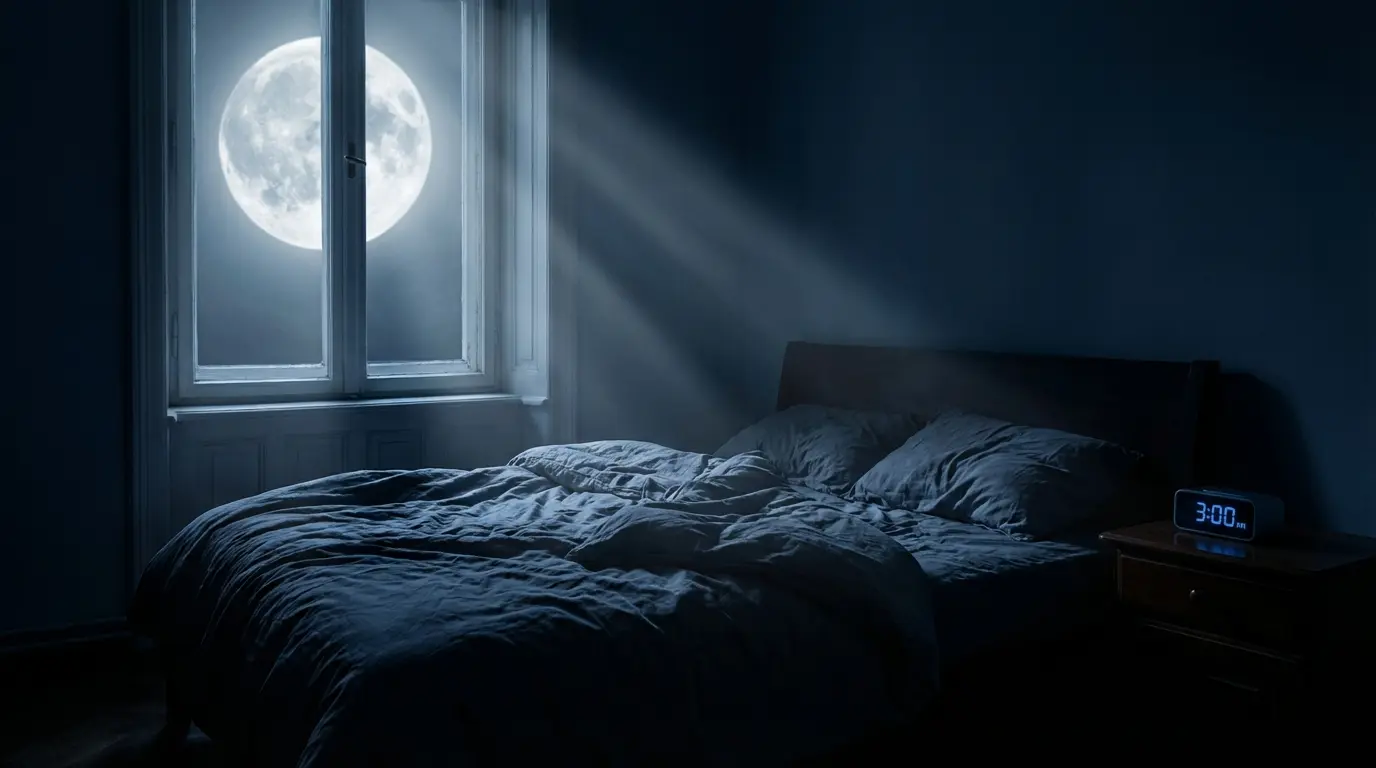
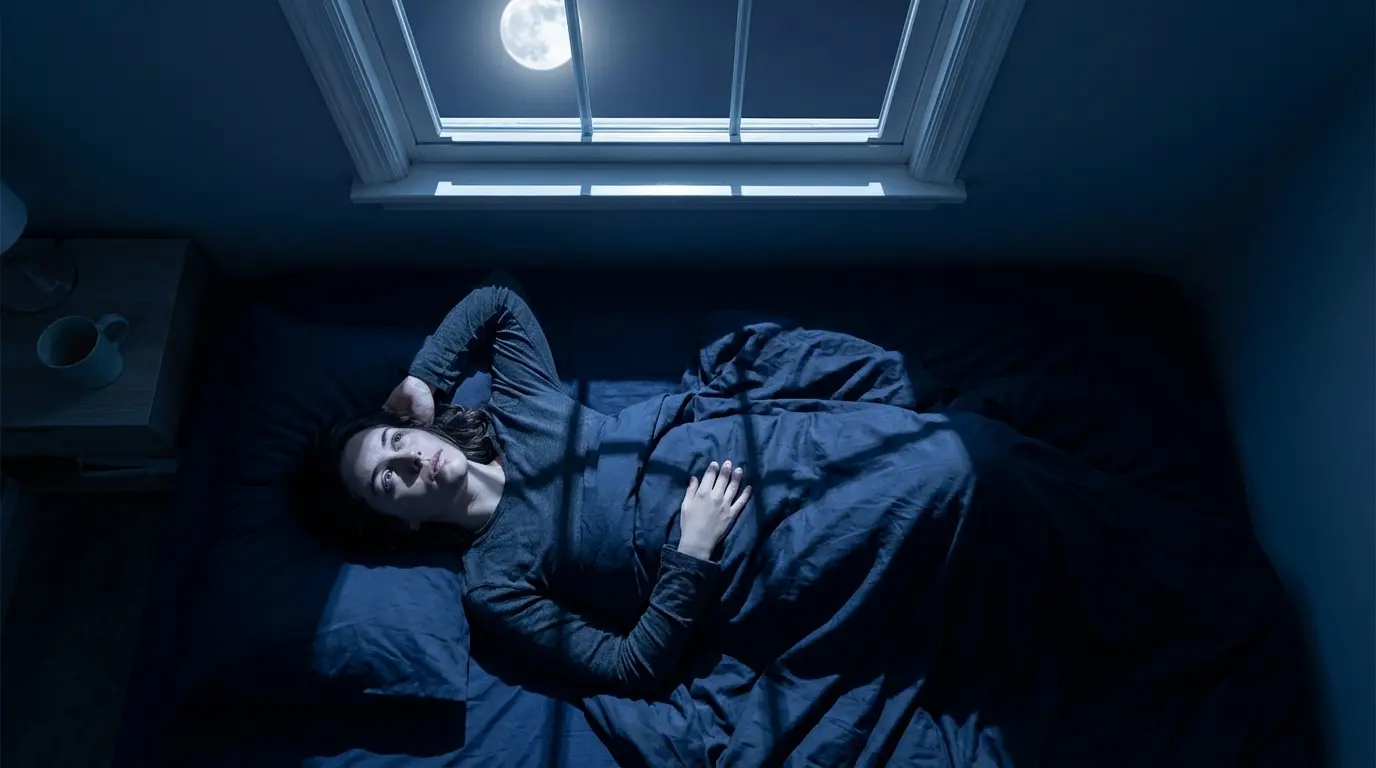
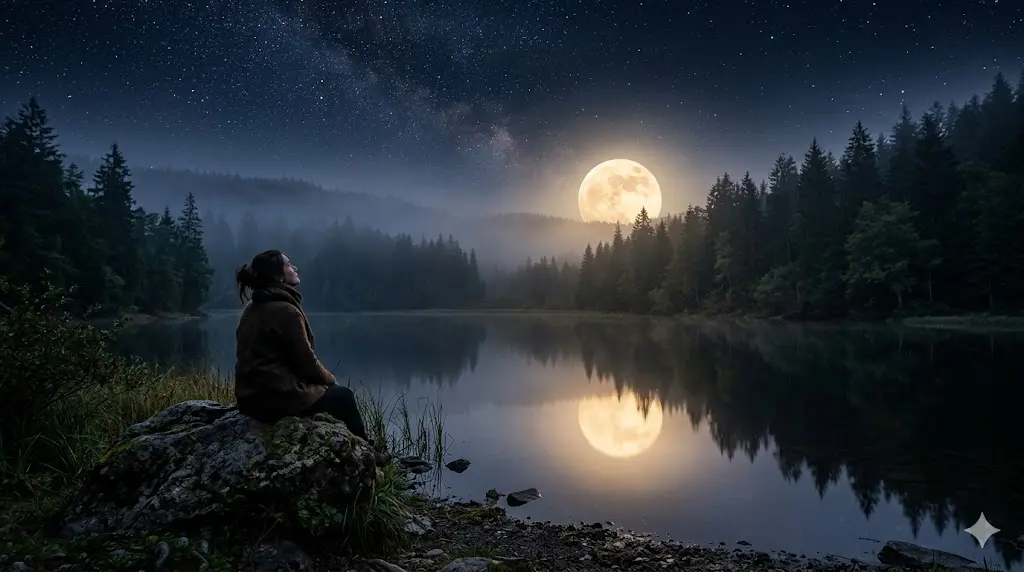
You go to bed at your normal time. Nothing unusual about the evening. No argument, no anxiety spiral, no late coffee. Sleep comes — or almost comes — and then somewhere around 2 or 3 AM, you’re awake. Not groggy-awake. Alert-awake. As if someone flipped a switch inside your skull that has no off position.
You check your phone. You stare at the ceiling. You roll over, rearrange the pillow, close your eyes hard enough to see static. Nothing works. Your body is horizontal but your system is vertical — standing at full attention for no apparent reason.
And then at some point — maybe that night, maybe the next morning — you glance at the sky or check a lunar calendar and realize: full moon.
Again.
When Regular Insomnia and Full Moon Insomnia Feel Nothing Alike
People who experience both know the difference immediately.
Regular insomnia has a source you can usually trace. Stress. Overthinking. A body that’s too wired from the day. It feels like your brain won’t stop talking to itself — repetitive loops, worry spirals, mental checklists that won’t dissolve.
Full moon insomnia doesn’t feel like that.
It feels quieter and louder at the same time. The mind isn’t necessarily racing. Sometimes it’s completely still — and that stillness is what keeps you up. A bizarre, almost electric awareness floods the body. Skin feels more sensitive. Sounds seem sharper. The dark itself feels charged, like the air has a different weight.
Some people describe a pulling sensation — not emotional, not physical, somewhere in between. As if something is tugging their attention upward or outward, away from the pillow, toward something they can’t name.
The fatigue is real. The desire to sleep is real. But the body operates as though sleep would mean missing something important.
The Pattern That Made You Search for Answers
The first time, you ignore it. Bad night. It happens.
The second time — next month, same phase — you notice but don’t connect the dots.
After several memorable matches, it is natural to suspect a pattern. Memory, however, favors unusual nights and emotionally striking coincidences. The way to test the impression is to keep a dated sleep record before checking the lunar phase, then compare the full month rather than reconstructing it afterward.
That’s usually the moment someone types “can’t sleep during full moon” into a search bar at 3:47 AM.
The full moon is predictable; an individual’s sleep response may not be. A calendar can make matches easy to notice, while nonmatching nights receive less attention. Predictability of the astronomical event should not be confused with predictability of insomnia.
Why People Associate Sleeplessness With Full-Moon Energy
A small 2013 laboratory study indexed by PubMed reported less deep sleep, longer sleep-onset time, and shorter sleep duration around the full moon. The result is worth discussing, but one study does not establish a universal effect. Later research has not produced a simple conclusion that everyone sleeps worse at that phase.
But sleep science gives you the what, not the why. It tells you the body responds. It doesn’t explain why certain people respond dramatically while others sleep through it without blinking. It doesn’t account for the emotional quality of the wakefulness — the strange clarity, the surfacing of buried feelings, the sense that the sleeplessness has content.
A symbolic or energetic framework asks a different question from sleep science. It can describe what the night represents to a person, but it cannot fill gaps in physiological evidence or diagnose the cause of insomnia.
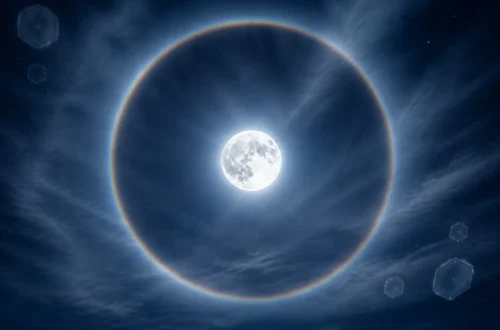
If the bright ring around the Moon—not the lunar phase itself—is what caught your attention, a moon halo has a separate atmospheric explanation and its own symbolic interpretations. Comparing the two helps keep a full Moon’s reflected light distinct from a 22° halo formed by ice crystals.
The Moon as an Emotional Symbol
In some spiritual traditions, the full moon functions as a symbol of amplification, visibility, completion, or release. These associations can organize reflection. They should not be presented as a measurable force that intensifies emotion in every reader.
As a metaphor, brighter illumination can represent noticing feelings that were already present. A quiet night may create space for frustration, grief, or worry to become more noticeable. That does not mean moonlight extracted or activated the emotion.
If wakefulness is accompanied by a specific emotion, both deserve attention. The emotion may relate to stress, memory, expectation, or the meaning the person gives the night. A lunar interpretation is one possible reflective frame, not the demonstrated cause.
The amount of unresolved emotion a person carries cannot be inferred from whether they slept during a full moon. Good and poor sleepers can both have complicated emotional lives, and a single night is not a measure of psychological health.
What Energy-Body Language Can and Cannot Explain
Energy-body language belongs to spiritual and traditional frameworks that describe subtle fields, meridians, or chakras. These systems are not interchangeable, and their maps should not be presented as a single scientifically verified anatomy.
The Moon’s position changes gravitational relationships and the full phase changes nighttime illumination, but those facts do not demonstrate that a human “energy body” enters heightened conductivity. Ocean tides are not evidence that emotion or intuition rises in the same way.
If the widening-channel image resonates, use it explicitly as a metaphor for increased attention. It may help a reader name what feels louder at night, but it should not be mistaken for a measured flow of information through the body.
Sleep depends on biological, behavioral, psychological, and environmental factors. The full moon does not run a diagnostic through the body. If someone is alert at night, checking light exposure, schedule, caffeine, stress, medication, pain, and breathing-related symptoms provides more actionable information.
The result: you’re exhausted, but your system is operational in a way it usually isn’t — close to the tiredness that has no obvious cause. The tiredness is real. The alertness is also real. They coexist because they’re operating on different layers of you.
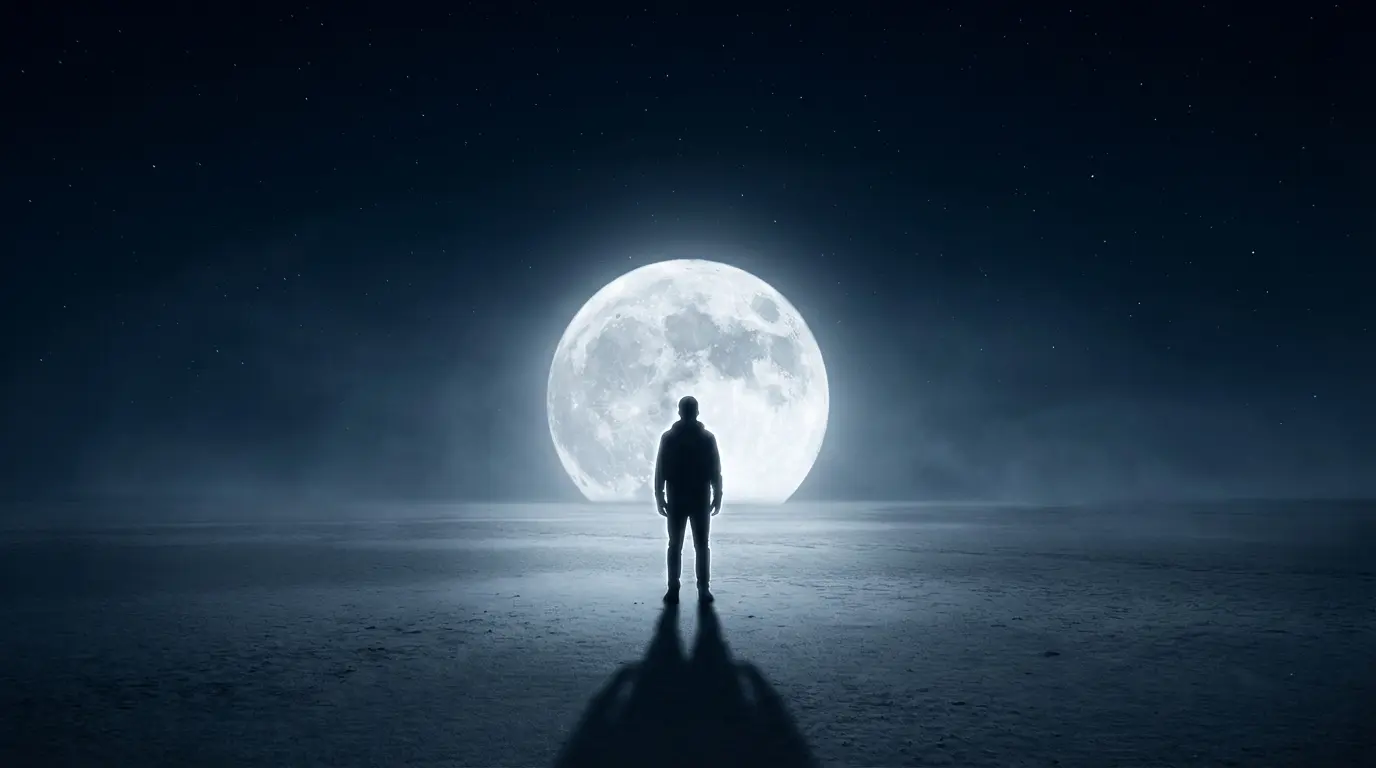
Five Symbolic Lenses for a Full-Moon Night
Not every sleepless night has the same cause or meaning. The sections below are symbolic prompts that may help compare the experience with waking concerns. They are not five diagnoses and should not replace a sleep assessment.
1. Emotions That Became Noticeable During Wakefulness
The most common spiritual cause, and the one most people try to override with melatonin.
The tide is a useful poetic image for accumulation and release, but it remains a metaphor. If an emotion surfaced at night, identify the situation connected with it instead of assuming a lunar force pulled it upward.
In the metaphor, the full disk represents a point when accumulated concerns are easier to see. The image can support reflection, but it does not physically pull emotional material from the body.
Suddenly, at 2 AM, you’re wide awake and the thing you thought you’d dealt with is sitting in your chest like a stone. The argument from two weeks ago. The friendship that shifted and you pretended not to notice. The decision you made under pressure that never sat right.
Sleeplessness is not evidence that the body is protecting important spiritual information. Repeated or impairing insomnia is a health concern. Reflection can happen the next day; there is no need to remain awake or refuse appropriate care in order to receive a message.
If the wakefulness includes identifiable emotions tied to identifiable situations, those situations are reasonable starting points for reflection. They do not prove a lunar cause, and “almost certainly” is too strong for an experience with many possible contributors.
A Life Cycle Reaching Its Completion Point
Astronomically, the full moon is a phase within a continuing lunar cycle. Spiritually, some people use the image of a completed disk to reflect on culmination or closure. The personal meaning comes from the person and tradition, not from a deadline imposed by the Moon.
Something in your life is reaching the end of its natural arc. A relationship dynamic that ran its course. A habit that carried you for years but now holds you back. A professional chapter that’s been winding down while you keep pretending the next page will look the same.
The insomnia in this case feels less emotional and more structural. You’re awake not because you’re feeling something intense, but because something inside you knows that a transition is due — and you haven’t initiated it.
Full moon sleeplessness tied to completion carries a restlessness that’s different from anxiety. It feels more like a countdown. A vague, persistent awareness that something needs to end before the next thing can start, and the full moon is the deadline you didn’t set but somehow agreed to.
3. A Sudden Idea or Insight That Still Needs Testing
Some people describe unusually vivid thoughts or impressions during a full-moon night. That subjective intensity should not be framed as proof that extra information is entering the mind. Record the content and compare it with current concerns before assigning a source.
Not thoughts. Not emotions. Information — the kind that arrives as sensation, as sudden knowing, as an awareness of something that hasn’t been confirmed yet through ordinary channels.
“Intuitive bandwidth” is a metaphor used in some spiritual discussions. A sudden idea during insomnia may be useful, ordinary, mistaken, or influenced by fatigue. It should be evaluated after rest using evidence and consequences, not treated as automatically accurate.
The result is a mind that won’t quiet down because it’s processing incoming data that the conscious self doesn’t have a filing system for. It’s not anxiety. It’s overload. The difference matters because the response to each is completely different.
If wakefulness comes with an idea that feels unusually clear, write it down and reassess it after sleeping. Fatigue can make an idea feel urgent or unusually convincing. The insight may still be useful, but the sleeplessness does not prove that intuitive channels caused it.
4. Feeling Overstimulated or Emotionally Porous
This one overlaps with intuition but sits in a different category.
Some people are energetically porous. They absorb the emotional and energetic states of people around them, of environments they move through, of collective moods they can’t name but carry in their shoulders and stomach. During most of the month, they’ve developed coping strategies — conscious or unconscious — that keep the input manageable.
A difficult night can overwhelm ordinary coping strategies, regardless of lunar phase. Reduce stimulation, return to basic sleep-supportive habits, and seek help if the pattern persists.
There is no established evidence that personal boundaries become physically thinner for 48 to 72 hours around a full moon. Feeling overwhelmed may still be real and deserves practical support, but the source should not be assigned to lunar intensity without evidence.
Sleeping in that state is like trying to nap in a room where thirty different conversations are happening at once. Nothing is threatening. Everything is loud.
Feeling overwhelmed without an obvious reason can arise from many factors, including accumulated stress and sleep loss itself. It is not enough to conclude that the emotions belong to other people or that energetic sensitivity is the likely explanation.
5. An Avoided Concern Becoming Harder to Ignore
The most uncomfortable meaning, and the one most people recognize last.
There’s a thing you’ve been sidestepping. You know what it is. You’ve been managing it by staying busy, by filling silence with content, by maintaining just enough momentum that the thing can’t catch up.
The full moon stops the momentum.
At 3 AM, with no task list to execute and no distraction available, the thing you’ve been avoiding is the only presence in the room. It doesn’t arrive as a dramatic revelation. It arrives as the quiet, steady awareness of something you’ve known for a while but refused to fully face.
The conversation you need to have. The boundary you need to set. The truth you need to tell — to someone else or to yourself.
This version of full moon insomnia has a distinctive quality: the moment you mentally acknowledge the thing — not solve it, just acknowledge its existence without flinching — the grip loosens. Sleep doesn’t necessarily come instantly, but the electric charge drops. The body relaxes one degree.
That release upon acknowledgment is the diagnostic marker. If naming the avoided thing produces physical relief, the moon wasn’t keeping you awake. Your own avoidance was. The moon just removed every exit.
Responding to the Night Without Reinforcing Insomnia
The default response to full moon insomnia is resistance. Fight the wakefulness. Force sleep. Take something. The approach makes sense from a productivity standpoint and fails from every other one.
If the night feels spiritually meaningful, note the interpretation without turning wakefulness into an obligation. Trying to rest, reducing stimulation, or seeking care is not “hanging up” on a message.
The alternative isn’t to celebrate the insomnia or romanticize exhaustion. It’s to use the window for what it’s designed for.
Using a Three-Night Observation Window Responsibly
Some rituals treat the surrounding three nights as one reflective period. This is a chosen practice window, not proof of an energetic peak in the body.
A three-night observation window can be used to record sleep consistently, but it should be compared with the rest of the month. The claim that sensitivity reliably opens, peaks, and tapers on those exact nights has not been established for every person.
The night before the full moon is the opening. Emotional material begins surfacing but hasn’t reached full volume yet. Whatever rises to awareness during this night is usually the most important signal — the headline before the full article arrives.
The full moon night itself is the peak. Everything is loud, clear, and unavoidable. This isn’t the night for subtlety. Whatever you’ve been carrying is fully illuminated.
The night after is the integration window. The intensity drops, but the material remains accessible. This is when the insight from the previous two nights can be metabolized — when the meaning behind the wakefulness becomes usable rather than just felt.
Most people fight all three nights equally and miss the sequential logic. Each night serves a different function in the same process.
How to Record the Experience Without Sacrificing Rest
These actions are designed specifically for full moon wakefulness. They wouldn’t apply to regular insomnia, and they’re not generic spiritual practices repackaged with a lunar label.
Name the loudest signal within the first 30 minutes of waking. When you realize sleep isn’t coming, stop resisting and ask one question: what’s the most prominent feeling or thought occupying my awareness right now? Not the one you’d prefer — the one that’s actually loudest. Naming it precisely — “I’m angry at the way that conversation ended on Tuesday” rather than “I feel weird” — is the action that converts raw wakefulness into usable clarity. Vague acknowledgment doesn’t work. Precision does.
Move your body in the dark. Not exercise. Not a workout. Slow, deliberate movement in the moonlit space — stretching, walking through the house, standing outside if possible. The full moon’s energy tends to pool and stagnate in a body that’s lying still trying to sleep. Movement distributes it. Five to ten minutes of slow physical motion often reduces the electrical charge enough to shift the experience from wired-awake to calm-aware.
Make one decision you’ve been postponing. Not a dramatic life overhaul at 3 AM. One specific, containable decision. The email you’ll send tomorrow. The conversation you’ll initiate this week. The thing you’ll stop doing starting now. Full moon clarity is genuinely sharper than your regular Tuesday afternoon clarity — the noise is removed, and what remains is signal. Use it. Make the decision while the signal is clean. Write it down so your morning self can’t negotiate its way out of it.
Release one thing before sunrise. Full moons are completion energy. Something needs to leave. Identify the smallest, most concrete thing you can let go of before the sun comes up — a grudge you’ve been maintaining, a commitment that no longer fits, a belief about yourself that the evidence no longer supports. Letting go during the full moon window carries a different weight than doing it on a random afternoon. The cycle supports release the way the new moon supports initiation. Work with the current instead of against it.
When the Sleep Problem Needs Practical or Medical Attention
Not every full moon sleepless night is a spiritual event. The honest framework requires acknowledging when the cause is medical — and when ignoring that possibility does harm.
If your insomnia extends well beyond the 3-night lunar window — persisting through the waning and new moon phases — the full moon may be amplifying an underlying sleep disorder rather than delivering a spiritual message. Chronic insomnia, sleep apnea, restless leg syndrome, and thyroid imbalances all produce wakefulness that can coincide with the full moon but isn’t caused by it.
The diagnostic boundary is pattern specificity. If the sleeplessness is tightly clustered around the full moon and absent during the rest of the month, the lunar energetic explanation holds weight. If it’s scattered across the entire cycle with occasional spikes during the full moon, the body is asking for medical attention, not spiritual interpretation.
Hormonal shifts — particularly during perimenopause, postpartum recovery, and certain phases of the menstrual cycle — also produce moon-adjacent sleep disruption that deserves clinical evaluation rather than energetic framing.
The spiritual and the medical aren’t enemies. But using one to avoid the other helps nobody. If the sleeplessness is degrading your health, your functioning, and your quality of life regardless of moon phase — a sleep specialist has more to offer than any lunar ritual.
How to Test Whether You Actually Have a Lunar Sleep Pattern
A pattern should be recorded before it is interpreted. For at least four weeks, write down bedtime, estimated time to fall asleep, nighttime awakenings, final wake time, daytime sleepiness, caffeine and alcohol timing, exercise, medications, stress level, bedroom light, noise, and temperature. Do not check the lunar phase until the recording period is complete.
The National Heart, Lung, and Blood Institute recommends a sleep diary because it helps identify whether habits and activities are associated with sleep problems. This method creates a fuller comparison than remembering three dramatic nights and forgetting ordinary nights that did not match the expected pattern.
After the month ends, add the lunar phases to the record. Compare full-moon nights with several other nights. Look for consistency in sleep onset, awakenings, total sleep, and daytime effects. If only one memorable night matches, the evidence for a personal pattern is weak. If a pattern appears across multiple cycles, it is still an observation rather than proof of a mechanism, but it gives a healthcare professional better information to evaluate.
What to Do During the Sleepless Night
Keep the room cool, quiet, and dark. Avoid repeatedly checking the time or lunar calendar, because monitoring can increase alertness. If you cannot sleep, choose a low-stimulation activity and return to bed when sleepy. Avoid turning the night into a mandatory ritual or analysis session; preserving the association between bed and sleep is more useful than extracting a spiritual conclusion at 3 a.m.
Use spiritual symbolism later, when rested. Ask whether completion, visibility, or release connects with a real situation, then identify one concrete action supported by waking evidence. A symbolic question can be valuable without claiming that moonlight caused the insomnia.
When to Seek Professional Help
MedlinePlus explains that insomnia can involve difficulty falling asleep, staying asleep, or waking too early. Speak with a healthcare professional when sleep problems persist, affect daytime functioning, or occur with loud snoring, gasping, significant mood changes, pain, medication effects, or other concerning symptoms. A lunar explanation should never delay assessment of a treatable sleep problem.
❓ FAQ — Why You Might Not Be Able to Sleep During a Full Moon
Is it scientifically proven that the full moon affects sleep? A controlled study conducted at the University of Basel in 2013 found measurable differences in sleep quality during the full moon phase — even in participants with no exposure to moonlight. Subjects experienced reduced deep sleep, took longer to fall asleep, and slept fewer total minutes. The findings surprised the researchers and remain one of the few controlled data points on the topic. The mechanism is still debated, but the effect has been documented.
Why can I only not sleep during the full moon and sleep fine the rest of the month? This pattern is the hallmark of lunar-specific sleep disruption rather than general insomnia. From an energetic perspective, the full moon creates a peak in electromagnetic and gravitational influence that affects people with higher baseline sensitivity more than others. The fact that your sleep normalizes outside the full moon window is what distinguishes this from a sleep disorder — and what makes the spiritual framework relevant rather than the medical one.
Does the full moon affect everyone’s sleep or just certain people? Not everyone is affected equally. People with higher energetic or emotional sensitivity tend to report the strongest disruption. Research suggests that chronotype — whether you’re a natural night owl or morning person — may also play a role. People who already have a stronger nighttime alertness pattern appear more susceptible to lunar sleep disruption than those who fall asleep easily regardless of conditions.
How long does full moon insomnia usually last? For most people who experience it, the disruption concentrates within a 3-night window: the night before the exact full moon, the night of, and the night after. Some highly sensitive individuals report effects beginning up to two days before and lingering up to two days after, creating a 5-night window. Beyond that range, other factors are likely contributing.
Can I do anything to sleep better during a full moon? Resistance tends to intensify the wakefulness. The most effective approach reported by people who experience this regularly is to stop fighting the sleeplessness and use the heightened awareness for its intended purpose — emotional processing, decision-making clarity, or releasing something that’s been held past its expiration date. Physical movement in the dark, precise naming of what’s occupying your mind, and making one postponed decision during the wakeful window tend to reduce the charge enough to allow sleep in the later hours.
Conclusion
The next full moon will arrive on schedule. It doesn’t adjust its timeline for yours.
Somewhere around midnight — or 2 AM, or that strange hour when the house is so quiet you can hear the walls — the wakefulness will return. Your body will refuse the shutdown sequence. Your mind will hum at a frequency that has no business existing at that hour on a weeknight.
You’ll have a choice. The same one you’ve had every month before this one: fight it, medicate it, curse it, and drag yourself through the next day running on frustration. Or recognize the full moon sleeplessness for what it’s been signaling all along — a window your system opens once a month, on a schedule it didn’t ask your permission for, because something in you needs the silence and the clarity that only arrive when every distraction has been stripped away.
What you do during that window — the one decision you make, the one feeling you finally name, the one thing you release instead of carrying into another cycle — will determine whether the next full moon feels like an enemy or an instrument.
The moon isn’t keeping you awake to punish you. It’s keeping you awake because you’re not done yet. And the honest truth about full moon insomnia is that it tends to ease — permanently — once you stop treating it as a problem to solve and start treating it as a signal to answer.
Before you start analyzing your sleep habits, please remember that the spiritual, energetic, and reflective perspectives we’ve explored here are meant for your own personal reflection.
These frameworks are offered to help you navigate your experiences, but they shouldn’t be taken as absolute scientific conclusions, medical diagnoses, or substitutes for professional advice.
If you are experiencing chronic insomnia that significantly impacts your health or daily functioning—regardless of what phase the moon is in—it is always best to reach out to a qualified healthcare provider or sleep specialist.

Alex Turner
Alex Turner is the editorial pen name used for articles published on Signs of Universe. The website covers dreams, symbolism, and cultural interpretations for informational and reflective purposes. Alex Turner is not a medical, mental health, scientific, or spiritual authority.