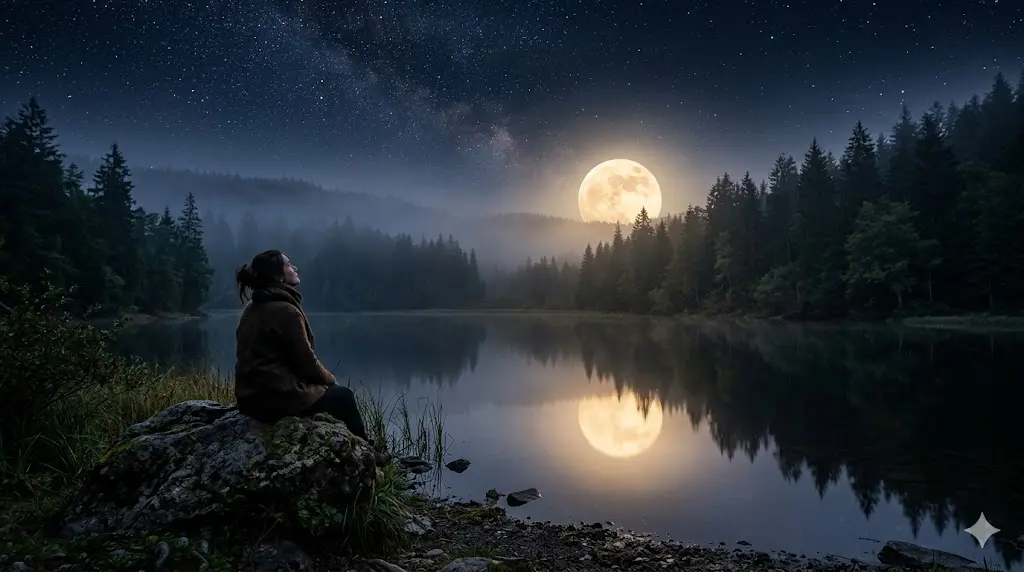
Full Moon Spiritual Meaning: Why You Feel Like Crying
A full moon can be an emotionally powerful sight. Its brightness changes the night landscape, makes shadows sharper, and has carried religious, calendrical, agricultural, artistic, and spiritual importance in many communities. If you notice yourself crying, restless, or unusually reflective during a full moon, the feeling is real. What cannot be assumed from timing alone is that the lunar phase caused it.
The spiritual meaning of a full moon is best treated as a symbolic framework rather than a medical or psychological explanation. Completion, visibility, culmination, and release are common modern associations because the illuminated disk appears complete. Those themes can structure reflection, but they do not diagnose an emotion, predict an event, or establish that the Moon controls human behavior.
What a Full Moon Actually Is
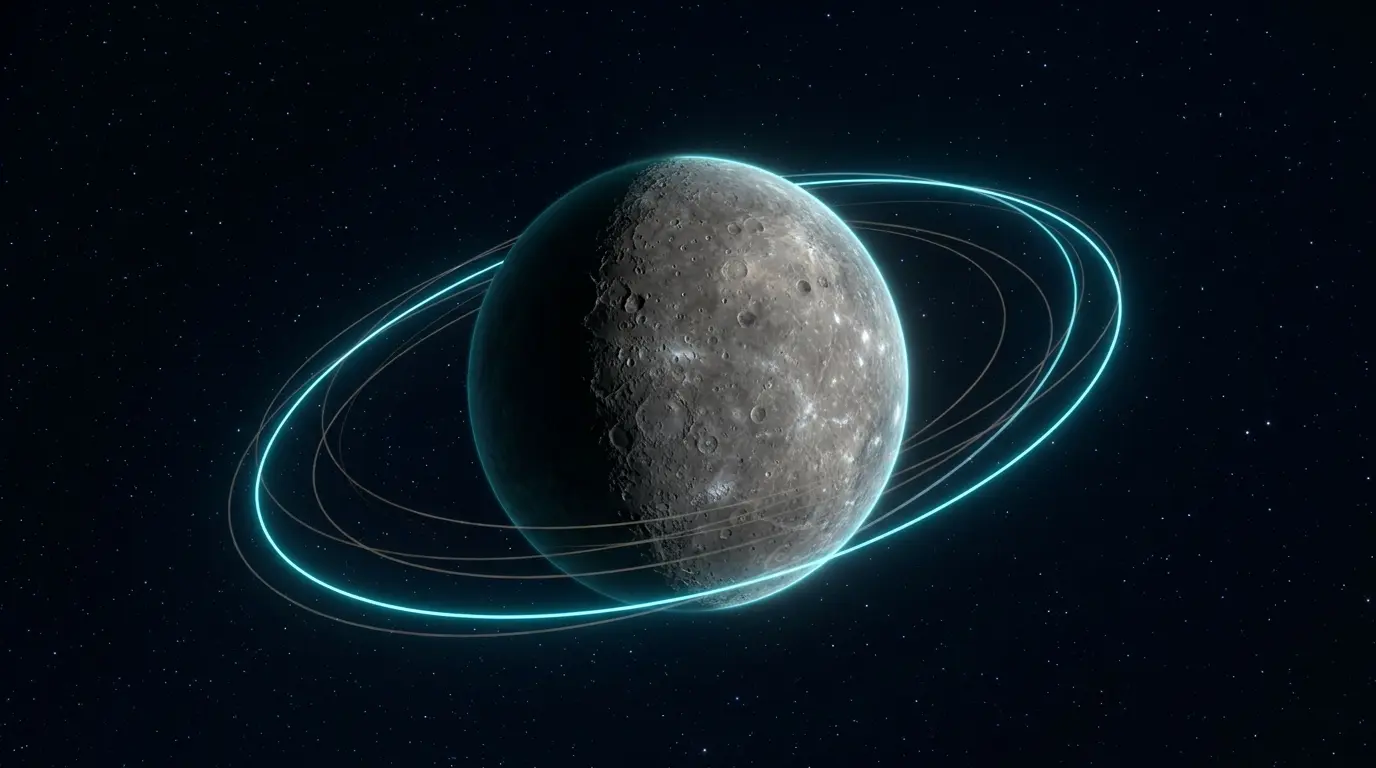
A full moon occurs when the Moon is opposite the Sun as viewed from Earth and its near side appears fully illuminated. The Moon is not producing its own light; it reflects sunlight. It also does not become physically larger or more powerful at that phase, even though the brighter night can make it feel more present.
That astronomical fact and a spiritual interpretation answer different questions. Astronomy explains why the Moon looks full. Symbolism explores what the image means to a person or tradition. Keeping those questions separate allows spiritual reflection without presenting metaphor as a physical mechanism.
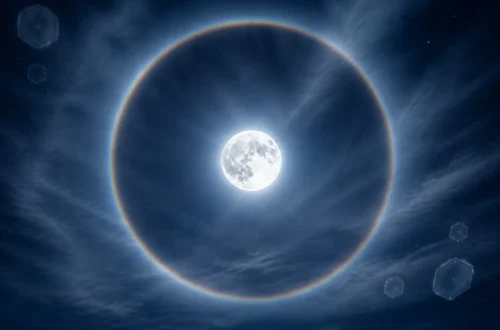
An unusual ring around the Moon adds another layer because it is not a lunar phase. Our guide to moon halo meaning explains how ice crystals create the 22° ring, why it can appear before changing weather, and where personal symbolism begins.
Why Completion and Illumination Became Common Symbols
The lunar cycle provides a visible sequence: a thin crescent grows, the disk appears full, and then the illuminated portion decreases. Because the full phase is visually complete, people often use it as a marker for culmination, review, or a completed stage. Because it brightens the night, it can also symbolize attention, revelation, or something becoming easier to see.
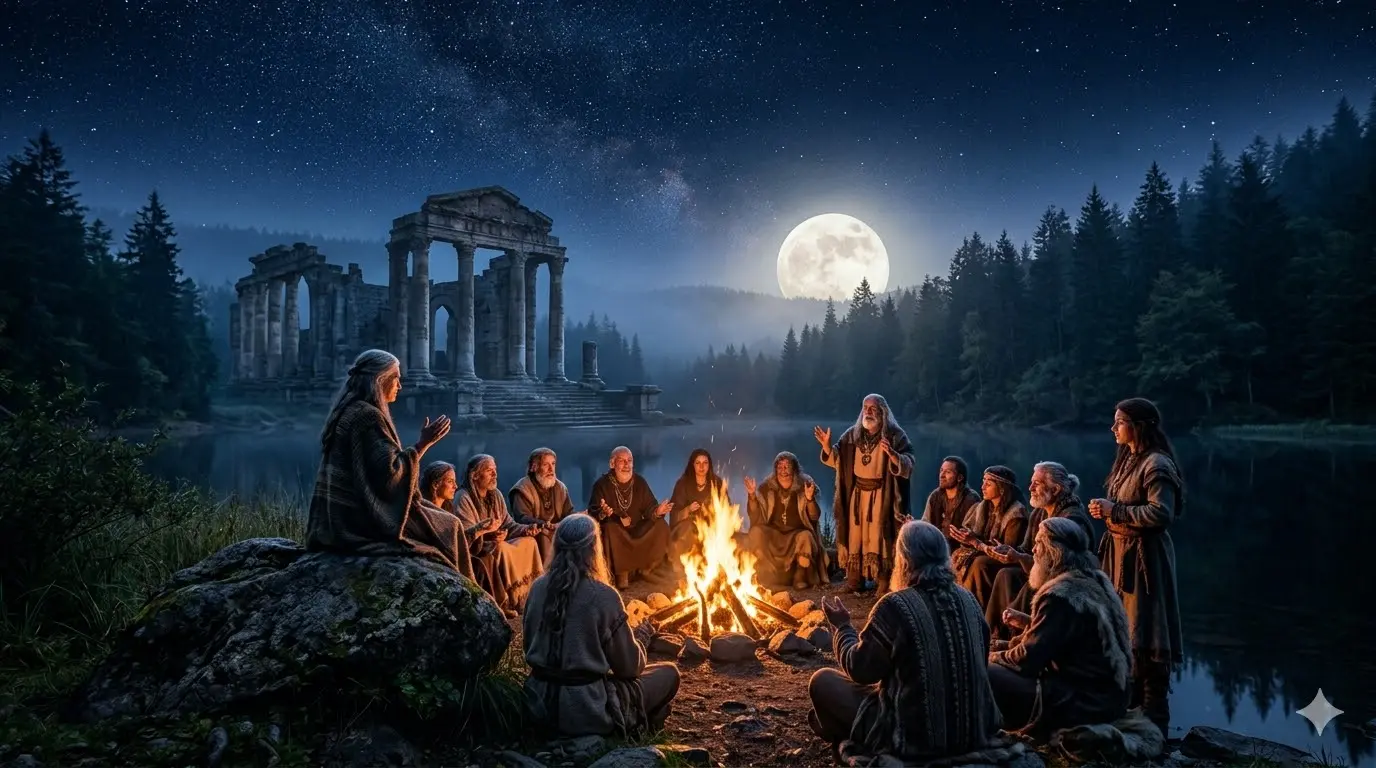
These meanings are understandable metaphors, not universal ancient rules. Cultural relationships with the Moon differ by place, language, religion, calendar, and period. Claims that “every ancient culture” gave the full moon the same meaning flatten those differences and should be avoided unless a specific tradition and reliable source are identified.
Why You Might Feel Like Crying
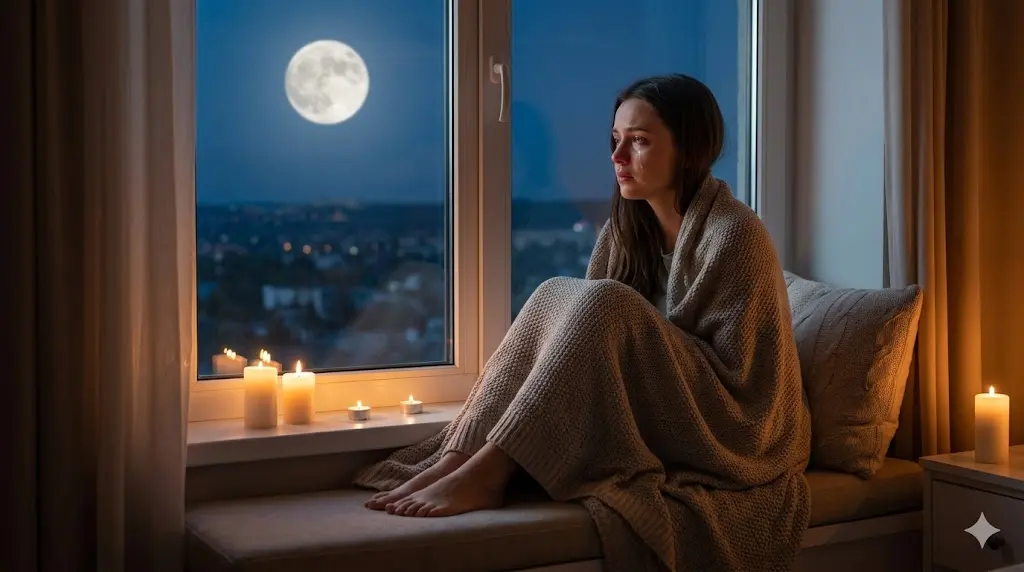
Crying can accompany grief, relief, exhaustion, frustration, hormonal changes, pain, memory, loneliness, joy, or a combination of factors. Sometimes the reason becomes clear only after the emotion has already surfaced. Seeing a full moon may create a quiet pause in which feelings become more noticeable, but that is different from proving that lunar “energy” produced them.
Instead of deciding that the Moon is releasing emotion from your body, ask what was happening before you looked outside or checked the lunar calendar. How had you slept? What conversation, anniversary, pressure, or memory was active? Had you already felt close to tears? Those questions connect the experience to information you can examine.
If crying feels relieving and passes, you may simply note the moment. If it is frequent, overwhelming, unexplained for a long period, or accompanied by hopelessness or thoughts of self-harm, seek qualified support promptly. A lunar interpretation should never delay mental-health or medical care.
Does the Full Moon Pull on the Water in the Human Body?
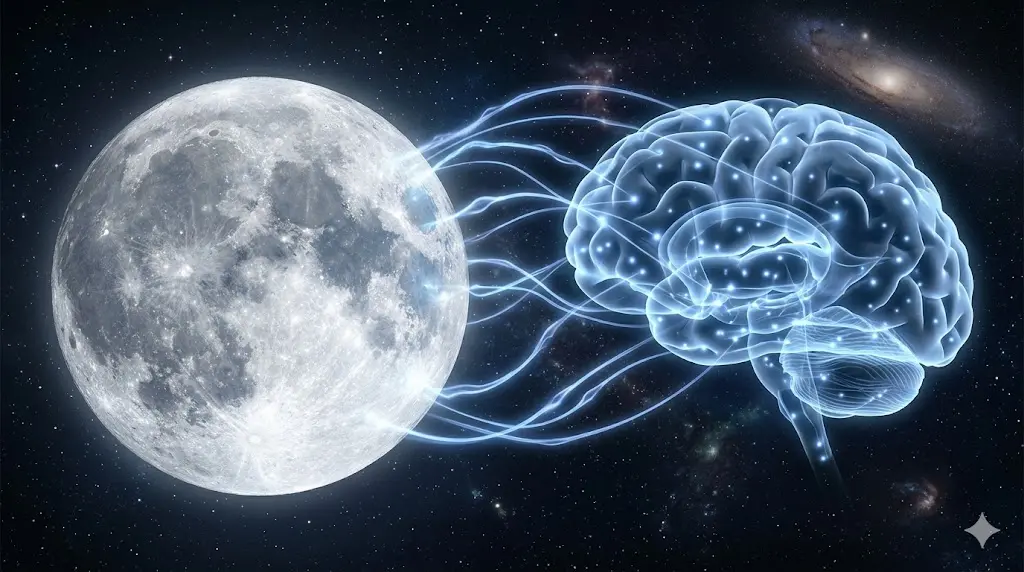
The Moon contributes to ocean tides through gravity, but the familiar “the body is mostly water, so the full moon pulls our emotions” comparison is not evidence of a biological effect. Oceans are enormous connected bodies of water, and tides depend on gravitational relationships involving the Moon, Earth, and Sun. Water inside the body is distributed through cells, blood, and tissues under very different conditions.
Using tides as a poetic image is fine if it is labeled as metaphor. It should not be presented as the scientific reason someone cried, felt anxious, or slept poorly. The emotional experience may deserve attention even when the proposed mechanism is unsupported.
What Sleep Research Shows—and Does Not Show
A small 2013 laboratory study indexed by PubMed reported changes in several sleep measures around the full moon, including less deep sleep and longer time to fall asleep. The finding attracted attention because participants were not watching the moon during the laboratory sessions.
One study does not establish a universal lunar effect, and later research has not produced a simple, consistent conclusion that everyone sleeps worse at full moon. Studies vary in design, sample size, location, access to artificial light, and whether lunar effects were the original research question. The responsible summary is that some studies report associations while the overall evidence remains mixed.
Research on psychiatric emergencies also warns against strong claims. A 2017 study of psychiatric presentations reported no effect of lunar phase on the incidence or diagnostic categories examined. It would therefore be inaccurate to tell readers that a full moon reliably increases anxiety, crisis, aggression, or emotional sensitivity.
Expectation Can Shape What You Notice
If you expect the full moon to be emotionally intense, you may check your mood more closely on those nights and remember strong experiences that match the expectation. Quiet nights that do not match may receive less attention. This does not mean you invented the emotion. It means that attention and memory influence how patterns are recognized.
A simple way to test your own pattern is to record mood and sleep every day for several weeks without checking the lunar phase first. Add the phase later and compare the notes. This will not produce a medical diagnosis, but it is more informative than recording only nights when you already know the Moon is full.
What a Full Moon May Symbolize Spiritually
When presented as optional symbolism, several themes can be useful:
- Completion: reviewing something that has reached a natural stopping point.
- Visibility: noticing information, feelings, or consequences that were previously easier to ignore.
- Contrast: recognizing both what is clear and what remains uncertain.
- Release: choosing to stop a habit or commitment through an ordinary decision, not because the Moon forces it.
- Rhythm: using a visible recurring event as a reminder to pause and take stock.
None of these themes has to fit. A person can appreciate the full moon aesthetically or scientifically without assigning it a spiritual meaning. A useful symbol is optional and specific; it does not demand belief.
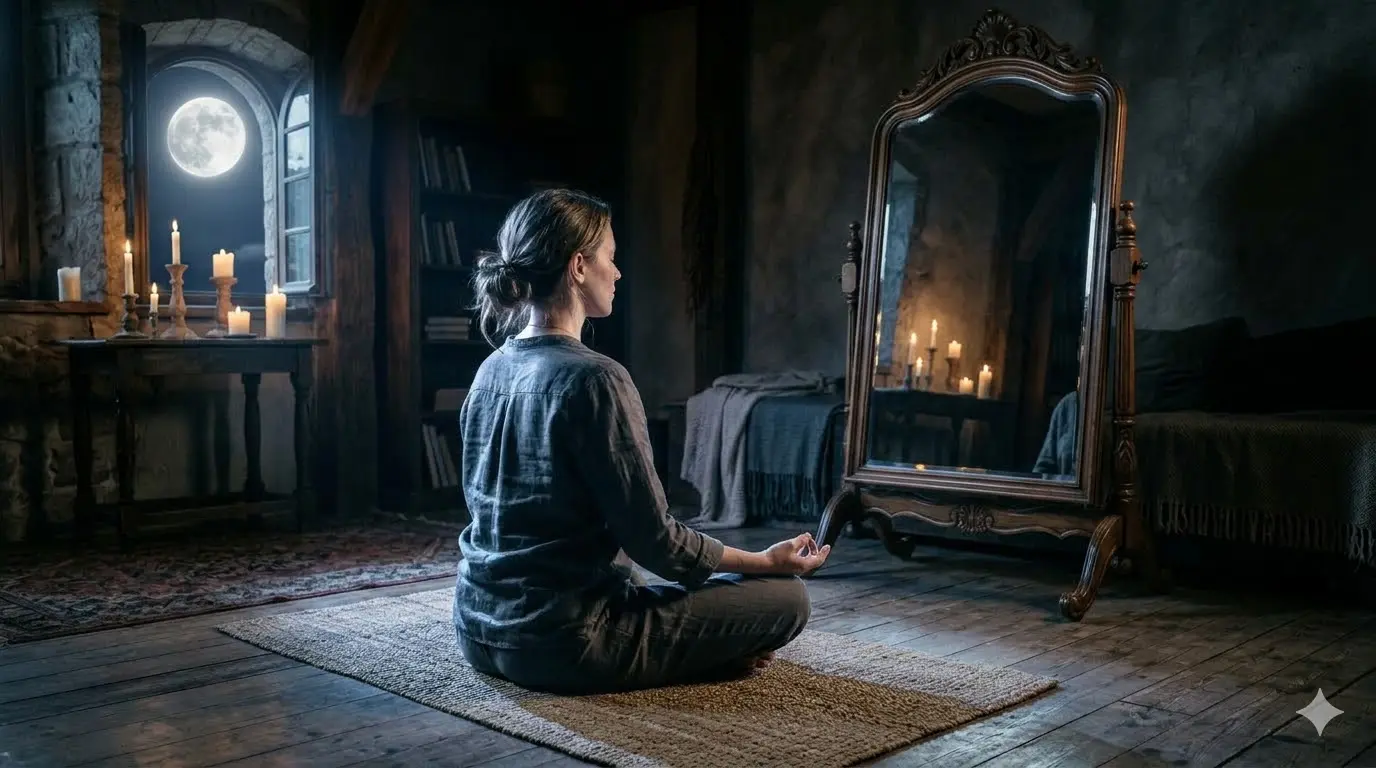
A Grounded Full Moon Reflection
You do not need candles, crystals, special words, or a prescribed emotional reaction. If a monthly lunar marker helps you reflect, use a short process that stays connected to real life:
- Describe the month: Name one concrete event, not a vague “energy.”
- Identify an emotion: Choose the closest word and note what may have contributed to it.
- Review one commitment: Decide whether to continue, change, complete, or seek more information.
- Choose one action: Make it small, voluntary, and independent of supernatural certainty.
- Close the reflection: Return to ordinary routines rather than waiting for a sign to act.
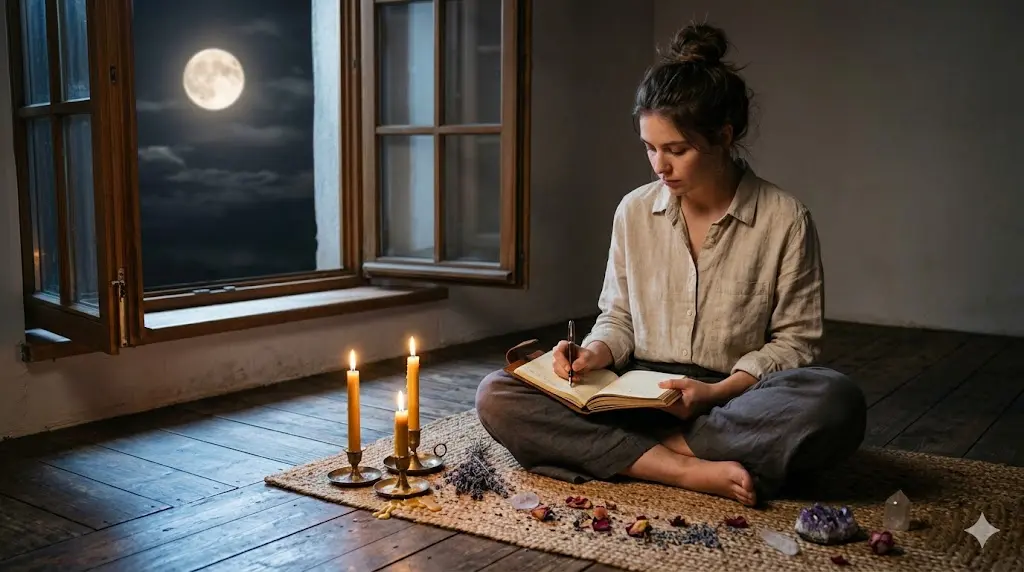
If you write a “release list,” treat tearing or safely disposing of it as a personal ritual, not a mechanism that removes debt, illness, grief, or another person’s behavior. Symbolic action can mark a decision, but the practical work still happens through choices, support, and time.
If you spend time outdoors, follow ordinary safety: check weather, temperature, location, wildlife, visibility, and local access rules. Moonlight is reflected sunlight, not a treatment, cleanse, or source of medical benefit.
Full Moon Meaning and Zodiac Signs
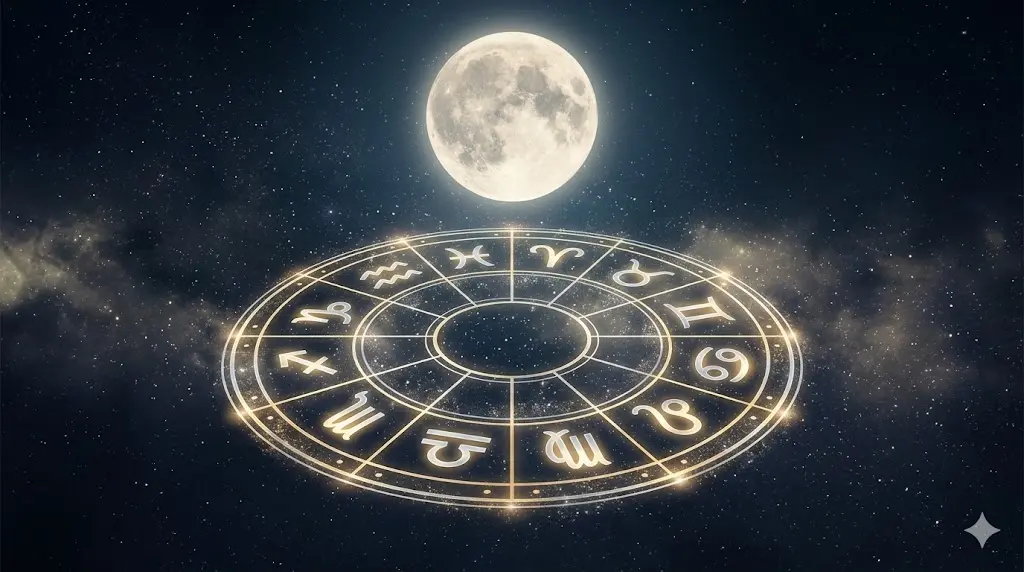
Astrology interprets a full moon partly through the zodiac sign in which it occurs and through a person’s birth chart. That is an astrological belief system, not an evidence-based method for predicting mood or behavior. Statements such as “Cancer will be most emotional” or “Scorpio will uncover a secret” should not be presented as facts about everyone born under those signs.
If astrology is part of your practice, use it as a vocabulary for questions rather than a forecast. An Aries theme might prompt reflection on impatience, a Taurus theme on stability, Gemini on communication, Cancer on home, Leo on recognition, Virgo on routines, Libra on balance, Scorpio on privacy, Sagittarius on exploration, Capricorn on responsibility, Aquarius on community, and Pisces on imagination. These are conventional associations, not guaranteed effects.
Your actual mood may contradict the expected sign description, and that does not make you spiritually blocked or astrologically defective. The article on why you may not relate to your zodiac sign explores that mismatch without treating a sign as a diagnosis.
Why Sky Events Can Feel Like Personal Signs
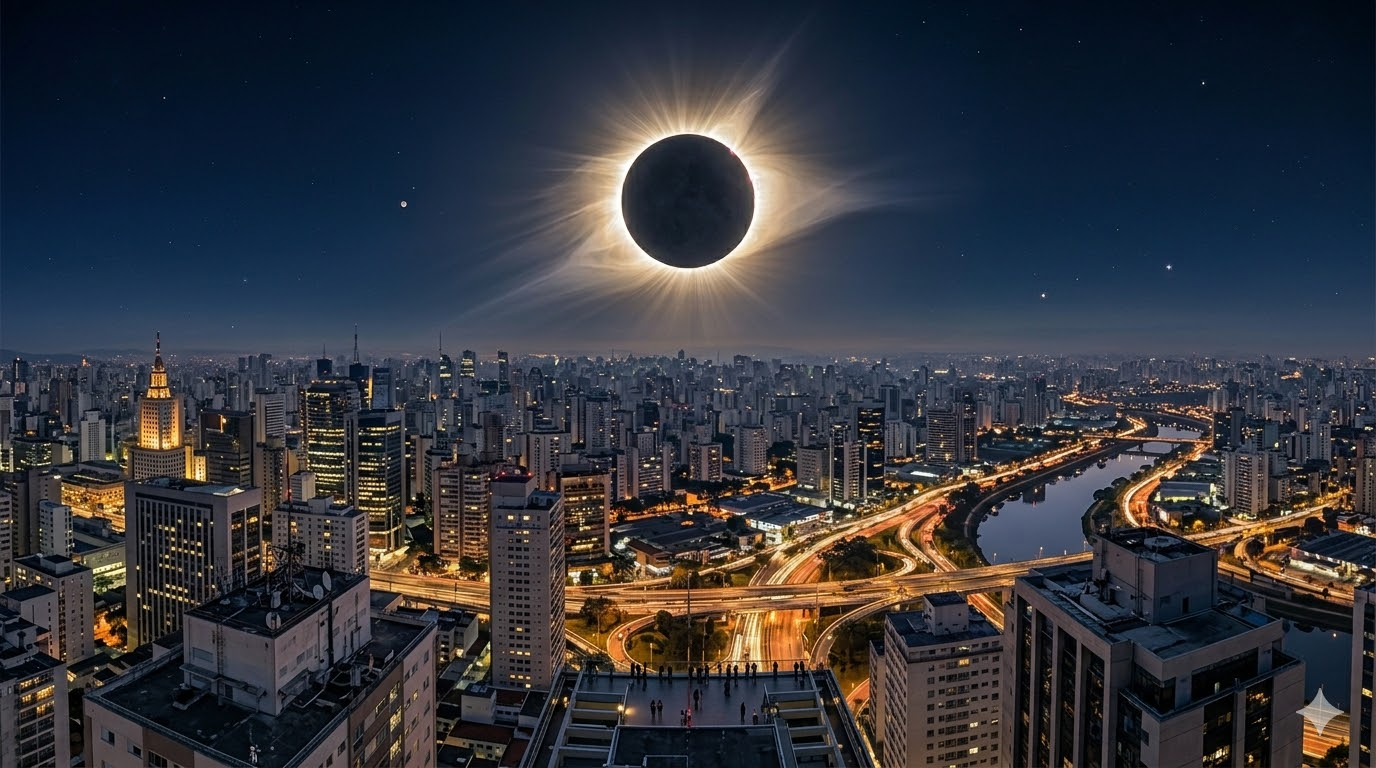
A bright moon, rainbow, eclipse, or unusual cloud formation interrupts the ordinary view of the sky. The timing can feel intimate when it occurs during prayer, grief, or a difficult decision. The meaning comes from the connection a person experiences; the visual event does not by itself verify a divine answer or predict an outcome.
The same careful distinction is used in the article about seeing a rainbow after praying. That link also gives the rainbow article an incoming internal connection while both pages remain in the non-indexed review group.
Frequently Asked Questions
Why do I cry during a full moon?
Crying has many possible emotional and physical contexts. The timing may feel meaningful, but it does not identify the cause. Review recent stress, sleep, grief, health, and circumstances, and seek qualified help if the pattern is persistent or severe.
Does the full moon affect human emotions?
Research does not support a simple claim that the full moon reliably intensifies emotion in everyone. Some sleep studies report associations, while other behavioral and clinical studies find no meaningful lunar effect. Personal experience should not be generalized into a medical fact.
What should I avoid during a full moon?
There is no evidence-based rule prohibiting a new project, important conversation, haircut, purchase, or decision because of the phase. Avoid using the Moon as the sole reason for a high-stakes choice. Use the same evidence and care you would on any other day.
How long does “full moon energy” last?
“Energy” in this sense is spiritual language, not a measured force with a standard duration. Astronomically, the exact full phase occurs at a specific moment, while the Moon may look nearly full for more than one night.
Can a full moon ritual heal emotional pain?
A personal ritual may provide structure or comfort, but it is not treatment and cannot guarantee healing. Ongoing distress deserves support suited to its cause.
When the Feeling Needs More Than Symbolic Reflection
A lunar journal is not enough when emotion repeatedly interferes with sleep, work, relationships, eating, safety, or ordinary responsibilities. Track the experience if that helps you communicate it, but do not wait for the next phase to seek care. A clinician can consider patterns, medication, health conditions, stress, sleep, and other factors that a moon calendar cannot evaluate.
If you feel in immediate danger or think you may harm yourself or someone else, contact local emergency services or an appropriate crisis resource now. The urgency comes from the symptoms and situation, not from the phase of the Moon.
A Balanced Full Moon Spiritual Meaning
The full moon can be a recurring symbol of completion, visibility, or review. It may give you a memorable time to pause and name what you are feeling. That use does not require claiming that lunar gravity pulls emotions from the body, that every sign reacts differently, or that crying proves a spiritual release.
Let the Moon be a prompt, not an authority. Observe your actual circumstances, keep interpretations tentative, and make decisions through evidence and your own judgment.
This article distinguishes astronomy and published research from spiritual and astrological interpretation. Symbolic meanings are offered for personal reflection, not as facts, predictions, diagnoses, or substitutes for medical, mental-health, financial, relationship, or safety advice.

Alex Turner
Alex Turner is the editorial pen name used for articles published on Signs of Universe. The website covers dreams, symbolism, and cultural interpretations for informational and reflective purposes. Alex Turner is not a medical, mental health, scientific, or spiritual authority.