Evil Eye Bracelet Broke: Meaning and What to Do Next
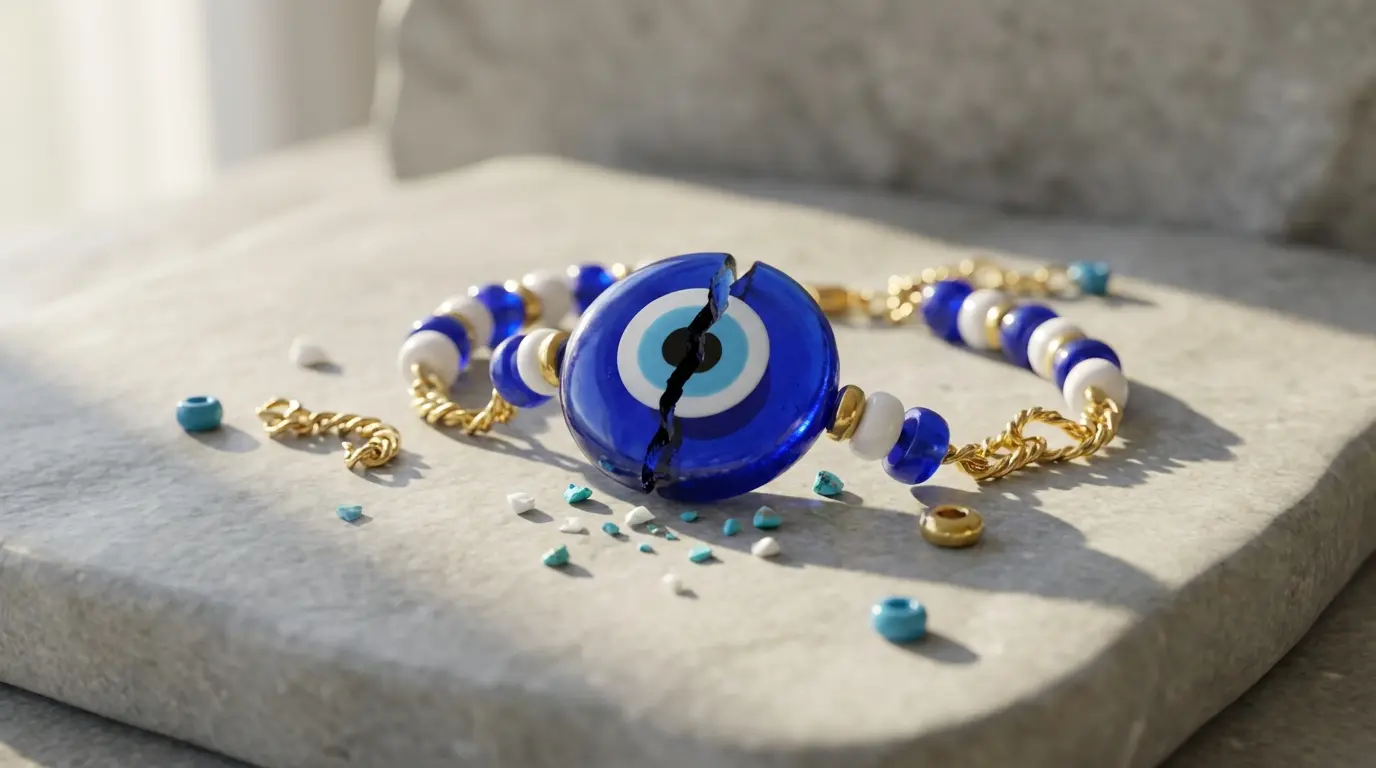
If your evil eye bracelet broke, it does not prove that someone was jealous of you or that bad luck is coming. Some wearers interpret the break as a protective charm having completed its purpose. That is a symbolic belief. First check whether the bead cracked, the cord snapped, or the clasp opened, then deal safely with the damage.
You do not have to identify an enemy, replace the bracelet urgently, or perform a disposal ritual to prevent harm. You can respect the object’s cultural meaning and any sentimental value while treating the break as a jewelry problem.
On this page
What a Broken Evil Eye Bracelet Can Mean
What the Museum Record Establishes
Check Which Part Failed
Does the Timing of the Break Matter?
What to Do With the Broken Pieces
Should You Repair or Replace It?
If Evil Eye Bracelets Keep Breaking
Frequently Asked Questions
A Practical Response That Still Respects the Symbol
What a Broken Evil Eye Bracelet Can Mean
An evil eye charm is associated with protection against harmful or envious attention. In a spiritual reading, someone may describe a broken charm as having “done its job.” That interpretation can feel reassuring, but the break itself cannot demonstrate that attention was transmitted, absorbed, or returned to another person.
Three different things are often grouped together as “my bracelet broke”: damaged glass, a failed cord, and an open clasp. Distinguishing them helps with repair and safety. It does not create a reliable scale of spiritual danger.
What the Museum Record Establishes
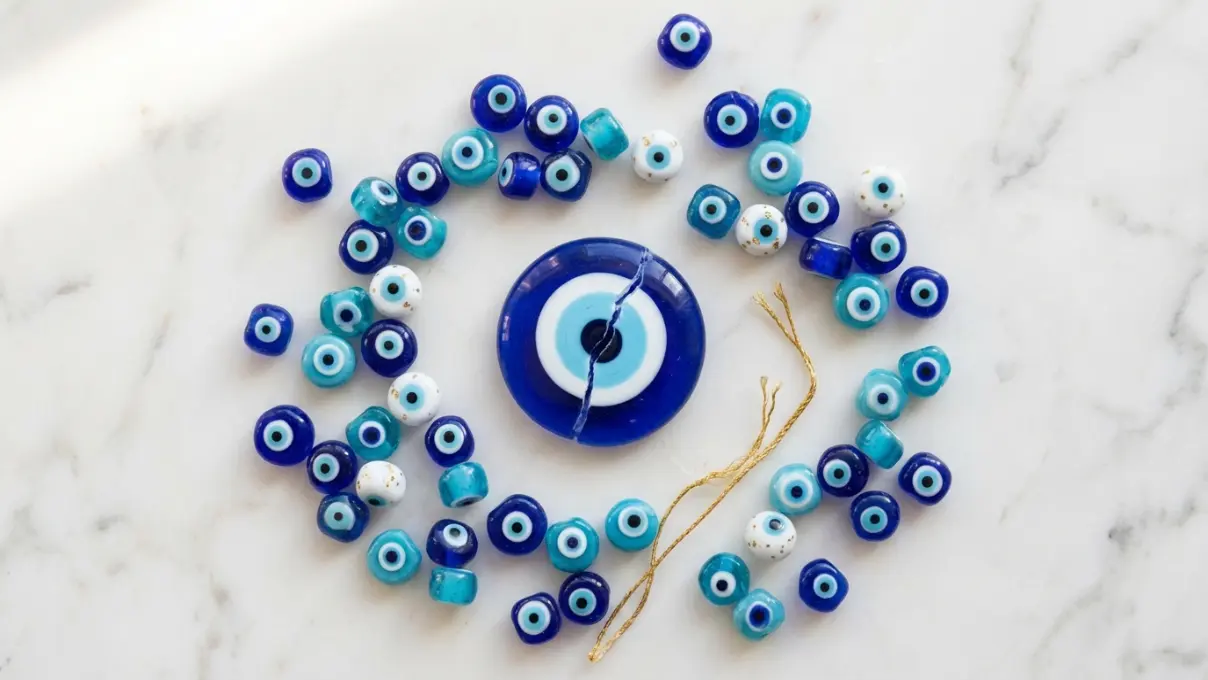
The Pitt Rivers Museum’s account of an amulet from Syria describes protection against the Evil Eye as the object’s intended purpose. Its example combines glass, tin, and plastic, including blue eyes and a Hand of Fatima. The museum explains these elements within a belief about harmful glances and protective charms.
That record supports discussing the charm as a cultural object. It does not test whether protection works, explain why a modern bracelet broke, or establish one disposal rule for all Turkish, Greek, Mediterranean, or Middle Eastern communities.
It is also a reason to be careful with sales claims. A blue bead can have a recognized symbolic role without an expensive version offering measurable supernatural protection. Material, workmanship, fit, and the seller’s repair policy are practical things you can assess.
Check Which Part Failed
The Glass Eye Cracked or Shattered
Stop wearing the bracelet if the bead has a sharp edge or loose fragments. Set it down where children and pets cannot reach it. A visible chip, a recent knock, or pressure against another object is useful information to give a jeweler or the maker.
A hairline crack and a shattered bead differ physically, but they do not reveal the strength of an alleged spiritual attack. Not seeing the moment of impact is also different from establishing that no physical cause existed.
If the unexpected fracture is what concerns you, the related guide to glass breaking without an obvious cause separates possible physical explanations from symbolic interpretations.
The Cord or Elastic Snapped
Collect the loose beads and inspect the cord for stretching, fraying, a failed knot, or rubbing against a bead hole. Think about whether it recently snagged or felt unusually tight. These observations can help a repairer choose a more suitable cord or fit.
If the eye bead is intact, restringing may be possible. An intact bead on a broken cord does not establish that a “protection cycle” expired or that your connection to the charm ended. You can choose whether to reuse it based on condition, sentiment, and your own beliefs.
The Clasp Opened and the Bracelet Fell Off
Check the clasp, connecting rings, and any bent or missing parts. The bracelet may need a simple repair even if nothing looks shattered. An open clasp is not evidence that the charm lost a protective charge or rejected its wearer.
If you cannot locate the bracelet, retrace where you last saw it and check places where jewelry can snag. Losing it does not tell you that a relationship must end or that a hidden threat is nearby.
Does the Timing of the Break Matter?
Timing can give the event personal significance. A bracelet given by a loved one may feel especially important if it breaks during an argument, a move, or an anniversary. That association explains why you care about the moment; it does not establish why the material failed.
After an Argument
Deal with the disagreement using what was actually said and done. A broken bracelet cannot identify who is jealous, prove hostile intentions, or settle whether someone is trustworthy. A physical jolt or snag during an interaction is worth checking before attributing the damage to the other person.
While Alone or Asleep
An absence of witnesses does not show that harm arrived from a distance. If pieces are in bedding, stop and collect them before using it again. A vivid dream that night does not identify the cause of the break or make a person in the dream responsible.
During a New Chapter
You may decide to treat the break as a personal marker of change. For example, you could keep an intact bead from an old gift or choose a new bracelet to mark a move. That is a meaning you give the event, rather than an instruction the object has issued.
What to Do With the Broken Pieces
Make the area safe first. Keep people and pets away from loose glass. Avoid handling sharp pieces with bare fingers. Check the floor, clothing, and nearby soft surfaces for fragments.
Separate reusable parts from damaged ones. Put intact beads in a closed container for a jeweler to inspect. Contain sharp waste securely and follow your local disposal guidance. A broken decorative bead should not automatically go into a container-glass recycling bin.
Keep any symbolic farewell optional. If thanking the bracelet matters to you, you can do that. There is no demonstrated need for dark cloth, a particular prayer, a public bin outside your home, or a ban on photographing the pieces. Do not throw glass into a river or leave sharp fragments in soil.
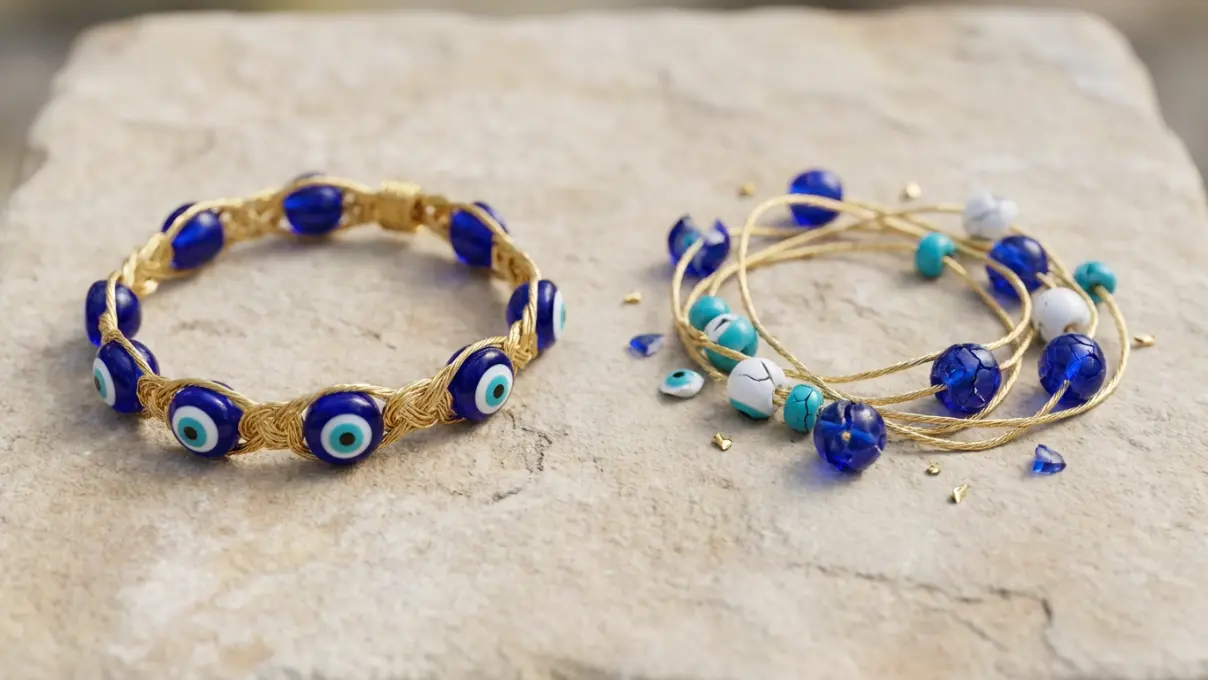
Should You Repair or Replace It?
Repair can make sense when the bead is sound and the cord or clasp failed. A damaged glass bead needs a different assessment: a jeweler can advise whether it is safe to retain in a wearable piece. Glue does not automatically restore its original strength or make sharp edges safe.
Replacement is a choice, not an emergency. You do not need to wait exactly 24 or 48 hours, receive a gift, or buy a costly charm to prevent bad luck. If you want another bracelet, choose something comfortable and ask about its materials, care, and repair options.
If the original was a gift, you can tell the giver what happened without implying that their protection failed. An intact component, a photograph, or the memory of the gift may preserve its sentimental meaning.
If Evil Eye Bracelets Keep Breaking
Look for a repeated physical pattern before buying more. Do the cords fail in the same place? Does the bracelet fit tightly? Does it catch on a desk, sleeve, bag, or bedding? Have replacements used the same clasp or construction? These questions produce useful information for a maker.
Keep a photograph of the damage and note what you were doing. Ask whether a different fit or construction would suit your routine. Repeated breaks do not measure how much envy surrounds you and do not mean you caused them through negative thoughts.
Frequently Asked Questions
Does a Broken Bracelet Mean Someone Is Jealous of Me?
No. The evil eye belief concerns harmful attention, but damaged jewelry cannot establish another person’s emotions or intentions. Assess relationships through behavior and communication.
Is It Bad Luck If My Evil Eye Bracelet Breaks?
The break does not establish future luck. Some wearers interpret it positively as completed protection; others see ordinary damage. Neither interpretation makes a prediction reliable.
Can I Keep an Intact Eye Bead?
Yes, if it is physically safe. You can store it, ask about restringing it, or choose not to reuse it. There is no need to discard a sound sentimental component because an online rule says its energy has expired.
Do I Need to Replace It Every Year?
There is no universal replacement deadline. Check the condition and follow the maker’s care advice. Any annual renewal practiced in a family is a custom, not evidence that every intact bracelet becomes unsafe or spiritually ineffective after a year.
A Practical Response That Still Respects the Symbol
The charm can matter because of its cultural associations, the person who gave it to you, or what it represents in your life. None of that requires turning a break into proof of an attack. Make the pieces safe, inspect the damage, and decide whether repair, replacement, or keeping a memento suits you.



Alex Turner
Alex Turner is the editorial pen name used for articles published on Signs of Universe. The website covers dreams, symbolism, and cultural interpretations for informational and reflective purposes. Alex Turner is not a medical, mental health, scientific, or spiritual authority.