What Does It Mean When a Glass Breaks by Itself? Some Believe It’s a Quiet Signal of Inner Transformation
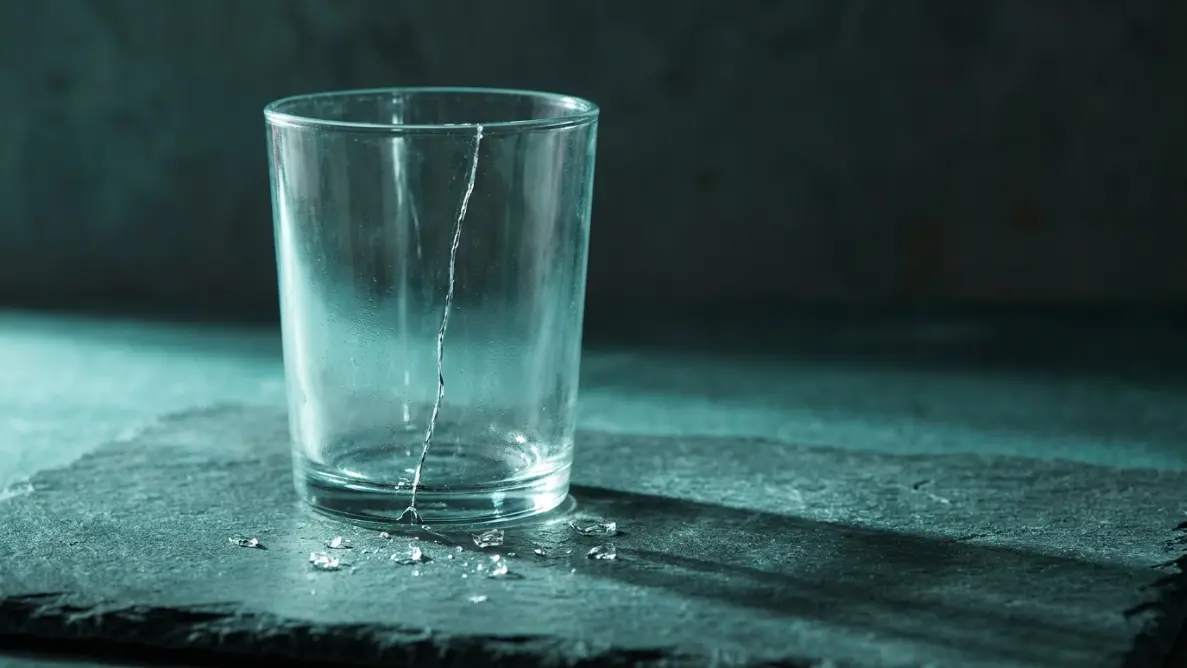
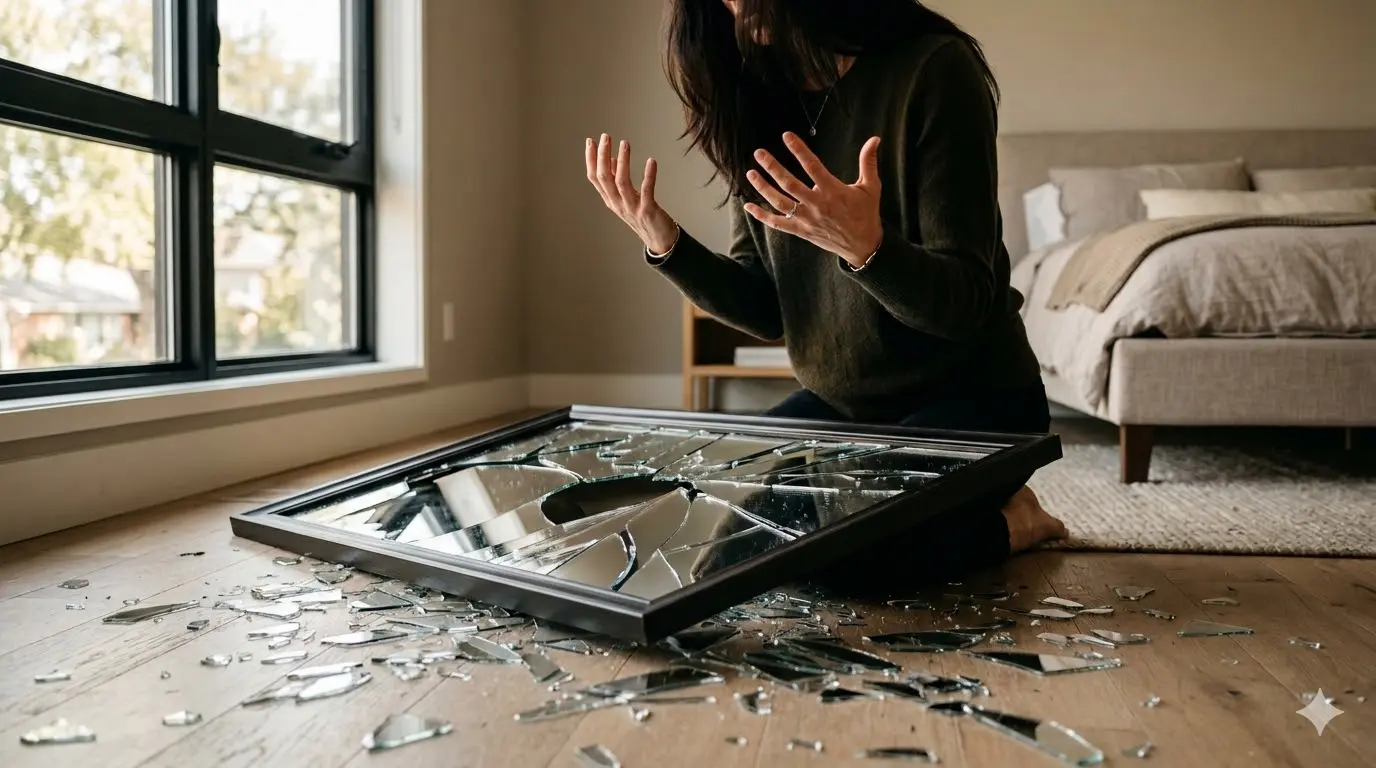
Glass breaking by itself has no established spiritual meaning. Some people interpret an unexpected break as release, change, or the end of a chapter, but these are personal readings. A fracture without a visible trigger can still have a physical cause. Make the area safe and check the damaged object before looking for symbolism.
The sound can be startling: a sharp crack, then pieces where a whole object stood moments earlier. If the object belonged to someone you miss or broke at an important time, the experience may also feel personal. That feeling does not have to be dismissed, but it cannot identify what caused the glass to fail.
On this page
Can Glass Break Without Being Touched?
What to Check Before Interpreting the Event
Why It Can Still Feel Meaningful
Personal Symbolism: Release, Change, or an Ending
Protective Glass and the Evil Eye Belief
Frequently Asked Questions
After the Cleanup
Can Glass Break Without Being Touched?
Yes. “I did not see anyone touch it” describes what you observed; it does not rule out earlier damage, pressure, or other stresses. The relevant explanation depends on the object and the type of glass. A drinking glass, a window, and a shower panel should not automatically receive the same diagnosis.
For architectural glass, Vitro Architectural Glass describes edge or surface damage and stresses involving framing or installation among possible explanations. It also explains that rare nickel-sulfide inclusions can cause delayed breakage specifically in tempered glass, not annealed or heat-strengthened glass.
That technical explanation should not be applied to every cup or ornament. Without identifying the glass and examining the failure, an article cannot tell you whether an inclusion, a temperature change, a previous knock, or another cause was responsible.
What to Check Before Interpreting the Event
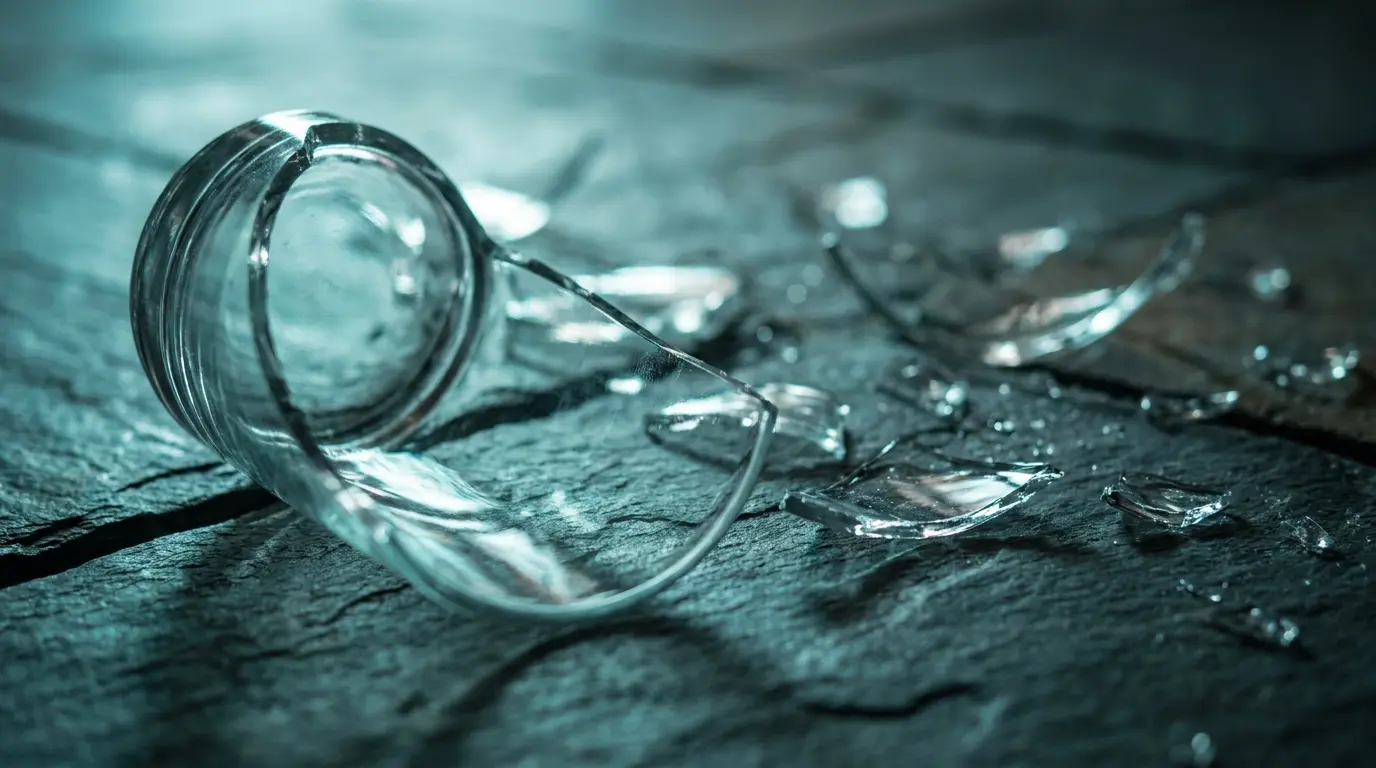
Keep the area clear. Move children and pets away from fragments. Avoid touching sharp edges with bare fingers. If a window, door, or shower enclosure is damaged, avoid using the affected area until it can be assessed safely.
Record what you can actually observe. Was there a chip or crack beforehand? Was the object tightly stacked, recently washed, close to a heat source, or resting against something? Did a shelf or nearby appliance move? These are questions to investigate, not a diagnosis from a distance.
For repeated or structural breakage, ask for help. Photograph the damage from a safe position and contact the manufacturer or a qualified glazier when appropriate. If several objects break in the same place, continue investigating the physical setting rather than treating the pattern as proof of a warning.
Why It Can Still Feel Meaningful
The object’s history may matter more to you than its replacement cost. A cup that belonged to a parent, a wedding glass, or a gift from a former partner can bring a particular relationship to mind. Its loss may therefore feel different from breaking an ordinary spare.
That emotional association does not mean the glass physically stored grief or fractured because an emotion became too strong. “Something could no longer be held” can be a metaphor for your experience, but it is not a materials-science explanation.
You can ask two separate questions: “Why did this break?” and “Why does losing it affect me?” An inspection may help with the first. Recalling who gave it to you or what you associate with it may help you describe the second. Neither answer has to cancel the other.
Personal Symbolism: Release, Change, or an Ending
If a symbolic reading appeals to you, keep it in the form of a question. Does the broken object remind you of something you are letting go of? Does it mark a change you had already noticed? Is the association comforting, unsettling, or simply absent?
You do not need to make an ordinary accident into a turning point. Replacing the item and moving on is as reasonable as keeping a photograph or writing about what it represented. There is no single message everyone must discover.
During an Argument or Stressful Week
The timing may make the break memorable, but it does not show that tension traveled into the glass. Respond to the argument using the words and actions involved. Deal with the damaged object separately. An accident cannot establish who is at fault or whether a relationship is destined to end.
During Grief or a Life Transition
If the object has sentimental value, acknowledge that you have lost something connected to a memory. You might save a photograph, write down the story behind it, or talk with someone who remembers it. You do not have to keep sharp fragments to preserve that connection.
In a Quiet Room
A quiet setting can make an unexplained noise especially striking. Not noticing a trigger leaves a question open; it does not supply a spiritual cause. You can note what was on your mind without treating that thought as a prediction or a force that broke the object.
Protective Glass and the Evil Eye Belief
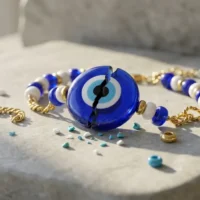
Some glass objects are made as protective charms, which gives them a different cultural context from ordinary household glass. The Pitt Rivers Museum documents a Syrian amulet incorporating blue eyes and other materials, intended to protect against the Evil Eye.
That documented use concerns the meaning of a charm within a belief. It does not establish that all glass absorbs envy, that every break releases harmful energy, or that an ordinary glass on a shelf has the same intended function.
If the object was jewelry rather than a household glass, see what to check when an evil eye bracelet breaks. The condition of the bead, cord, or clasp matters for safe repair, while the symbolic interpretation remains a separate choice.
Frequently Asked Questions
Is It Bad Luck When Glass Breaks by Itself?
The break does not establish future bad luck. The familiar seven-year superstition concerns mirrors, and it should not automatically be transferred to every household glass. The separate article on broken-mirror beliefs explains that context.
Can Annealed Glass Break Because of Nickel Sulfide?
Vitro’s guidance states that the nickel-sulfide spontaneous-breakage mechanism it describes affects tempered glass, not annealed or heat-strengthened glass. Other causes of fracture still need to be considered. Do not diagnose an unidentified household object from this mechanism alone.
Does Breaking Glass Mean a Spirit Is Present?
The event alone does not establish a spirit’s presence or a message from someone who died. If it brings someone to mind, you can recognize that memory without claiming to know who or what caused the break.
What If Glass Keeps Breaking in My House?
Investigate the repeated setting, construction, handling, and condition of the objects. If a qualified assessment does not immediately find the cause, the cause remains unknown. That uncertainty is not evidence of an emotional or spiritual mechanism.
Do I Need to Perform a Cleansing Ritual?
No ritual is required to prevent a demonstrated consequence of the break. Cleaning up safely and addressing any physical hazard come first. An optional reflection or prayer may fit your beliefs, but it does not replace an inspection or repair.
After the Cleanup
A broken object can leave an empty space on a shelf and an unexpected memory. You can give that memory attention while keeping the cause of the fracture open to practical investigation. Personal meaning belongs to the way you understand the experience; the glass does not have to deliver a forecast.


Alex Turner
Alex Turner is the editorial pen name used for articles published on Signs of Universe. The website covers dreams, symbolism, and cultural interpretations for informational and reflective purposes. Alex Turner is not a medical, mental health, scientific, or spiritual authority.