Ring Symbolism: From Love and Vows to Status, Faith, and Memory
A ring does not have one universal meaning. Its symbolism depends on what the ring was made to do, who wore it, and the context in which it was given or used. Historically, rings have marked vows, status, remembrance, faith, and personal identity. The Metropolitan Museum of Art describes rings as objects that can declare status, mark major life events, express identity, and serve protective purposes.
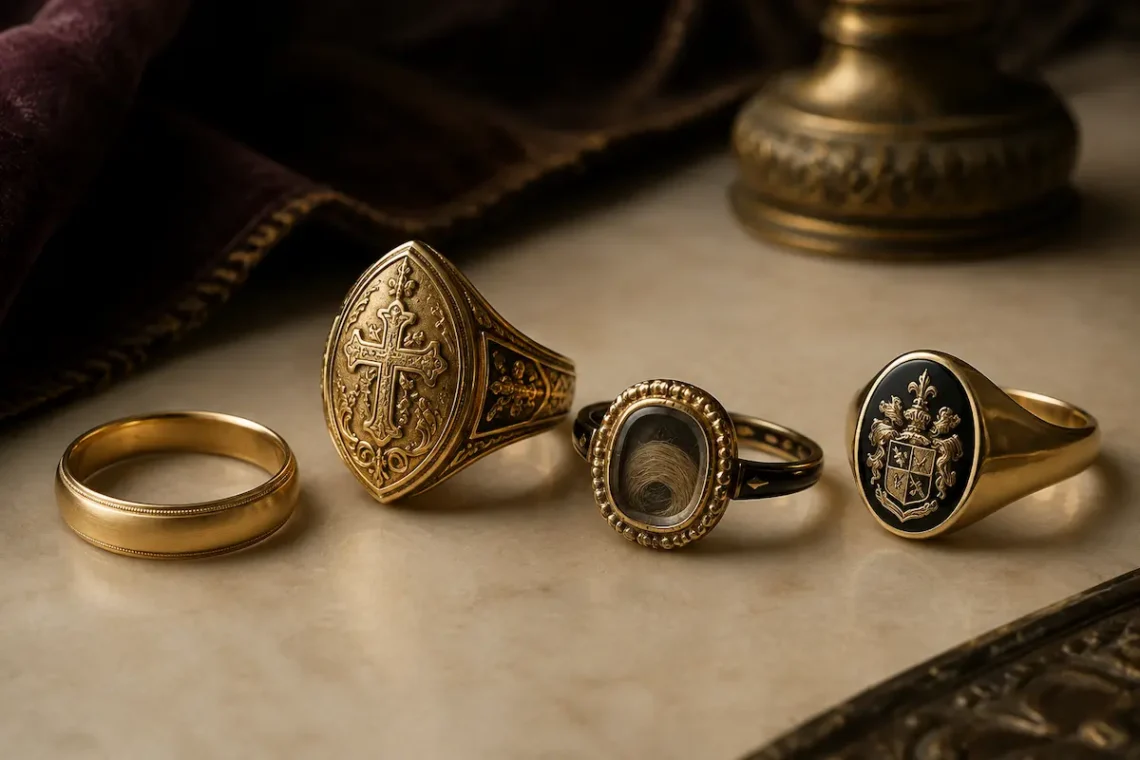
That makes ring symbolism easier to understand when you start with function rather than a fixed list of mystical meanings. A wedding band, a bishop’s ring, a mourning ring, and a signet ring may all share the same basic circular form, but they communicate very different things because their social roles are different.
Ring Symbolism: Start With the Ring’s Function
The shape of a ring may invite broad associations with continuity or connection, but shape alone cannot explain what a particular ring meant to the person who wore it. A better question is: what job was this ring doing?
Five functions are especially useful for reading historical examples:
- Vow: the ring materializes a promise, bond, or commitment.
- Status or rank: the ring signals office, wealth, authority, or social position.
- Remembrance: the ring preserves the memory of a person, relationship, or event.
- Faith: the ring expresses devotion, religious identity, or religious office.
- Personal identity: the ring identifies a person, family, name, or affiliation.
These categories are not universal rules. They are an editorial framework for organizing documented uses. One ring can also belong to more than one category. Museum records support the underlying range of functions: The Met connects rings with status, life events, identity, religion, love, and marriage, while the V&A documents jewelry as a marker of rank and status, as an expression of religious belief or political power, and in later examples as a vehicle for love and friendship.
This function-first approach is useful with other symbolic objects too. An old key, for example, carries much of its symbolic force from its practical purpose: controlling access. The object’s physical function gives you a grounded starting point before you add personal interpretation.
Vows and Love: When a Ring Makes a Promise Visible
Rings and vows have a long documented relationship. The Met notes that rings can act as tangible reminders of promises, with the wedding ring being an obvious example. That does not mean every culture used rings for marriage in the same way, or that the practice began at one single moment. It means the connection between a ring and a promise is historically visible in surviving objects and traditions.
A Roman gold finger ring in The Met, dated to the third century CE, was used as a betrothal or wedding band. The museum notes that the tradition became firmly established during that century. This documented example is enough to anchor the association between rings and vows without relying on the “vena amoris” story about a special vein running directly from the fourth finger to the heart.
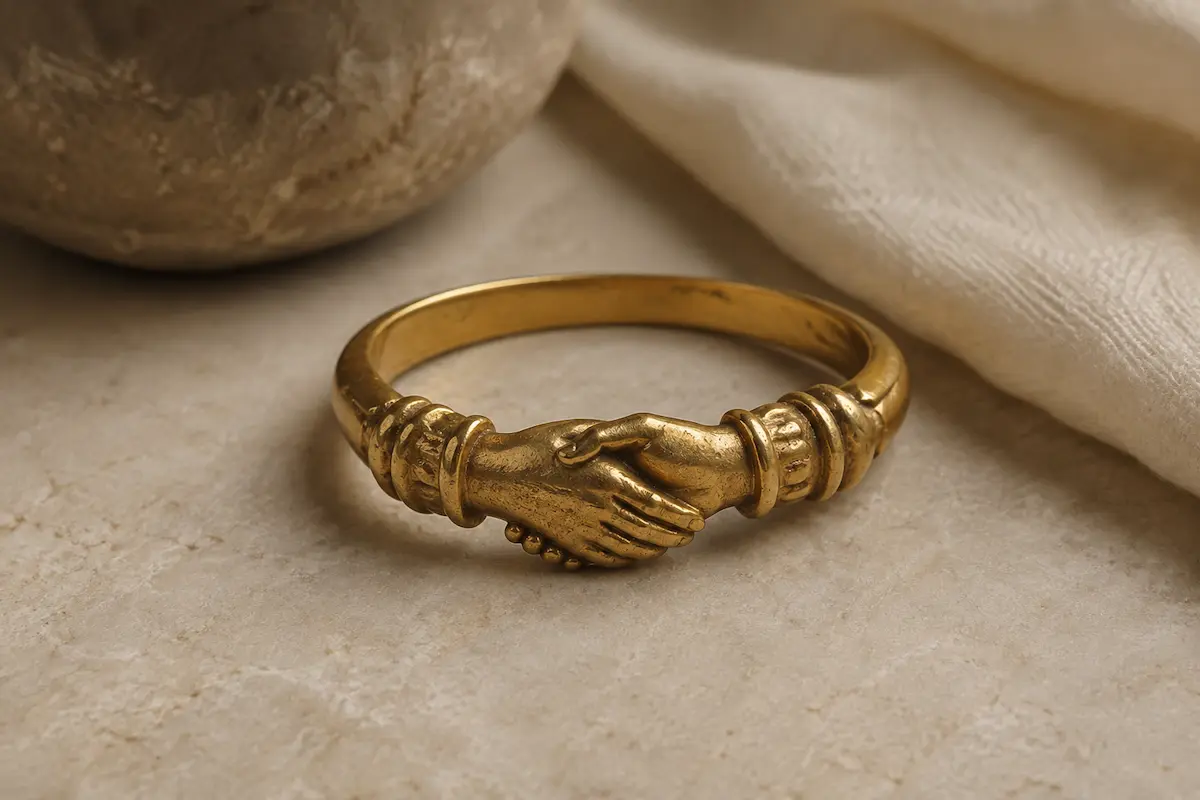
The ring’s usefulness as a vow object is partly material. It is small enough to remain on the body, durable enough to outlast a ceremony, and visible enough to signal a relationship to other people. In some historical rings, inscriptions made that meaning explicit. A fourteenth-century ring discussed by The Met bears a band inscription translated as “For love you were made and for love I wear you.” Renaissance posy rings could also carry short phrases of affection or commitment inside the band.
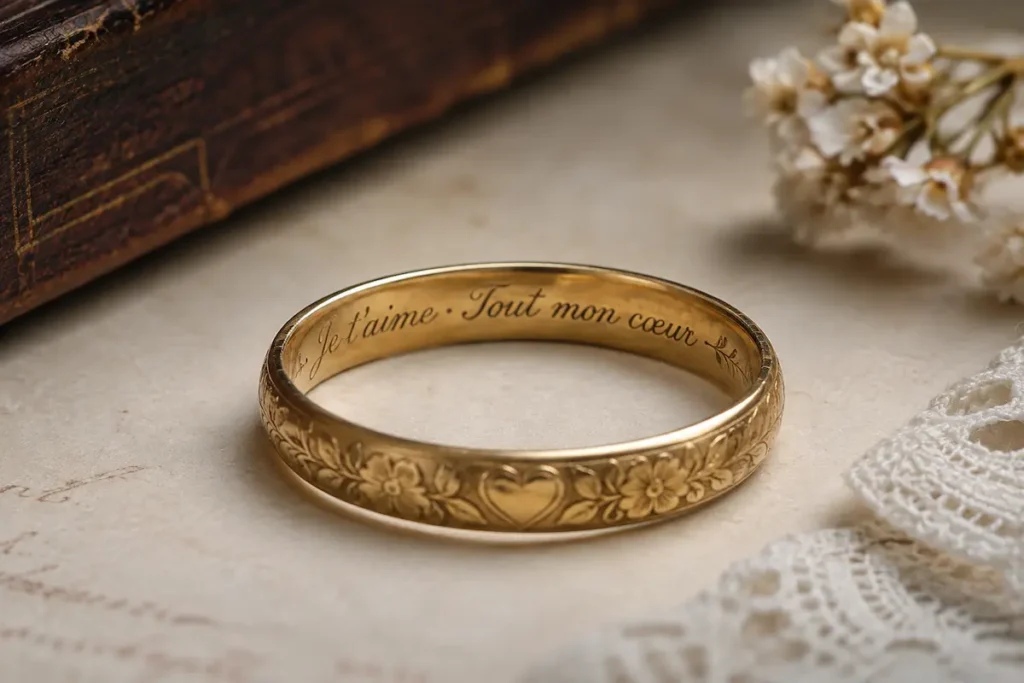
The important distinction is that love is not simply “contained” in the circular shape. In these examples, meaning comes from the act of giving, the social custom around the ring, and sometimes the words physically inscribed on it.
Status and Rank: When a Ring Shows Position or Office
Jewelry has also been used to signal social position. The Victoria and Albert Museum notes that ancient jewelry was likely worn in some contexts as protection or as a mark of status or rank, and its survey of medieval jewelry describes a strongly hierarchical society in which materials such as gold, silver, and precious gems were closely tied to rank.
Rings could participate in that same visual language. A large gold ring, an expensive stone, an official seal, or an object associated with an office could communicate more than personal taste.
Religious office provides a clear example. The Met’s Treasures and Talismans exhibition identifies a seventh- or eighth-century object as a Langobard Bishop’s Ring. Another Met record notes that a bishop’s ring, together with the pectoral cross, has formed part of episcopal regalia since the late Middle Ages. Here a ring can belong to two categories at once: it is connected to faith, but it also marks institutional rank.
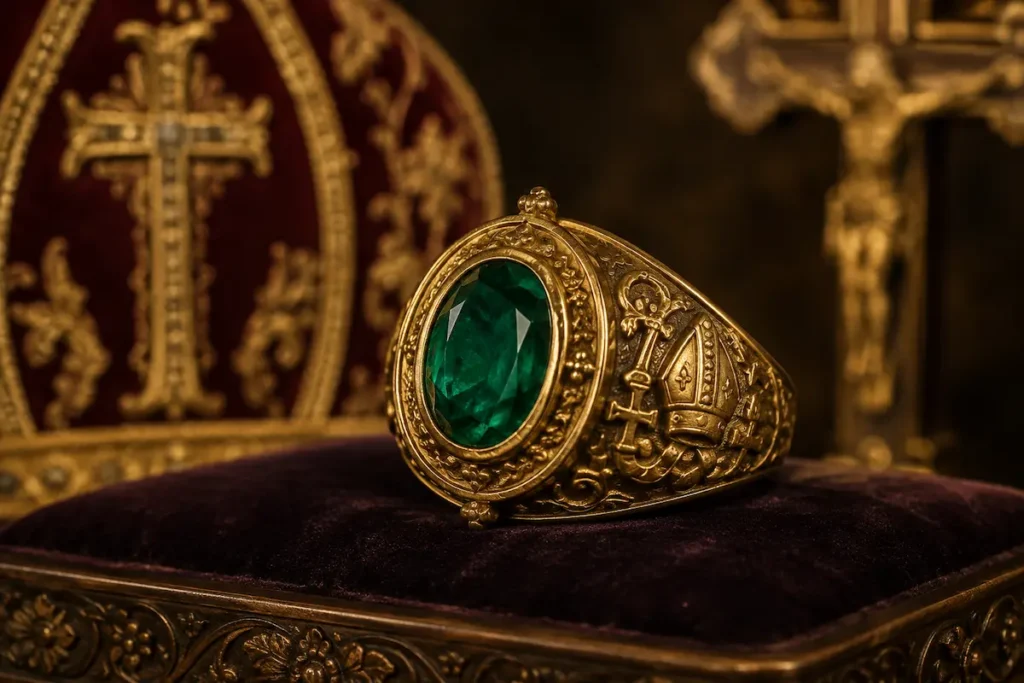
This overlap is important. “Status” does not always mean wealth, and “faith” does not always mean private devotion. A ring can signify a recognized role inside a religious, political, or social system.
Remembrance: Rings Made to Keep a Person Present
Some rings were designed not to announce a promise or office but to keep a memory physically close.
The Met describes an American ring from 1757 as mourning jewelry commissioned to commemorate the dead. Gold letters on black enamel memorialize Sarah Rawson by name and record the date and age associated with her death. The ring also contains imagery connected with mourning.
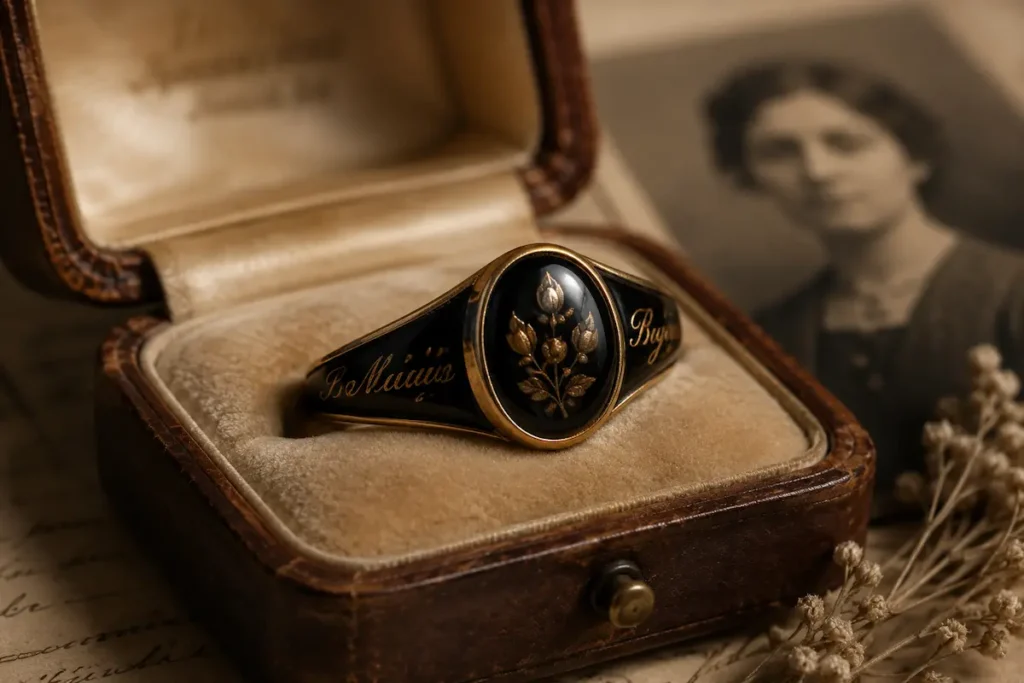
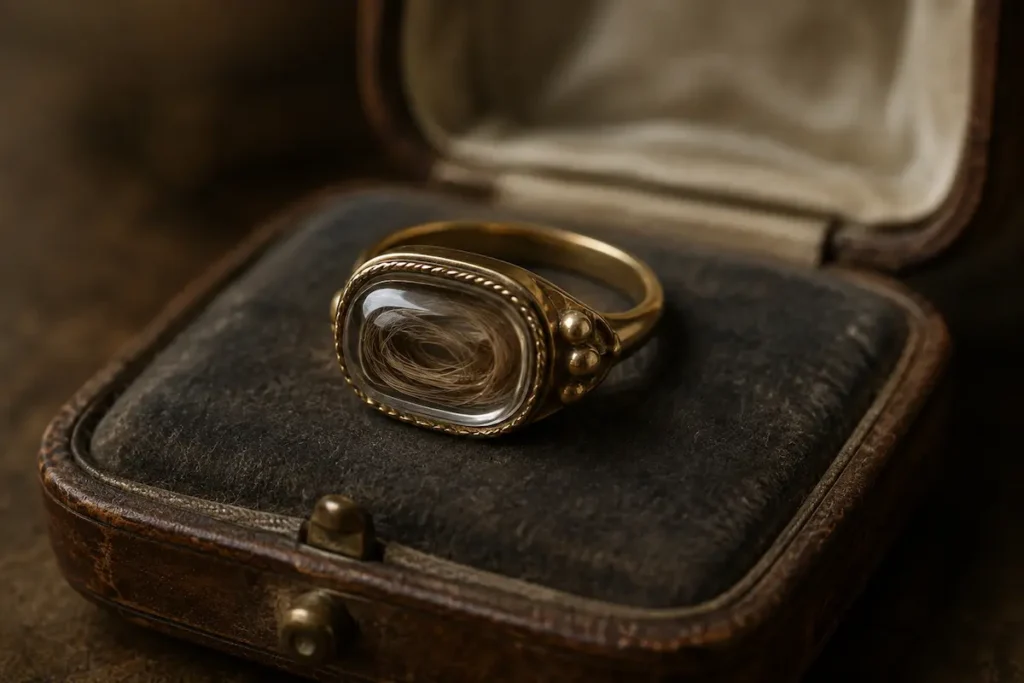
Other mourning rings made remembrance even more material. A Met mourning ring dated 1848 is made from gold, jet, glass, and hair. The presence of hair turns memory into part of the object’s physical construction rather than leaving remembrance as an inferred symbolic theme.
These objects show why “remembrance” deserves its own category. The meaning is not inferred from the ring’s shape. It is documented by names, dates, materials, imagery, and the object’s classification. The ring becomes a portable memorial.
That distinction also helps when thinking about an ordinary object that feels meaningful because of when it appears. A found coin may become a personal reminder of a moment, but that is different from a historical mourning ring deliberately manufactured to commemorate a particular person. Both can carry memory, but they do so through different kinds of evidence.
Faith and Devotion: Belief Worn on the Hand
Religious meaning in rings can be equally explicit. The Met’s Treasures and Talismans exhibition included a thirteenth-century devotional ring, probably British, carrying a Christian inscription addressed to Jesus. The same exhibition explored connections between rings and religion as well as love, marriage, identity, and protective belief.
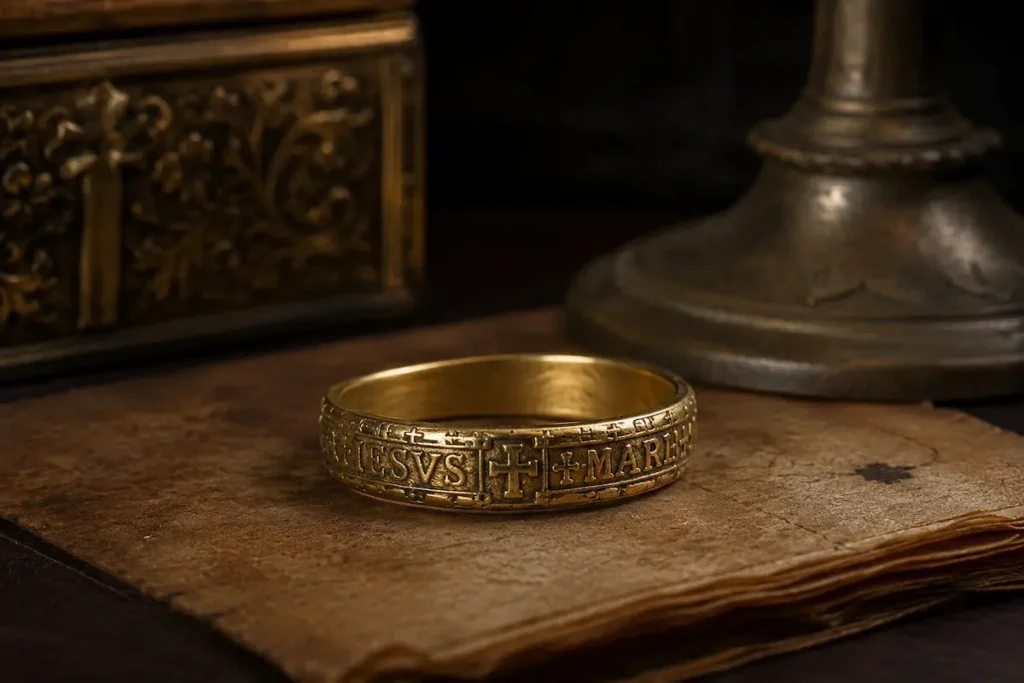
An inscription like this gives us a strong basis for identifying devotional meaning. We do not have to guess that the wearer considered the ring sacred merely because it looks old or ornate; the text on the object points directly toward its religious function.
A bishop’s ring shows a different form of religious symbolism. Rather than only expressing private devotion, it can be tied to office and institutional identity. That is why “faith” and “rank” sometimes overlap.
The same caution matters with symbolic jewelry more broadly. A Hamsa pendant, for example, carries meanings that come from a particular symbol and its historical traditions. A plain ring does not automatically acquire those meanings simply because both objects can be worn as jewelry. The symbol, inscription, object type, and context all matter.
Identity: When a Ring Names a Person, Family, or Role
Rings have also served as tools of identification.
A probably sixteenth-century seal ring in The Met, made in Central Asia or Iran, is carved with the name of Hajji Muhammad ibn Mahmud in reverse. The museum explains that the original purpose of such rings was to stamp the owner’s name into a seal. In this case, identity is not a poetic interpretation. The ring literally carries a name and was designed to reproduce it.
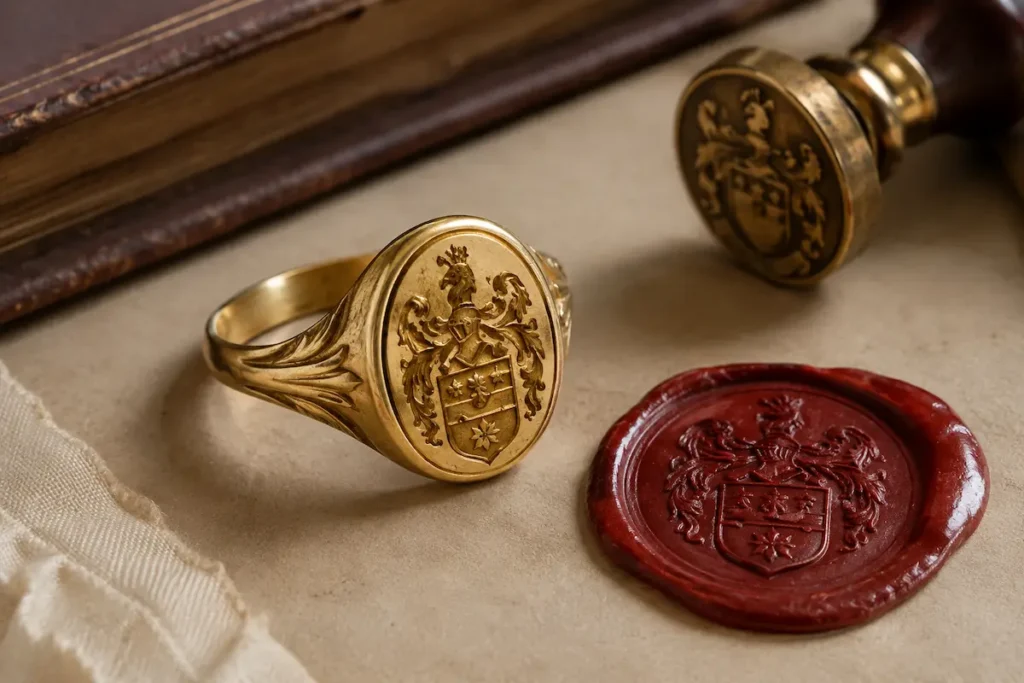
European signet rings could also display family arms. In a portrait by Hans Holbein the Younger, the sitter Hermann von Wedigh III was identified in part through the coat of arms shown on his signet ring, supported by other inscriptions in the painting. The ring functions as a visible marker of family identity.
This is a useful reminder that personal identity does not always mean individuality in the modern sense. Historically, a ring might connect a wearer to a family, a name, a religious office, or another documented affiliation. The object can say “who I am,” but sometimes that means “where I belong” or “what role I carry.”
One Ring Can Carry More Than One Meaning
The five functions—vow, status or rank, remembrance, faith, and personal identity—work best as questions, not boxes.
A wedding ring can be both a vow and a marker of relationship status. A bishop’s ring can express both faith and office. A signet ring can connect personal identity with family or social affiliation. A mourning ring can preserve a person’s identity while also carrying private memory. These overlaps are an editorial synthesis of the documented functions above rather than a historical classification system used by the museums themselves.
This is why ring symbolism is usually better understood through context than through a fixed dictionary of meanings. If you want to understand a specific ring, look first at the evidence around it:
- What type of ring is it?
- Was it given for a documented occasion?
- Does it contain a name, date, motto, prayer, coat of arms, or other inscription?
- Is it associated with a particular office, institution, family, or ritual?
- What do museum records or other reliable sources say about comparable objects?
- Which part of its meaning is documented, and which part is your own personal interpretation?
That last question is especially important. A ring inherited from a relative may symbolize continuity, grief, family, or responsibility to you even if none of those meanings can be established from the object alone. Personal symbolism is real as personal meaning; it simply should not be presented as a universal historical rule.
The history of ring symbolism is rich precisely because the same compact object has been used for different purposes. Rather than asking what every ring must mean, ask what this ring was meant to do. Its function, inscription, origin, and use will usually tell you more than a generic symbolism chart.




Alex Turner
Alex Turner is the editorial pen name used for articles published on Signs of Universe. The website covers dreams, symbolism, and cultural interpretations for informational and reflective purposes. Alex Turner is not a medical, mental health, scientific, or spiritual authority.