Picture Falling Off the Wall: Who the Old Omen Was Said to Concern
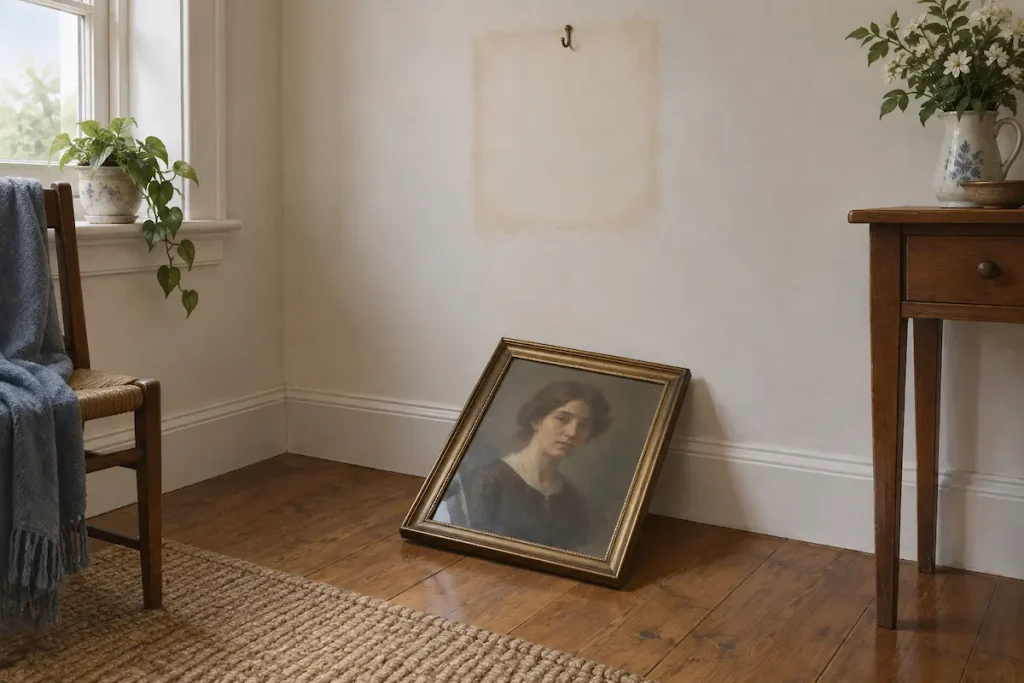
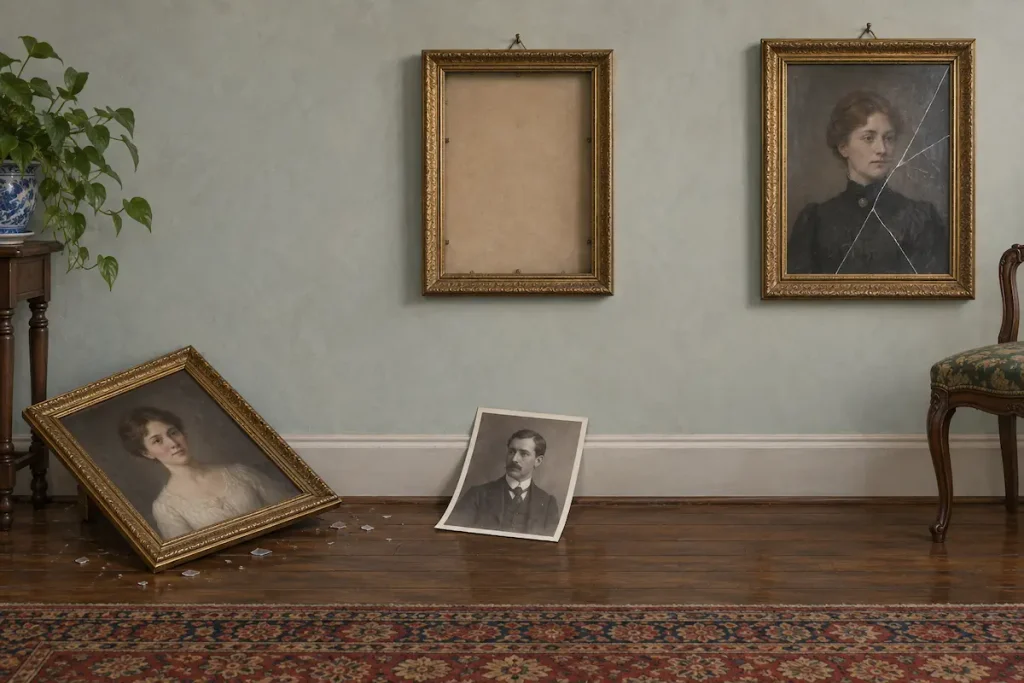
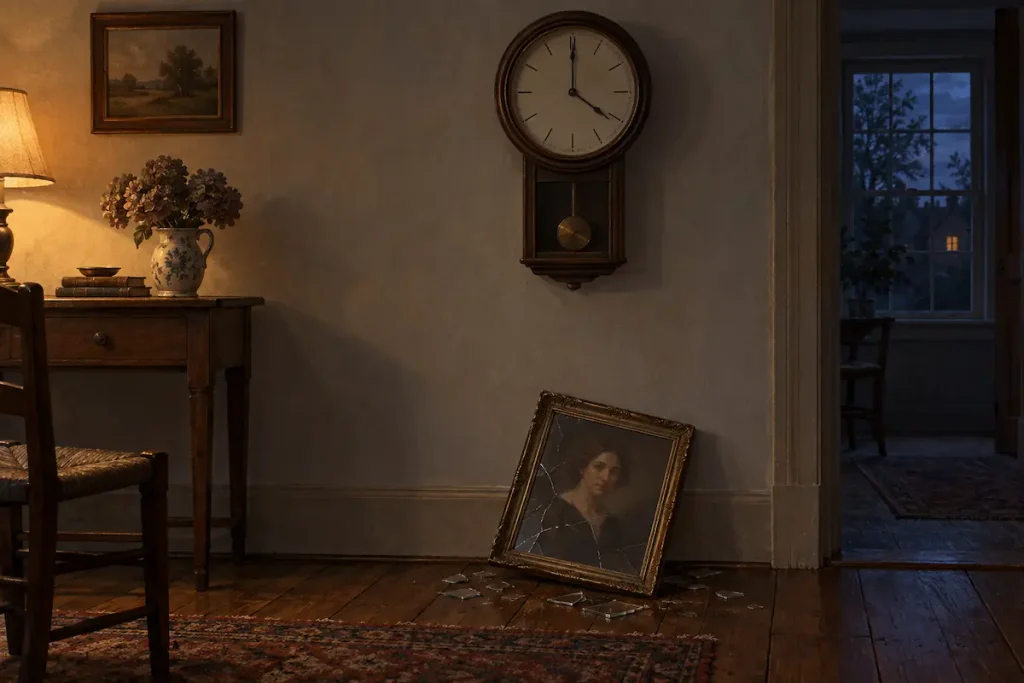
There is no single picture falling off wall meaning in recorded folklore. In a Kentucky collection published in 1920, some versions concerned the person shown in the portrait, while others referred to the family, the household, or simply bad luck. The details mattered: a large family portrait, a picture falling in a room where someone had died, and an image slipping out of its frame were recorded as different cases.
These entries document beliefs; they do not predict that anyone will die, become ill, quarrel, or suffer a loss. Before looking for symbolic meaning, secure any broken glass and inspect the frame, wire, hook, adhesive, or wall fastener. The folklore becomes useful as history only after the physical event is kept separate from the outcome people once attached to it.
Picture Falling Off Wall Meaning in the 1920 Kentucky Collection
The most specific source located for this question is Kentucky Superstitions, compiled by Daniel Lindsey Thomas and Lucy Blayney Thomas and published by Princeton University Press in 1920. Its preface describes a statewide collection assembled with help from schools and contributors in different parts of Kentucky. The book preserves beliefs as collected material; it does not present them as proven causes or reliable forecasts. The same volume records a separate consecutive block of candle and lamp entries, including what it says about a flame that goes out by itself.
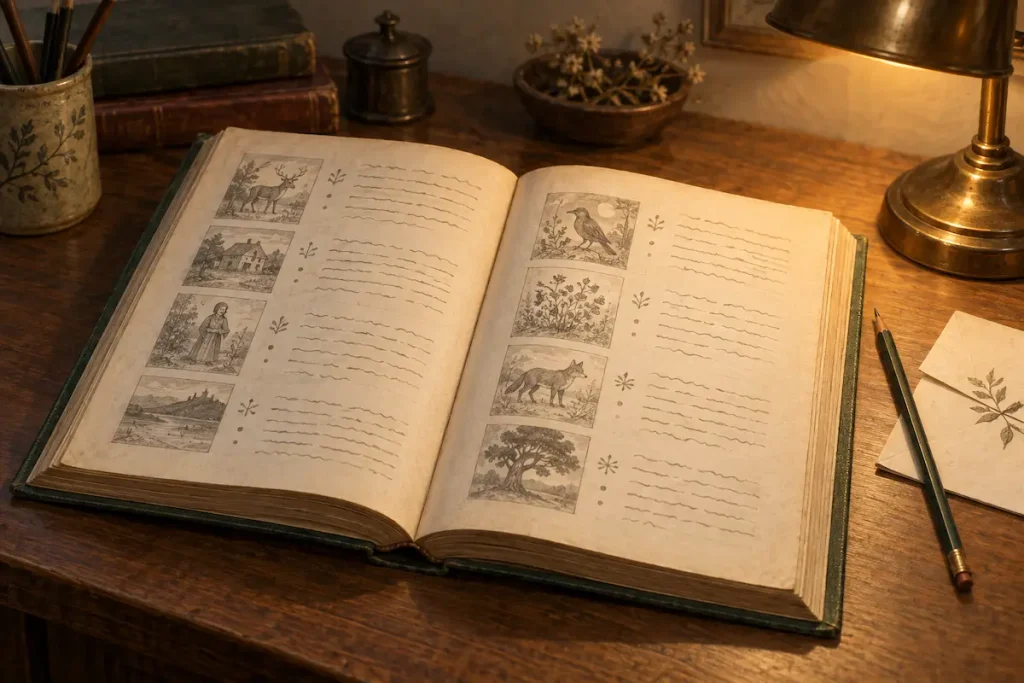
In the section on shadows, portraits, and reflections, entries 2166 through 2173 form a consecutive group about portraits or pictures falling. Anyone searching for a picture falling off wall meaning gets a better answer from that sequence than from a modern list of unrelated spiritual associations: the old record itself shows that the interpretation changed with the event.
The source also has limits. It tells us that these statements were collected and printed, and several entries include regional labels such as Blue Grass or Southern Kentucky. It does not tell us how widely every version was believed, whether every contributor accepted it, or how old each belief was. It would therefore be inaccurate to call all eight entries universal Kentucky folklore, ancient wisdom, or a rule shared across cultures.
The book does explain its own labels, and that changes how the list should be read. A note printed with the first group of entries states that naming a section of Kentucky means the belief was reported only from that section, and that an entry with no place name was reported generally. The compilers add that the attribution to definite localities is necessarily loose. So in this group the blank spaces are not missing data: they mark the versions collected across the state, while entries 2167, 2169, and 2173 were each tied to one reported area.
Eight Recorded Variants, Side by Side
The eight adjacent entries can be compared directly in the transcribed section of the collection. The wording below is summarized so the differences are easier to see.
| Entry | What happens | Who or what the omen concerns | Recorded outcome | Location label in the source |
|---|---|---|---|---|
| 2166 | A portrait falls | Not specified | Bad luck | None given |
| 2167 | A portrait falls from the wall | Someone in the family | Death | Louisville |
| 2168 | Anyone’s picture falls | The household | Death; a clock is then said to stop until after the funeral | None given |
| 2169 | A large family portrait falls | Not specified | A death | Blue Grass |
| 2170 | A portrait falls | The person it falls on, and the portrait’s “original” | A quarrel between them | None given |
| 2171 | A portrait falls in a room where someone is dead | The portrait’s “original” | Death | None given |
| 2172 | A portrait falls in a room where someone is dead | The portrait’s “original” | Death within three years | None given |
| 2173 | A picture drops out of its frame | Not specified | A bad omen | Southern Kentucky |
The table reveals the central distinction. There was no single picture falling off wall meaning to recite, because “a picture fell” was not enough to identify one traditional answer. The most general entry gives only bad luck. Others move the supposed consequence toward a family, a household, or the individual represented in the portrait. One even concerns the picture leaving the frame rather than the whole frame falling from the wall.
Some of those labels also name the community a belief was collected from, in racial terminology that is now outdated. Entry 2167 is one of them: the 1920 volume credits it to Black contributors in Louisville, and the table above keeps the place and drops the wording. Readers should know what was removed, because the label carried information about who reported the belief. That editorial choice does not change the numbered entries or the distinctions between them.
When the Omen Was About the Person in the Portrait
Entries 2170, 2171, and 2172 use the word “original.” In the context of a portrait, the original is the person represented by the image. These are the three entries that most clearly direct the recorded omen toward the person in the frame.
Even within that smaller group, the predicted result is not consistent. Entry 2170 is addressed to whoever the portrait falls on: that person, it says, will quarrel with the original. The outcome is an argument between two living people, not a fate for the subject alone. Entries 2171 and 2172 attach a much darker prediction to a specific setting: the portrait falls in a room where someone is dead. The second of those versions adds a three-year period.
This makes the most repeated picture falling off wall meaning online—“the omen is about whoever appears in the picture”—only partly accurate. It describes three entries, not the whole recorded group. Entry 2167 shifts the alleged consequence to someone in the family, and entry 2168 shifts it to the household. Neither says that the person whose face appears in the frame must be the person affected.
The portrait still plays an important symbolic role. Unlike an undecorated object, it visibly represents an identifiable person or group. The historical record shows that some tellers used that relationship to define the target of the omen. It does not establish that a portrait has a real connection to the fate of its subject.
Why the Size, Room, and Frame Changed the Reading
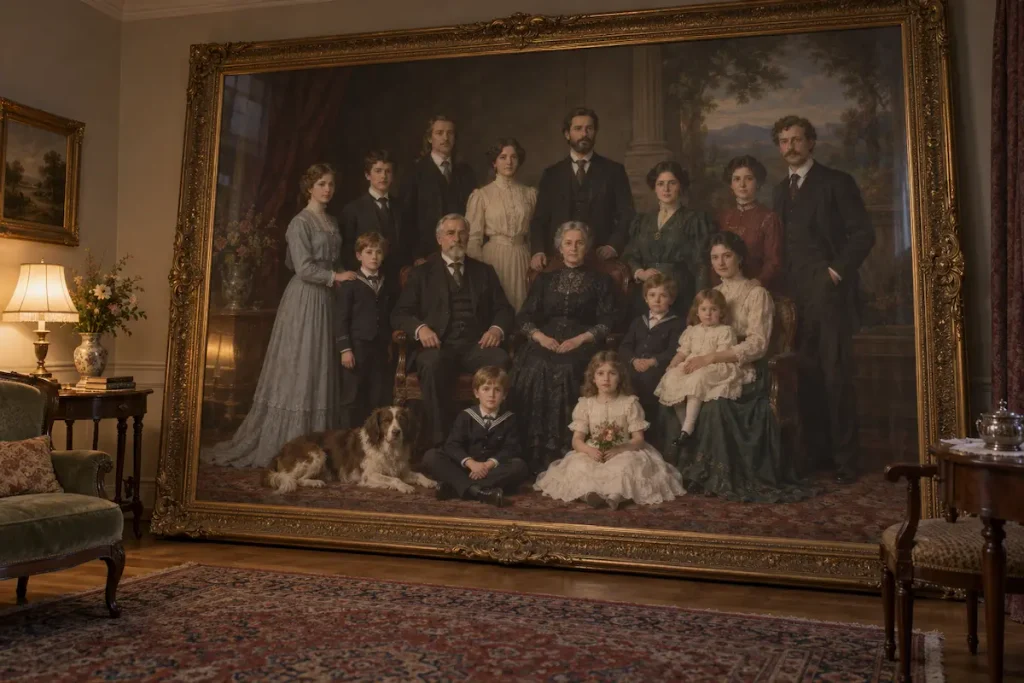
Entry 2169 does not refer to any picture. It specifies a large family portrait. The size and group subject make the object different from a small photograph of one person, yet the recorded consequence is left open: a death will occur, with no person or household named. Even here, where the object is the most specific in the group, the source offers no explanation for why size mattered, so supplying one would go beyond the evidence.
The room becomes decisive in entries 2171 and 2172. A portrait falling in an ordinary room is not given the same wording as a portrait falling in a room where someone is dead. Those entries belong to a death-related setting already charged with ritual and family significance. The collection records the condition but does not prove that the fall and the later prediction were causally connected.
Entry 2173 changes the mechanics. The picture drops out of the frame; the frame itself does not necessarily fall. Its result is also less specific: a “bad omen,” without naming a person, event, or time. This is important because many current explanations combine every mishap involving framed art into a single meaning. The older list keeps them separate.
A careful reading therefore asks three factual questions before selecting the closest folklore entry: Did the entire frame fall from the wall? Did only the image leave the frame? Was it a portrait of one person or a large family group? The answers identify the closest recorded variant; they do not make its prediction true.
The Falling Picture and the Stopped Clock
Entry 2168 is the most unusual item in the group because it combines two household objects. It says that a person’s picture falling means death in the household. It then adds that, when the death occurs, the clock stops until after the funeral.

The sequence matters. The entry does not say that the clock stops at the moment the picture falls, nor does it invite the reader to decode the time shown on the clock. That makes it different from a modern search about a clock stopped at a specific time, where the frozen time itself is the main object of interpretation.
What the entry demonstrates is that separate household omens could be joined into a small narrative: first the picture, then a death, then the clock, then the funeral. The collection confirms that this sequence was recorded. It cannot confirm that such a sequence occurred as described or that one event caused another.
What If the Glass Broke Instead?
The same source keeps dividing the subject a few entries further on. Entry 2174 records something different again, knocking heard behind a picture, and entry 2175 concerns the glass on a picture breaking “of its own accord.” That one attaches a death prediction to the family, but it is recorded as a separate event from a portrait falling or an image dropping out of its frame.
If the frame stayed on the wall and only its glazing cracked, the closest entry in this collection is therefore 2175, not 2167 or 2173. A discussion of glass breaking by itself addresses that physical event more directly, although no unexplained break proves a supernatural cause.
A mirror introduces another difference. Mirror folklore is built around reflection and includes the familiar seven-year belief, which appears as entry 2179 in the same book. That is why broken mirror folklore should not be used as a substitute for the meaning of a fallen portrait. A picture represents a particular subject; a mirror reflects whoever stands before it.
What the Record Can—and Cannot—Tell You
The record can establish that several picture-falling superstitions were collected and published in Kentucky by 1920. It can show the exact entry numbers, preserve the conditions attached to them, and demonstrate that the supposed target varied. It can also show that falling from a wall, leaving a frame, breaking picture glass, and breaking a mirror were not treated as the same event.
It cannot establish that a spirit pushed the picture, that the universe selected the person in the frame, or that a death or quarrel will follow. It also cannot support broad claims about Slavic, European, or universal Appalachian tradition without additional named sources. “Recorded in a Kentucky collection” is more precise than turning one regional source into a belief held everywhere.
So, if a picture has just fallen, the recorded picture falling off wall meaning is conditional rather than fixed. Three entries direct the omen toward the portrait’s subject; several others concern the wider family or household; one promises only bad luck; and one is about the image slipping out of its frame. The useful discovery is not which prediction to fear. It is that the old source was more specific—and less uniform—than the single ominous meaning often repeated online.




Alex Turner
Alex Turner is the editorial pen name used for articles published on Signs of Universe. The website covers dreams, symbolism, and cultural interpretations for informational and reflective purposes. Alex Turner is not a medical, mental health, scientific, or spiritual authority.