Spiritual Meaning of Finding an Old Photograph in an Unknown Place
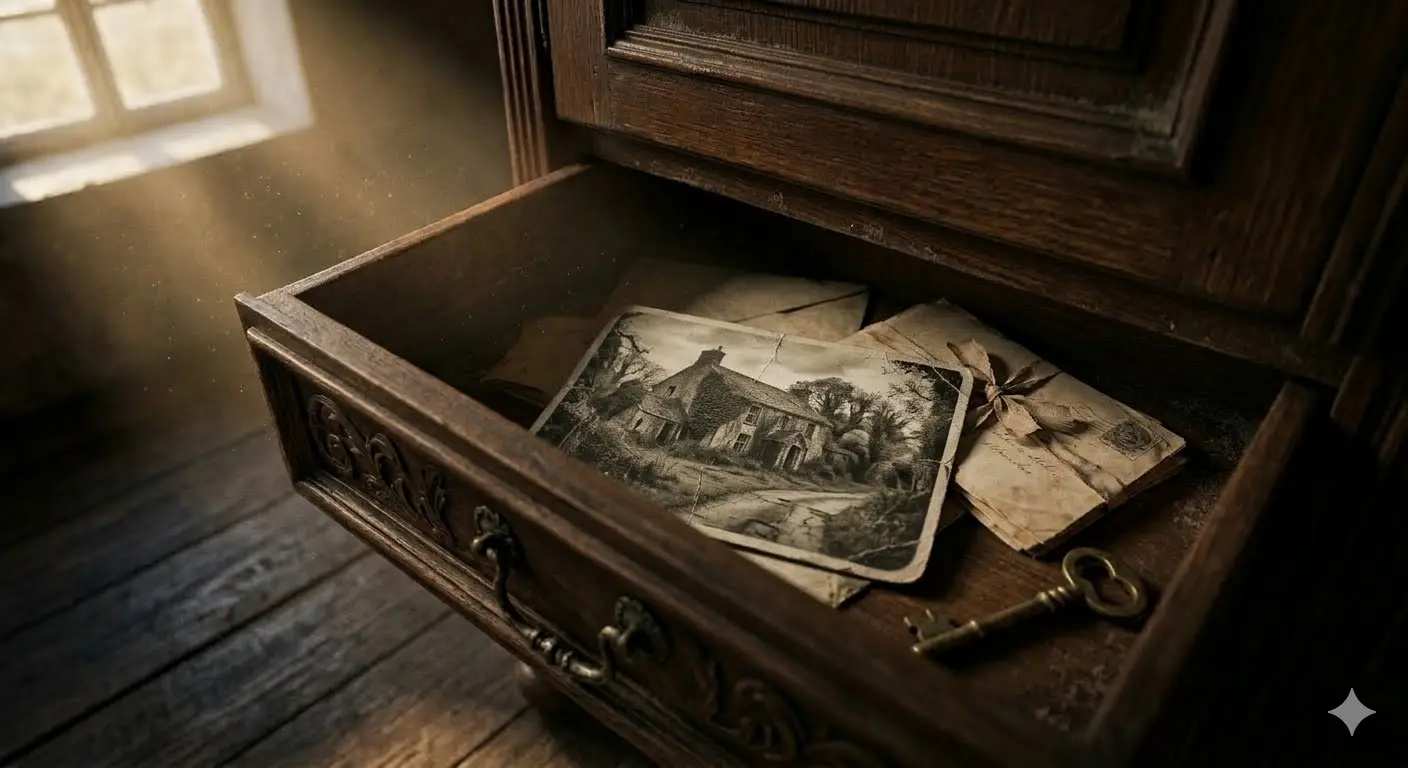
You weren’t looking for it. You weren’t thinking about the past, or memories, or anything sentimental. Maybe you were cleaning out a drawer, flipping through a stack of books at a garage sale, or walking through a room you’d never entered before — and there it was. A photograph. Old, slightly faded, and showing faces or places you don’t recognize at all.
That feeling of a space you didn’t know you had connects to dreams about hidden rooms in your house, where the unentered room often holds something the waking mind set aside.
Why a Photograph Specifically Feels Loaded
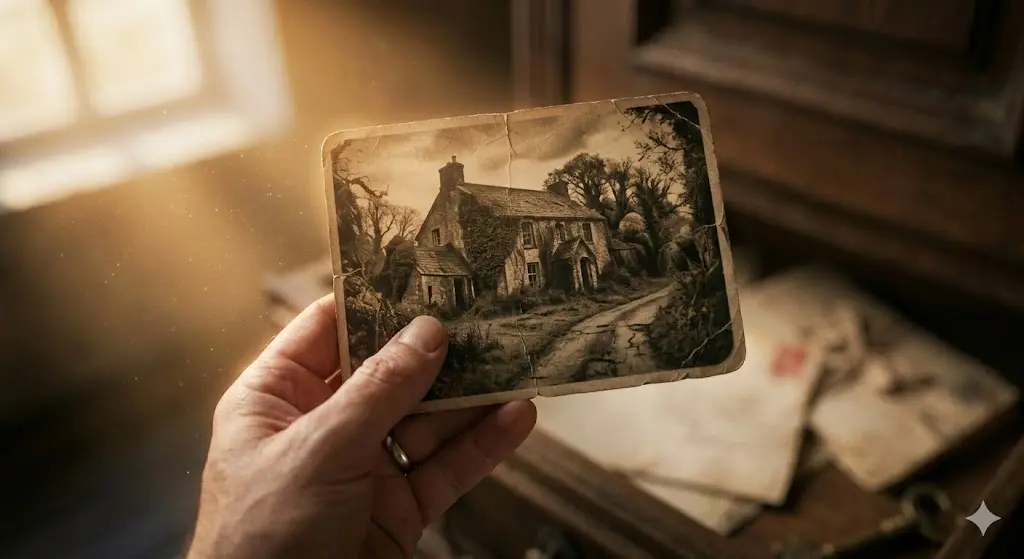
A photograph exists between two points at once — the present moment you’re holding it in, and the frozen past it depicts. That in-between quality is what spiritual traditions call a liminal object, something that sits on a boundary rather than fully inside one state. Finding one unexpectedly puts you, briefly, on that boundary too.
If the Person in the Photo Could Be Family
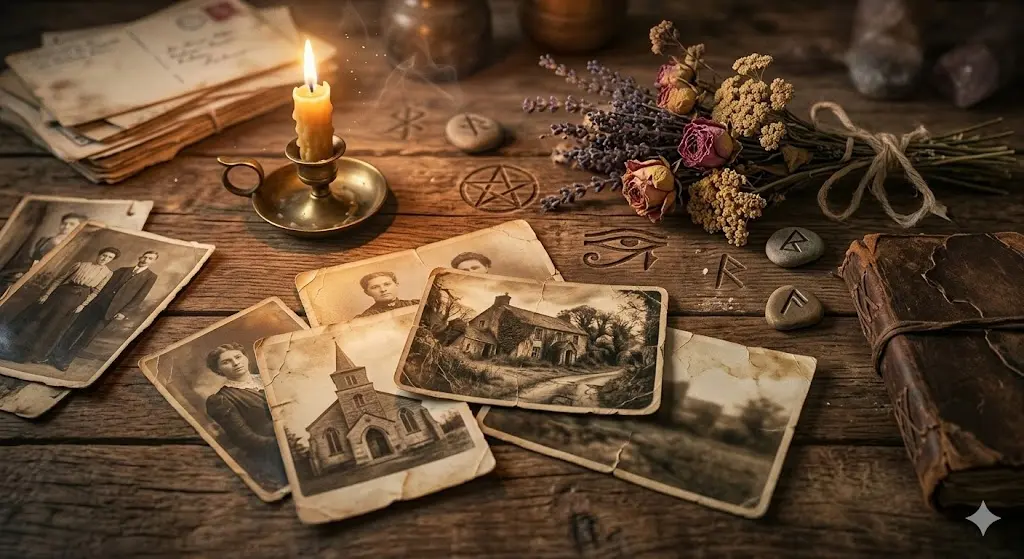
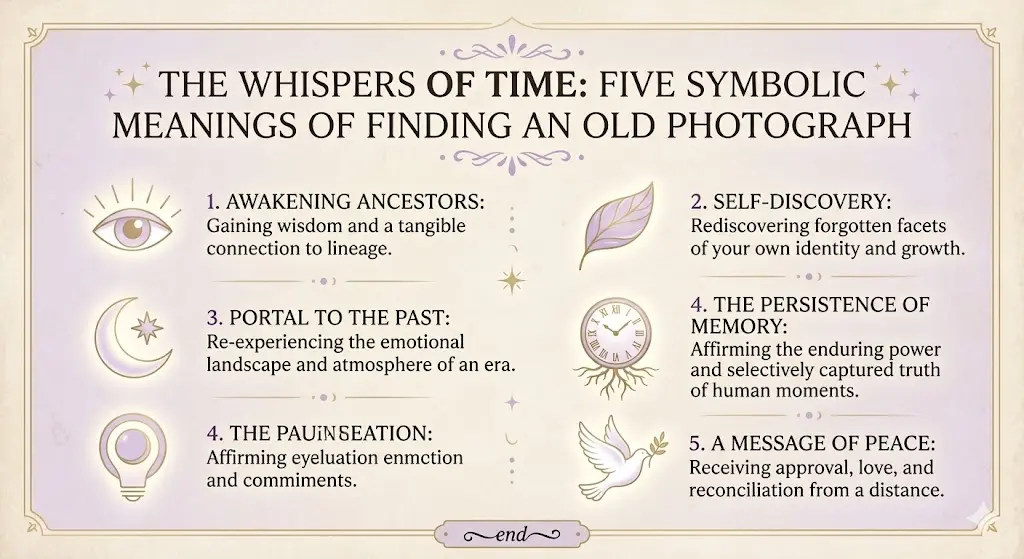
An old photo turning up in a house you’re renovating, an inherited box, or a relative’s belongings gets read very differently from one found in a thrift store. Several indigenous and African diasporic traditions treat photographs of the deceased as more than keepsakes — closer to a window into who came before. Finding one of a possible relative doesn’t require believing in literal haunting to carry weight; the more common reading is about lineage and being reminded that you’re a continuation of something, not about a specific message being sent.
If It’s a Complete Stranger
This is the version that tends to produce the strongest, hardest-to-explain reaction — sadness, recognition, or an emotional pull toward someone you have no connection to at all. For people who hold beliefs in reincarnation, that reaction sometimes gets read as a past-life recognition. You don’t need to hold that belief for the moment to still mean something: an emotional response to a stranger’s frozen moment is, at minimum, evidence that the photo reached something in you the object itself can’t fully explain.
If It Surfaced During a Transition
Photographs are, by nature, endings sealed in time — a moment that stopped changing the instant the shutter closed. Finding one during a move, a breakup, or any period where your own life is visibly shifting tends to get read less as a message about the photo’s subject and more as a mirror: other lives kept moving after their own moments passed, and so will yours.
Do the Details in the Photo Matter?
Some, more as texture than a fixed code. A faded or damaged print leans toward something naturally fading and ready to be released rather than held onto. A solitary figure reads differently than a group — one leans toward a personal, individual message, the other toward lineage and belonging. None of these override the two questions that matter more: who might be in it, and what was happening in your life when you found it.
The Ordinary Explanation
Old photographs travel through very unremarkable channels — estate sales, donated boxes, attic cleanouts, renovation debris, secondhand furniture. The “unknown place” almost always has a mundane history behind it. There’s also a documented cognitive reason the moment feels significant: apophenia, the brain’s tendency to find connections between emotionally loaded stimuli and whatever’s happening in your life right now. If you’re already in a period of loss or transition, you’re primed to assign weight to exactly this kind of object — not because anything mystical occurred, but because your attention was already tuned to notice it.
Neither explanation cancels the other. The photo likely got there through an ordinary chain of events, and the timing of when you noticed it can still be worth sitting with.
What to Do With It
Notice your first reaction before analyzing anything — curiosity, sadness, recognition — since that initial feeling usually carries more information than any symbolic framework applied afterward. If you found it somewhere with a real history (an estate, an inherited house), a little research into who might be pictured can turn a vague feeling into an actual answer. Beyond that, what you do with the object — keep it, pass it along, look further into its origin — matters less than whether you took the moment seriously enough to notice it at all.
The interpretations here draw on documented cultural and spiritual traditions. They’re offered as reflective possibilities, not as fact, prediction, or a substitute for your own judgment about what a moment meant to you.
Related reading: Finding a White Feather on the Ground in a Dream and Why Finding an Old Key in the Street During Times of Uncertainty May Be.




Alex Turner
Alex Turner is the editorial pen name used for articles published on Signs of Universe. The website covers dreams, symbolism, and cultural interpretations for informational and reflective purposes. Alex Turner is not a medical, mental health, scientific, or spiritual authority.