Dreaming of Rooms You Didn’t Know Existed in Your Home: What These Hidden Spaces Could Reflect
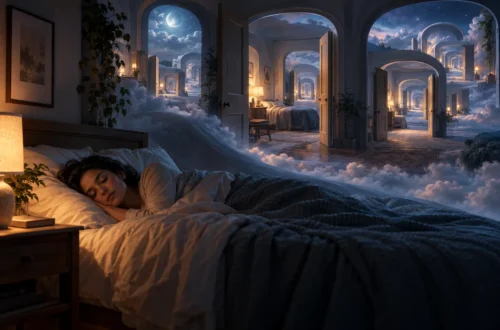
In 1909, Carl Jung dreamed he was inside a house he thought he knew. Each staircase dropped him into an older floor — an elegant salon, then a medieval ground level, then a cold cellar, then a low cave where two old skulls lay in the dust.
He spent years unpacking that one dream. It pushed him toward a strange idea: that the mind is built in layers, like a house with rooms most people never open.
If you keep dreaming about hidden rooms in your house, you want the same thing Jung wanted. You want to know what the unfamiliar part of a familiar place is saying about you.
The short answer: a hidden room usually stands for a part of yourself you haven’t entered yet. And the condition of that room is the real message — not the lucky fact that you found it.
That last point is where most advice collapses. Search this dream and you’ll be told, again and again, that extra rooms mean untapped potential and good things coming.
Sometimes true. Often not. The dream where you find a bright new wing is not the same dream as the one where you open a door onto a flooded room nobody used. Both are “hidden rooms.” They point in opposite directions.
What you felt, where the room sat, and what state it was in — that is the part worth reading.
🚪 The Reading Everyone Repeats — and Why It’s Only Half True
Type this dream into any search bar and the answer comes back almost pre-written. Hidden rooms mean hidden potential. New talents. A bigger life waiting behind the drywall.
Here’s the problem. That reading only fits the happy version.
People dream of rooms that are flooded. Rooms with a stranger asleep in a bare bed. Wings that are ancient, rotting, half-collapsed. Rooms they’re too scared to enter, so they shut the door and leave them empty on purpose.
A blanket “good news is coming” flattens all of that into a fortune cookie.
The dream isn’t a prediction. It’s a floor plan of attention. When your mind builds a room you didn’t know was there, it’s pointing at something that exists in you but hasn’t been used, named, or visited.
That something can be a gift. It can also be grief you sealed off, a talent you walked away from, or a fear you’ve kept behind a locked door for years.
So drop the assumption that finding a room is automatically lucky. Ask the harder question instead: what did the room feel like when you stepped inside?
The House Was Always the Oldest Map of the Mind
Long before dream apps, the house was already our favorite picture of the self. We say someone is “not all there.” We say a person “has rooms in their head they never go into.”
The metaphor is old because it works.
Jung gave it the sharpest form. His dream of descending through that house — each level older than the last — became part of how he described the psyche itself: lived-in floors sitting on top of inherited basements.
That image fed straight into his concept of the collective unconscious, the idea that beneath your personal memory sits a far older, shared layer you didn’t build and can’t fully see.
You don’t have to buy the whole theory to use the frame. A hidden room is the dream saying: there is more house than you’ve been living in.
Now look at what the recurring versions add.
When the same unfound rooms keep showing up, the dream usually isn’t teasing a prize. It’s tracking something you keep circling but won’t enter. The room stays “hidden” because you haven’t gone in — not because the universe is hiding it from you.
It’s the same engine behind recurring childhood home dreams, where a familiar house rearranges itself to measure the gap between who you were and who you are now. The hidden-room dream flips that move. Instead of returning you to a known space, it shows you the part of the house — the part of you — you never agreed to occupy.
Questions People Ask When Dreaming About Hidden Rooms in Your House
Why are the hidden rooms almost always upstairs or in the attic?
Many people find the new rooms above them — an attic, a top floor, a staircase that keeps climbing. In the house-as-self picture, upper floors often read as the mind, aspiration, or the parts of you that look ahead. It’s not a rule. The direction, condition, and destination of the stairs can change the reading, so if your hidden room sits high in the house, the dream may be pointing at potential and perspective rather than buried memory.
Why do the rooms usually come empty or unfurnished?
An empty room is room to fill — or room that’s been cleared. The blankness is often the point. It marks space in you that isn’t committed yet, which can feel like freedom or like something unfinished.
Is this a spiritual sign or just my brain?
It can be read as both, and you don’t have to choose. Researchers note that sleeping minds reshuffle memory and emotion into spatial scenes, so the architecture is partly your own life sorted into floors and doors. Symbolic traditions read the same image as the self showing you what you’ve outgrown or avoided. The verifiable part is that house dreams are extremely common. The interpretation is yours to test against your waking life.
The Condition of the Room Is the Real Message
Here’s the move almost no article makes. Stop reading the fact of the room. Read its state.
The same dream changes meaning entirely depending on what you walked into.
When the Room Is Empty or Unfurnished
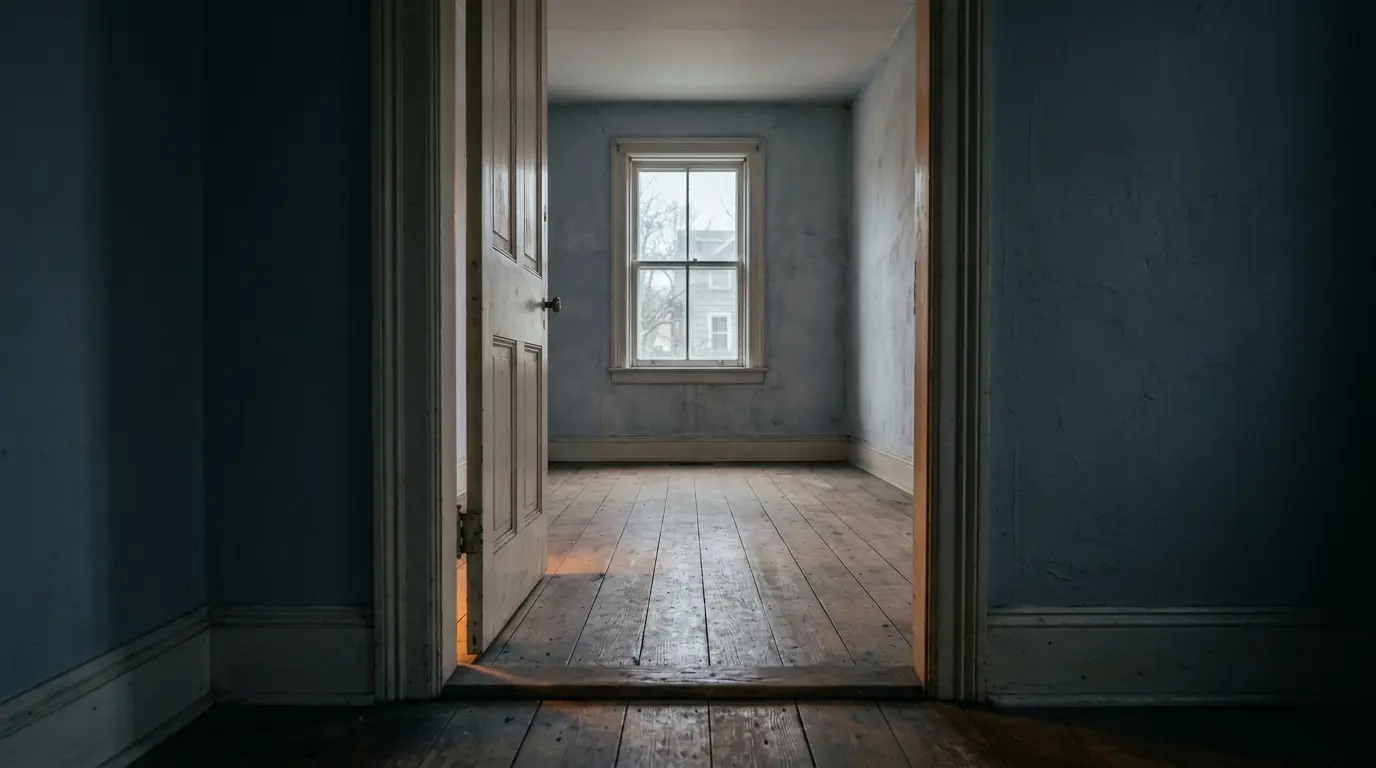
A bare, unfurnished room is the most common version. No furniture, clean floor, maybe a window with gray light.
This rarely means “abundance is coming.” More often it marks capacity — space in you that hasn’t been claimed. A skill you never developed. A part of life you keep postponing.
The feeling matters here. If the empty room excites you, it usually reads as possibility. If it unsettles you, it can read as a room you’ve been avoiding furnishing, because furnishing it would mean committing to something.
When the Room Is Locked, Decaying, or Frightening
Now the harder versions.
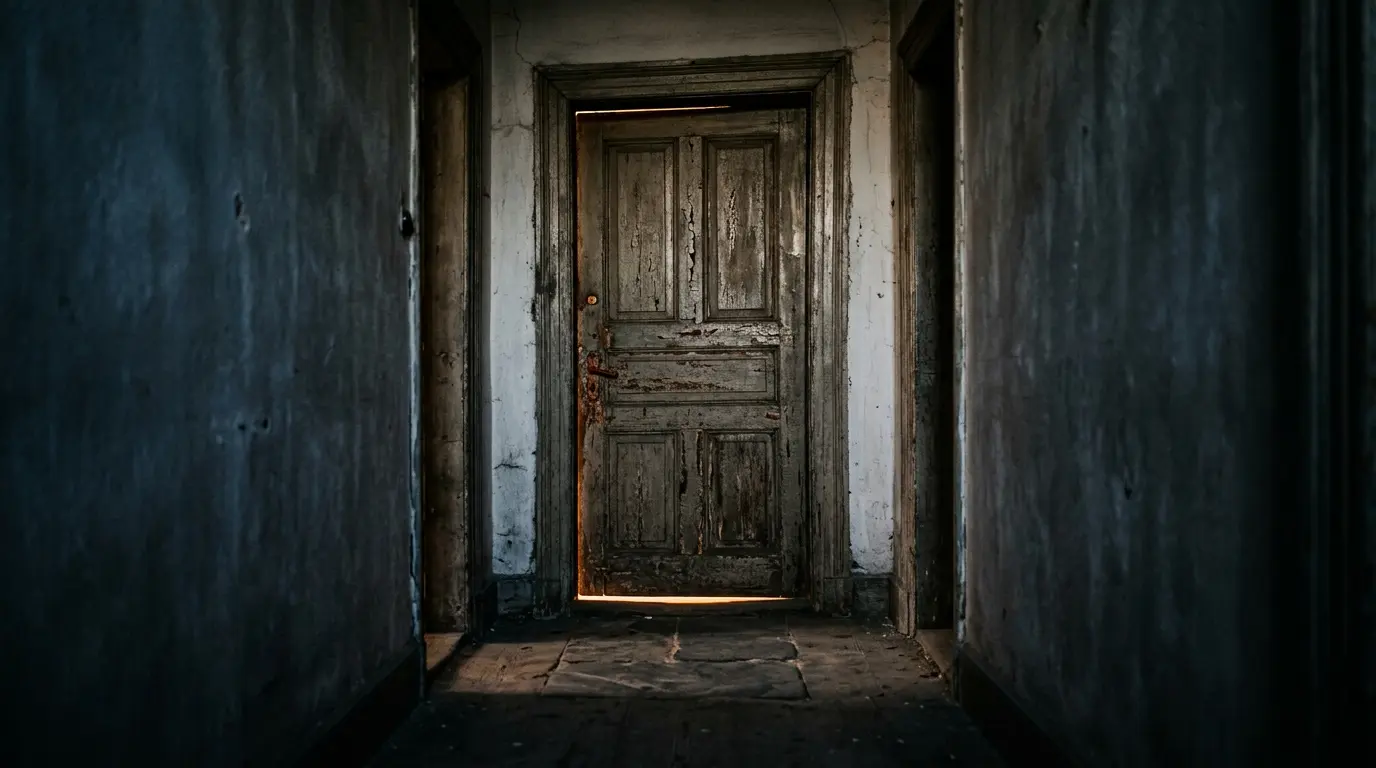
A locked door you can’t open. A room in disrepair, full of old furniture you don’t like. A wing that feels haunted, and you step aside instead of going in.
These are not warnings about the future. They tend to mark something already inside you — grief you boxed up, a memory you shut away, a part of yourself you decided not to deal with.
That instinct to hesitate at the threshold is the whole signal. It’s the same fear that surfaces when people dream of dreaming about golden keys they’re afraid to use. The lock isn’t keeping you out. You’re the one holding the door shut.
How to Read Your Own Hidden Room Without Forcing a Happy Ending
Forget the generic “untapped potential” reading. Your dream gave you specifics. Use them.
That’s the honest way to handle dreaming about hidden rooms in your house — read the specifics, not the slogan.
Start with what you did at the doorway. Did you step inside? Hesitate? Back away and pretend you didn’t see it?
That single gesture says more than the room itself. Entering is curiosity. Freezing is ambivalence. Fleeing is a part of you that isn’t ready to be looked at.
Then read the state of the room, not the genre. Empty, full, bright, rotting, occupied — each points somewhere different, as the last section laid out.
Then ask what was happening in your waking life the week the dream came. A hidden room rarely shows up at random. It tends to arrive when something real is asking for space — a change you’re resisting, a role you’ve outgrown, a capacity going unused.
If the room came empty, the work may not be to fill it fast. An unfurnished room can mean you’re clearing old meaning, the same hollow stretch people describe when feeling empty during awakening. The space isn’t broken. It’s between uses.
Notice I’m not handing you a ritual. This dream doesn’t need one. It needs you to stop reading it as a lottery ticket and start reading it as a map of where your own attention won’t go.
The Door You Keep Walking Past
Here’s the part the cheerful version never says out loud.
The room was never hidden from you. You’re the one who stopped going in.
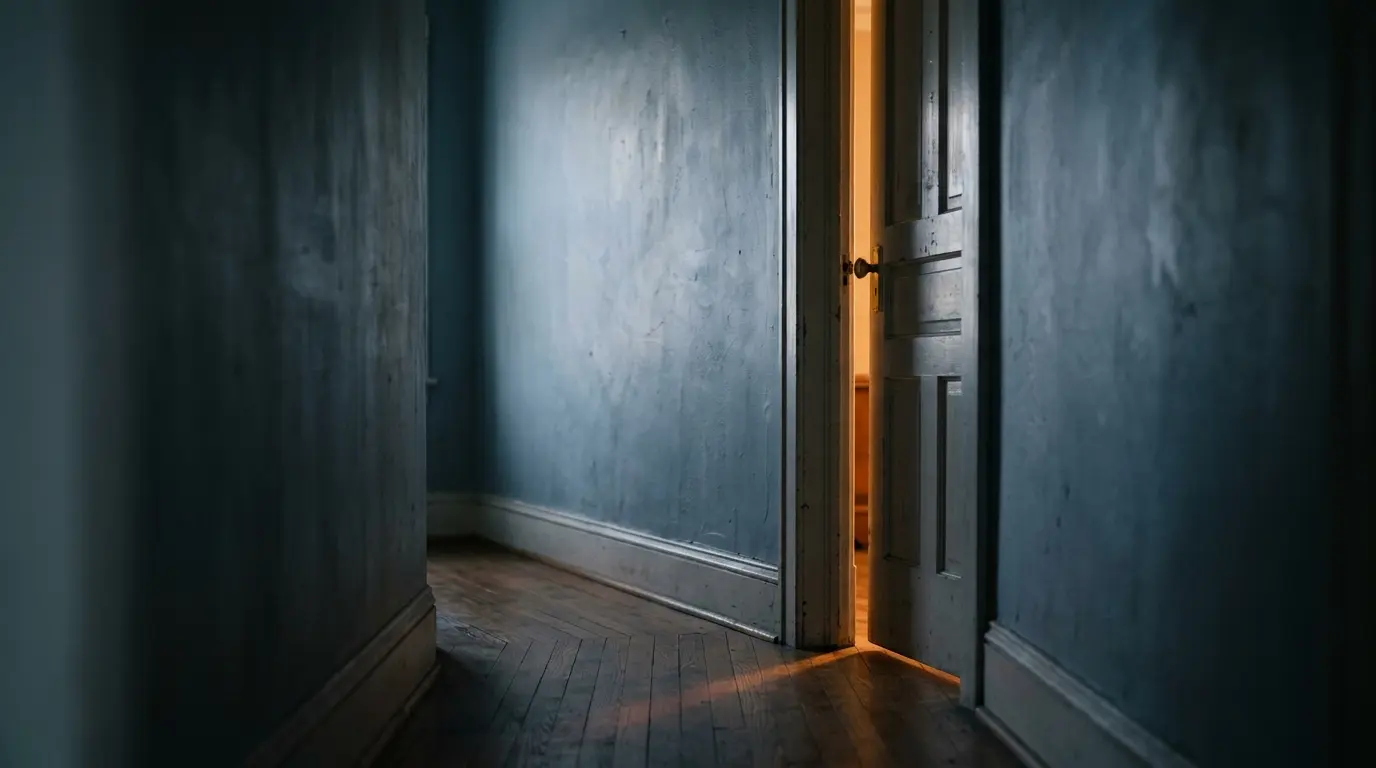
So the next time the dream hands you a door at the end of a hallway you don’t recognize, the real question isn’t what is the universe telling me. It’s simpler, and harder. What part of your own house have you agreed never to enter — and what would it cost you to finally turn the handle?
This article offers symbolic and reflective readings of hidden-room dreams. It isn’t a diagnosis or a forecast, and the only person who can confirm what your particular locked door holds is you.




Alex Turner
Alex Turner is the editorial pen name used for articles published on Signs of Universe. The website covers dreams, symbolism, and cultural interpretations for informational and reflective purposes. Alex Turner is not a medical, mental health, scientific, or spiritual authority.