Why Grieving People Are Drawn to the Color Grey: Emotional Meaning and Symbolism
This article explores the symbolic and emotional side of being drawn to grey during grief. It is reflective, not medical. Grief affects people in different ways, and if sadness becomes heavy or lasting, a licensed mental health professional is the right kind of support — not a color article.
You opened the closet and noticed it without planning it. Charcoal. Slate. Ash. Fog. Somewhere after the loss, the bright things drifted to the back and grey quietly took over.
The short answer: being drawn to the color grey during grief usually reflects a need for visual quiet — grey asks nothing from you, and after a loss, “nothing” can feel like relief. It is less a fashion choice and more an emotional one, a way of matching the outside world to a muted inside.
If you have been reaching for grey without deciding to, you are not doing anything strange. Many people describe the same drift after a hard goodbye, a slow season, or a stretch where color simply felt like too much. What that pull may mean, why neutral tones feel safe, and when grey stops comforting and starts isolating are the questions worth sitting with.
What Grey Represents When Everything Feels Like Too Much
Grey sits between black and white. It does not commit to either. That in-between quality is part of why it feels honest during grief, when nothing feels finished and clear answers are hard to find.
Bright colors carry demands. Red asks for attention. Yellow insists on cheer. Blue pulls the mind toward thinking. Purple color symbolism carries the weight of royalty, ceremony, and sacred authority. Grey makes no request at all. For someone carrying loss, a color that asks for nothing can feel like the only color that understands.
This is why the pull toward grey rarely feels like a decision. It feels like recognition. The outside finally matches the inside.
Grey as a Pause, Not a Verdict
It helps to read grey as a pause rather than a sentence. A grey season is often the mind giving itself permission to feel less, see less, and decide less for a while.
That pause is not the same as giving up. Many people move through a quieter, greyer stretch and slowly find color returning on its own, without forcing it. The same way grief itself softens in uneven waves rather than on a schedule.
A similar pattern appears when a white feather shows up at a tender moment — grief tends to attach meaning to small, quiet things precisely because the loud things feel like too much.
The Cultural Side of Grey: Mourning, Memory, and Restraint

Grey has carried meaning across cultures for a long time, and most of it circles the same themes: mourning, humility, and the space between worlds.
In Victorian mourning customs, grey was a recognized stage of “half-mourning.” After the heaviest period of full black, the bereaved were allowed to move into grey and soft mauve — a visible, gentle signal that grief was changing shape without being over. Color was used as a language for where someone stood in their loss.
In many spiritual traditions, grey is linked to humility, neutrality, and quiet contemplation rather than celebration. It is the tone of ash, of stillness, of stepping back from the noise of ordinary life. According to the symbolism and psychology of color, neutral tones like grey are widely associated with calm, restraint, and emotional distance — which is part of why they feel natural during a season of withdrawal.
None of this proves anything about your specific closet. But it shows that the instinct is old and human. People have reached for grey during loss for a very long time.
When Grey Comforts and When It Starts to Trap
Here is the distinction worth paying attention to, gently and without alarm.
Comforting grey feels like relief. You put on the grey sweater and your shoulders lower. The world dims to a level you can handle. You can still function, still go out, still connect when you choose to.
Trapping grey feels heavier. The idea of choosing any color feels exhausting. Grey is not soothing anymore — it is the only option that feels possible, and it slowly spreads from clothes to food to mood to who you are willing to see.
The first is a healthy kind of rest. The second can be a sign that grief has settled into something that deserves more support.
A Gentle Way to Notice the Difference
You do not need a test or a protocol. You only need honest attention.
Notice whether color still feels possible, even if you are not choosing it yet. Can you imagine wearing something brighter next month without dread? Does a colorful object in the room feel neutral, or does it feel like too much?
Notice whether grey is the only thing spreading. If grey clothing slowly became grey meals, grey rooms, and avoiding everyone but the most neutral company, the quiet may have tipped from rest into withdrawal.
If that wider shutdown is happening, it is not a failure and not something to fix alone. It is the point where talking to a professional makes sense. Sometimes the same fatigue shows up in other ways too, like feeling tired for no clear reason, and it is worth taking seriously rather than pushing through.
Letting Color Return on Its Own Terms
The kindest approach to a grey phase is not to force brightness back to prove you are healing. Forcing color rarely works and often backfires, because it treats a tender state like a problem to overcome.
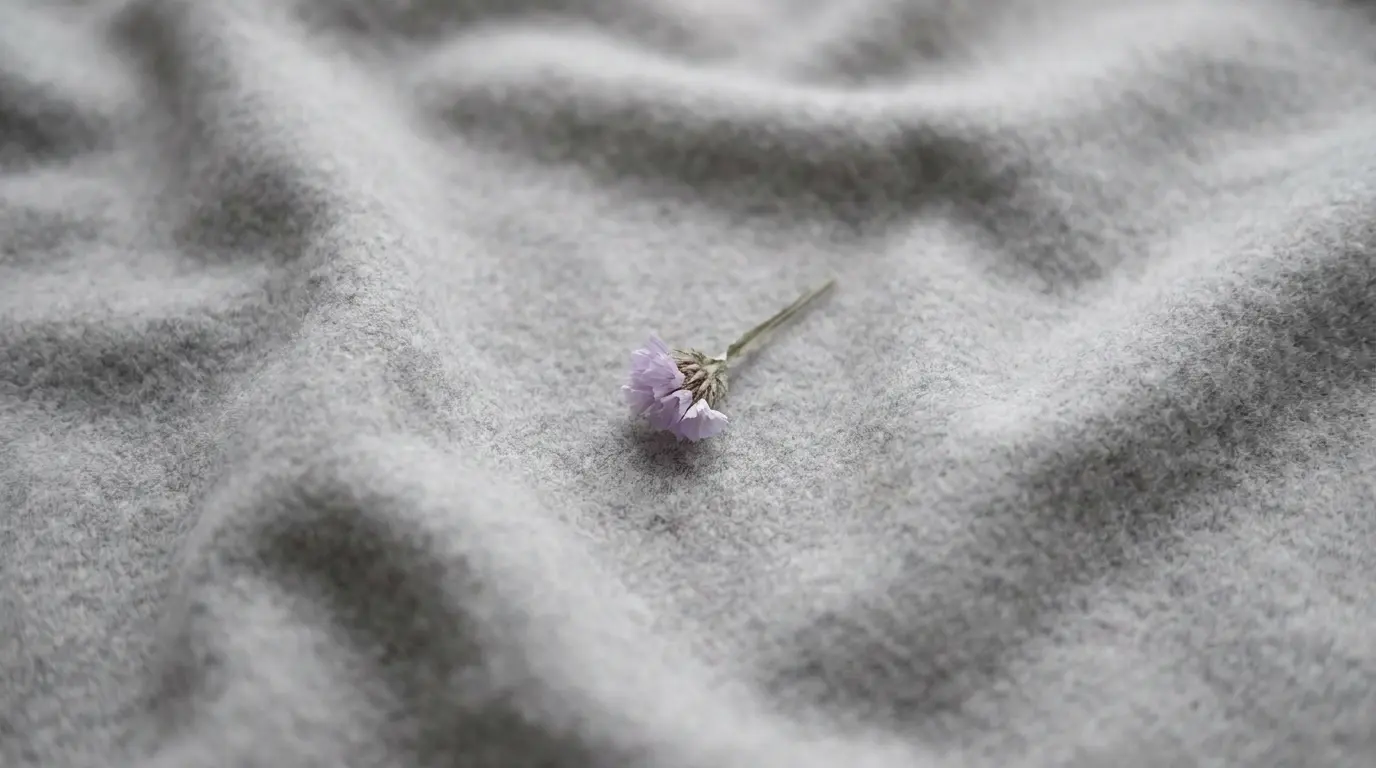
A softer path is to let one small color sit nearby without pressure. A single flower on a grey table. One warm object on the shelf. Not to replace the grey, but to keep a door slightly open.
If color feels welcome, that is a quiet sign the season is shifting. If it still feels like too much, that is information too, and grey can stay as long as you need it. Healing is not measured by how fast the brightness comes back.
The Color That Held You for a Reason
Grey is not the absence of feeling. It is often the most honest color available when everything else feels like too much to hold.
Every bright thing you set aside was a small act of self-protection. Grey gave you a place to rest your eyes and your heart while the harder work of grieving happened underneath. That is not giving up. That is the mind being gentle with itself.
So the next time you open the closet and see only grey, you do not have to reach for the brightest thing to prove anything. Let the grey be what it is — a quiet companion for a loud loss — and trust that color will come back when you are ready for it, not a moment before.
This article offers symbolic and emotional reflection, not medical or psychological advice. If grief feels overwhelming, or if withdrawal from color extends into withdrawal from food, rest, or the people who care about you, please reach out to a qualified professional. Grey held you for a reason. Knowing when to ask for more support is its own kind of strength.
Related Posts




Alex Turner
Alex Turner is the editorial pen name used for articles published on Signs of Universe. The website covers dreams, symbolism, and cultural interpretations for informational and reflective purposes. Alex Turner is not a medical, mental health, scientific, or spiritual authority.