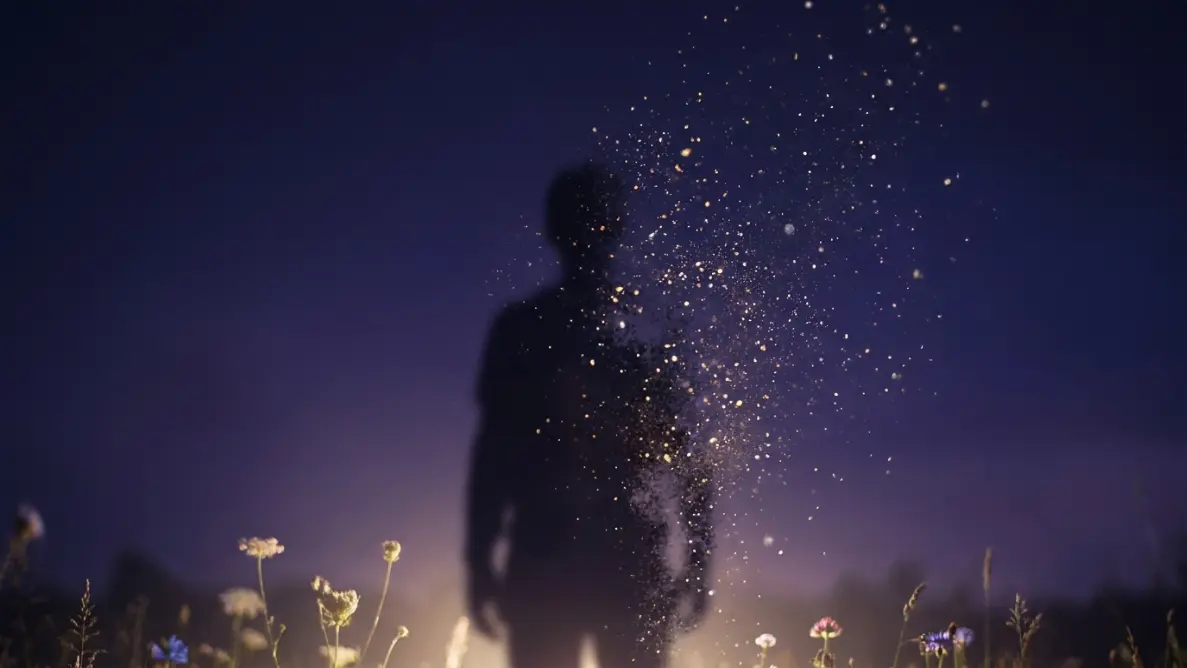
Losing Interest in People You Once Loved: Inner Shift or a Sign to Pause?
Most people will tell you that losing interest in people you once loved means something is wrong with you. That you have grown cold. That you have become difficult to be around.
But the truth is usually gentler, and more complicated, than that. Slowly and quietly drifting from people who used to be the center of your world is one of the most misunderstood human experiences. And the guilt that comes with it can weigh heavily when you do not understand what might be behind it.
This article explores what losing interest in people you once loved might mean, from a reflective and spiritual point of view. It is not a diagnosis, and it does not try to tell you what is happening inside you. Some of what looks like detachment can be part of an inner shift. Some of it can be a sign that you are tired, stretched thin, or carrying something that deserves real support. Often it is a mix. The goal here is not to label your experience, but to offer a kinder way of looking at it.
If at any point you recognize a heaviness that does not lift, please hold on to one idea as you read: noticing the difference between a passing shift and something that needs care is not something to settle alone. A qualified professional is the right person to help with that.
The Moment You Realized You Did Not Feel Anything

Losing interest in people you once loved rarely happens all at once. There is often no dramatic argument, no betrayal, no single event that flips a switch.
One day you simply notice. A close friend called and you let it ring. Your partner told a story they were excited about and you caught yourself somewhere else entirely. A family dinner that used to feel warm now felt like something to get through.
The strange part is that you often cannot explain why. Nothing obvious happened between you and these people. They did not change. Something in you did, and that is the part that makes it so confusing.
When the Guilt Hits Harder Than the Distance
For many people, the detachment itself is not what keeps them up at night. It is the guilt.
Because you remember loving these people. You remember caring. You remember a version of yourself that would have dropped everything for them.
And now that version can feel like a stranger. The questions start: Am I a bad person? Did I ever really care? Those questions rarely lead anywhere useful, and they are almost impossible to switch off, especially when the people around you have no idea what shifted inside you. If that quiet loneliness feels familiar, you may recognize it in the experience of feeling alone even around people.
A Spiritual Way of Understanding the Shift

Here is where many people land when they search for meaning in losing interest in people you once loved. Spiritual traditions across the world have described this exact experience for centuries, and what they say about it may surprise you.
The Frequency Shift Nobody Warned You About
Many spiritual traditions that work with energy describe human awareness as operating on a kind of frequency. When that frequency changes, through grief, growth, crisis, or simply the slow accumulation of life experience, relationships built around your old self can start to feel off.
Not wrong. Not bad. Just misaligned. It is the same reason a song you loved at sixteen can feel almost unbearable at thirty-five. The song did not change. You did. In this view, losing interest in people you once loved can be read as a sign that something inside you has quietly updated, and not every connection fits the new version of you.
When Your Inner World Evolves Faster Than Your Outer One
Inner growth rarely happens on a schedule your relationships can follow. You might spend months in a quiet internal change, questioning your values and shedding old beliefs, while the people around you are exactly where you left them.
That gap creates a particular kind of loneliness. Not the loneliness of being abandoned, but of standing in a room where no one can quite see what you see. Many who go through this also describe feeling empty during a spiritual awakening, as the old sense of meaning loosens before a new one settles in.
What Older Traditions Called This
Hindu philosophy has a word, vairagya, for a natural loosening of worldly bonds that some describe alongside deeper inner development. It is not treated as a failure of love, but as a sign of growth.
The Sufi tradition speaks of ghurba, a kind of spiritual exile, which the mystic poets described as both beautiful and painful. And the early Christian Desert Fathers wrote of acedia, a flatness that could arrive during intense inner change. They did not see it as a disease, but as a passage. These are old, human ways of saying the same thing: sometimes a season of distance is part of becoming someone new.
When the Distance Might Be Asking for Care
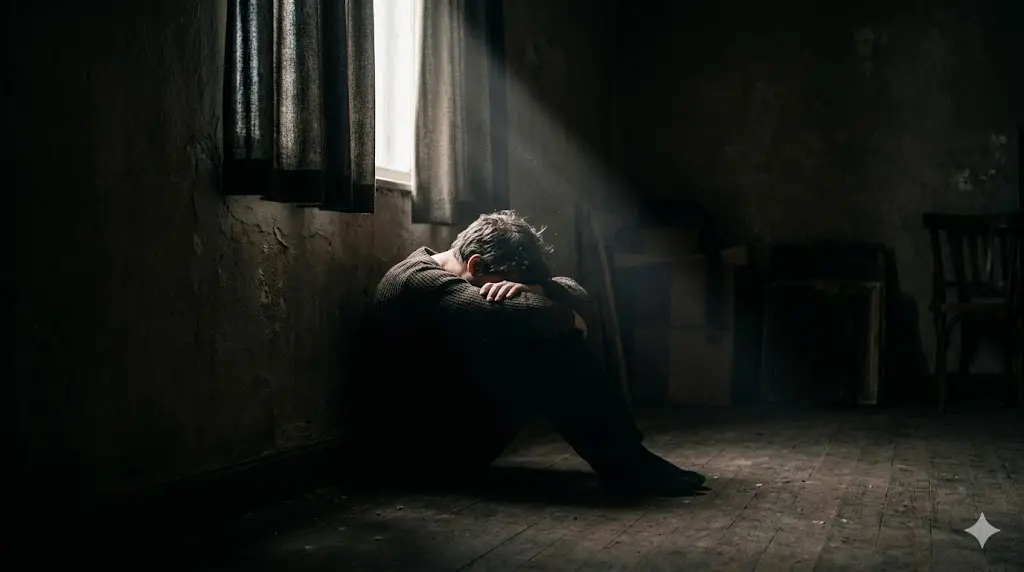
This part matters just as much as the spiritual side, and it deserves honesty.
Sometimes losing interest in people you once loved is not about inner growth at all. Sometimes it is a sign that you are exhausted, overwhelmed, grieving, or carrying more than you can hold right now. And from the inside, a season of growth and a season of struggle can feel almost identical.
That is exactly why this is not something to sort out on your own. A blog cannot tell you which one you are living through, and it should not try. What a reflective article can do is gently point out when it may be time to reach for support.
When It Is Worth Talking to Someone
Please consider speaking with a qualified professional if the distance you feel comes with a heaviness that does not lift, if it spreads into everything rather than just certain relationships, if joy seems to drain out of things you used to love, or if it arrives alongside changes in sleep, appetite, energy, or a sense of hopelessness about the future.
None of these mean something is wrong with you as a person. They are simply signs that the kindest next step might be a real conversation with someone trained to help. Reliable, plain-language information on what emotional detachment can involve is available from trusted sources like Psychology Today, and a therapist can help you make sense of your own situation in a way no article can.
Why It Is Risky to Call Everything an Awakening
There is a real temptation, especially in spiritual spaces, to label every difficult feeling as growth. Calling a hard season an awakening can feel empowering. It gives the pain meaning.
But there is a quiet danger in that, too. If someone is genuinely struggling and convinces themselves it is purely spiritual, they may not reach for support that could truly help. Growth and difficulty are not opposites, and they are not in competition. A person can be changing inside and also going through a hard time at once. Holding both, honestly, is wiser than forcing the experience into a single tidy story.
What Can Gently Help, Whatever the Cause

Whether this distance is part of an inner shift, a sign you need rest and support, or some mix of both, a few gentle things tend to help.
Let Relationships Breathe Without Burning Bridges
One common mistake during a season of change is the dramatic exit, cutting people off or announcing that you have outgrown them. There is rarely a need for that. You can quietly spend less time in spaces that drain you, without grand declarations. Let some relationships fade naturally and let others surprise you. Often, one honest connection with someone who simply gets it can ease weeks of feeling unseen.
Look After the Ground You Stand On
Sleep, food, movement, time outside, and gentle routine are not spiritual shortcuts. They are the foundation everything else rests on. When that foundation is shaky, it is very hard to tell a passing mood from something deeper. Caring for the basics, and getting professional guidance when you need it, gives you steadier ground to stand on.
Name It, Without Forcing a Label
One thing helps almost universally: saying it plainly to yourself or to someone you trust. Something like, “I have changed. The way I connect has shifted. I do not fully understand it yet, and I am not going to pretend it is not happening.”
That simple, honest acknowledgment, without judgment and without rushing to a diagnosis, creates a little breathing room. The experience stops being something happening to you and becomes something you are moving through with awareness.
FAQ — Losing Interest in People You Once Loved
Is losing interest in people you once loved a sign of spiritual growth?
It can be, but not automatically. Many people describe a period where old connections feel misaligned during a season of inner change. The gentlest way to look at it is whether the distance feels like it is moving you toward something, or simply draining everything. If everything feels flat and heavy, that is worth taking seriously and talking through with a professional.
Why do I feel so guilty about not caring the way I used to?
The guilt usually comes from the gap between who you remember being and who you are now. Part of you still carries the image of someone who cared deeply, and the present moment seems to contradict it. Guilt here is not proof that you did something wrong. It is the friction of change.
Can you love someone and still lose interest in them?
Yes. Love and day-to-day interest are not the same thing. You can deeply care about someone’s wellbeing and still feel unable to engage the way you once did. The care does not vanish. The energy to express it through the old habits sometimes does, especially during big life transitions.
Should I tell the people I am pulling away from?
It depends on the person and the relationship. Some people can hear “I am going through something internal that is changing how I connect” and hold space for it. Others may take it as rejection no matter how kindly you say it. A gentle rule: be honest with people who have earned that honesty, and allow yourself to be quieter with those who have not.
When should I talk to a professional about this?
If the distance lasts, spreads into every part of life, drains the joy from things you used to love, or comes with a sense of hopelessness rather than quiet change, please reach out to a qualified therapist or healthcare provider. There is no conflict between inner growth and getting support. Often the steadiest path includes both.
A Final Word

Losing interest in people you once loved does not collapse into one tidy answer, and anyone offering you a single neat explanation is probably skipping the parts that matter most.
What this experience really asks of you is gentleness. The willingness to look at the distance without rushing to call it either growth or something broken. Maybe you are quietly outgrowing an old version of your life. Maybe you are tired in a way that deserves care. Maybe it is both at once. You do not have to decide today, and you do not have to decide alone.
The next time someone tells you that drifting from people you love means something is wrong with you, you can hold a kinder possibility, and also stay honest enough to ask for support if you need it. That willingness to look without flinching is not coldness. It is the beginning of real clarity.
The spiritual, symbolic, and reflective perspectives shared here are meant only for personal exploration and self-awareness. They are not a substitute for professional mental health support. If you are experiencing persistent emotional numbness, a lasting loss of interest in daily life, or other signs of depression, please reach out to a qualified therapist or healthcare provider to help you navigate this season safely.
Related reading: Ego Death: What Might Be Happening in Your Mind When Identity Dissolves.


Alex Turner
Alex Turner is the editorial pen name used for articles published on Signs of Universe. The website covers dreams, symbolism, and cultural interpretations for informational and reflective purposes. Alex Turner is not a medical, mental health, scientific, or spiritual authority.