Broken Mirror Spiritual Meaning: Bad Luck or New Beginning?
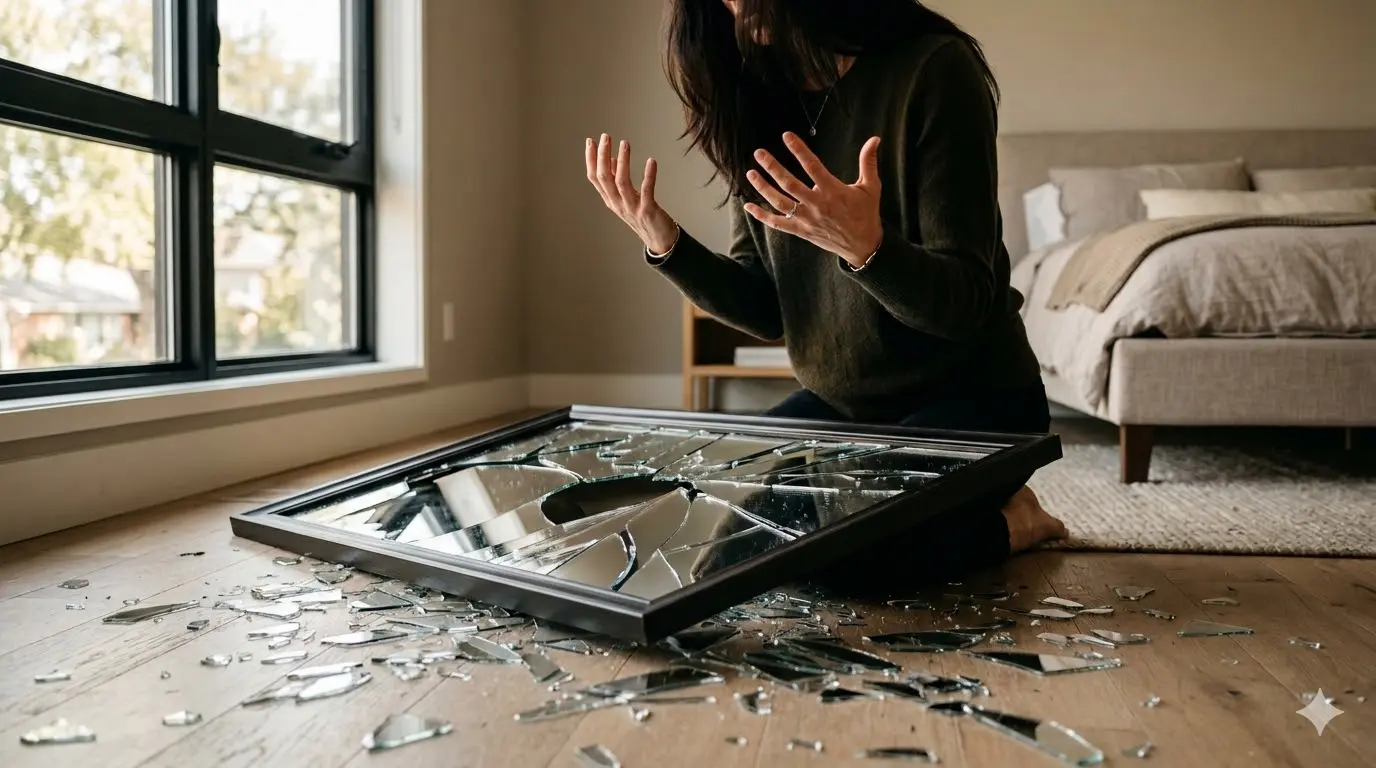
A broken mirror is commonly associated with bad luck, disrupted identity, the end of a cycle, or a need for self-reflection—but no interpretation is universal, and the seven-year curse is folklore rather than a prediction. First secure the broken glass and identify the physical cause; any spiritual meaning can then be treated as a personal or cultural symbol.
On this page
The Mirror as a Spiritual Symbol
What the Break Tends to Mean, Depending on the Context
The Seven-Year Bad Luck Belief: A Recorded Explanation
Why a Break Can Seem Connected to Later Events
Safe Cleanup and an Optional Symbolic Reset
Reflecting on the Timing Without Predicting the Future
FAQ
The Real Reflection Left Behind
The Mirror as a Spiritual Symbol
A mirror can serve as an image of identity because it shows a reflection of the person looking into it. If it breaks during a change in your life, you might associate the fractured image with a changing self-image. That is a personal metaphor, not evidence that your soul or future has been damaged. If the mirror is intact and your question concerns its position, the guide to a mirror facing the bed examines placement beliefs separately from breakage.
Historical stories have also connected reflections with the soul. Those stories help explain the symbolism, but they should be attributed to a particular source rather than assigned to every ancient culture.
What the Break Tends to Mean, Depending on the Context
If the mirror broke during a relationship ending, a move, or another change, you might choose to use it as a marker of that transition. The break did not cause the transition or confirm that it was destined. Ask what you already knew about the situation before the accident.
If life already feels chaotic, use the accident as a reminder to check what needs practical attention: the mounting, the room, or a decision you had been postponing. There is no established evidence that a household mirror stores a spiritual charge and releases it when it breaks.
Some folk readings describe a mirror as taking or deflecting misfortune. Treat that as folklore, not a verified protective event. The common useful thread is simply that an unexpected break can mark a moment worth noticing without turning it into a curse.
The Seven-Year Bad Luck Belief: A Recorded Explanation
The Pitt Rivers Museum’s account of mirrors describes a Roman belief connecting a reflection with the soul and a broken mirror with a seven-year renewal cycle. This is an account of a belief, not evidence that a broken modern mirror causes seven years of harm.
It also does not establish a complete route by which every later version spread. A museum summary can document an explanation of the superstition while leaving its transmission and variation open. You do not need to accept the story as a forecast to understand why the number became attached to broken mirrors.
Why a Break Can Seem Connected to Later Events
If you expect bad luck after the accident, it is easy to connect a later setback with the mirror. To assess that connection fairly, consider the ordinary difficulties that happened before the break, the good events afterward, and whether there is any actual causal link.
A personal association can still be meaningful. If another object has prompted the same question, compare a stopped clock and the meaning attached to its time. Neither a striking match nor an emotional response establishes a prediction.
Safe Cleanup and an Optional Symbolic Reset
After the area is safe, an optional reflection can help you mark the incident in your own way. You do not need a cleansing ritual to cancel a curse, and choosing not to perform one does not create bad luck.

What to Do First
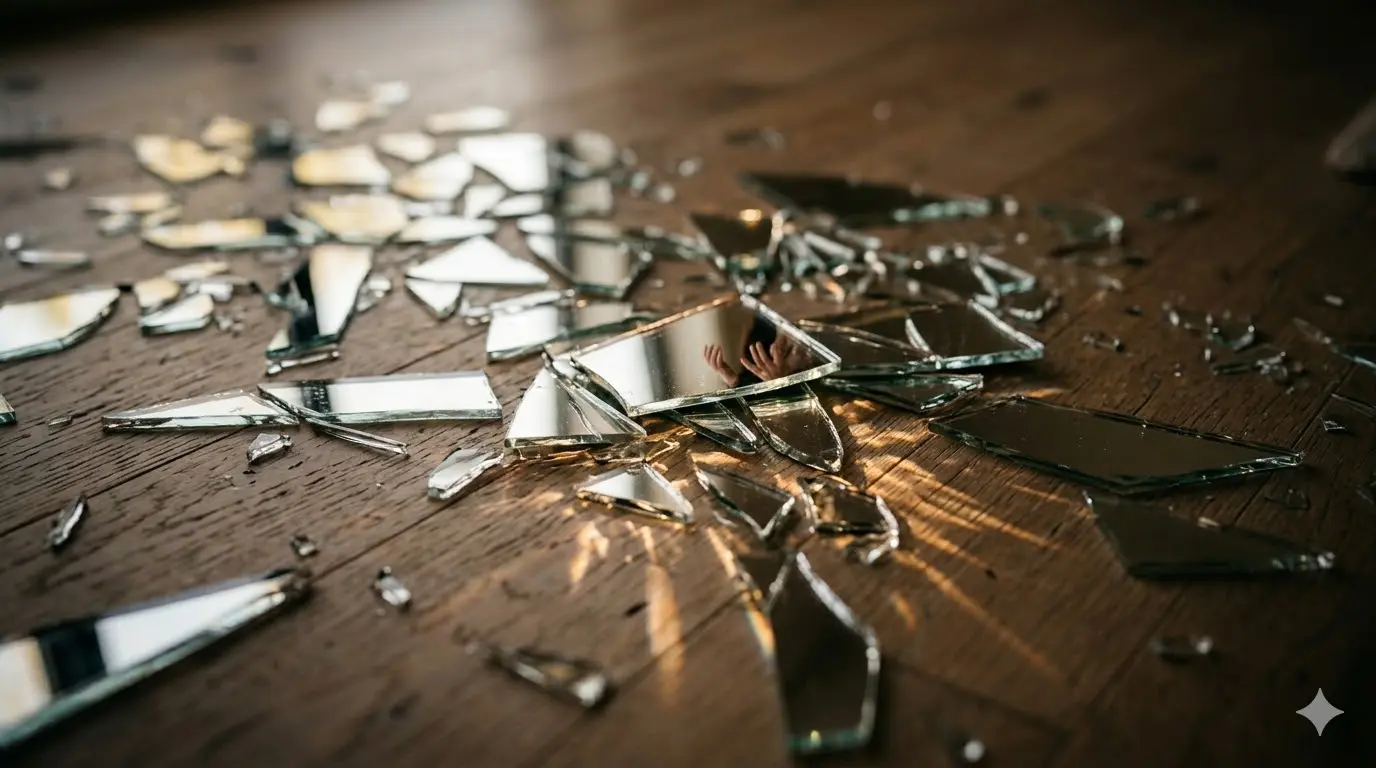
1. Secure the area first. Keep children and pets away, put on closed shoes, and do not handle sharp fragments with bare hands. Fear does not amplify “negative energy,” but rushing can increase the chance of a cut.
2. Clean up carefully. Keep sharp fragments contained and follow your local waste service’s instructions for broken mirror glass. A symbolic preference for a material should never override safe handling or disposal.
3. Dispose of pieces safely. Use a rigid, puncture-resistant container and follow local waste guidance. Do not bury glass or throw it into running water; a symbolic release should not create a hazard for another person, animal, or sanitation worker.
4. Reset the room without adding risk. Open curtains, ventilate if appropriate, clean the frame area, and choose a non-flame ritual such as a brief reflection or rearranging the space. If you use incense or candles, follow fire-safety rules and never leave a flame unattended.
5. Reflect if you want to. You could name something you are leaving behind or a practical step you want to take. This is optional; safe cleanup and repair do not depend on an intention.
Salt, Moonlight and Intention
Salt can be used symbolically if that practice matters to you, but it has no demonstrated ability to absorb spiritual residue. Keep it away from pets and surfaces it can damage, then dispose of it normally. The left-shoulder salt-tossing custom concerns a separate accident superstition; it is not a cleaning method for damaged mirrors.
Moonlight may serve as a personal symbol of renewal. It does not physically “recharge” a mirror, and moving heavy mirrors to a window can create a new fall risk.
Disposing of the Pieces Mindfully
Remove the fragments promptly because they are sharp, not because broken energy accumulates. Check the wall anchors, adhesive, frame, heat exposure, impact, and any manufacturing damage before replacing the mirror.
Reflecting on the Timing Without Predicting the Future
Not every broken mirror is a cosmic telegram. But sometimes the timing is impossible to ignore.
Timing and Life Context
If the break occurred during a transition, the timing may feel meaningful because the event gives visible form to an already active emotion. That can be used as a reflection prompt without claiming the universe caused the glass to fail.
Ask yourself: what was I thinking about right before it happened? What have I been avoiding lately?
Repeating Patterns
Repeated breakage is a reason to check mounting, storage, and other physical conditions. Several accidents do not establish a spiritual pattern. Reflect on the timing if you wish, but do not use it as evidence that further harm is coming.
Spiritual awareness isn’t about fear. It’s about paying attention.
Noticing Your Reaction
Notice your reaction without treating it as a verdict. Dread, relief, or surprise may tell you what you associated with the event. None of those feelings establishes that the mirror carried a warning or that your first interpretation is the correct one.
If the reaction is distressing, take a break from searching for omens and talk with someone you trust. You can replace the mirror without first resolving a symbolic question.
FAQ
Does breaking a mirror bring seven years of bad luck? No evidence supports a curse. The Roman seven-year renewal explanation is a commonly repeated origin story, but popular accounts often provide little primary documentation. Treat it as folklore, not a timeline for misfortune.
What should I do immediately after breaking a mirror? Keep people and pets away from the fragments, avoid bare-hand contact, and follow local waste guidance. Do not bury the glass or throw it into a river. A personal ritual is optional and should come only after the area is safe.
Is a broken mirror a bad spiritual omen? It does not establish an omen. Different people may interpret the break as ending, release, warning, or simple accident. A safe interpretation does not predict harm or demand a costly remedy.
Can a broken mirror affect the energy of my home? A damaged mirror can affect safety, light, and how a room feels. Energy-based traditions may add symbolic meaning, but there is no established evidence that the object stores or releases a measurable spiritual energy.
What if it breaks on its own? Keep the area clear and arrange a physical inspection of the mirror and its mounting. For the related question of an object breaking without visible contact, see glass breaking by itself. The absence of an obvious cause does not verify a spiritual message.
The Real Reflection Left Behind
A shattered mirror is a household safety problem first. It may also bring up thoughts about identity, loss, or change, depending on its place in your life.
If a reflective reading appeals to you, ask what the mirror represented before it broke. Your answer can give the accident personal context without turning it into an instruction or a prediction.
The universe does not need to be declared the cause for cracked glass to become a useful image. What matters is whether the event helps you inspect a real transition without replacing evidence with fear.
Choose a simple, safe reflection practice if it helps you mark a transition. You do not need to cleanse away a curse or wait seven years before replacing the mirror and moving on.
Your reflection is still whole — even when the mirror isn’t.
As a final thought, the cultural traditions, folklore, and symbolic belief systems shared throughout this piece are offered solely to inspire your own inner exploration. They are meant to be a reflective guide, not a substitute for professional psychological, medical, or spiritual advice. Ultimately, the best approach is to trust your own judgment when deciphering life’s mysteries, and to never hesitate in seeking qualified support whenever you feel you truly need it.
For another protective-object belief, see what a broken evil eye bracelet can and cannot establish. The object’s meaning and the physical cause of its damage are separate questions.


Alex Turner
Alex Turner is the editorial pen name used for articles published on Signs of Universe. The website covers dreams, symbolism, and cultural interpretations for informational and reflective purposes. Alex Turner is not a medical, mental health, scientific, or spiritual authority.