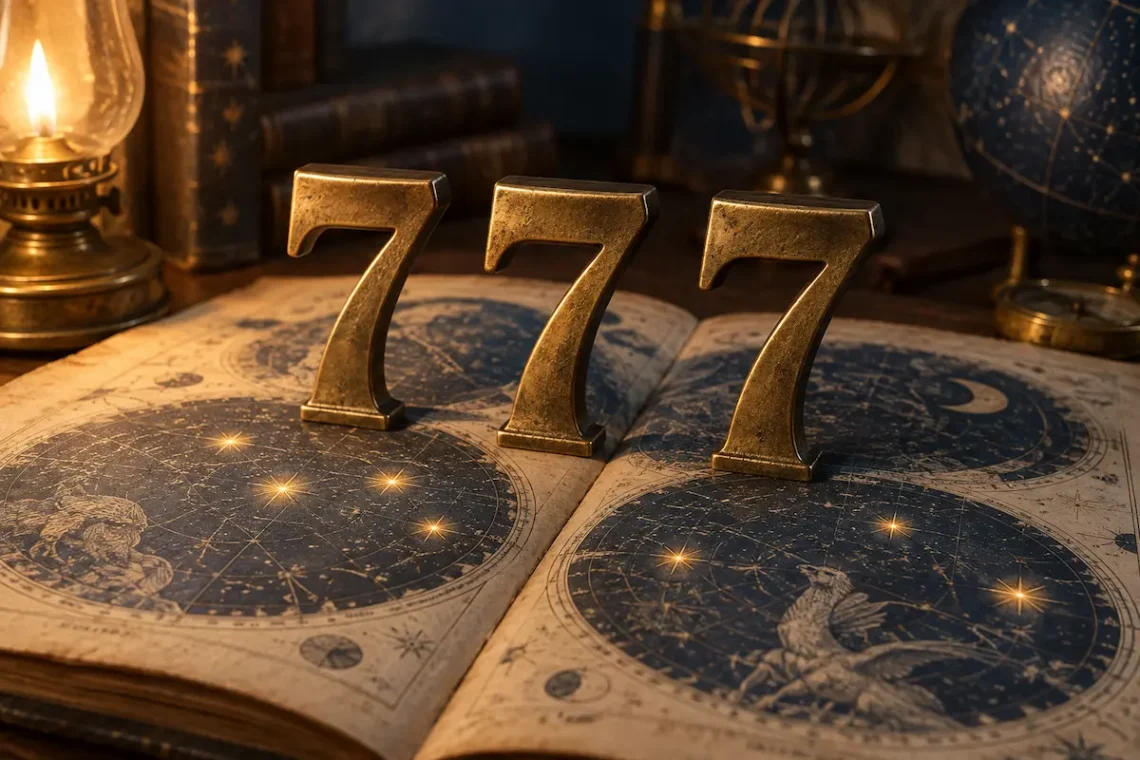
Where the Idea That 777 Is Lucky Actually Comes From
Two of the most visible pages about the 777 angel number meaning disagree on the most basic point. Mental Floss presents 777 as a sign of good fortune, spiritual guidance, and growth. Numerologist.com says plainly that 777 is not a luck sign and reads it instead as the end of a long stretch of inner work. If the meaning came from one old, settled tradition, that split would be hard to explain.
The short answer is that 777 carries two different kinds of material. The older layer is documented: seven is the day of rest that closes the creation account in Genesis, and seven was the number of moving lights ancient sky watchers followed, which still gives the days of the week their names. The newer layer, 777 as a message meant for the person who sees it, was popularized by angel-number books, including a 2005 pocket guide by Doreen Virtue that grew out of a chapter in one of her earlier books. The piece most readers expect to find, a clear historical record of seven as a lucky number, is the one we could not trace to a reliable source.
None of this means that seeing 777 predicts luck, money, or any particular outcome. What it does allow is something the usual meaning lists skip: checking which parts of the 777 story have a paper trail.
Where Current Sources Disagree on the 777 Angel Number Meaning
Contemporary readings of 777 do not share one method. Mental Floss and PleaseNotes treat the single digit 7 as an inward, spiritual number and describe the triple sequence as an amplified version of it, while Numerologist.com works from the sum of the three sevens. Where the pages part ways most clearly is on luck.
- Mental Floss (Nitya Rao, March 2026) links 777 with good fortune, spiritual guidance, and growth, and it credits the author Doreen Virtue with coining the term “angel numbers.”
- Numerologist.com rejects the luck reading and describes 777 as a sign that a long phase of private preparation is complete and ready to be shared.
- PleaseNotes frames 777 around spiritual alignment and inner wisdom.
These are interpretations, and each belongs to the publication that states it. Numerologist.com ties its reading to tarot, noting that three sevens add up to 21, the number of The World card, but none of the three pages cites a dated historical source for its reading of 777. Mental Floss does point to two reasons the number 7 feels special, the seven days of the week and the seven classical planets of ancient astrology, but it does not link a source for either. Both of those points can be checked, and they are checked in the next two sections.
There is also a practical difference between 777 and some other repeating numbers. Sequences like 3:33 can appear on clocks, and our pieces on seeing 333 on clocks and why 222 keeps showing up spend much of their time on attention and on why a sequence starts to stand out. A standard clock never shows 7:77, so 777 has to turn up elsewhere, such as on prices, receipts, page numbers, or license plates. That changes where people meet the number, not where its meaning came from.

The Seventh Day: How Genesis Ties Seven to Completion
A widely known text that ties the seventh day to finished work is the opening of the Hebrew Bible. Genesis describes creation unfolding over six days. In Genesis 2:1–3, the heavens and the earth are finished, God rests on the seventh day, and God “blessed the seventh day and hallowed it.”
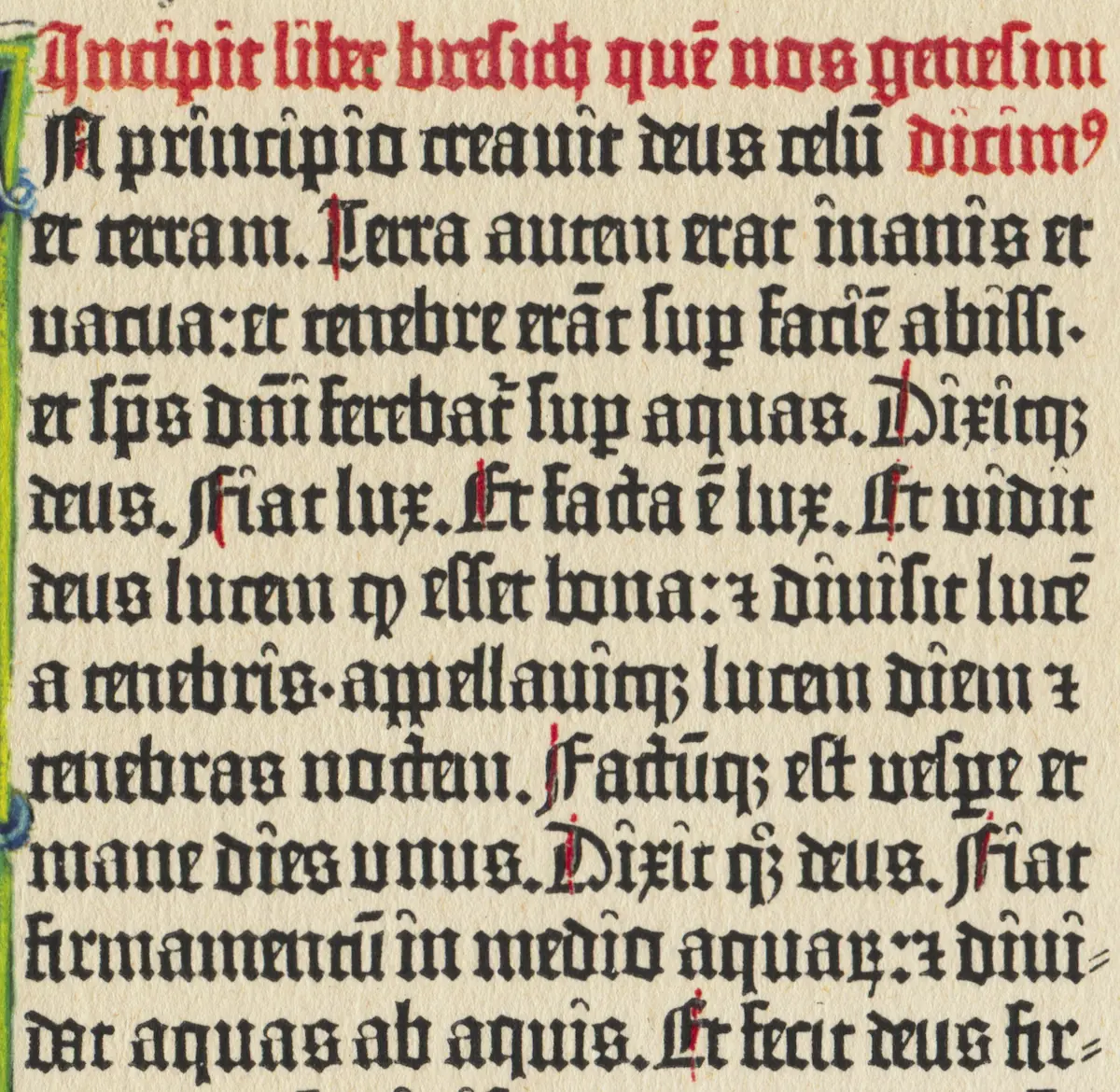
That day did not stay inside the story. The WebExhibits calendar guide notes that this seventh day became the Jewish day of rest, the Sabbath, which falls on Saturday. So the association is not only literary. It shaped a weekly practice that repeated the pattern of six days of work followed by a seventh set apart.
It matters just as much what this passage does not say. It concerns the seventh day, not the number seven as a force, and it says nothing about 777, about luck, or about numbers carrying personal messages. When a modern page describes 777 as “completion,” that reading resembles the pattern in Genesis 2, although Numerologist.com, the page reviewed here that builds on completion, draws the idea from tarot rather than from Genesis. When a page describes 777 as “luck,” that idea does not come from this passage.
Seven Wandering Lights and the Week Named After Them
The second old source of seven is the sky. Ancient sky watchers could see the Sun, the Moon, and five other bright bodies. A Lowell Observatory column on the planets and the days of the week explains that those five became known as planets, from the Greek planetes, meaning “wanderers,” and that the Sun and Moon were also counted as planets when people believed the celestial bodies orbited Earth. Together, the Sun, Moon, Mercury, Venus, Mars, Jupiter, and Saturn were sometimes called the seven classical planets.

Those seven bodies still sit inside the English week, some directly and some through Germanic gods that took the place of Roman ones:
- Sunday and Monday come from the Sun and the Moon.
- Tuesday (Tiw), Wednesday (Woden), Thursday (Thor), and Friday (Freya) correspond to the days of Mars, Mercury, Jupiter, and Venus.
- Saturday keeps the Roman name of Saturn.
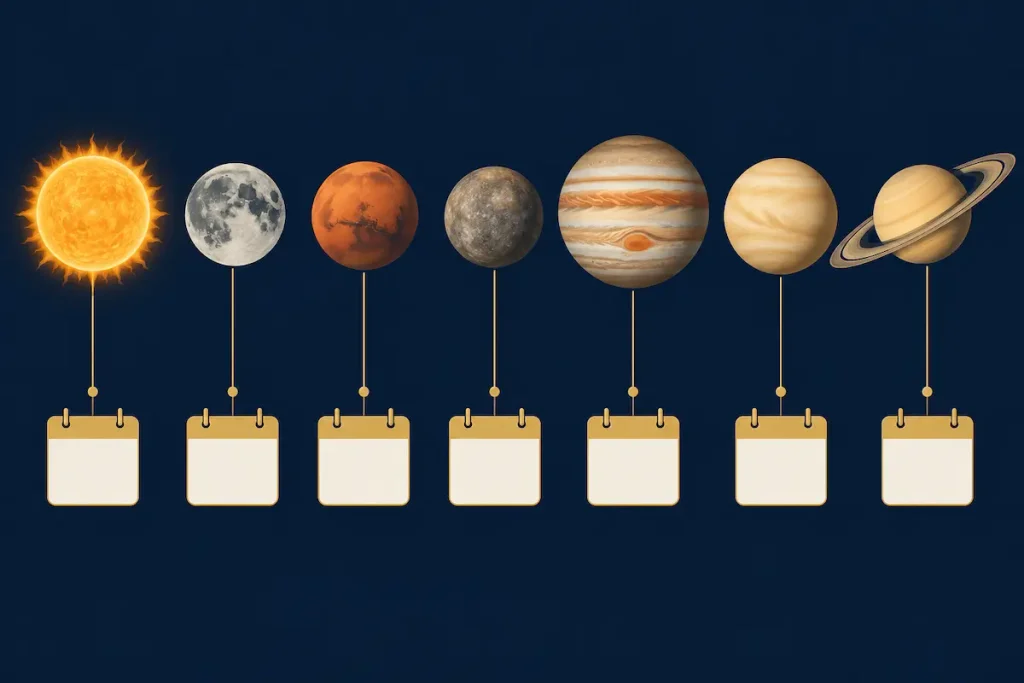
WebExhibits adds that most Latin-based languages also connect each weekday with one of these seven ancient “planets.”
What is not settled is where the seven-day week itself began. The same calendar guide states that almost nothing about its origin is known for certain. Babylon and Persia are among the places sometimes proposed, and the Lowell column notes that several cultures may have arrived at the idea independently. A Babylonian origin should therefore be read as a hypothesis, not a fact.
In these sources, the count of seven planets comes from what ancient observers could see in the sky. Whether that count set the length of the week is less certain: WebExhibits presents the planetary link as one viable theory and also discusses the idea that seven days roughly match a quarter of the Moon’s cycle. Neither source describes the number as lucky. The planetary names show why seven became structural and familiar in the calendar, but they do not show where the idea of seven as fortunate began.
When 777 Became an “Angel Number”
The step from “seven is an old, meaningful number” to “777 is a message for you” is recent, and its best-documented milestones are books. Doreen Virtue’s Angel Numbers: The Angels Explain the Meaning of 111, 444, and Other Numbers in Your Life was published by Hay House in 2005 as a pocket guide to number sequences up to 999. According to the book’s publisher description, that guide expanded on a shorter chapter about number sequences in Virtue’s earlier book Healing with the Angels. Mental Floss credits Virtue with coining the term itself; we have not independently confirmed the earliest use of the phrase.
The format of that book explains something about 777 that the older sources cannot. In a guide that assigns meanings to hundreds of sequences, 777 is one entry in a numbered series alongside 111, 333, and 555. Its place in the system comes from the series, not from a separate ancient tradition about triple sevens. Readings of other sequences, such as 555 after a life change, come from the same modern framework rather than from a separate older tradition for each number. The clearest test of that is the modern reading of 666, which sits alongside an older reputation that does come from a dated text.
We were not able to read the 777 entry in Virtue’s book directly, so this article does not attribute a specific 777 meaning to her. The readings described earlier belong to the publications that state them.

What Has a Paper Trail and What Doesn’t
Put side by side, the claims around 777 fall into three groups: things with a traceable source, readings that belong to a specific modern publication, and popular claims we could not connect to any reliable record.
| Claim | Kind of claim | Traceable origin? | Where it can be checked |
|---|---|---|---|
| Seven is the day of rest that closes creation in Genesis | Religious text | Yes | Genesis 2:1–3 |
| That seventh day became the Jewish Sabbath | Religious practice | Yes | WebExhibits calendar guide |
| Ancient observers followed seven moving lights | History of astronomy | Yes | Lowell Observatory column |
| English weekday names trace back to those seven bodies | Language history | Yes | Lowell Observatory column |
| The seven-day week began in Babylon | Hypothesis | Uncertain; one of several proposed origins | WebExhibits calendar guide |
| Repeating sequences as angel messages | Modern publishing | Partly: book milestones are documented; earlier informal use is not dated here | Hay House book record and publisher description |
| 777 signals good fortune | Contemporary interpretation | Not shown by the page that states it | Mental Floss |
| 777 signals completed inner work, not luck | Contemporary interpretation | Not shown by the page that states it | Numerologist.com |
| Seven has always been a lucky number | Popular claim | No reliable source located | — |
| 777 means luck because of slot machine jackpots | Popular claim | No reliable source located | — |
The table can be used as a filter for any page about the 777 angel number meaning. When a page says the number “has always” meant something, look for which row that claim belongs to. If it is completion, there is a real text behind the idea, even though that text is about a day rather than a number sequence. If it is structure, the sky and the calendar support it. If it is luck, the page is making the claim with the least documentation behind it.

“No reliable source located” is not the same as “false.” It means that the sources available for this article, which excluded casino affiliate pages and uncited meaning lists, did not show where the claim began. A future documented source could move a row.
So Is 777 Lucky?
On the evidence reviewed here, luck is the weakest part of the 777 story. The number seven has two well-recorded associations: the seventh day that ends the creation account, and the seven wandering lights behind the names of the week. Reading 777 as a personal message is a modern practice whose clearest milestones are published books, and the modern sources reviewed here do not agree on whether that message has anything to do with fortune.
If you came looking for the 777 angel number meaning, the more accurate way to describe it is as a sequence that draws on an old sense of seven as complete and ordered, read through a system of angel numbers popularized in books from the late 1990s onward. As with 11:11 on the clock, whatever meaning it holds comes from that reading, not from a guarantee written into the number.



Alex Turner
Alex Turner is the editorial pen name used for articles published on Signs of Universe. The website covers dreams, symbolism, and cultural interpretations for informational and reflective purposes. Alex Turner is not a medical, mental health, scientific, or spiritual authority.