Ankh Meaning in Ancient Egypt: What Museum Objects Actually Show
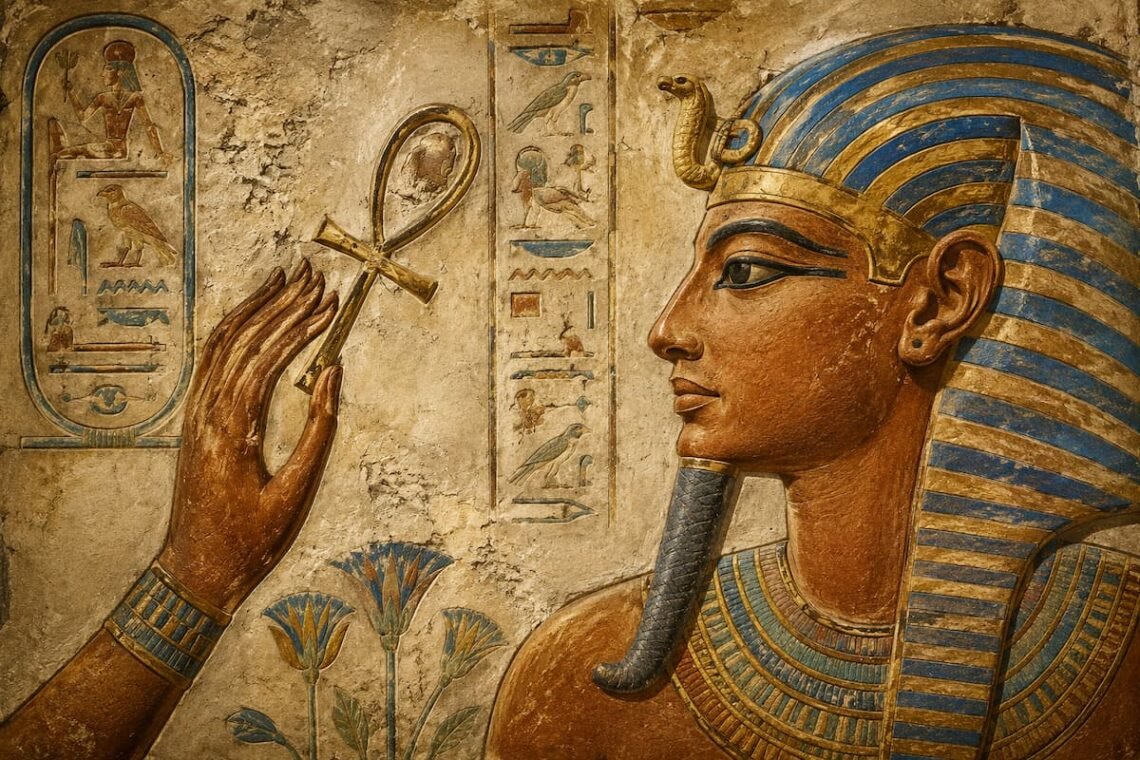
The ankh meaning in ancient Egypt is unusually well documented. The sign could write “live,” “alive,” or “life,” and it also became a broader symbol of life. What surviving museum objects add is context: the ankh could be carved into a ritual vessel, offered by a god to a king, made into a freestanding object, incorporated into a cosmetic spoon, placed on an amulet, or combined with other hieroglyphs.
The central meaning remains remarkably consistent. What changes is the way that idea of life is expressed through different objects, settings, and functions.
Ankh Meaning: The Short Answer Is “Life”
The safest historical starting point is linguistic rather than mystical. In its collection record for a ceremonial ankh from the reign of Thutmose IV, The Metropolitan Museum of Art explains that the ankh was used as a hieroglyph for “live,” “alive,” or “life” and became a general symbol for life.
That distinction matters because modern explanations sometimes expand the symbol into long lists of meanings: eternal life, protection, fertility, masculine and feminine forces, divine energy, manifestation, spiritual balance, and more.
Some of those ideas may belong to later interpretations or specific symbolic contexts. They should not, however, all be treated as direct translations of the ancient Egyptian sign.
Life is the secure core meaning.
The more interesting question is what ancient Egyptians actually did with that meaning.
What Museum Objects Actually Show
Looking at dated museum objects gives us something more useful than a generic list of symbolic meanings. It shows where the ankh appeared, what it was made from, what other signs surrounded it, and how its function changed from one context to another.
| Museum object | Date / period | Material and context | How the ankh is used | What the object actually lets us say |
|---|---|---|---|---|
| Libation Dish Depicting Ka-Arms Presenting an Ankh-Sign | Early Dynastic Period, ca. 3100–2900 BCE | Greywacke ritual vessel | The vessel combines ka arms with an ankh form | The ankh already functioned as a readable sign for “life” or “to live” in a very early ritual object. The exact combined reading remains uncertain. |
| King Sahure Accompanied by a Divine Figure | Old Kingdom, ca. 2458–2446 BCE | Gneiss royal sculpture | A divine figure offers an ankh to the king | The symbol could visually represent life being bestowed upon the king. |
| Model ankh | Middle Kingdom, ca. 1981–1802 BCE | Wood, probably from a tomb at Meir | The ankh exists as a freestanding object | The sign was not limited to written inscriptions. Its shape could itself become an object. |
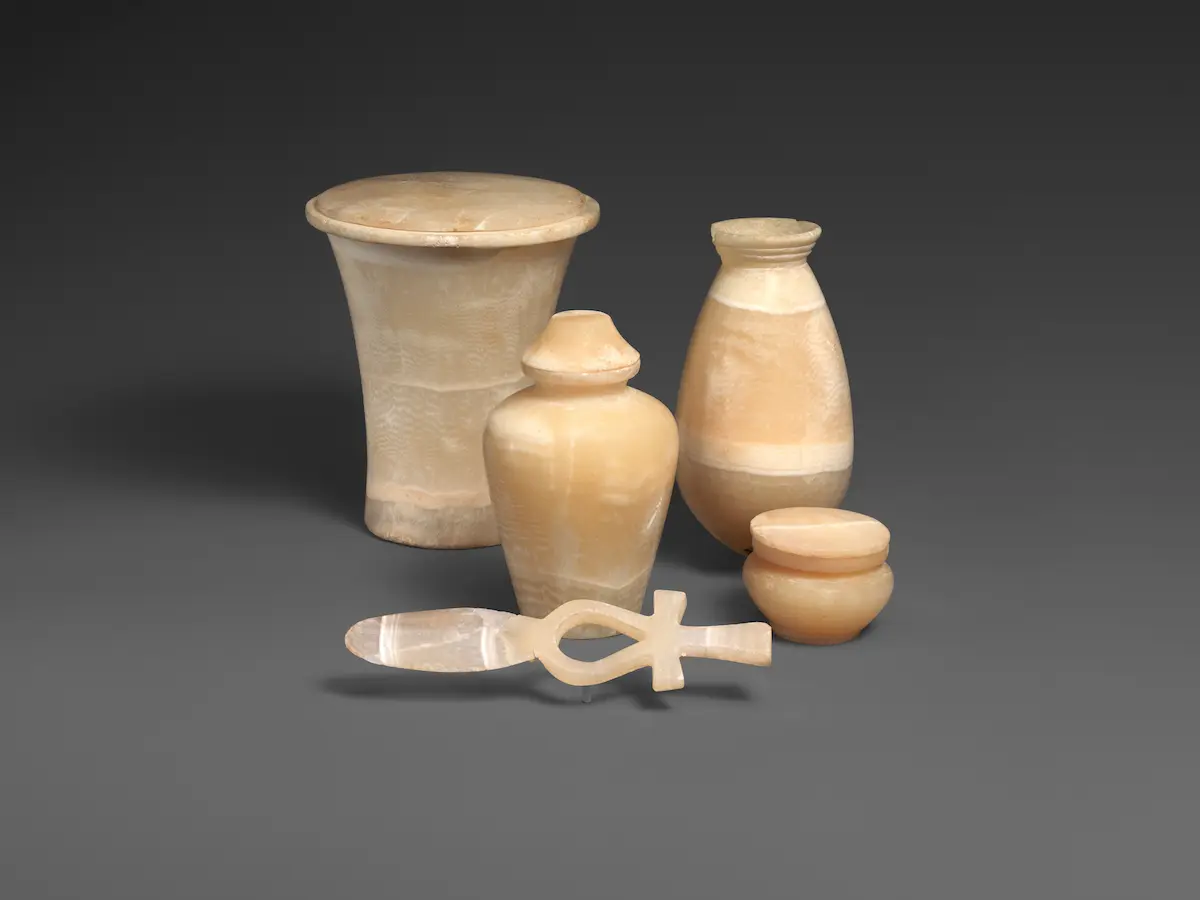
| Cosmetic spoon with an ankh-shaped handle | Middle Kingdom, ca. 1887–1750 BCE | Travertine, from a tomb at Haraga | The ankh forms the handle | The symbolic form could be incorporated into a functional object. |
| Scarab Inscribed with Hieroglyphs | Middle Kingdom, ca. 1760–1670 BCE | Glazed steatite amulet | The ankh appears with other positive signs | In this amuletic context, “life” forms part of a larger protective composition. |
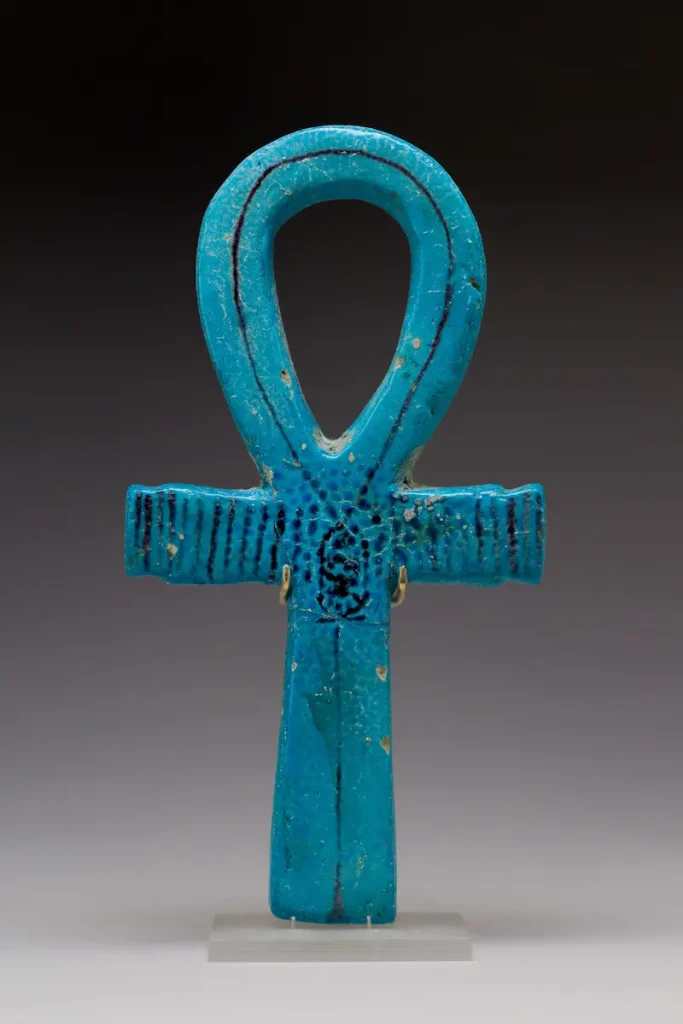
| Ceremonial Implement in the Shape of an Ankh | New Kingdom, ca. 1396–1386 BCE | Faience, found in the tomb of Thutmose IV | The entire object takes the form of an ankh | The symbol could become a royal ceremonial object within a funerary setting. |
| Ankh, djed, was on neb basket | Late Period–Ptolemaic Period, 664–30 BCE | Faience with gilding | Ankh appears with djed and was | “Life” could form part of a larger formula together with stability and dominion. |
An Early Dynastic Ankh Was Already More Than a Written Sign
One of the earliest objects in this group is also one of the most informative.
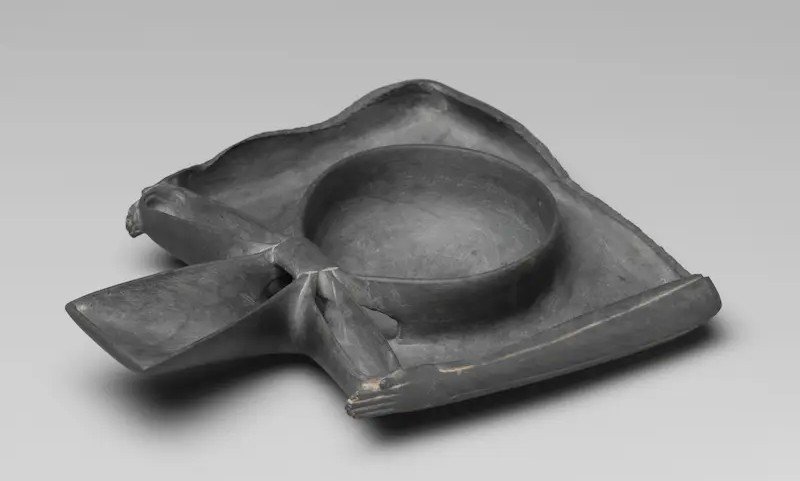
The Met dates its Libation Dish Depicting Ka-Arms Presenting an Ankh-Sign to approximately 3100–2900 BCE. The greywacke vessel combines two recognizable hieroglyphic elements: bent arms associated with ka and the looped ankh sign associated with “life” or “to live.”
The importance of the object is not that it gives us one perfectly certain sentence to translate.
The museum itself is careful about that point. It notes that the combination could be interpreted in more than one way, including a reading related to life and the ka, or possibly as a personal name.
What is much more secure is that the ankh was already functioning as a meaningful sign within an Early Dynastic ritual object.
The vessel was probably used for pouring a purifying liquid, which means that hieroglyphic meaning, object shape, and ritual function were not necessarily separate things.
This unusual vessel received detailed scholarly treatment in Egyptologist Henry G. Fischer’s study “Some Emblematic Uses of Hieroglyphs with Particular Reference to an Archaic Ritual Vessel,” published by The Metropolitan Museum of Art.
The object helps establish an important pattern that will continue throughout Egyptian history: the ankh could be both something that was read and something that was materially represented.
A God Offering an Ankh to a King Makes “Life” Visible
The clearest evidence for the ankh meaning appears in royal imagery.
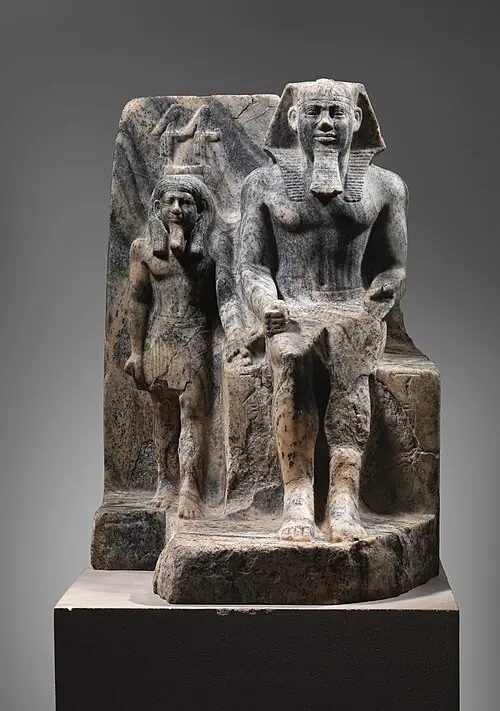
In The Met’s sculpture of King Sahure accompanied by a divine figure, dated to about 2458–2446 BCE, the smaller divine figure beside the seated king presents him with an ankh.
The museum identifies the ankh directly as the hieroglyph for “life.”
That makes the gesture more than decorative. The image turns an abstract idea into something almost tangible: the deity presents “life” to the king.
A New Kingdom object connected with Thutmose IV develops this visual language even further.
On an arm panel from a ceremonial chair of Thutmose IV, the ankh is represented in an animated form near the king. The Met’s interpretation describes the figure as offering him the “breath of life,” while inscriptions on the panel also invoke life, dominion, years, and eternity.
This does not mean that every ancient Egyptian ankh should automatically be translated as “breath of life.”
It demonstrates something more precise: Egyptian artists could take the sign for life and make that meaning active within a scene involving the king and the divine world.
The Ankh Could Become an Object, a Handle, or an Amuletic Motif
Middle Kingdom objects show just how flexible the physical use of the sign could become.
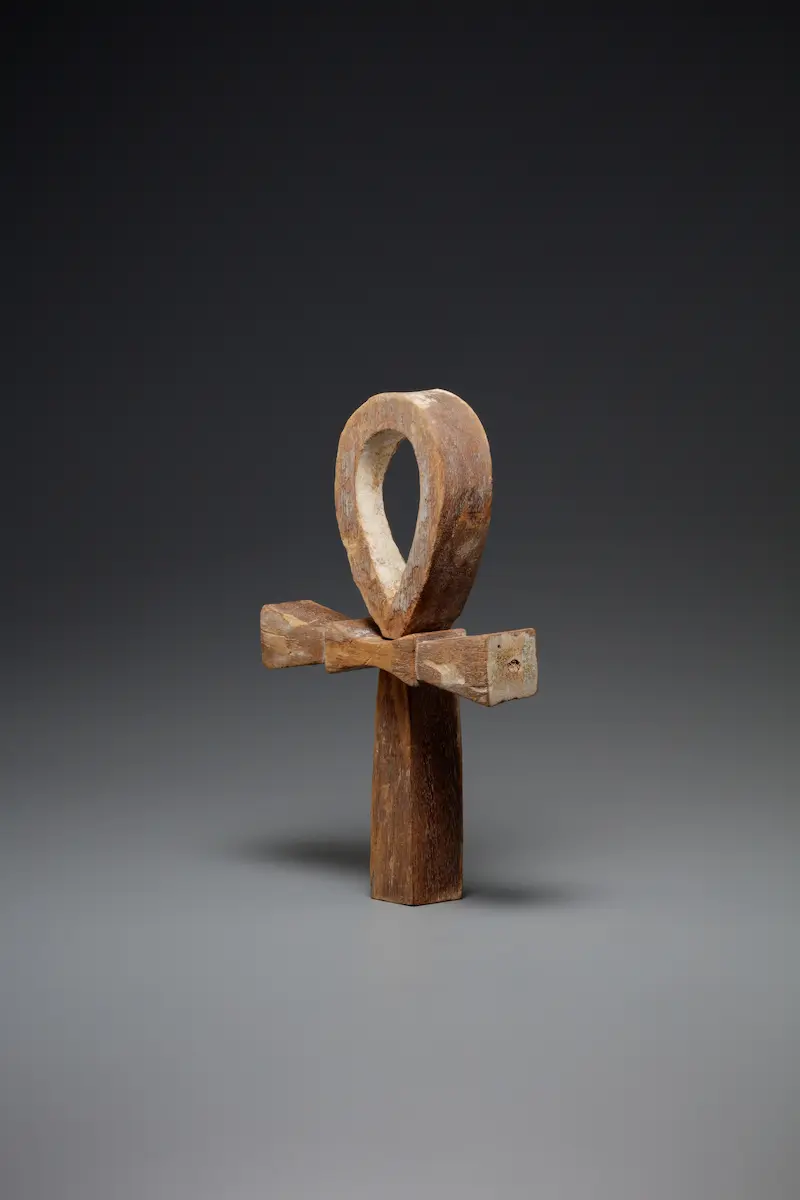
A wooden model ankh in The Met, dated to about 1981–1802 BCE, essentially turns the hieroglyph itself into a three-dimensional object.
A travertine cosmetic spoon, dated to approximately 1887–1750 BCE, uses an ankh as its handle.
These objects are important because they show that the sign did not have to remain an inscription carved or painted onto another surface. Its recognizable outline could become part of an object’s physical design.
The same distinction between form and function is useful when considering other symbolic objects. A ring, for example, does not acquire exactly the same meaning every time its circular shape appears. Wedding rings, signet rings, mourning rings, and rings used as signs of authority can share a form while performing very different social functions. That same function-first approach is explored further in our guide to ring symbolism.
The ankh could also participate in amuletic compositions.
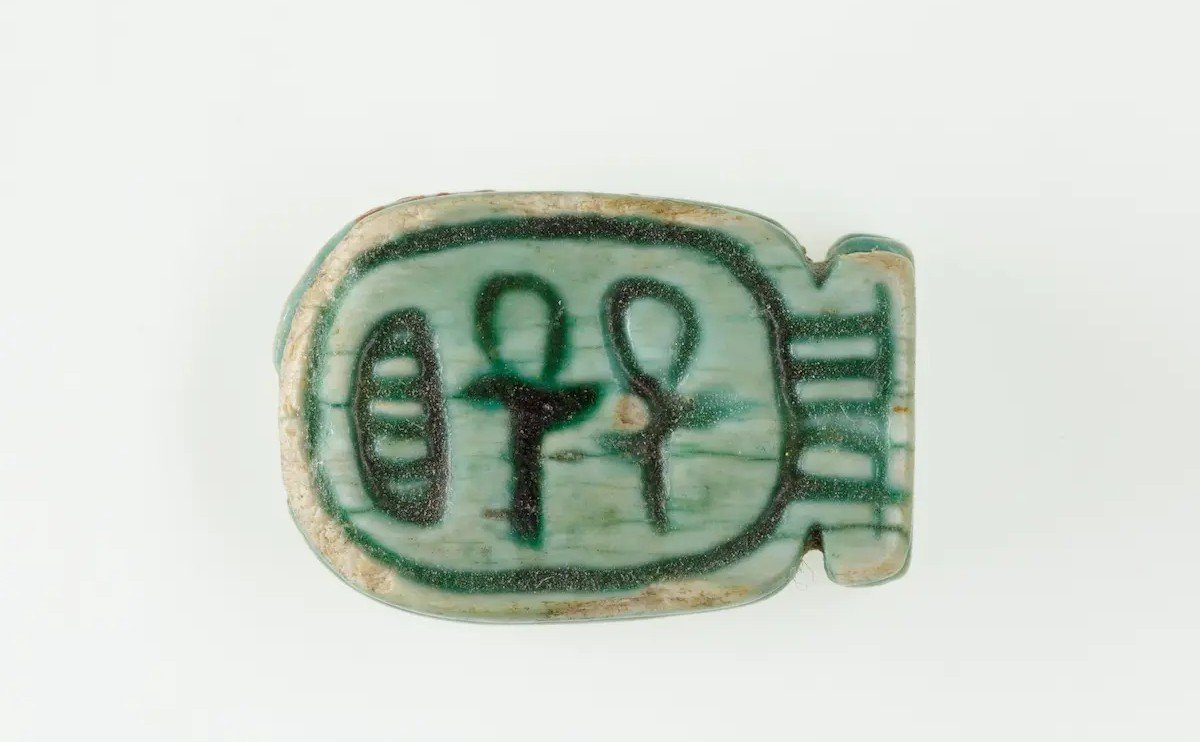
A Middle Kingdom scarab inscribed with hieroglyphs in The Met includes an ankh together with wedjat-eyes, a nefer sign, and a djed pillar.
According to the museum, many design scarabs from this period used hieroglyphic signs because of their positive or protective significance rather than simply to spell out ordinary text.
Within that particular composition, the ankh contributes its association with life to a broader amuletic design.
This is an important distinction. Protection is part of the scarab’s context and function; it does not require us to redefine the word ankh itself as simply meaning “protection.”
Royal and Funerary Contexts Add Meaning Without Replacing “Life”
The ankh frequently appears in discussions of death, tombs, and the afterlife, which can make it tempting to translate it immediately as “eternal life.”
Funerary context certainly matters in ancient Egyptian religion, but surviving objects suggest a more careful way of describing the relationship.
The ceremonial ankh associated with Thutmose IV was discovered in the king’s tomb in the Valley of the Kings. Made of faience and bearing the king’s cartouche, it clearly belongs to a royal funerary setting.
Yet The Met still explains the underlying sign as the hieroglyph for “live,” “alive,” or “life.”
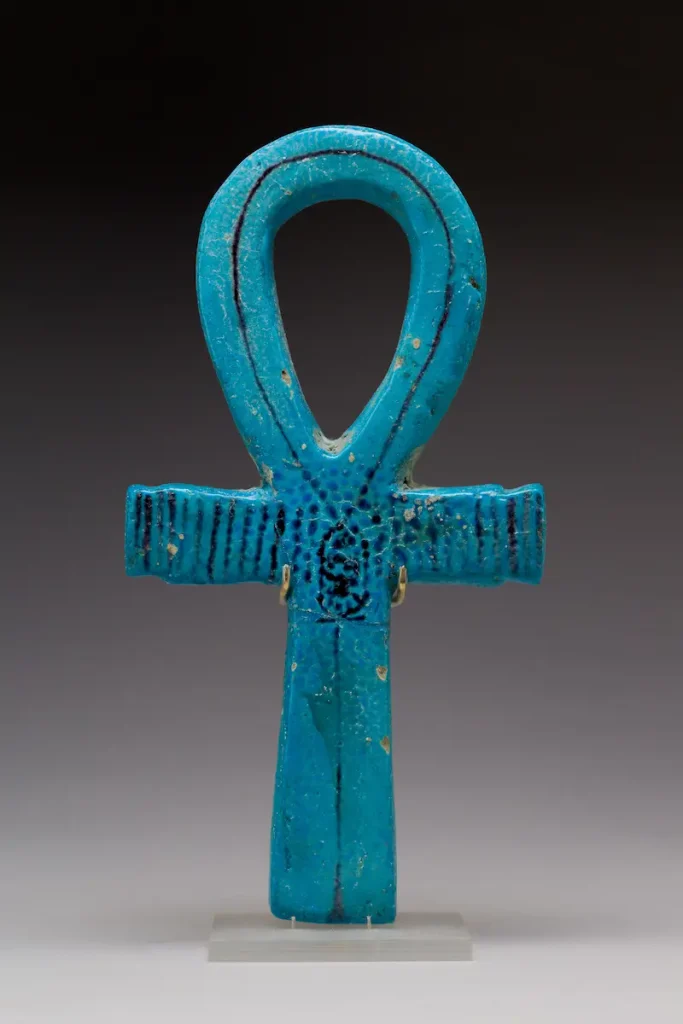
The tomb changes the context in which that idea of life operates. It does not require us to invent an entirely different dictionary definition for the symbol.
That distinction helps prevent an important interpretive mistake: treating every context in which a symbol appears as a separate meaning.
A funerary ankh, a royal ankh, a ritual ankh, and an amuletic ankh can all relate to life while applying that idea differently.
Why Context Changes the Ankh Without Replacing Its Core Meaning
The museum objects point toward a useful distinction between semantic meaning and material function.
Semantically, the ankh remains strongly anchored to life.
Materially, it can perform many roles.
It can appear as writing.
It can become part of the shape of a ritual vessel.
A deity can present it to a king.
It can become a freestanding model.
Its outline can form the handle of another object.
It can appear among protective symbols on an amulet.
It can become a ceremonial implement.
It can also be combined with other hieroglyphs to create a larger symbolic statement.
This is why generic lists such as “seven meanings of the ankh” can sometimes create more confusion than clarity. They often take differences in use and convert them into completely separate definitions.
A better model is:
core meaning: life → context: who uses the symbol, where it appears, what surrounds it, and what the object is meant to do.
A similar problem appears when studying the meaning of the labyrinth symbol. Archaeological evidence, mythology, religious practice, and modern contemplative interpretations can all contribute to a symbol’s history, but they do not necessarily belong to the same historical layer.
Keeping those layers separate makes symbolic interpretation more precise.
Ankh, Djed, and Was: When “Life” Becomes Part of a Larger Formula
The ankh becomes especially interesting when it appears beside other Egyptian signs.
The Met holds a small faience object known as Ankh, djed, was on neb basket, dated broadly between 664 and 30 BCE.
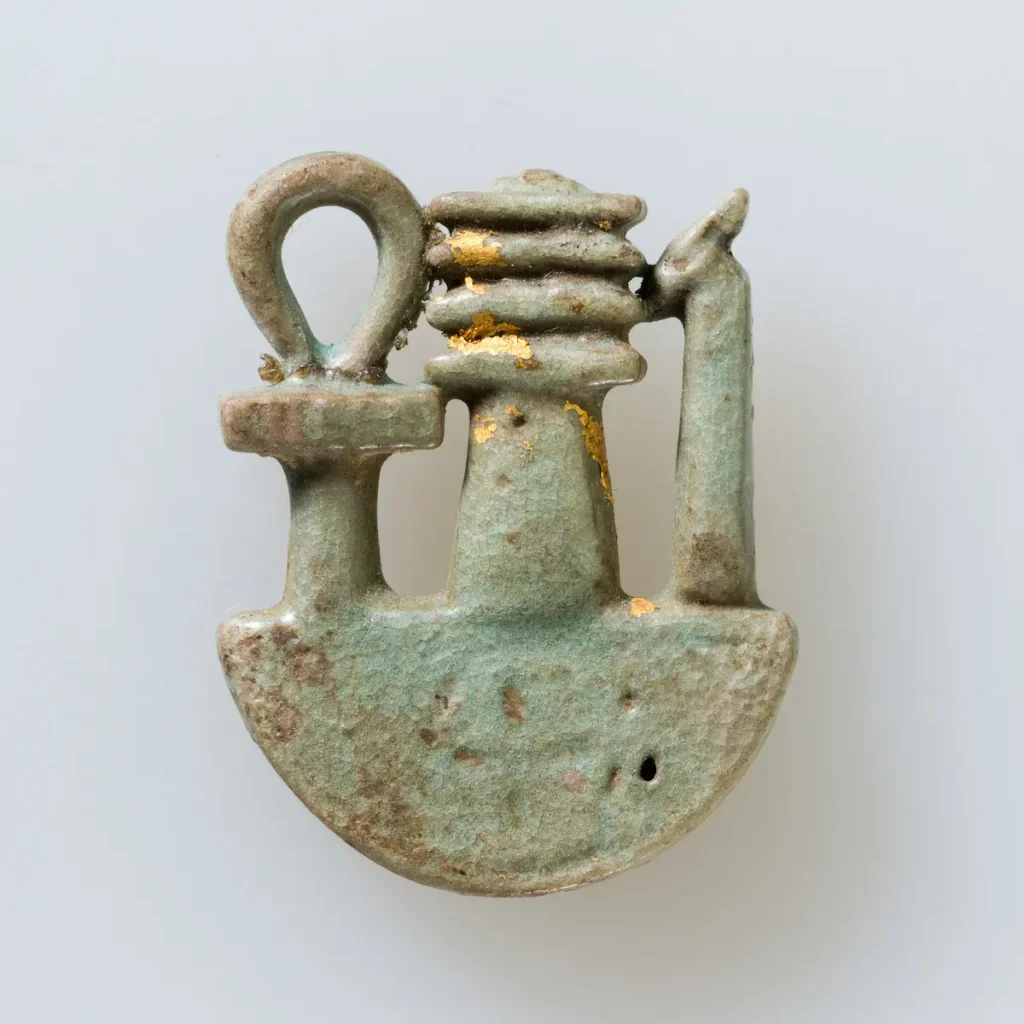
The three principal signs carry different ideas.
The ankh represents life.
The djed is associated with stability.
The was represents dominion or power.
Together, they form a larger symbolic expression involving life, stability, and dominion.
This is another reason to be cautious about assigning every nearby idea to the ankh itself.
The ankh does not suddenly mean “life, stability, and dominion.” Instead, it contributes “life” to a compound statement constructed from several signs.
The Met also notes that examples of this combination were associated with offerings between kings and gods, while a connection with New Year celebrations is treated more cautiously.
A related object in the British Museum collection combines ankh, djed, was, and heh signs in a royal amuletic composition. The different hieroglyphs contribute ideas involving life, endurance or stability, dominion, and extended duration.
Again, the value of the example comes from the combination.
Ancient Egyptian symbolism did not require one symbol to carry every idea present in an object.
What Museum Objects Do Not Prove
Physical evidence is valuable not only because of what it confirms, but because it shows where interpretation should stop.
The museum records examined here do not establish one certain physical origin for the shape of the ankh.
Several explanations for the outline have been proposed over time, but establishing what physical object, if any, originally inspired its shape is a separate question from establishing what the sign meant in Egyptian writing and imagery.
We do not need a speculative origin story to conclude that the ankh represented life.
The museum evidence considered here also does not establish modern concepts such as chakra energy, manifestation, universal masculine-feminine balance, or contemporary energy systems as the original Egyptian meaning of the ankh.
That does not mean modern people are forbidden from giving the symbol additional personal or spiritual significance.
Symbols can acquire new interpretations when they enter new religious, cultural, artistic, and personal settings.
The historical distinction is simply this: a modern interpretation should not be presented as an ancient Egyptian meaning unless the ancient evidence actually supports that claim.
So What Did the Ankh Mean?
The most defensible ankh meaning remains the simplest:
The ankh meant life.
What makes the symbol fascinating is not the existence of a hidden second definition, but the remarkable number of ways ancient Egyptians could materialize the idea.
Life could be written as a hieroglyph.
It could be presented by a god to a king.
It could shape a ritual vessel.
It could become a freestanding object.
It could form the handle of a cosmetic spoon.
It could appear on an amulet.
It could become a royal ceremonial implement.
And it could join symbols for stability, dominion, and other ideas in a larger composition.
The surviving museum objects therefore show something more useful than a generic list of spiritual meanings.
They show a symbol with a stable central idea — life — used flexibly across centuries of ancient Egyptian material culture.




Alex Turner
Alex Turner is the editorial pen name used for articles published on Signs of Universe. The website covers dreams, symbolism, and cultural interpretations for informational and reflective purposes. Alex Turner is not a medical, mental health, scientific, or spiritual authority.