Owl Symbolism: From Ancient Wisdom to What Owls Mean Today
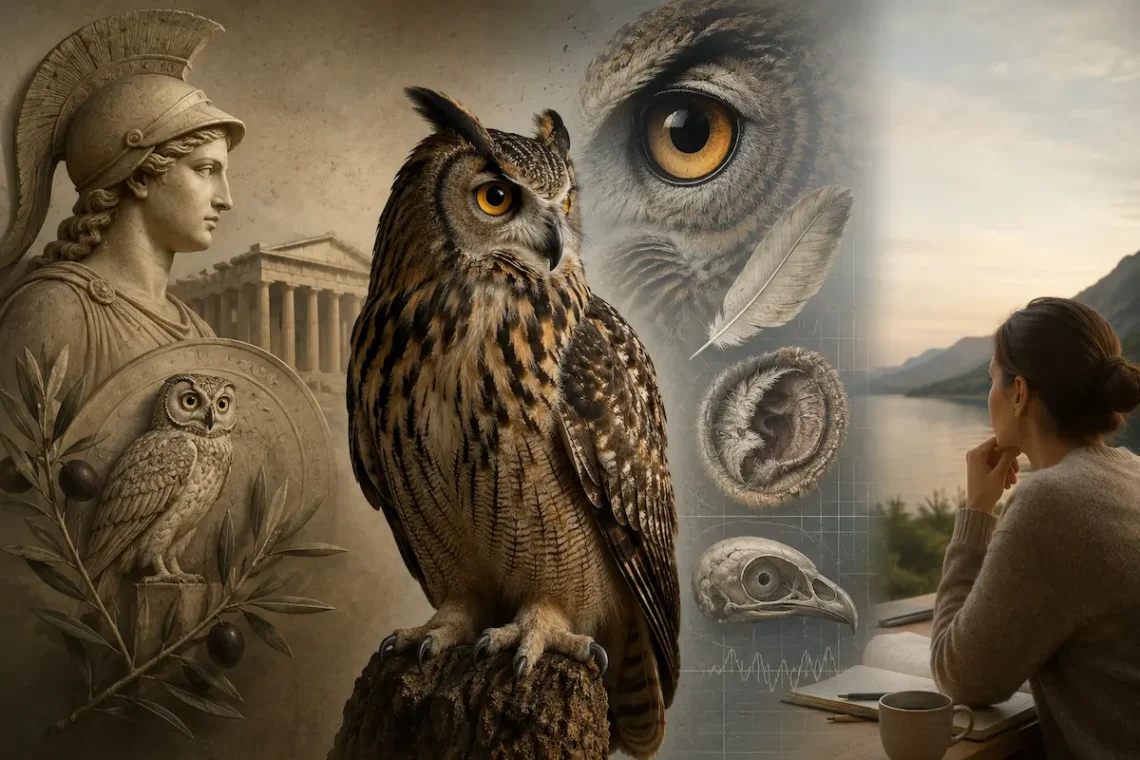
Owl symbolism in the Western sources reviewed here is most clearly documented through wisdom; perception works better as a biology-inspired metaphor than as a documented ancient meaning. The link between owls and wisdom has a documented history connected with Athena in ancient Greece and, later, Minerva in Western symbolism. Other meanings—such as intuition, hidden truth, or “seeing through darkness”—work better as modern symbolic interpretations inspired by the bird’s real sensory abilities than as universal ancient beliefs.
That distinction matters. An owl can carry historical symbolism, biology-inspired metaphor, and personal meaning at the same time without those categories becoming interchangeable.
What Does an Owl Symbolize?
The clearest historically documented meaning in Western owl symbolism is wisdom. Knowledge and learning are closely related extensions of that idea. They are not simply modern inventions: ancient Greek material culture connects the owl with Athena, while later Western imagery continues to use Minerva’s owl as a recognizable emblem of wisdom.
Other common meanings need more qualification.
Perception is a strong metaphor because many owls are adapted to detect prey in conditions that challenge human senses. Some species combine excellent low-light vision with highly sensitive hearing. Silence also has a biological basis because specialized feathers can make owl flight unusually quiet.
Night and mystery are understandable associations because many owl species are active after dark, although owls are not uniformly nocturnal. Snowy Owls, for example, are strongly diurnal and may hunt at any hour during the continuous daylight of an Arctic summer.
Meanings such as intuition, hidden truth, or seeing what others miss are better treated as symbolic interpretations. They can be personally meaningful, but the owl’s eyesight or hearing does not demonstrate a spiritual ability to reveal secrets, predict events, or deliver messages.
So the useful answer is not that an owl “means one thing.” It is that different owl meanings have different kinds of support: some are historically documented, some grow naturally from the animal’s biology, and some belong to modern personal interpretation.
Why Did the Owl Become a Symbol of Wisdom?
The most important documented route into Western owl symbolism runs through ancient Greece.
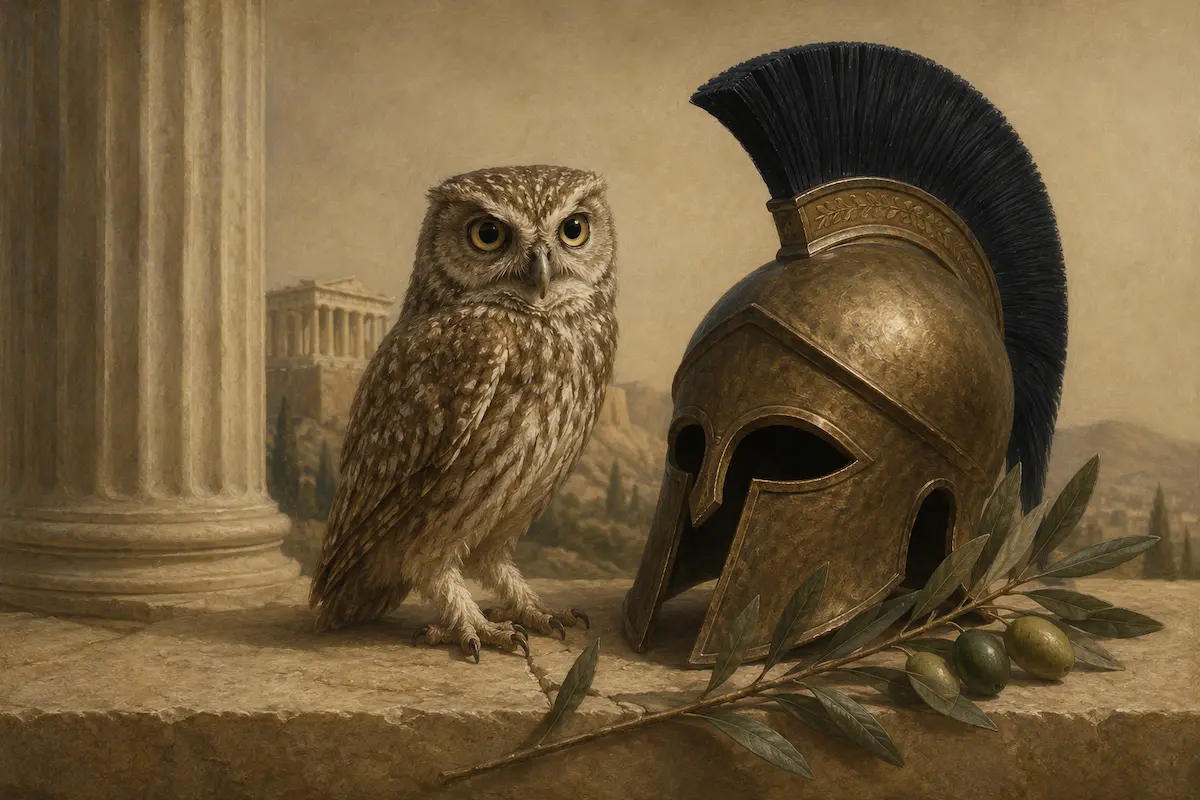
The Metropolitan Museum of Art describes Athena as the wise patron goddess of Athens and notes that both the owl and the olive tree were sacred to her. That establishes a direct association between the goddess, the city, and the bird without requiring a later spiritual explanation to fill the gap.
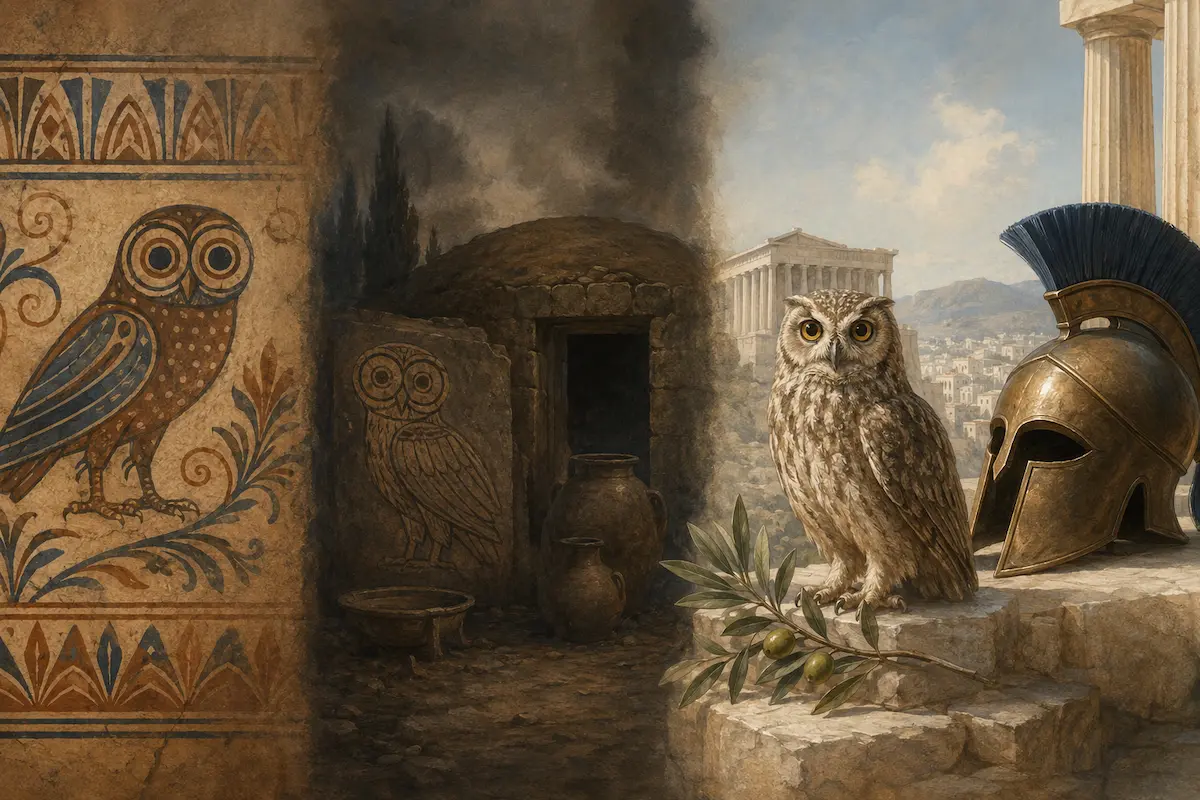
A 2023 research article by V. A. Bontzorlos, David H. Johnson, Kostas Poirazidis, and Alexandre Roulin reviewed owl symbolism across roughly five millennia of Greek history. Their review is especially useful because it shows that the symbolism was not fixed. According to the authors, owls were primarily decorative in earlier periods; during the Mycenaean era they acquired associations with fear and funeral ritual; and during the Archaic, Classical, and Hellenistic periods they became important symbols of wisdom, power, justice, and divinity connected with Athena and Athens.
That changing history makes the wisdom association more interesting, not less. It shows that “owl equals wisdom” is not a timeless biological rule. It is a cultural meaning that became particularly powerful in a specific historical setting.
Athena, Athens, and the Owl
Athena provides the strongest anchor for the Western wisdom symbolism because the connection survives in both institutional descriptions and physical objects.
The Met identifies the owl as sacred to Athena and describes the goddess herself as wise. A separate Met object—a bronze statuette made around 460 BCE—shows Athena preparing to release an owl. The museum notes that owls were associated with Athena and that the principal coinage of Athens showed the head of Athena on one side and an owl on the other for centuries.
This matters because symbolism is easier to evaluate when it appears in material culture rather than only in later summaries. The owl was not retroactively attached to Athena by a modern list of “spirit animal meanings.” It appears within surviving Greek objects and the iconography of the goddess.
The Owl on Athenian Coins
Athenian silver coinage makes the connection especially concrete.
The Metropolitan Museum of Art records that Athens began striking silver coins with the head of Athena on the obverse and her owl on the reverse at the end of the sixth century BCE. A tetradrachm in the Met collection, dated to about 440–404 BCE, preserves that pairing. The coin type continued through the fifth century BCE with relatively minor stylistic variations.
A coin is not proof that every ancient Athenian understood the owl in exactly the same way. It does, however, show that the bird had become closely enough connected with Athena and Athens to function as repeated civic imagery.
That is a much firmer basis for the wisdom association than the vague claim that “ancient cultures believed owls were wise.”
From Athena to Minerva’s Owl
The association remains recognizable in later Western symbolism through Minerva.
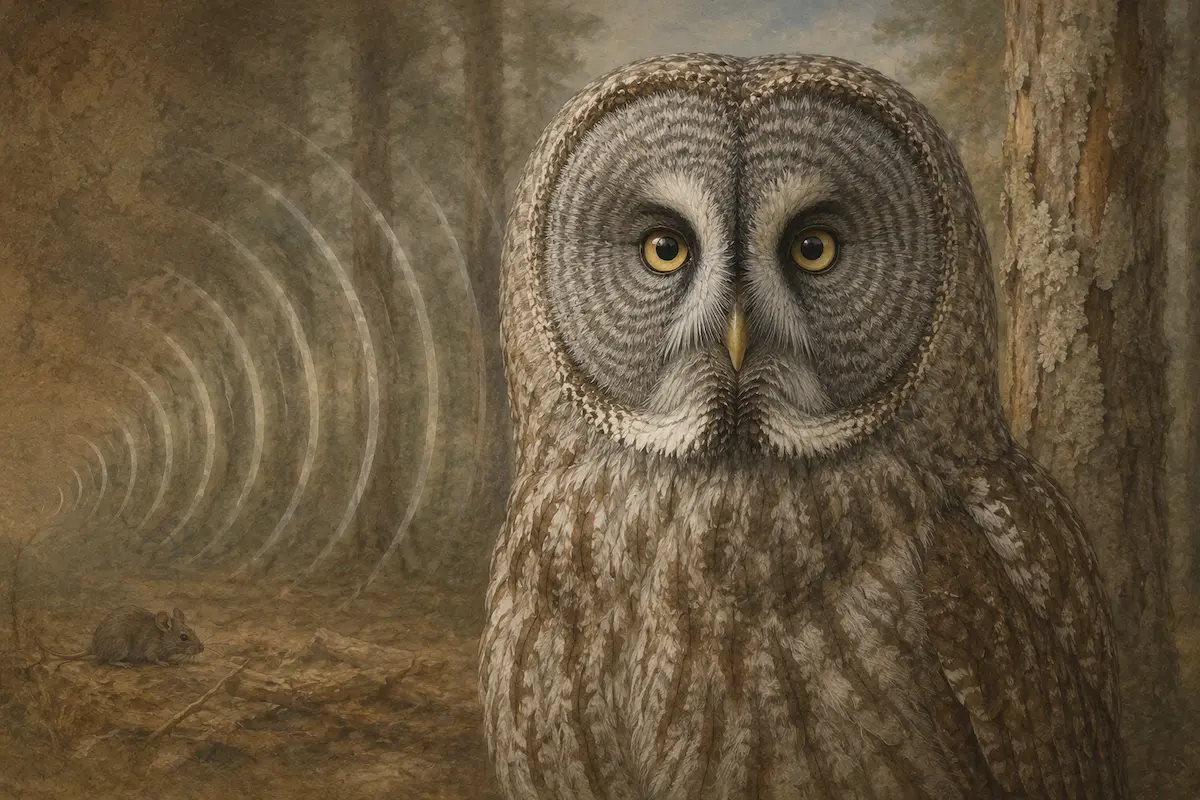
At the Library of Congress Thomas Jefferson Building, Elihu Vedder’s Minerva mosaic places a small owl beside the goddess. The Library’s own audio guide identifies Minerva as a Roman goddess of learning and wisdom and explicitly says that the owl of Minerva symbolizes wisdom in Western mythology.
The point is not that every use of an owl today descends from one uninterrupted ancient tradition. It is that the Western link between owl, wisdom, learning, Athena, and Minerva is historically traceable rather than merely asserted.
The Real Owl Behind the Symbol
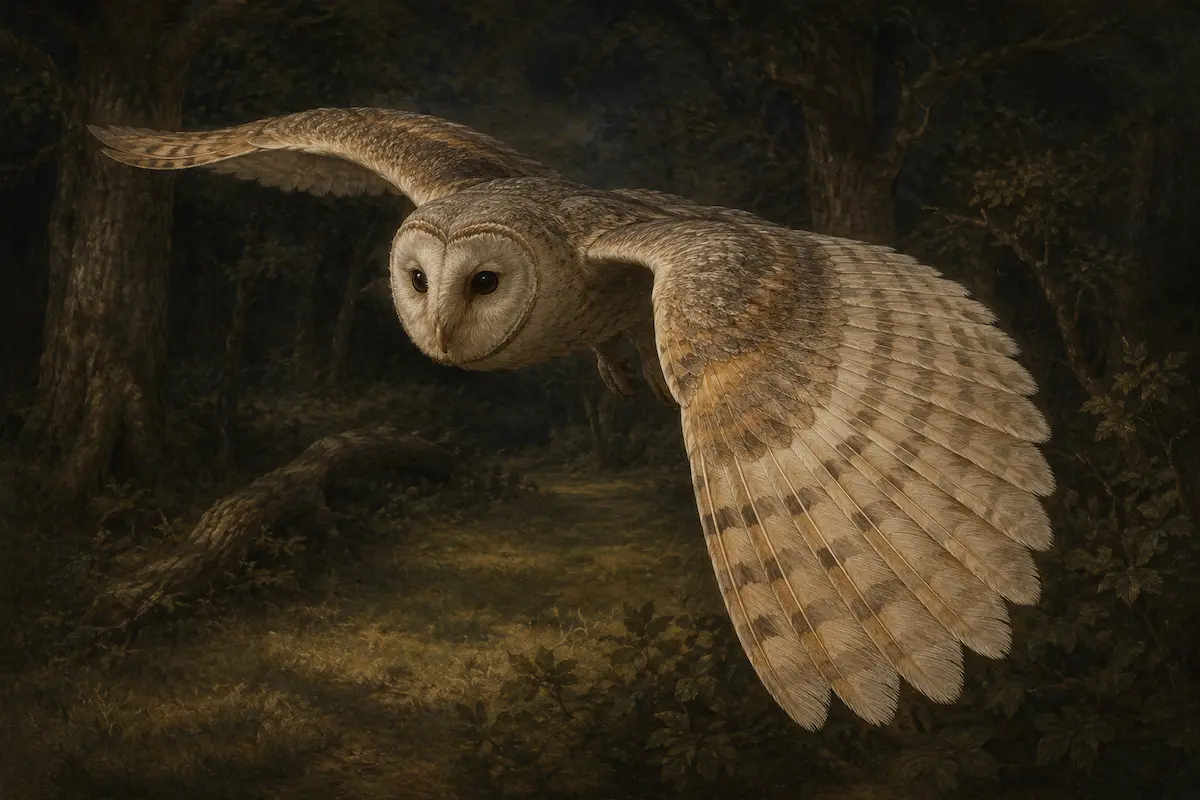
History explains where an important cultural association developed. Biology helps explain why some owl metaphors continue to feel persuasive.
Owls are strikingly well suited to symbolic language about perception because many species operate effectively in conditions where humans would struggle. But the biology should be kept in its own lane: a sensory adaptation can inspire a metaphor without proving the metaphor literally true.
Low-Light Vision and Precise Hearing

The Cornell Lab of Ornithology notes that Great Horned Owls have large eyes, pupils that open widely in darkness, and retinas containing many rod cells for excellent night vision. Cornell also describes sensitive hearing aided by facial-disc feathers that direct sound toward the ears.
American Barn Owls provide an even clearer example of how hearing and vision can work together. Cornell reports that they have excellent low-light vision and can locate prey by sound alone, including prey hidden from view.
Great Gray Owls add another specialized case. Their asymmetrical ear openings help them locate prey by sound with great precision, while their large facial disc helps collect and direct faint sounds toward the ears. Cornell describes Great Grays locating prey beneath snow using these auditory adaptations.
These facts make “perception” a reasonable editorial metaphor for owls. They do not establish extrasensory perception. An owl can detect light and sound differently from a human without detecting spiritual truth.
The same distinction matters in other animal-symbolism questions. When an animal reacts to something a person cannot immediately perceive—as explored in the Signs of Universe guide to dogs staring at apparently empty spaces—sensory or environmental explanations should remain separate from supernatural interpretation.
Silent Flight—and the Nocturnal Stereotype
Silence is another owl association with a real physical basis.
Cornell describes Great Horned Owls as having extremely soft feathers that help them fly very quietly while pursuing prey. Research summarized by Cornell on Great Gray Owls also describes combs and fringes on wing feathers that break up air currents and reduce noisy turbulence during flight.
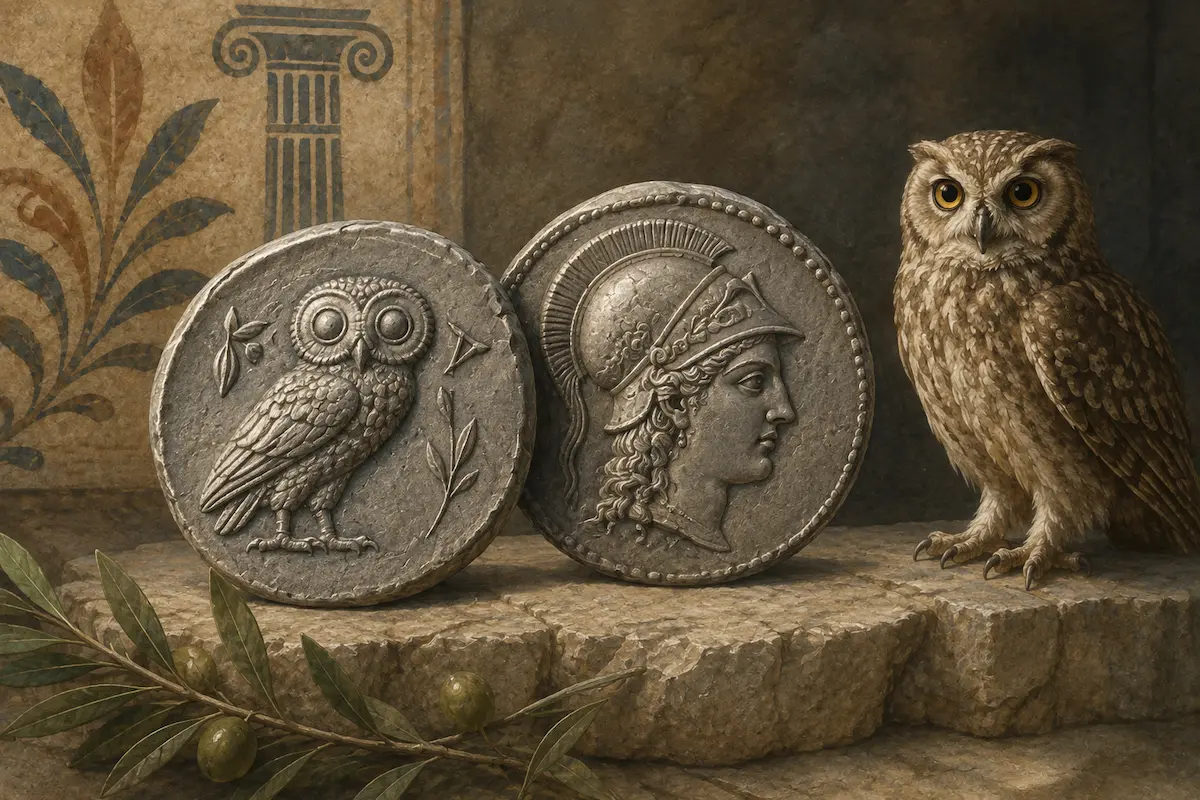
That quiet movement easily lends itself to metaphors such as stealth, observation, patience, or unseen presence. Those are interpretations of a real characteristic, not scientific conclusions about what an owl spiritually represents.
The same caution is useful with darkness. Many familiar owl species are active at night, so night symbolism is unsurprising. But “owl” should not be treated as synonymous with “nocturnal.” Cornell describes Snowy Owls as strongly diurnal; during Arctic summers they may hunt through 24-hour daylight.
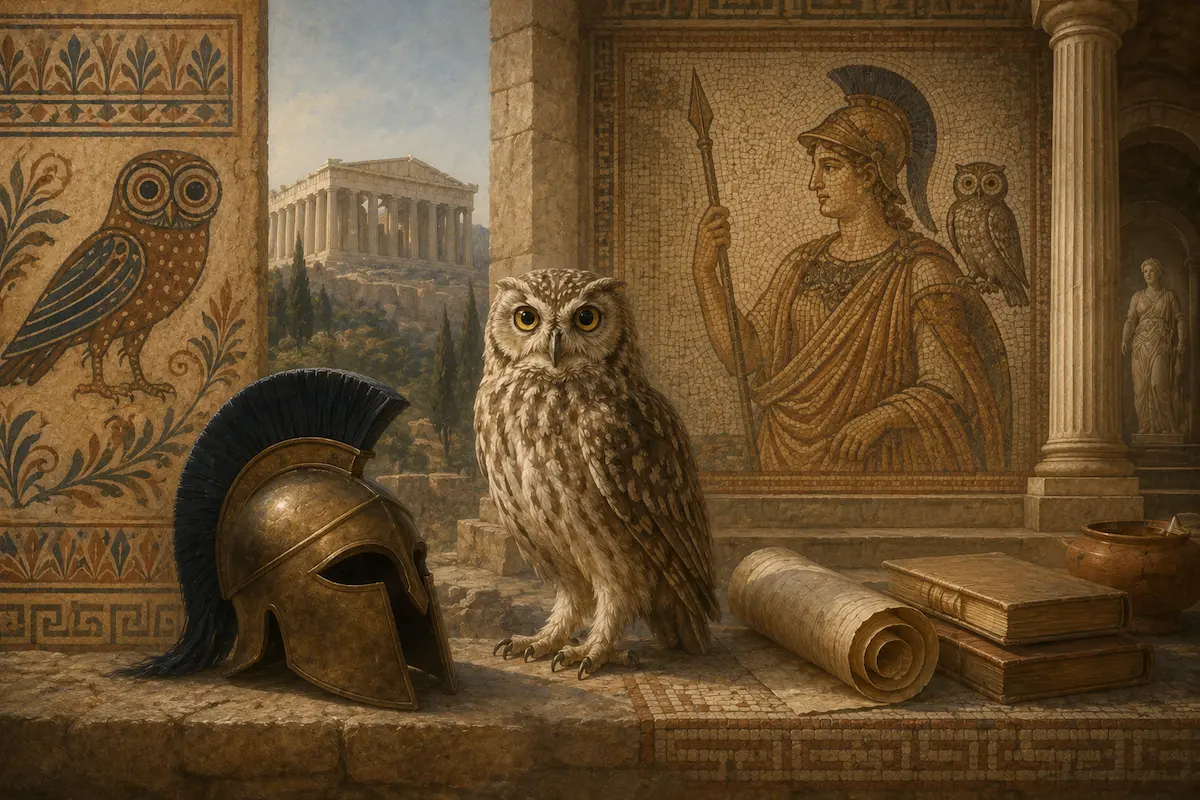
The exception prevents the symbol from turning into a false biological rule. Night can be part of owl imagery without being a universal fact about every owl species.
Owl Meanings, Sorted by Evidence
The easiest way to interpret owl symbolism without mixing fact and belief is to ask what kind of claim each meaning represents.
| Meaning | Evidence category | Documented basis | What it does not prove |
|---|---|---|---|
| Wisdom | Documented historical meaning | Athena’s association with the owl; later Minerva imagery explicitly uses the owl as a symbol of wisdom. | That all cultures or all historical periods gave owls the same meaning |
| Knowledge and learning | Documented Western extension | Athena/Minerva imagery and the Library of Congress use of Minerva and her owl in a setting dedicated to learning. | That seeing an owl gives a person special knowledge |
| Perception | Biology-inspired metaphor | Low-light vision, sensitive hearing, facial discs, and species-specific auditory adaptations. | Extrasensory perception or supernatural awareness |
| Silence | Biology-inspired metaphor | Soft feathers and specialized wing structures support quiet flight in documented species. | That an owl’s appearance is a secret message |
| Night and mystery | Mixed observation and metaphor | Many owls are active at night, while some—including Snowy Owls—are not. | That all owls are nocturnal or that darkness has one spiritual meaning |
| “Seeing through darkness” | Editorial symbolic synthesis | Real ability to function in low light makes the metaphor intuitively understandable. | Literal ability to reveal hidden truths |
| Intuition or hidden truth | Modern personal interpretation | A reflective extension of perception imagery. | A universal ancient tradition, prediction, or verified spiritual property |
Documented Historical Meanings
Wisdom is the strongest entry because the evidence is concrete: Athena, Athenian material culture, coinage, and later Minerva imagery all support the association in Western history.
Even here, precision matters. The 2023 historical review shows that Greek owl meanings changed over time. The safer formulation is therefore not “owls have always meant wisdom,” but “the owl became an important symbol of wisdom in ancient Greek culture, especially through its connection with Athena and Athens.”
Biology-Inspired Metaphors
Perception, silence, and navigating darkness work differently.
These meanings are persuasive because they translate observable animal traits into human language. An owl that hunts in low light can become a metaphor for noticing what is hard to see. A bird that approaches quietly can symbolize attentiveness or restraint. A species capable of localizing faint sounds can suggest careful listening.
The metaphor is legitimate as metaphor. The mistake occurs when the metaphor is converted back into a factual claim: “Owls see well at night, therefore seeing one means you will uncover a secret.” The first statement can be supported by zoology. The second requires a personal or spiritual interpretation.
Modern Personal Interpretations
If an owl encounter feels meaningful, “intuition,” “pay attention,” or “look beyond the obvious” can be useful reflective readings. They fit the modern symbolic vocabulary that has grown around the bird’s reputation for perception.
But a personal interpretation becomes more precise when it is framed as personal: “I took the owl as a reminder to look more carefully,” rather than “the owl was sent to tell me the truth.”
That wording preserves the experience without pretending to know the cause of the encounter. It also leaves room for the ordinary reality that an owl may simply be hunting, resting, moving through its habitat, or behaving in ways unrelated to the observer.
Why Owl Symbolism Has Never Been One Fixed Code
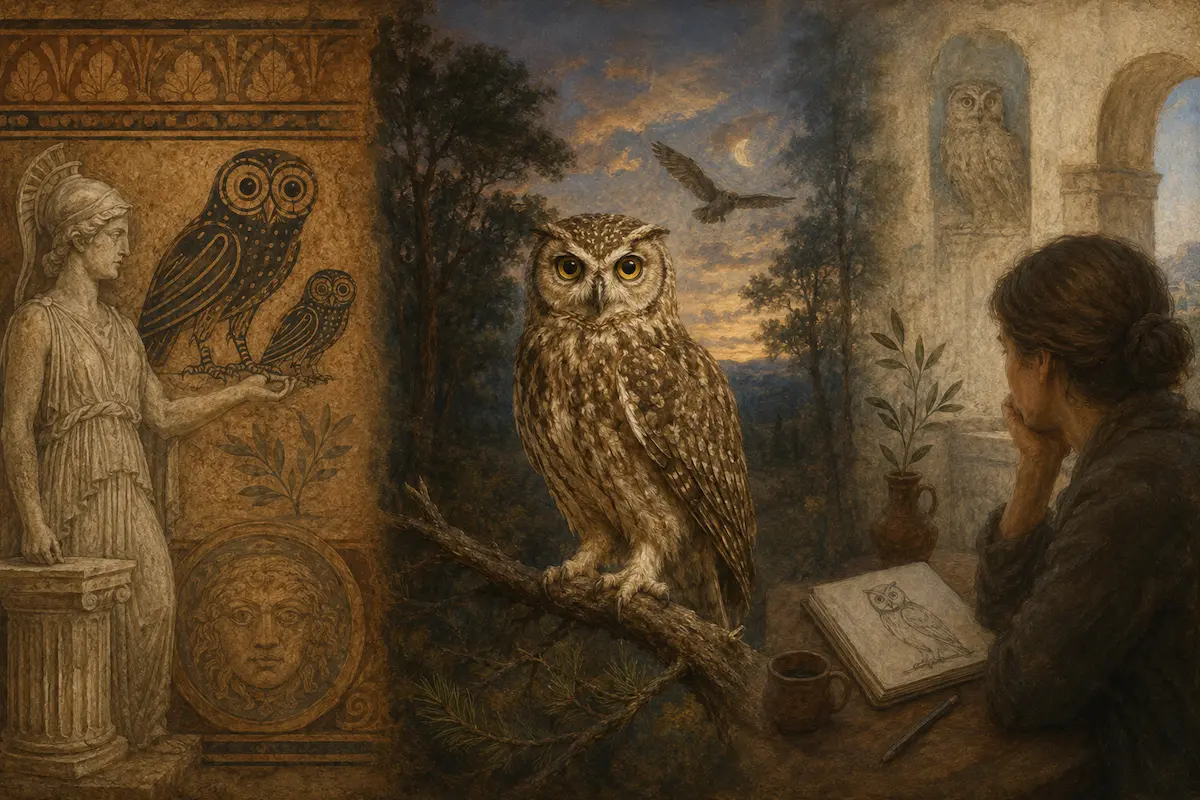
The history reviewed by Bontzorlos and colleagues provides a useful warning against universal symbolism.
Within Greek civilization alone, the researchers describe substantial changes across time: primarily decorative uses in earlier periods, fear and respect in Mycenaean funeral contexts, strong connections with wisdom and divinity during the Archaic, Classical, and Hellenistic periods, and different attitudes again in later eras.
That means there is no need to search across unrelated cultures to prove that owl symbolism is complex. One documented cultural history already demonstrates that meanings can change with period, setting, religion, art, and social use.
This is also why lists claiming that an owl always means wisdom, death, transformation, protection, intuition, or prophecy should be treated cautiously. Some of those ideas may belong to specific traditions or modern spiritual practices, but they require their own evidence. They should not be bundled together as if every meaning came from the same source.
The owl’s strongest Western symbolism is wisdom, and that association has a traceable history through Athena, Athenian imagery, and Minerva. Its reputation for perception and silence also draws strength from real adaptations found in owl species. Modern ideas such as intuition or “seeing through darkness” can still be evocative, but they are best understood as symbolic extensions rather than universal facts.
To compare how bird symbolism changes by context, you can also explore the meaning of a black crow at your window, the old omen of a bird hitting your window, and the symbolism of dreaming of an eagle flying overhead.
An owl, then, does not come with one fixed message. Its symbolism is more useful when the source of each meaning remains visible: history where history exists, biology where biology helps, and personal interpretation where the meaning belongs to the observer.




Alex Turner
Alex Turner is the editorial pen name used for articles published on Signs of Universe. The website covers dreams, symbolism, and cultural interpretations for informational and reflective purposes. Alex Turner is not a medical, mental health, scientific, or spiritual authority.