Purple Color Symbolism: Why Purple Became a Symbol of Royalty and Roman Catholic Worship
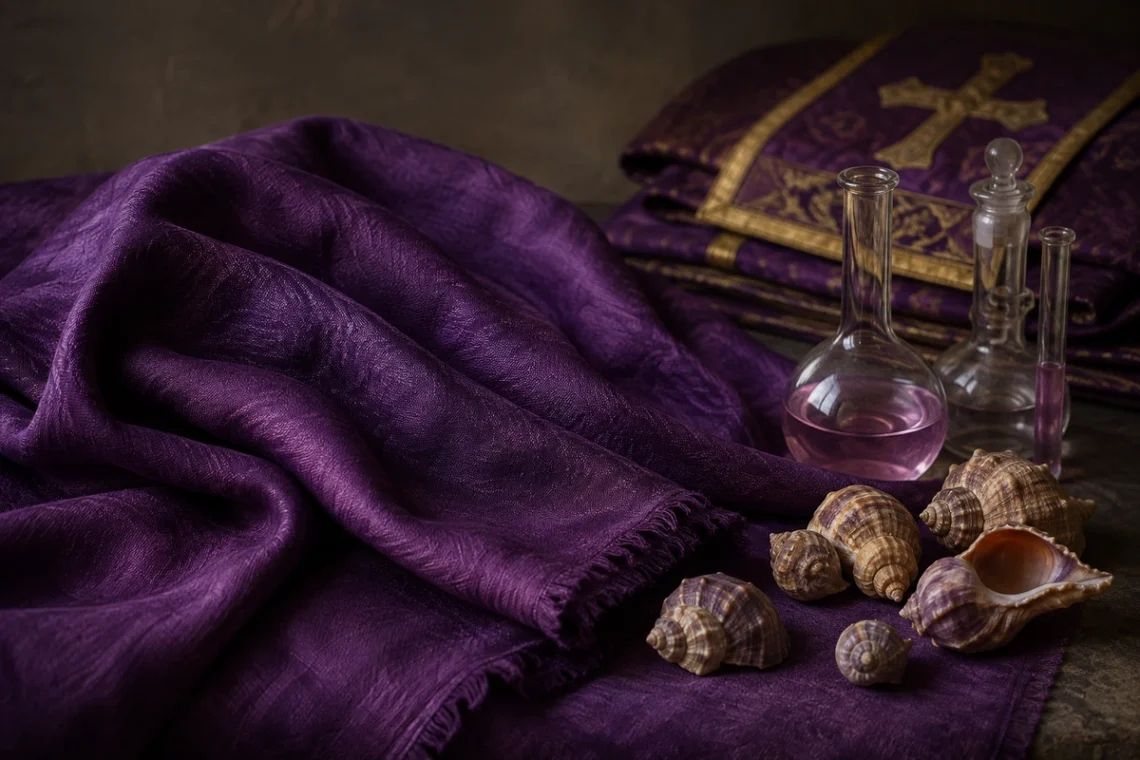
Purple color symbolism is strongly associated with royalty for a reason that can be traced through material history. Before synthetic dyes, some purple colorants were difficult and expensive to produce, and certain famous purples required large quantities of sea snails. That scarcity helped make purple a visible marker of status.
In Roman Catholic worship, however, purple has a different documented context: violet or purple is used during Advent and Lent. The invention of synthetic mauve in 1856 changed who could afford rich purple colors, but it did not instantly erase the associations that had formed around them.
Why Purple Became a Status Color
The royal meaning of purple is often presented as if the color itself naturally communicates power. The historical record suggests a more concrete explanation: access mattered.
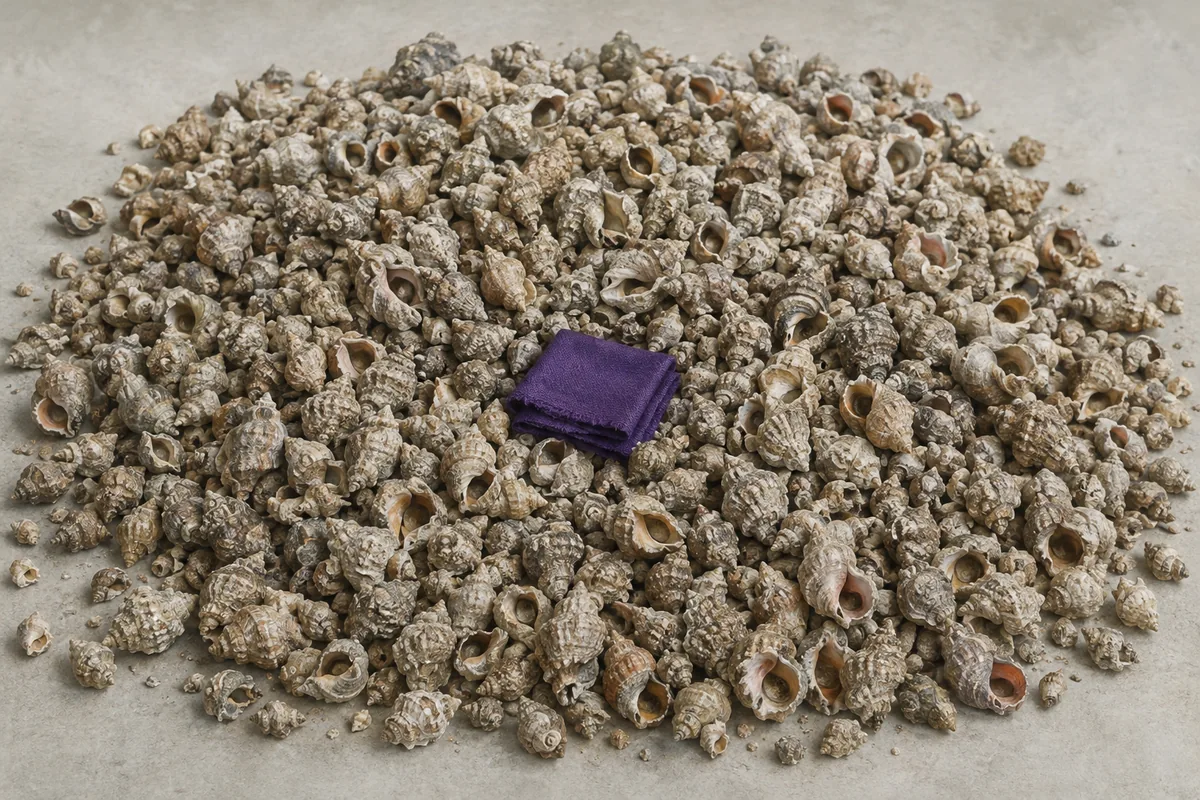
According to Smithsonian Libraries and Archives’ Making Color, until the mid-1800s, dyes came from natural sources such as insects, roots, and minerals, and producing them could be difficult and expensive. Purple made from sea snails was an especially demanding case: the exhibition explains that sea snails could be milked or crushed for the substance used to make purple dye and that thousands were needed to color a single robe.
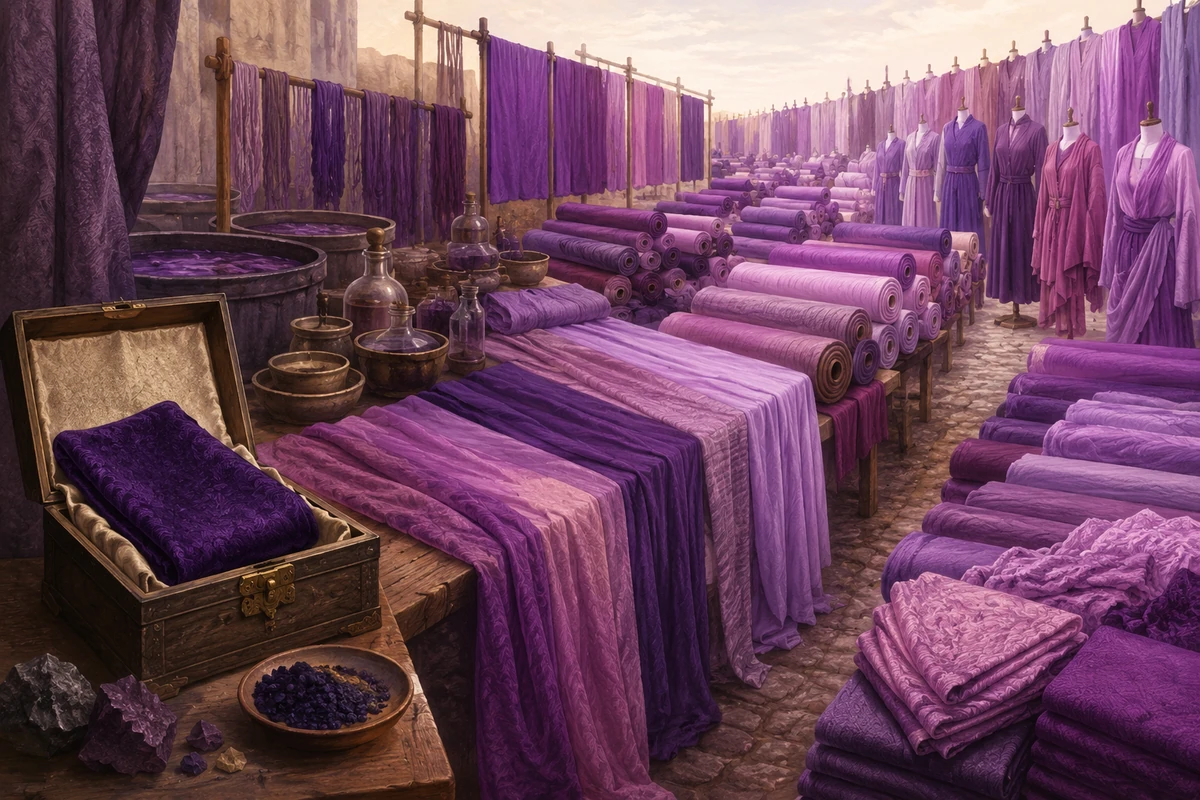
When a color requires scarce material, specialized labor, and high expense, ownership is not evenly distributed. Purple could therefore communicate status partly because relatively few people could obtain the most costly versions of it. The association was not simply an abstract belief attached to a hue; it was reinforced by the economics of producing and wearing that hue.
This is an important distinction in purple color symbolism. The color did not have to exert a psychological effect to become prestigious. A visible material that was difficult to obtain could become a social signal because access to it was limited.
The Material Cost of Tyrian Purple
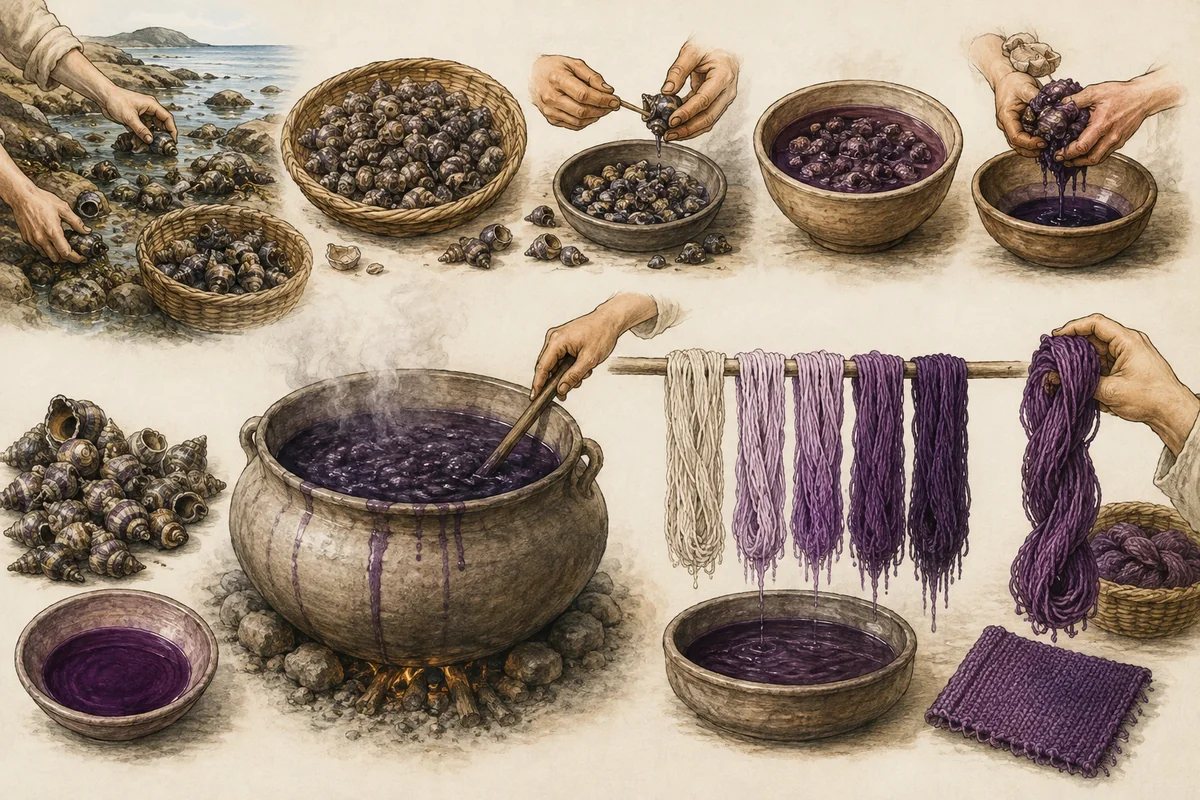
The purple dye commonly called Tyrian purple was produced from predatory sea snails in the eastern Mediterranean. Smithsonian material describes the historic dye as exceptionally expensive and difficult to produce. Its exhibition materials also document the extraordinary quantity of mollusks involved in producing rich natural purple.
The exact history of purple clothing varies by place and period, so “purple always meant royalty” would be too broad. What the evidence does support is a strong historical relationship between costly purple dye, restricted access, and elite status in particular societies.
That material relationship helps explain why royal symbolism could survive even after production methods changed. Once a color has been repeatedly used as a status marker, the association can remain culturally recognizable even when the original economic barrier becomes weaker.
How Mauveine Changed the Meaning of Access
A major break in that material history came in 1856.
William Henry Perkin was 18 years old and studying chemistry when an experiment involving coal-tar derivatives produced a substance that could dye fabric a bright purple. Smithsonian Libraries identifies the dye as mauveine. The National Museum of American History describes Perkin’s discovery as a development that helped establish the artificial dye industry.

The change was not merely the arrival of a new shade. Synthetic dye chemistry altered the economics of color. Smithsonian’s account of Perkin explains that synthetic dyes were cheap and easy to make compared with the older purple associated with costly natural production. Rich purple colors no longer had to remain confined to the people who could afford rare natural dyes.
That gives purple an unusual symbolic history. The color’s older association with exclusivity did not disappear just because the material became easier to produce. Instead, inherited symbolism and new accessibility existed at the same time.
This is the central historical shift: before synthetic purple, scarcity could help create status; after synthetic purple, the status association could persist even as scarcity weakened. A symbol can outlive the material condition that helped establish it.
Why Purple Appears in Christian Worship
Purple’s religious meaning should be treated separately from its royal history. There is no need to assume that one association caused the other.
Christian traditions are not uniform, and the meaning or use of liturgical colors can differ among churches. One clearly documented example comes from Roman Catholic liturgy. The Vatican’s General Instruction of the Roman Missal states that violet or purple is used in Advent and Lent and may also be used in Offices and Masses for the Dead.
The United States Conference of Catholic Bishops explains Advent as a season of preparation. Its Advent guidance identifies purple as the liturgical color for the season, as it is for Lent, and connects the color with preparation and a penitential dimension.
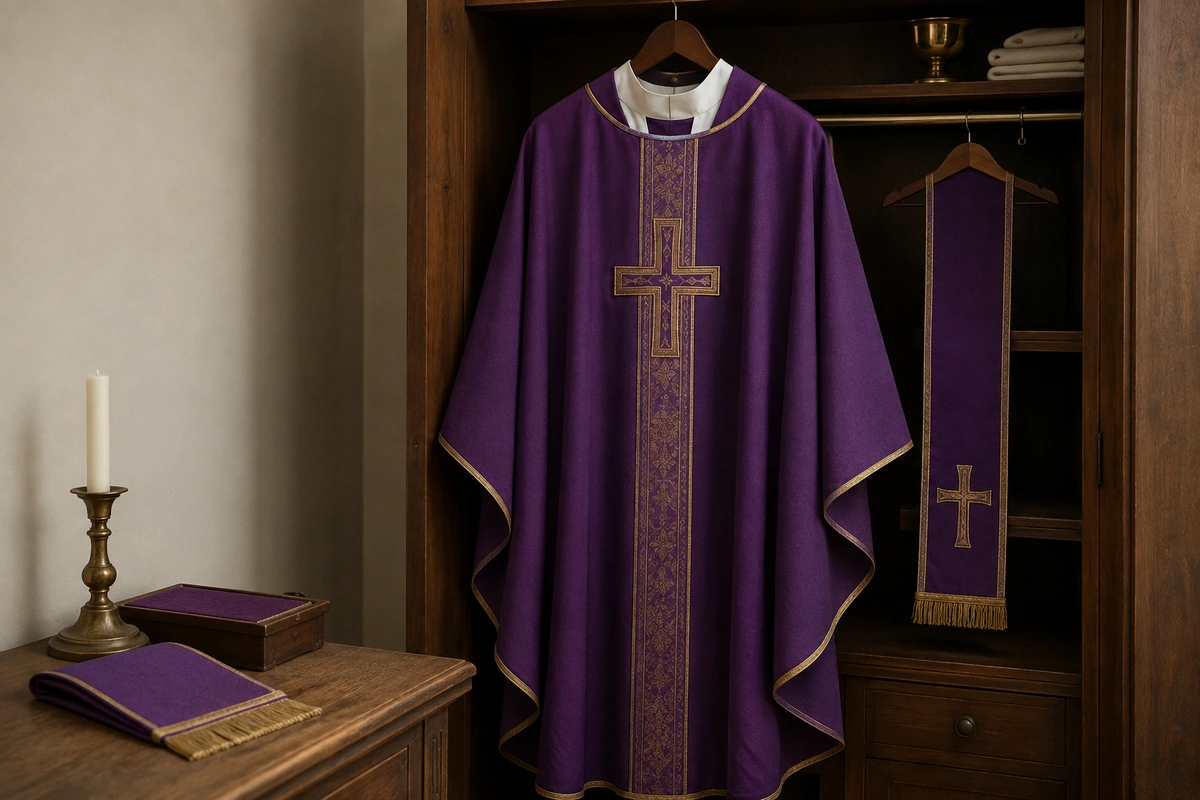
That gives purple a specific religious meaning within a specific institutional context. Here, purple is not evidence that the color universally creates reverence, spirituality, or faith. It functions inside a liturgical system where seasons, vestments, and colors have established roles.
Keeping that context visible prevents a common mistake in color-symbolism articles: taking one documented religious use and turning it into a universal statement such as “purple means faith in all traditions.” The sources used here do not support that claim.
Purple Does Not Mean the Same Thing in Every Context
A guest post published by Smithsonian Libraries and Archives describes color as a shared cultural experience and argues that shared experiences give color its impact and meaning. That framing is more cautious than assuming every color has a fixed psychological message.
For purple, at least three different contexts can be separated.
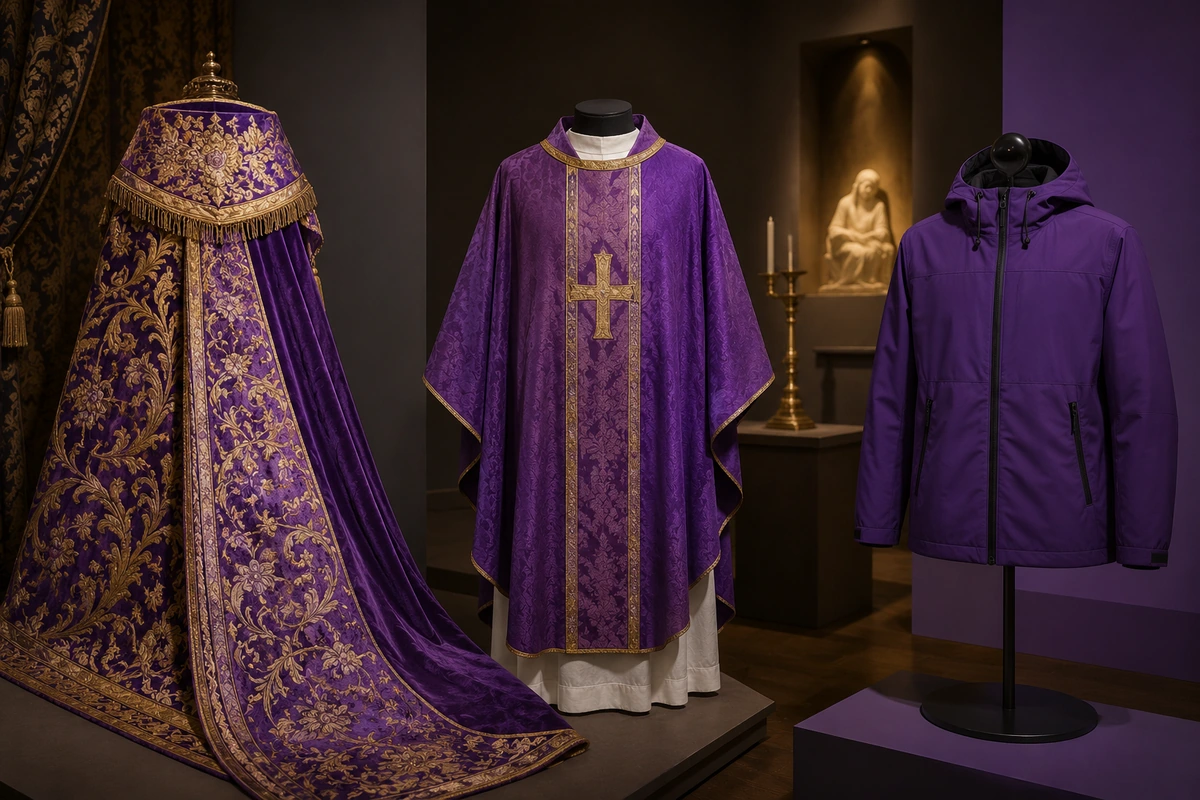
In the history of expensive natural dyes, purple could signal status because production was difficult and access was restricted. In Roman Catholic worship, violet or purple has an institutional liturgical role during seasons such as Advent and Lent. After the rise of synthetic dyes, purple became easier to produce and use while retaining older cultural associations with prestige.
These meanings can overlap, but they are not interchangeable. A purple church vestment, a purple velvet throne in a historical painting, and a purple jacket worn today do not automatically communicate the same thing.
The same context-first principle applies when color appears in dreams or symbolic imagery. Our guide to a dream about a red sky makes a similar distinction: the color is only one part of the scene, and interpretation depends on setting, emotion, and use rather than a universal code.
Personal preference requires the most caution. Liking purple does not by itself establish that someone is creative, intuitive, spiritually advanced, powerful, or drawn to luxury. Those may be familiar modern associations, but a color preference alone cannot prove a personality trait or spiritual condition.
What Purple Color Symbolism Can — and Cannot — Tell You
Purple color symbolism is most useful when it is tied to a documented context.
What those histories cannot establish is a universal psychological or spiritual effect of the color itself.
The most defensible way to read purple color symbolism is not “What does this color always mean?” but “What has purple meant in this particular context, and what evidence explains that meaning?”
Related reading: Bright Blue Light in Your Bedroom at Night and Why Grieving People Are Drawn to the Color Grey.




Alex Turner
Alex Turner is the editorial pen name used for articles published on Signs of Universe. The website covers dreams, symbolism, and cultural interpretations for informational and reflective purposes. Alex Turner is not a medical, mental health, scientific, or spiritual authority.