Finding a Button in a Strange Place: What Closure and Connection Could Represent
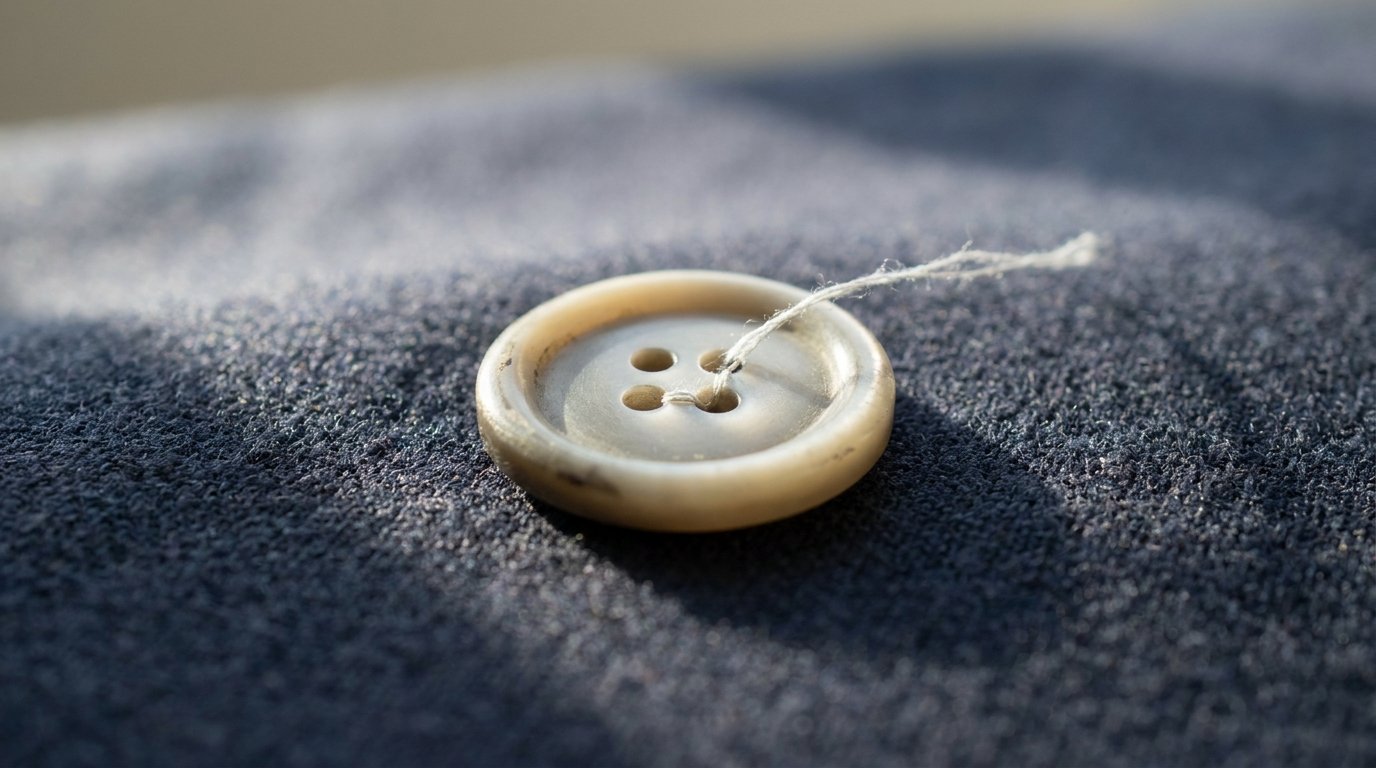
You bend down for a dropped receipt and see it first: a button, loose, quiet, and oddly out of place.
That small shock is usually where the search for the finding a button spiritual meaning begins. A button should belong somewhere. On a coat. In a drawer. Attached to a sleeve. When it appears alone, it feels less like an object and more like a missing sentence.
That is why this symbol works. A button is not only decorative. It is built to hold two sides together. So when it turns up detached, the question is rarely just “What does it mean?” It is closer to “What no longer holds, and does it need to be closed or reconnected?”
The Button Is Small Because the Missing Place Is Not
A button looks minor until it is gone.
One missing button can make a coat hang wrong, a shirt open too far, or a cuff lose its shape. That is the hidden force behind button symbolism. The object is tiny, but the absence it reveals is structural.
A found button may point to closure. Not dramatic closure. Not cinematic closure. The ordinary kind.
A conversation never finished. A boundary never fastened. A connection held by habit more than choice.
There is also a quieter possibility. The button may represent something that once belonged but no longer has a place. That matters. A button without fabric is not broken in itself. It is displaced.
This is where the symbol separates itself from other found objects. A feather may feel like comfort. A coin may suggest value or exchange. A stopped clock may pull attention toward symbolic closure.
A button asks a narrower question.
What was meant to stay connected?
That question is the heart of the finding a button spiritual meaning. The button does not need to be “magical” to become meaningful. It only needs to interrupt your automatic movement long enough to make you notice the idea of fastening.
And fastening is never neutral.
It can protect. It can conceal. It can keep warmth in. It can hold a public version of the self together.
Sometimes it can also keep something closed that should be opened.
Where You Found It Changes the Meaning
Location is not decoration. With a button, location is half the symbol.
A button found in your kitchen does not carry the same emotional weight as one found in the street. A button in an old pocket feels different from one beside the front door. The object stays the same, but the question changes.
That is why reading a found button should begin with the scene, not the superstition.
If It Was Inside Your Home
A button found inside the home may reflect a private kind of repair.
Not necessarily emotional. Not necessarily spiritual. Just private.
Home is where things loosen without witnesses. Clothes come off. Bags drop. Coats brush against chairs. The tiny hardware of daily life fails quietly.
As a symbol, that can point toward a domestic gap. Something inside your routine may need re-fastening. A habit. A role. A personal boundary that used to hold but now slips.
The useful question is not “Who sent this?” It is: what part of my ordinary life has started coming undone?
That reading keeps the symbol grounded. The button is not floating in space. It is sitting inside your actual life.
If It Was on the Street
A button found on the street feels more public.
It may have fallen from a stranger’s coat, been stepped on, carried by rain, or kicked toward you by accident. This makes the symbol less intimate, but more transitional.
Street objects are in motion. They belong to movement, exposure, weather, and leaving.
In that context, a loose button’s meaning may lean toward a connection that no longer belongs to you. Not every loose thing is asking to be repaired. Some things are only showing that they have already separated.
That is the uncomfortable part.
A button on the sidewalk may feel like a sign of reconnection, but it may also mark release from a bond that cannot be sewn back onto your life. This is close to the logic of old found objects, where the item matters because it carries a trace, not because it demands recovery.
If It Was in an Old Pocket or Drawer
This is the most personal version.
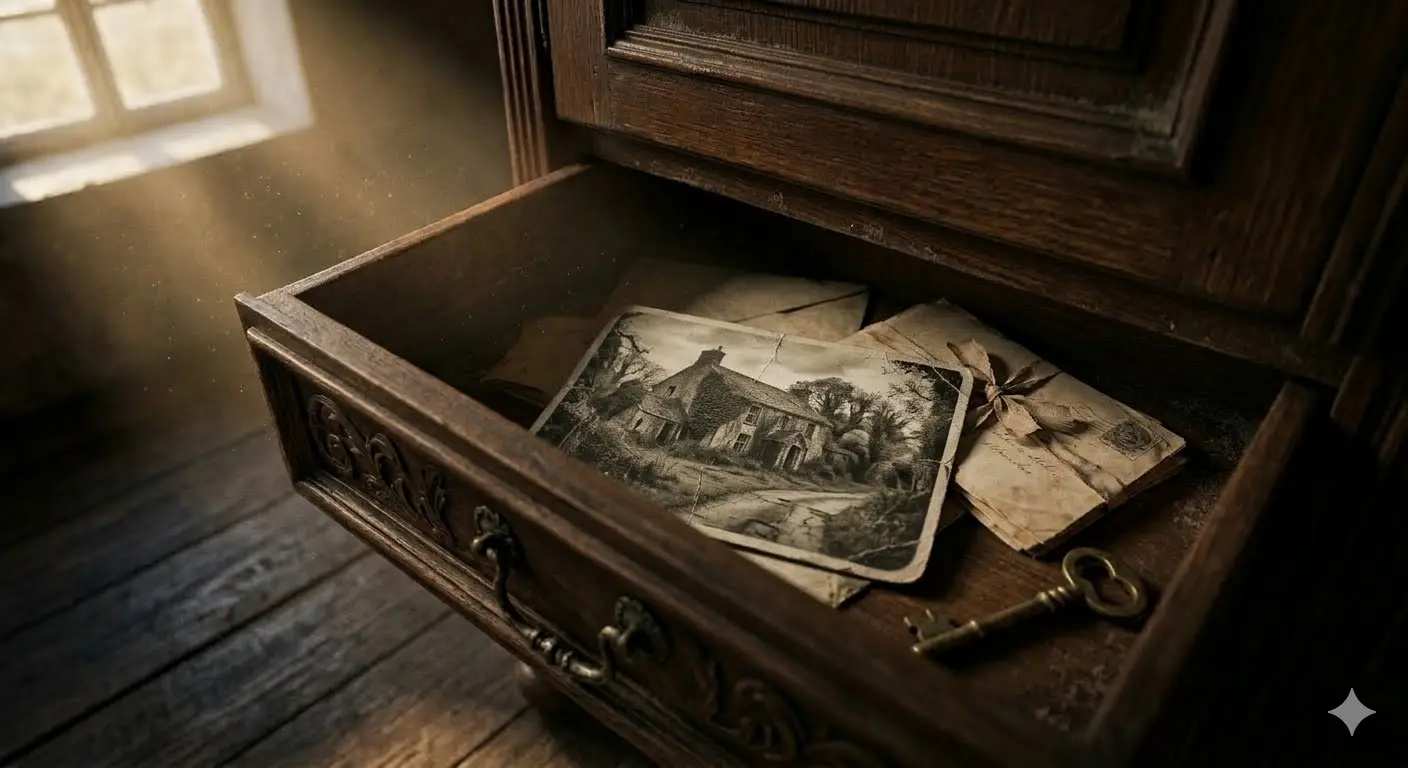
A button discovered in an old pocket, sewing box, or drawer often belongs to memory. It may have been saved because someone intended to reattach it. Then time passed. The repair never happened.
That detail changes the entire reading.
Here, the finding a button spiritual meaning may connect to an old self-image. A phase you meant to restore. A relationship you kept “just in case.” A former identity folded away but not fully discarded.
The button becomes a small archive.
Not a command.
An archive.
It holds evidence that, at some point, something was considered worth repairing.
Closure Is Not the Same as Reconnection
This is the mistake most button readings make.
They assume a loose button means something must be sewn back on.
Maybe. But not always.
A button has two symbolic lives. It can close an opening, or it can reconnect two separated sides. Those are related, but they are not identical.
Closure can mean accepting that the garment is finished as it is. Reconnection means choosing to restore function. The difference matters, because a loose button’s meaning can become emotionally confusing if every lost object is treated as an instruction.
Some connections should be repaired.
Some only need to be acknowledged.
A real button makes this clear. If it belongs to a coat you still wear, the next step is simple. Match it. Sew it. Restore the closure.
But if the button belongs to nothing you can identify, forcing a repair would be fantasy. You cannot reattach a button to an unknown garment.
That distinction is useful as a symbol.
There are moments when it may invite repair: an apology, a practical boundary, a returned message, a relationship that still has fabric on both sides.
There are other moments when it may invite completion: no more pulling the loose thread, no more carrying an old fastener for a life you no longer wear.
Historically, this practical reading has weight. Britannica notes that medieval European garments were laced or held with brooches and clasps until buttonholes were invented in the 13th century — after which buttons became so prominent that some regions passed laws limiting their use.
That detail is perfect for this article.
A button alone is only potential.
A button with a place to pass through becomes closure.
So the symbol may not be about the button at all. It may be about the missing opening. The part that would let connection work without force.
Read the Button Before You Read the Sign
Before turning the button into a message, inspect the object.
Not ceremonially. Practically.
This is the most specific way to work with a found button without turning it into a generic spiritual script. The material details narrow the interpretation.
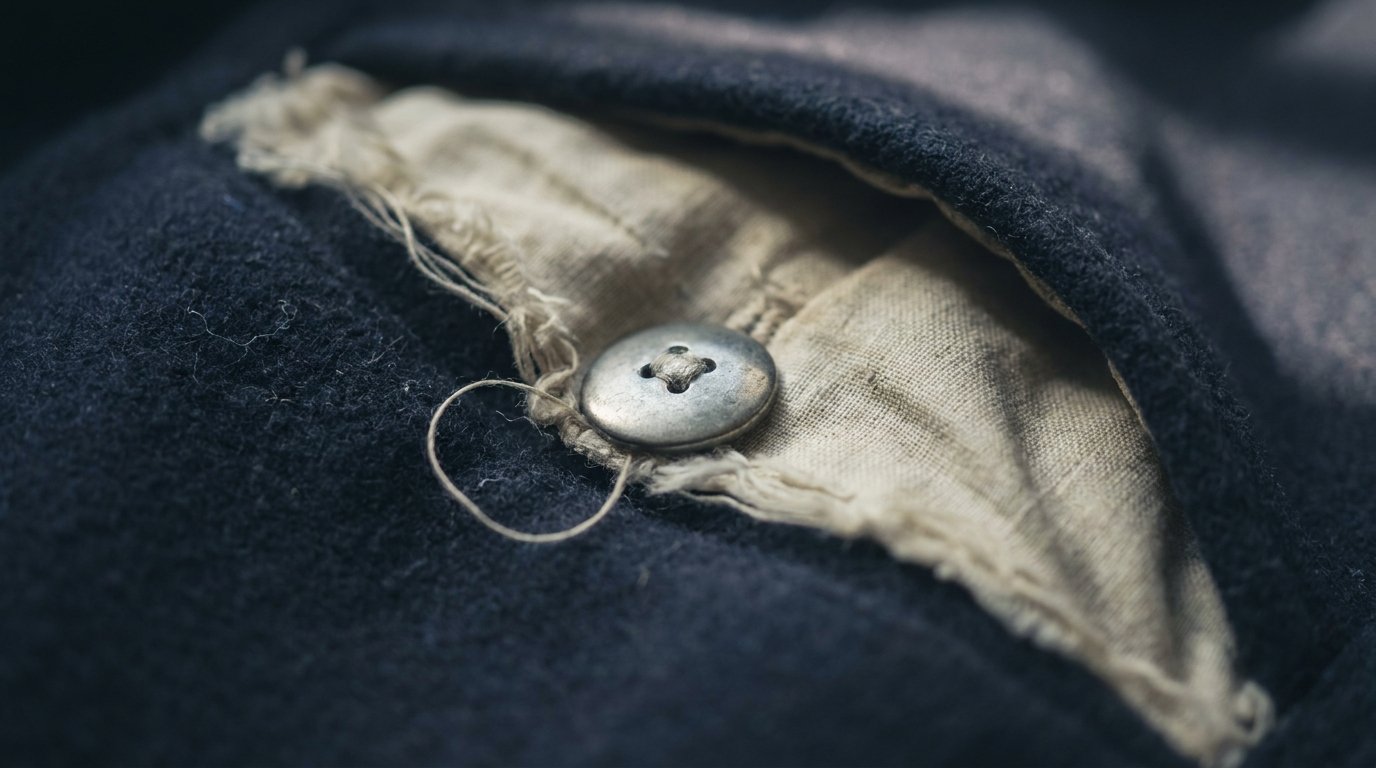
Thread Still Attached
A button with thread still attached feels different.
It suggests recent separation. Something pulled, snapped, or wore down. There was contact. There was tension.
This may point toward a bond that did not vanish cleanly. A conversation ended with strands still hanging. A role changed, but the attachment is not fully gone.
Look at the thread.
Is it frayed, clean, knotted, tangled?
A clean knot can suggest a deliberate former attachment. Fraying may suggest gradual wear. Tangled thread may reflect a connection that became too complicated to hold its shape.
This is not proof of anything mystical. It is a material metaphor.
And sometimes a material metaphor is enough.
No Thread, Clean Edges
A button with no thread may carry a different tone.
It can feel older. More detached. Less like a recent break and more like an object already separated from its source.
In that case, the reading may lean toward completion rather than repair. The bond may have already ended. The lesson may not be to sew it back, but to recognize that it no longer has a place to attach.
This matters if you were hoping the sign meant reunion.
A clean button can be beautiful and still not belong anywhere.
That is a hard symbol. Useful, though.
It can suggest that something does not need to be fixed simply because it once had function. A button can outlive the garment. A person can outgrow the identity that once held them together.
A Button You Can Actually Match
If the button belongs to your clothing, begin there.
Repair the literal thing first.
This may sound too ordinary, but it is the strongest interpretation. A symbol that can be acted on physically should not be skipped in favor of abstraction.
If your coat is missing that exact button, the meaning becomes almost blunt. Something in your life has an obvious place where closure can be restored.
That does not make it less spiritual.
It makes it more honest.
A button is not a cloud shape. It has work to do. If the work is visible, do the visible work before reaching for invisible meaning.
The same principle applies to any small found object that feels symbolic: meaning becomes stronger when it respects the object’s actual function.
Questions People Ask About Finding a Button Spiritual Meaning
Is finding a button a good sign?
It can be, especially if the button feels connected to repair, closure, or reconnection. But the meaning should not be reduced to “good luck” without context. The place, condition, and emotional timing matter more than a fixed definition.
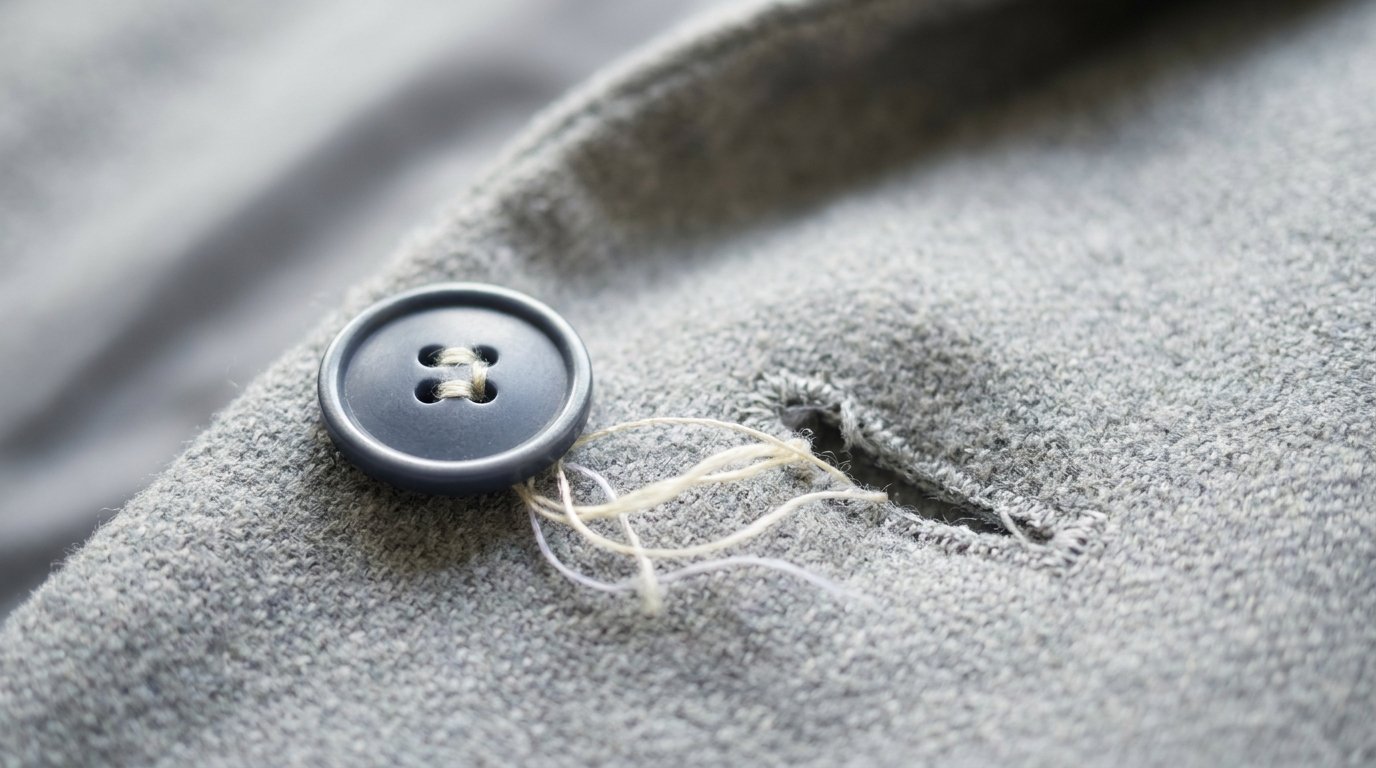
What does it mean if the button has four holes?
A four-hole button may symbolically suggest stability, because it is built for a stronger attachment. That is interpretation, not a rule. If the thread pattern is still visible, notice whether it forms a cross, a square, or parallel lines. The structure may echo how the connection itself was held — evenly, tightly, or with strain.
Should I keep a button I found?
Keep it only if it feels tied to a real reflection or a practical repair. If it feels heavy, random, or unrelated, leaving it behind can be its own form of closure.
Not every symbol needs to become an object you carry.
The Place Where the Button No Longer Holds
A button is humble. That may be why it works so well as a symbol.
It does not glow. It does not announce itself. It waits for pressure, fabric, and the small opening that lets it do its job.
So when a button appears loose, the meaning is not automatically reunion. It may be asking for a more careful distinction.
Is this something to close?
Something to repair?
Something to stop fastening around yourself?
The next time you find one, resist the urge to make it grand too quickly. Turn it over. Look for thread. Look for wear. Ask whether it belongs to something you can actually name.
That is the whole mystery of the finding a button spiritual meaning. The button is not powerful because it is lost. It is powerful because it remembers the shape of attachment. And sometimes the most honest sign is the one that shows exactly where the holding ended — which is also a reminder that a loose button can simply be a loose button, an invitation to reflect rather than a guaranteed message or professional advice.




Alex Turner
Alex Turner is the editorial pen name used for articles published on Signs of Universe. The website covers dreams, symbolism, and cultural interpretations for informational and reflective purposes. Alex Turner is not a medical, mental health, scientific, or spiritual authority.