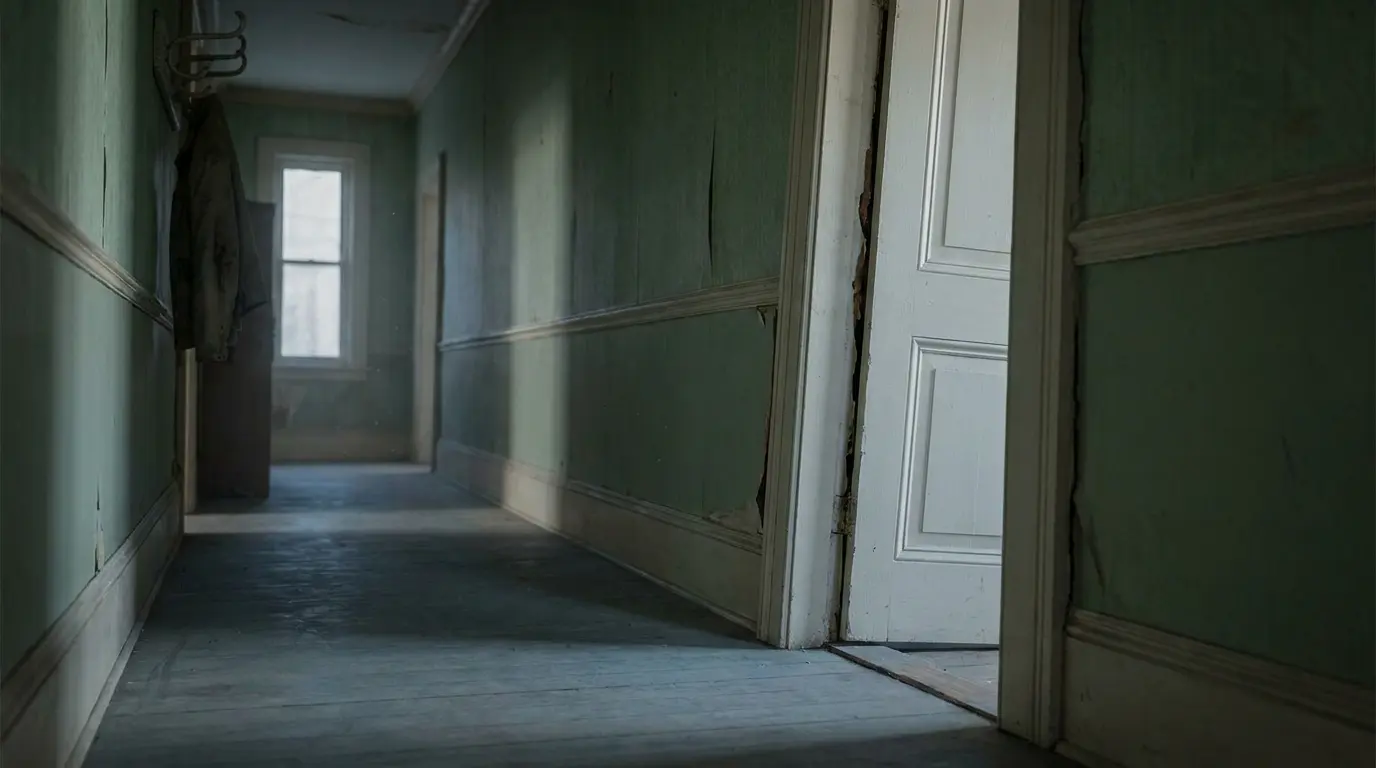
Dreaming of Stairs: How Direction, Condition, and Destination Change the Meaning
Understanding stairs dream meaning starts with context, not a fixed definition. A staircase can suggest movement, difficulty, access, delay, or transition in a symbolic reading, but the useful question is not simply “What do stairs mean?” It is: What were you doing on the stairs, what condition were they in, where did they lead, and how did you feel?
Dream research supports a general continuity between waking life and dream content: events, concerns, thoughts, behaviors, and emotions from waking life can appear in dreams, and emotionally salient experiences may be more likely to be incorporated. That does not mean research has established a universal dictionary in which climbing stairs equals progress or descending equals decline. Those specific meanings are interpretations, not scientific findings.
Why the Same Staircase Can Mean Different Things
A staircase is unusual as a dream image because it is both a place and a route. It connects one level to another, but the route itself can become the main event. You may climb easily, struggle to move, discover missing steps, descend into a familiar basement, reach a door, or keep going without ever arriving.
That is why reading only the direction can be misleading. “Going up” can sound positive until the dream includes panic about what waits at the top. “Going down” can sound negative until the descent feels calm and leads somewhere you wanted to reach. A broken staircase can feel threatening in one dream and merely inconvenient in another.
The distinction also matters scientifically. Reviews of dream research describe continuity between waking and dreaming while also noting unresolved questions and the indirect nature of access to dream experience. Schredl and Hofmann likewise found broad empirical support for the continuity hypothesis but emphasized that its exact formulation remains vague. Neither source establishes a fixed symbolic meaning for stairs.
A more careful way to interpret the dream, then, is to treat the staircase as a structured scene rather than a coded message.

Five Details That Change Stairs Dream Meaning
Before assigning any meaning, reconstruct the dream through five observable variables.
| Detail | What to notice | Why it changes the reading |
|---|---|---|
| Direction | Up, down, falling, or not moving | Shows what kind of movement was actually happening |
| Condition | Solid, broken, missing, slippery, narrow, or steep | Shows whether the route felt usable, unstable, or demanding |
| Pace | Steady, rushed, slow, struggling, or frozen | Changes the sense of control and effort |
| Destination | Top floor, basement, landing, room, doorway, nowhere, or unseen | Gives the movement a target—or reveals that there was none |
| Emotion | Relief, fear, frustration, curiosity, confidence, dread | Helps distinguish between otherwise similar scenes |
The point is not to turn these five details into another dream dictionary. The value comes from combining them.

Consider an illustrative example: you are climbing a steep staircase quickly, but you feel excited and can clearly see an open door at the top. A symbolic reading might focus on effort directed toward something anticipated.
Change only two details: the staircase is endless and the emotion is frustration. Now “going up” no longer carries the same reading. The more important feature may be effort without arrival.
Change the emotion again to curiosity, and the endless staircase may feel less like blocked progress and more like exploration without a known endpoint.
The staircase did not change much. The interpretation did.
Going Up, Going Down, or Falling: Read the Direction First
Direction is the easiest detail to remember, which is why many interpretations begin there. It is a useful starting point, but it should not be the conclusion.
Going Up Stairs
Climbing naturally creates a relationship between effort and a higher destination. Symbolically, that can make questions about advancement, pursuit, challenge, or anticipation worth testing against your waking life.

But “up” should not automatically be translated as success.
Ask what was at the top. Were you trying to reach a person, a room, daylight, an exit, or something you could not see? Were you moving willingly, or were you being forced upward? Was the climb easy enough that the stairs barely mattered, or did each step demand attention?
A dream in which you climb calmly toward a place you want to reach may support a very different reflection from a dream in which you race upward because something is behind you. In the second case, the urgency may matter more than the elevation.
The pace matters too. A slow climb can be deliberate, exhausting, or peaceful depending on the emotion attached to it. Running upstairs can suggest urgency in a symbolic reading, but the dream itself has to tell you whether that urgency felt exciting, necessary, or frightening.
Going Down Stairs
Descending is often easy to flatten into a negative interpretation because “down” can be associated symbolically with loss or decline. The dream itself may not support that reading.
A descent can also be a movement toward something: a basement you need to enter, a lower floor where someone is waiting, an exit, a train platform, or a room you remember. If you feel relieved while going down, treating the direction alone as a warning would contradict one of the clearest details in the dream.
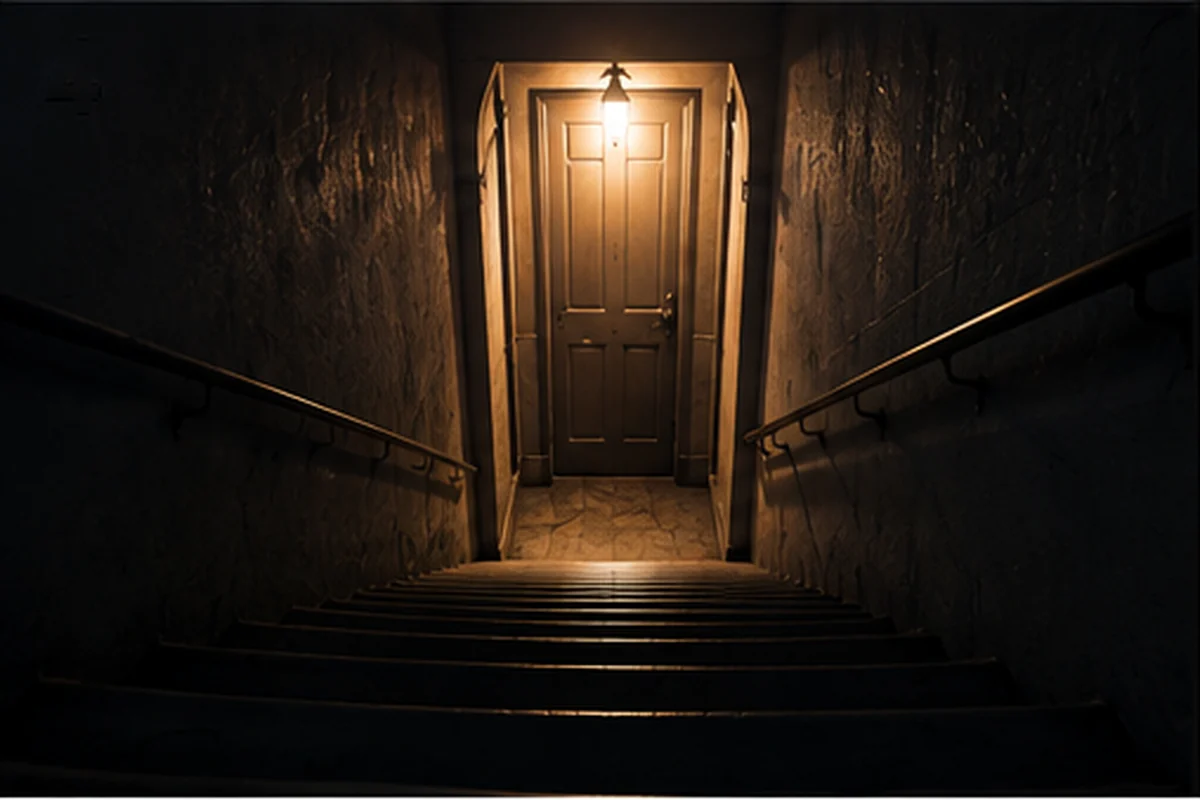
Instead, ask what the lower level represented within the scene. Was it familiar or unknown? Open or confined? Did you choose to descend? Did the staircase become darker, narrower, older, or more difficult as you moved?
Those details do not prove a psychological meaning. They simply give you better material for a contextual symbolic reading than “down equals bad.”
Falling Down the Stairs
A fall changes the structure of the dream because intentional movement becomes loss of footing or loss of control over the route.
The most useful dividing line is what you remember as the central event. If the staircase, its steps, and the attempt to navigate it remain the focus, the condition of the stairs may still be the main clue. If the falling sensation overwhelms everything else, the dream may fit more naturally with the broader pattern of falling dreams.
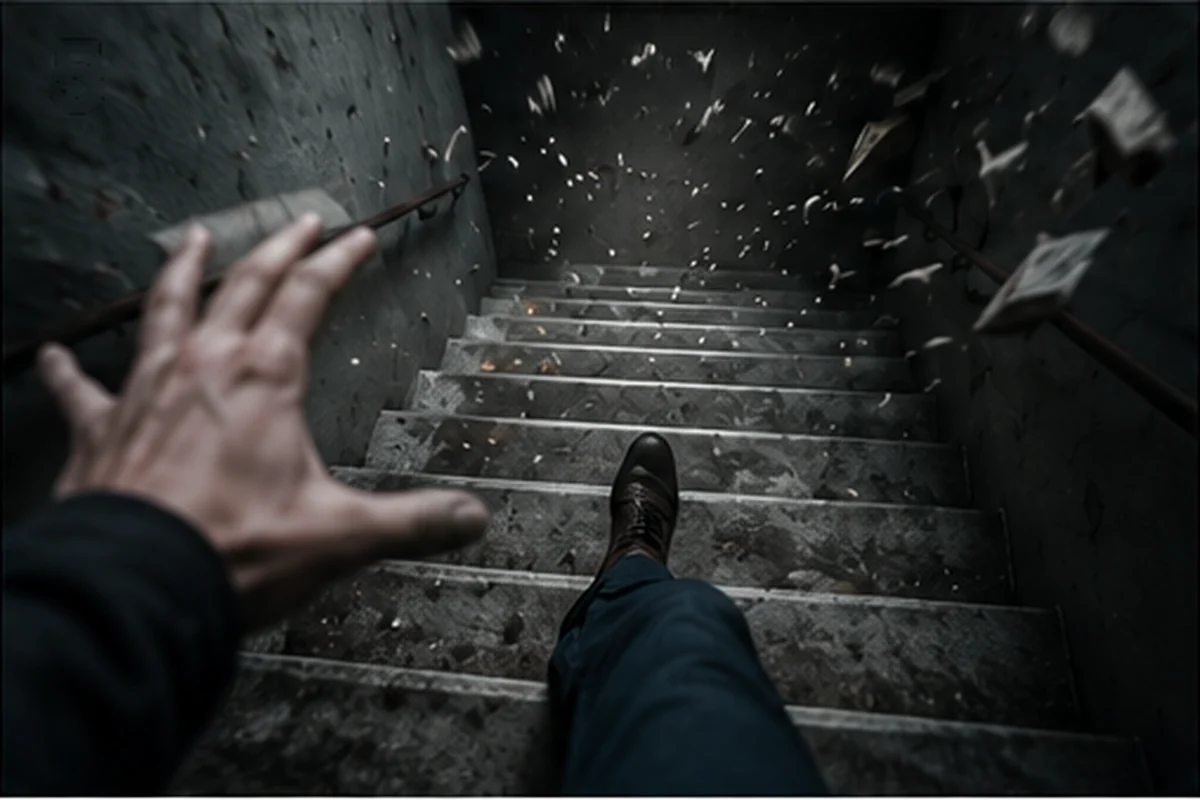
When the fall itself—not the staircase—becomes the dominant experience, the separate Signs of Universe guide to dreaming of falling into the void is a more specific continuation.
Broken, Missing, Steep, or Endless Stairs: Read the Path Itself
Sometimes the direction is ordinary but the path is not. In those dreams, the construction of the staircase may carry more interpretive weight than whether you were traveling upward or downward.
Broken or Missing Steps
Broken stairs introduce a practical problem into the scene: the route exists, but it cannot be followed normally.
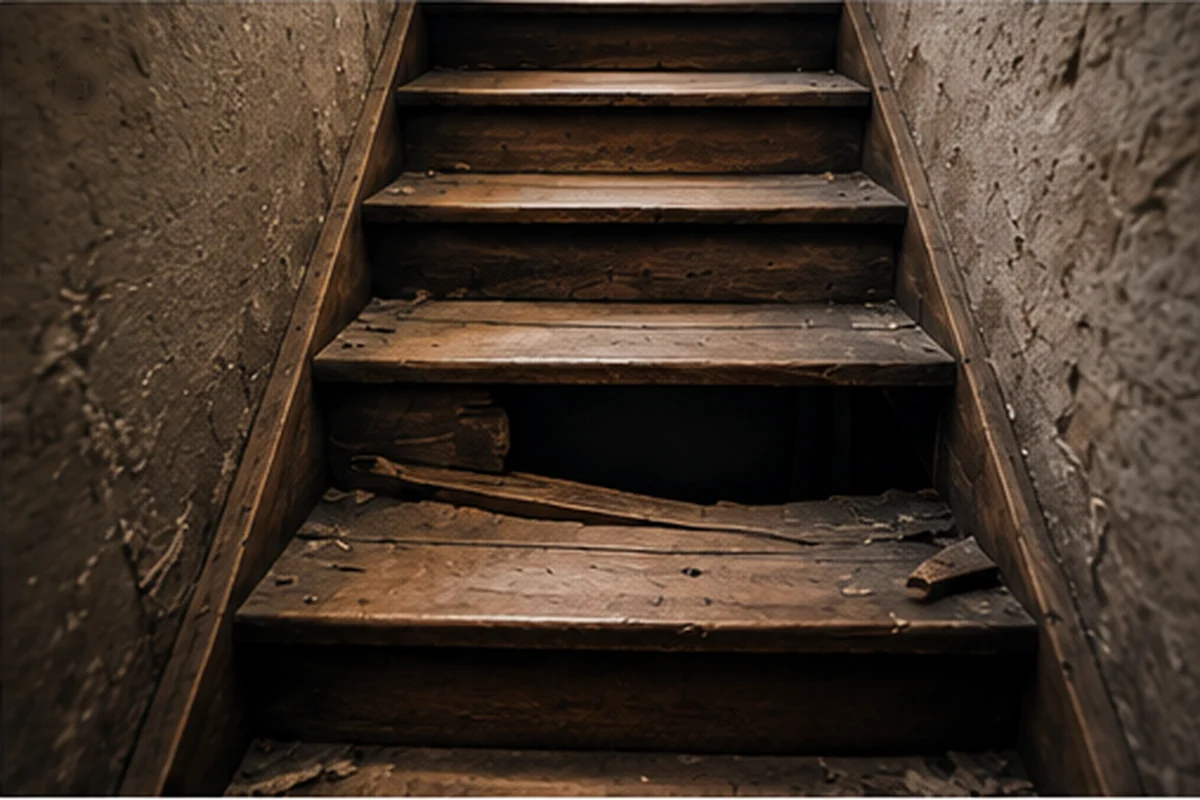
A contextual reading can start with the exact obstacle. Was one step missing, forcing you to jump? Were entire sections gone? Did the staircase collapse after you crossed it? Did you stop, turn around, or find another route?
These differences matter.
One missing step may draw attention to a particular transition point. A staircase that disintegrates as you climb creates a different pattern: the route changes while you are already committed to it. A staircase you refuse to use may center more on your response to uncertainty than on the damage itself.
Avoid turning any of these into a diagnosis such as “you have trust issues” or “your subconscious is warning you.” A narrower interpretation is to ask whether something in waking life currently feels like a path with an unclear next step, and whether the emotion in the dream resembles your reaction to that situation.
If nothing in waking life fits, the symbolic interpretation may simply not be useful. Dreams do not have to resolve into a message.
Endless Stairs or a Top You Never Reach
Endless stairs alter the role of destination. You are moving, perhaps working hard, but arrival keeps receding or never appears.

That makes the combination of pace + destination + emotion especially important.
If you are climbing endlessly and becoming more frustrated, one possible reading is effort without a satisfying sense of completion. If you are calmly exploring and do not care about reaching a top, the absence of destination means something different. If you are running because you believe you must reach the top before something happens, urgency becomes part of the pattern.
Also distinguish between an endless staircase and a staircase whose top is merely hidden. An unseen destination can still feel reachable. An explicitly endless staircase removes the expectation of arrival altogether.
That difference is more informative than treating both dreams as “struggling to succeed.”
Where the Stairs Lead May Matter More Than Whether You Go Up or Down
A staircase is a connector. In many dreams, the place it connects you to is the detail that makes the scene specific, which is one reason stairs dream meaning can change when the destination changes.
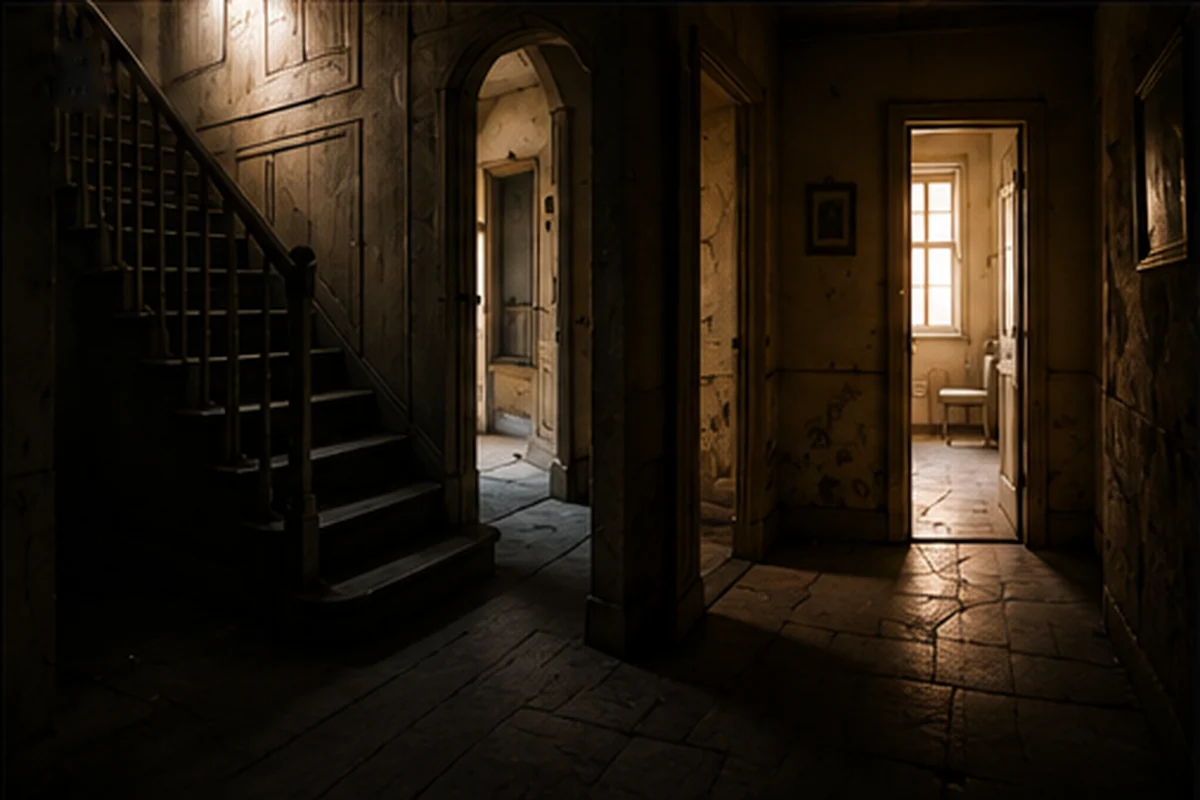
A bright landing, locked door, childhood bedroom, basement, attic, unfamiliar floor, rooftop, or blank space gives the movement a destination with its own associations. If the destination is vivid, ask whether the dream is primarily about the stairs or about gaining access to that place.
A staircase leading to a hidden or unfamiliar room, for example, overlaps with the Signs of Universe guide to dreaming about hidden rooms in your house. In that kind of scene, discovery, the condition of the room, and your willingness to enter may become more important than the fact that you used stairs to reach it.
The same applies to a staircase inside a childhood home. Once the architecture is tied to a specific remembered place, the familiarity of the house and what has changed inside it may carry more weight than a generic interpretation of “upstairs” or “downstairs.” The site has a separate guide for dreams centered on a childhood home.
This is one of the best tests for avoiding forced symbolism: remove the staircase mentally. Would the destination still be the most memorable part of the dream? If yes, interpret the destination first and the stairs as the route that brought you there.
If no destination ever appears, that absence is itself part of the scene. The dream may be organized around movement rather than arrival.
Use the Emotion to Resolve Conflicting Clues
Emotion is especially useful when the other details seem to point in different directions.
Research on continuity between waking and dream experience includes evidence that waking emotions and personally salient experiences can be reflected in dreams. That supports paying attention to emotion as part of the dream context. It does not authorize a fixed claim such as “fear on stairs means anxiety about your career.”
Keep the interpretation closer to what the dream actually gives you.

Consider these contrasts:
- Going up + confidence + visible destination: the scene can be explored as purposeful movement toward something anticipated.
- Going up + dread + locked destination: elevation does not make the dream positive; apprehension and blocked access may be more important.
- Going down + relief + familiar destination: the descent may feel like return, access, or movement toward something wanted rather than decline.
- Broken steps + curiosity + alternative route: the obstacle may be less central than adaptability within the scene.
- Endless stairs + frustration: effort without arrival becomes a stronger theme than the direction itself.
- Endless stairs + wonder: lack of arrival may function as open-ended exploration rather than failure.
These are interpretive possibilities, not translations.
A useful final check is to ask which detail would most change the dream if you reversed it. If the same staircase would feel completely different without the fear, emotion is probably carrying much of the meaning. If changing the destination from a locked basement to an open rooftop changes everything, destination matters more. If replacing missing steps with solid ones removes the entire tension, condition is central.
That is the advantage of reading the scene as a combination rather than a symbol with one definition.
Dream research gives good reason to take waking experiences and emotions seriously when thinking about dream content. It does not tell us that stairs have one scientifically established meaning. For a stairs dream, the most useful interpretation begins with what can actually be observed: direction, condition, pace, destination, and emotion.
Read those details together when considering stairs dream meaning. A climb is not automatically progress, a descent is not automatically decline, and a broken step is not automatically a warning. The meaning—if a symbolic reading is useful at all—comes from the pattern created by the whole scene and how well that pattern fits the dreamer’s waking context.



Alex Turner
Alex Turner is the editorial pen name used for articles published on Signs of Universe. The website covers dreams, symbolism, and cultural interpretations for informational and reflective purposes. Alex Turner is not a medical, mental health, scientific, or spiritual authority.