What Does It Mean to Feel Someone’s Presence When They Are Far Away?
She was in the middle of a grocery run when it hit her — not a thought, not a memory, but a feeling. Like someone had just walked into the room, except she was alone in aisle seven, and the person she felt was three time zones away.
She called him on the way to her car. He picked up on the first ring and said, “I was just thinking about you. Like, really thinking about you.”
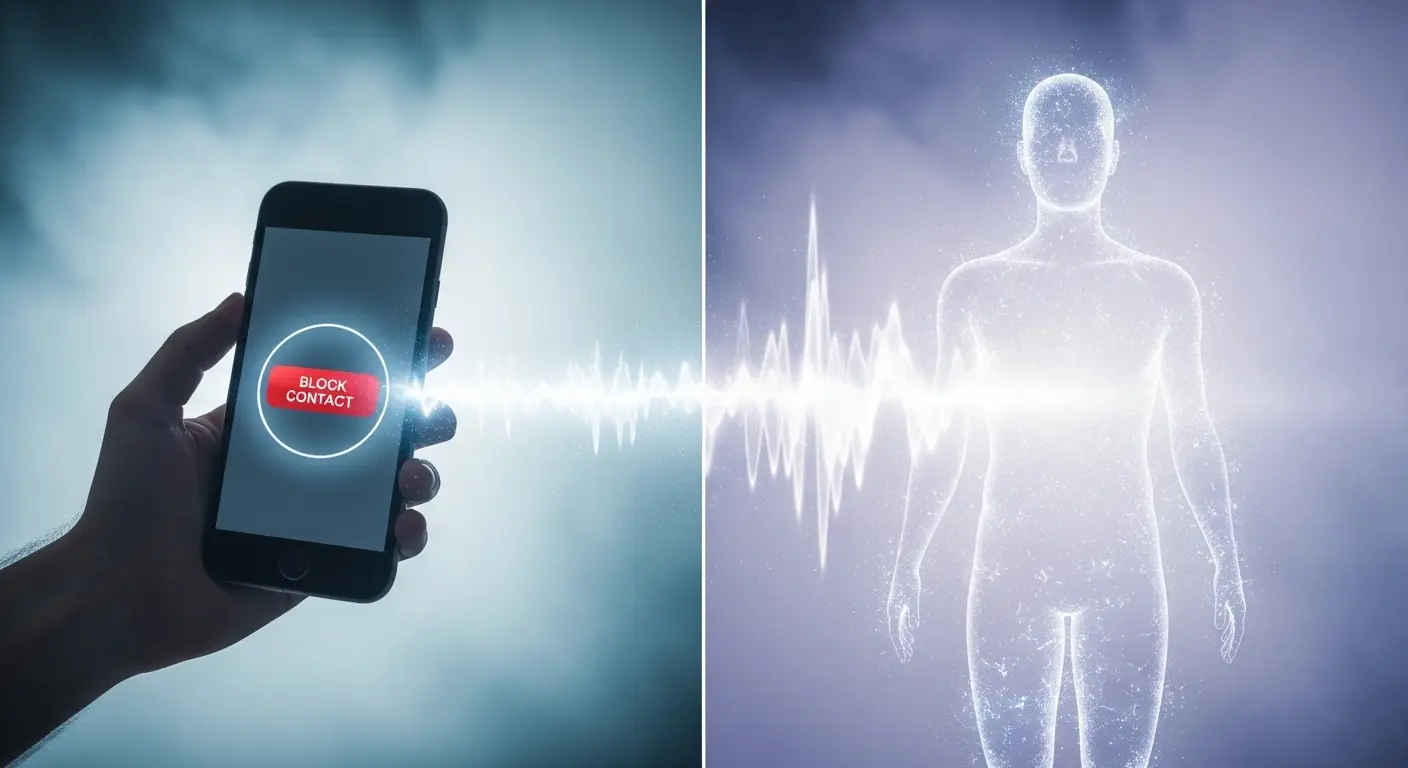
That kind of moment doesn’t fit neatly into any category. It’s too specific to dismiss as coincidence, too personal to explain with a generic “brains are weird” and move on. When you feel someone’s presence when they are far away, something real is happening — often overlapping with thought transmission between two connected people — even if the explanation remains genuinely open.
There is a pattern to this phenomenon that most people miss when they try to brush it off as mere coincidence. The truth is, whether this sensation arrives as an uninvited wave of warmth, an inexplicable sense of grief, or a quiet urgency, it carries a profound message that goes beyond simply remembering someone.
Let’s decode exactly what is happening beneath the surface, from energetic bonds that align perfectly with the other person’s emotional intensity, to the specific actions this presence is actually asking you to take, because confusing these different signals almost always produces the wrong response.
Why Do We Feel Someone’s Presence From a Distance?
Before getting into what the experience means, it’s worth understanding what it actually is — because “feeling someone’s presence” covers a wide range of sensations that aren’t all the same thing.
Some people describe a sudden warmth, as if someone placed a hand on their shoulder. Others feel a shift in the emotional atmosphere of the room — a kind of weight that wasn’t there a moment ago. Some experience it as a sound, almost like hearing someone say their name. Others simply know, with no physical sensation attached, that a specific person is nearby in some sense that has nothing to do with physical location.
What these experiences share is that they arrive uninvited. You’re not trying to connect. You’re not thinking about this person. And then, suddenly, you are — or rather, they are somehow there with you, without being there at all.
This isn’t a new phenomenon. Records of it appear in letters exchanged between separated twins, in documented accounts from soldiers and their families during wartime, in the clinical notes of grief counselors working with bereaved spouses. The experience crosses educational backgrounds, belief systems, and cultures. What changes is the framework people use to interpret it.
The five meanings below aren’t mutually exclusive. More than one can apply to the same experience. But they are distinct enough that identifying which one fits changes what you do with the information.

🔮 Meaning 1: A Deep Energetic Bond That Transcends Distance
The most commonly reported version of this experience happens between people with long, deep histories — partners, parents and children, lifelong friends, siblings. The connection predates the moment. It’s been built over years of shared experience, emotional vulnerability, and genuine knowing of each other.
In spiritual frameworks, these relationships are understood to create an energetic bond — a link between two people’s fields that doesn’t dissolve when they’re physically apart. Distance changes the medium but not the connection itself. Think of it less like a phone call that ends when you hang up and more like two instruments tuned to the same frequency: when one vibrates, the other responds, regardless of the space between them.
This is the most stable version of the experience. It tends to be calm, familiar, and recognizable — like sensing a presence you already know intimately rather than encountering something new or startling.
What an Energetic Bond Actually Feels Like
The physical and emotional signatures of this type of presence are fairly consistent across people who report it:
- A sudden sense of warmth or emotional fullness with no external cause
- The feeling of being accompanied rather than alone, even in an empty space
- A specific emotional tone that matches the person — their humor, their calm, their particular way of caring
- Thoughts of them that feel received rather than generated — as if the memory surfaced because they sent it, not because you retrieved it
- A settling sensation, like something snapping back into alignment
What’s notable about this category is that it rarely feels alarming. It feels like reunion rather than intrusion. If the presence of someone far away feels like coming home, this is likely the explanation.

Meaning 2: They Are Thinking About You Intensely Right Now
This one is harder to dismiss, mostly because the timing keeps being too precise to ignore.
The idea here is that thought isn’t entirely contained within the skull. When someone directs intense emotional attention toward another person — missing them, worrying about them, loving them with focused awareness — that attention generates something that can be felt on the receiving end. Not as a message with content, but as a presence. A sudden awareness that someone specific has their mind on you.
The word “telepathy” tends to make people uncomfortable because it carries a lot of baggage. But what’s being described here is more ordinary than that word implies. It’s not mind-reading. It’s more like emotional conduction — the way intense feeling can travel between people who are genuinely connected, the way you sometimes know a room’s mood the moment you walk in without anyone saying a word.
How to Tell If This Is the Likely Explanation
Several markers tend to cluster around this specific version of the experience:
- The feeling comes with a sense of being watched or held in thought, rather than simply accompanied
- It arrives during a moment when you yourself were emotionally neutral — not already thinking about them
- When you follow up, the other person confirms they were thinking about you intensely at that time
- The experience carries a slight alertness to it, different from the settled warmth of an energetic bond
- It often fades relatively quickly once you’ve acknowledged it — as if the “transmission” completed
The more emotionally intense the other person’s thoughts, the stronger the sensation tends to be. A passing memory of you is unlikely to register. But someone sitting somewhere missing you with their full attention? That lands differently.
Meaning 3: A Spiritual Warning or Protective Signal
Not every version of this experience is comfortable. Some arrive with an edge — a pull toward someone that feels less like warmth and more like urgency. Less “they’re thinking of you” and more “something needs your attention.”
This category covers experiences where the felt presence comes loaded with an emotional quality that doesn’t match casual connection. It might feel like worry. Like a need to reach out immediately. Like something is off in a way you can’t articulate but also can’t ignore.
In spiritual traditions that work with the concept of energetic connection, this version of the experience is understood as a protective signal — one person’s system reaching out to another’s in a moment of genuine need. The person sending isn’t necessarily doing it consciously. But the urgency reaches you anyway.
The Difference Between Comfort and Urgency
Learning to distinguish these two versions of the experience matters, because they call for different responses:
Comfort presence:
- Warm, settled, familiar
- Arrives without tension
- Feels complete in itself — no action required
- Fades gently
Urgent presence:
- Carries an undercurrent of unease or pull
- Creates a specific impulse to reach out or check in
- Feels incomplete until you do something with it
- Persists or intensifies if ignored
If you feel someone’s presence when they are far away and the first instinct it generates is I need to contact them right now — trust that instinct. Not because something catastrophic is necessarily happening, but because the signal is asking for acknowledgment, and acknowledgment is how the loop closes.

💡 Meaning 4: Grief, Loss, and the Presence That Doesn’t Leave
This version of the experience is the one people talk about least — and feel most deeply.
When someone has died, or left in a way that feels permanent, the logical expectation is that their presence fades. And often, that’s what happens. But sometimes it doesn’t. Sometimes the felt sense of someone who is gone remains specific, recognizable, and undeniably them — not as a memory you’re constructing, but as something that arrives from outside your own processing.
Grief researchers have documented this extensively. A significant percentage of bereaved spouses report sensing the presence of their deceased partner — not as hallucination, not as wishful thinking, but as something they describe as genuinely felt and often accompanied by a sense of communication or reassurance. The experience is common enough that it has a clinical name: post-bereavement hallucinatory experiences, or PBHEs. But the clinical name doesn’t quite capture what people actually describe, which is less like a symptom and more like a visit.
Why This Happens and What It Means for You
There are at least two frameworks for understanding this, and neither cancels the other out.
From a psychological perspective, the bond formed with someone deeply loved doesn’t simply dissolve when they die or leave. The internal representation of that person — the version of them that lives in your nervous system after years of closeness — continues to generate felt experience. The presence you feel may be your own system completing a conversation that was never finished, or maintaining a connection that your mind hasn’t yet learned to let go of.
From a spiritual perspective, the bond itself persists beyond physical separation. The presence is real in a non-physical sense — the person’s energy, consciousness, or whatever you choose to call the thing that made them them, hasn’t entirely departed. It remains accessible, particularly to people who were closely connected to them.
What both frameworks agree on is this: feeling the presence of someone you’ve lost is not a sign that something is wrong with you. It is, by most accounts, a sign that the connection was real.

Meaning 5: You Are More Intuitive Than You Think
Some people feel someone’s presence from a distance not because the connection is unusually deep or the moment is charged with urgency, but because they’re simply more perceptive than average to energetic and emotional information.
This isn’t mystical in the way people sometimes assume. Sensitivity to subtle interpersonal signals is a documented trait. Highly sensitive people — a term with specific psychological meaning, coined by researcher Elaine Aron in the 1990s — process sensory and emotional information more deeply than the general population. Their nervous systems pick up more. They notice things others filter out.
For people in this category, feeling someone’s presence when they are far away may be less about a specific dramatic moment and more about a baseline capacity that’s always been there. They may experience it with multiple people. They may have learned to half-ignore it because they couldn’t explain it, or because the people around them responded with skepticism.
The significance here isn’t the individual experience. It’s the pattern. If this happens to you regularly, with different people, across different circumstances — the experience is probably telling you something about your own perceptual range rather than exclusively about the person you’re sensing.
That’s not a diminishment. Knowing you’re highly attuned is useful information. It explains a lot of things beyond just this one experience, and it suggests that learning to work with that sensitivity — rather than suppress it or explain it away — might be worth your time.

How to Know Which Meaning Applies to You
Five meanings is five too many if you’re looking for clarity on what your experience was pointing to. So here’s how to narrow it down.
The first pass is emotional. Before you analyze anything, return to the moment itself and notice what the presence felt like. Was it warm or tense? Settled or urgent? Familiar or new? The emotional texture of the experience is your clearest diagnostic tool — and it’s the one most people skip in favor of looking for external confirmation.
The second pass is contextual. What was happening in your life and theirs at the time? Significant emotional moments on either end amplify the signal. If they were going through something major — good or bad — and you felt them without knowing it, that context matters.
The third pass is pattern-based. Is this the first time this has happened with this person, or does it happen regularly? Does it happen with other people too? Frequency and consistency reveal whether the experience is situational or reflects something more fundamental about how you receive information.
Questions to Ask Yourself
- When I felt their presence, what emotion came with it — and does that emotion match anything they might have been feeling at that moment?
- Did the sensation arrive while I was thinking about something else entirely, or was I already emotionally primed to think of them?
- When I reached out after the experience, what did they say they had been doing or feeling?
- Does this happen to me regularly with people I’m close to, or is this a rare occurrence with this specific person?
- Did the presence feel complete — like a moment of connection — or did it feel like it was asking something of me?
There are no wrong answers here. The point isn’t to arrive at a definitive label. It’s to take the experience seriously enough to pay attention to its specific qualities, rather than collapsing it into a generic “I must have been thinking of them” dismissal.
❓ FAQ — Feeling Someone’s Presence When They Are Far Away
Is it normal to feel someone’s presence when they are far away? More common than most people realize. Reports of this experience appear across demographics, belief systems, and geographies. The fact that it’s rarely discussed openly doesn’t mean it’s rare — it means most people don’t know how to bring it up without sounding strange.
Can you feel someone’s presence if they’re thinking about you? Many people report that this is exactly what’s happening. The experience tends to be strongest when the other person’s attention is focused and emotionally intense. Casual thoughts probably don’t register the same way directed longing, worry, or love does.
What does it mean to feel someone’s energy around you? It usually signals one of a few things: a deep existing bond activating across distance, an emotionally intense moment on their end reaching you, or your own intuitive sensitivity picking up on something in their field. The emotional quality of what you feel — warm vs. urgent vs. sorrowful — is your best guide to which explanation fits.
Why do I randomly feel someone’s presence? The word “randomly” is worth questioning. What feels random often has context that becomes visible in hindsight — a significant moment in their life, an emotional peak in yours, or a pattern that repeats with the same person under similar circumstances. Tracking the experience across time usually reveals structure where none seemed to exist.
Can you feel the presence of someone who has died? Yes, and it’s documented extensively in grief research. Bereaved individuals across many backgrounds report felt presences of the deceased that feel qualitatively different from memory or imagination — more immediate, more specific, sometimes accompanied by a sense of message or reassurance. Whether this is neurological, spiritual, or both remains genuinely open.
The Invisible Threads That Connect Us
The five meanings explored here aren’t competing explanations looking to disqualify each other. They’re different facets of the same underlying reality: that human connection operates on more channels than physical proximity accounts for.
What you do with the experience matters more than arriving at a definitive label for it. If the presence felt urgent, reach out. If it felt like grief, let yourself feel it without rushing toward resolution. If it felt familiar and warm, let it be what it was — a moment of genuine connection that happened to cross distance. If it keeps happening with multiple people across different circumstances, start paying attention to what that says about your own perceptual range.
The experience of feeling someone’s presence when they are far away is the kind of thing that invites you to take your own inner life more seriously. Not to abandon discernment. Not to start reading significance into every passing thought. But to recognize that some moments of knowing arrive through channels that logic alone doesn’t fully map — and that dismissing them entirely might cost you more than taking them seriously ever could.
This article presents spiritual, symbolic, and reflective perspectives on the experience of feeling someone’s presence from a distance. The meanings discussed are offered as interpretive frameworks for personal exploration — not as absolute claims, scientific conclusions, or professional advice of any kind. If you are navigating grief, loss, or experiences that significantly affect your daily functioning, please consider speaking with a qualified mental health professional.




Alex Turner
Alex Turner is the author behind Signs of Universe, a website focused on dreams, spiritual meanings, and symbolic signs. His approach combines research and intuitive interpretation to help readers understand the subtle messages that appear in everyday life.