Signs a Deceased Loved One Is Near: What It May Mean
Not every sign has to prove the afterlife to matter.
Sometimes signs a deceased loved one is near feel less like thunder and more like one private detail returning when the room has gone too quiet. You may notice a scent with no visible source, a song arriving at a precise hour, or an object resting where memory still aches.
For many readers, signs a deceased loved one is near are not a puzzle to win. The question is not only whether the sign came from them. It is also why this detail, this timing, this small piece of the relationship still carries weight.
The Moment a Small Sign Feels Too Personal to Ignore
Most lists about signs a deceased loved one is near begin with the obvious: dreams, scents, feathers, songs, coins, clocks, animals, lights. Those signs can matter. But the sign itself is rarely the whole story.
A robin in the yard is just a robin to most people. If your father fed robins every winter from the cracked blue bowl behind the garage, the meaning changes. That is the difference between a public symbol and a private signature.
A familiar scent with no clear source
A scent can feel more intimate than a photograph. Perfume, pipe smoke, laundry soap, motor oil, cedar, orange candy, hospital lotion. Grief often remembers through the nose.
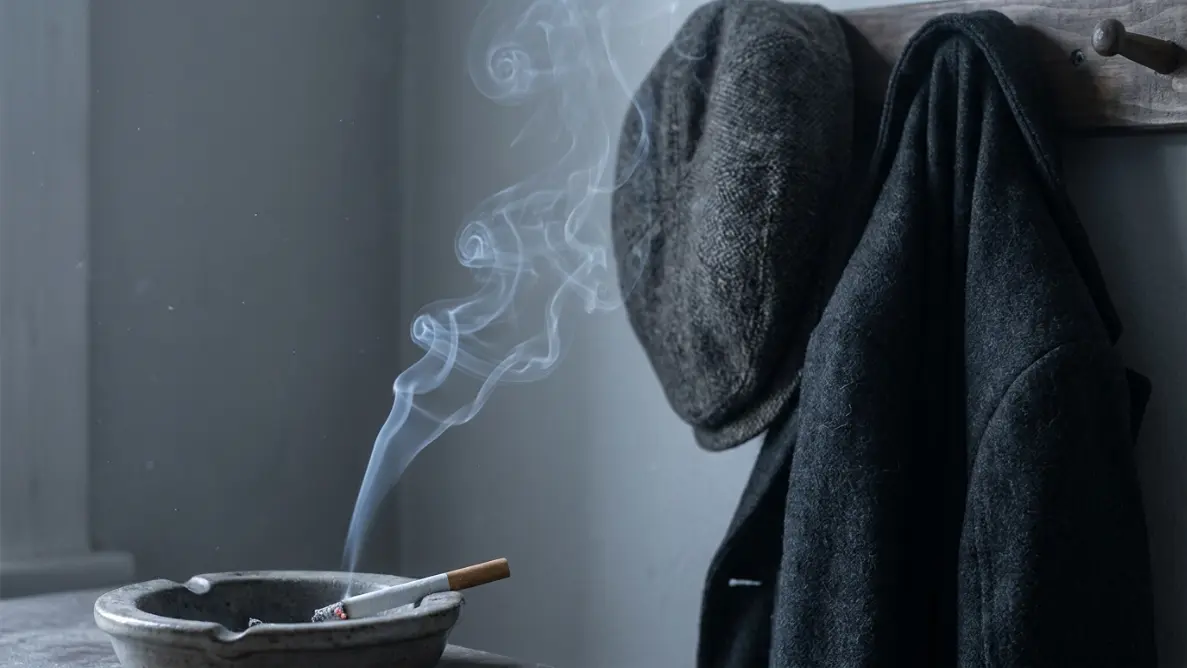
When that scent is tobacco, it carries its own weight — which is why a sudden smell of cigarette smoke is one of the most reported grief scents of all.
When signs a deceased loved one is near appear as scent, the detail matters more than the drama. Was it their exact aftershave, or only a pleasant smell you wanted to attach to them? Was it connected to a place, a coat, a chair, a car, a drawer, or a morning habit they actually had?
A symbolic reading becomes stronger when it carries the person’s real texture.
The song that lands too precisely
Music can feel unfairly accurate after a loss. A song they loved starts playing in a grocery store. A lyric repeats the sentence you never got to hear. A radio station catches you off guard.
That does not require a grand claim. It may be one of the signs a deceased loved one is near in a symbolic sense because the bond finds a sound it can travel through.
The song matters most when it belongs to your shared history. Not a generic sad song. Their song. The one from the kitchen, the long drive, the funeral, the wedding, or the voicemail you still cannot delete.
Objects that feel moved by memory
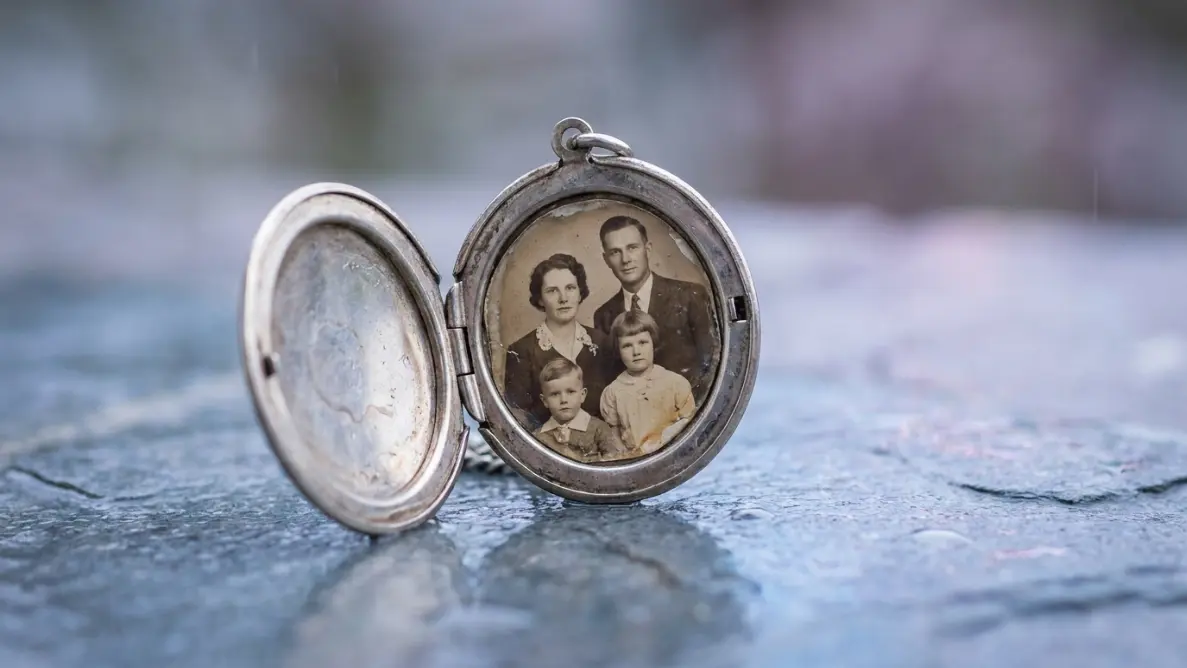
Objects can become emotional evidence because they outlive the body. A mug. A watch. A recipe card. A fishing lure. A baseball cap with sweat still faded into the brim.
When one appears in a strange place, it can feel like a message. Before forcing meaning onto it, look at the object’s relationship to the person. If the object could belong to anyone, the sign may be weak.
If it holds a private history, it may carry a sharper symbolic charge.
Not Proof, Not Nothing: The Space Grief Often Lives In
This is the careful middle. Signs a deceased loved one is near should not be presented as medical fact, spiritual proof, or a guaranteed message from the dead. They can still be meaningful.
That is why the phrase signs a deceased loved one is near needs careful language. Bereavement research has long observed that many grieving people report sensing, hearing, seeing, or feeling the presence of someone who died.
In 1971, W. Dewi Rees published “The Hallucinations of Widowhood” in the British Medical Journal. The study interviewed 227 widows and 66 widowers about experiences of their deceased spouse, and nearly half reported hallucinations or illusions connected to the spouse who had died.
That does not prove a spirit visited them. It does show that presence experiences after loss are documented, human, and more common than many people assume.
The continuing bonds model of grief also challenged the old idea that healthy mourning means cutting the bond completely. The 1996 book Continuing Bonds: New Understandings of Grief argues that many people keep a changed relationship with the deceased, and that this bond is not automatically denial.
That framework is useful here because signs a deceased loved one is near may not be about escaping grief. They may be about how love reorganizes itself after physical absence.
What is verifiable
The verifiable part is simple. People in grief have reported presence experiences. Bereavement scholars have studied ongoing bonds with the dead. Objects, songs, places, and routines can preserve attachment.
What stays symbolic
The symbolic part is different. No article can honestly prove that your loved one moved the object, sent the bird, chose the song, or placed the coin.
A responsible reading leaves room for mystery without pretending mystery is evidence. That boundary protects the tenderness of the experience. It also protects you from turning every random event into a test.
Quiet Questions People Ask After a Sign
Is smelling a deceased loved one a sign?
It may feel like one, especially if the scent is specific to them. A symbolic reading becomes stronger when the scent connects to a real habit, object, or place from the relationship.
Are dreams always signs a deceased loved one is near?
Not always. A dream may be memory, grief, longing, spiritual contact, or a blend the mind cannot neatly separate.
For more on this, see how the mind sorts dream visits from memory loops.
What if the sign makes me cry?
Crying does not make the sign false. It may show that the detail reached a protected part of the bond that ordinary daily life had not touched.
Can a deceased loved one send signs through music?
Many people interpret meaningful songs that way. A careful approach looks at timing, personal history, and whether the song carried something only that relationship would explain.
Should I worry if I stop seeing signs?
No. The absence of signs does not mean the bond has disappeared, and it should never be used as proof that love has weakened.
The Signs That Carry a Relationship, Not a Formula
The strongest signs a deceased loved one is near often do not look impressive from the outside. They look almost boring.
A Tuesday. A grocery receipt. A phrase on a stranger’s shirt. The wrong drawer opening to the exact object you had avoided touching for months.
This is the private-signature test. A sign becomes more personal when it contains one of three things: a shared detail, an impossible-to-explain timing, or a feeling that matches the relationship instead of the fantasy.
A date only you would notice
Repeating numbers can carry the same charge, like 444 after losing someone.
Some dates carry quiet voltage. Their birthday. The day they called every week. The day the diagnosis arrived. The day you forgot, then remembered at 4:12 p.m.
When signs a deceased loved one is near appear on a date like that, the date itself becomes part of the message. Not because the calendar proves anything. Because grief stores time differently.
A random coin on a sidewalk may mean little. A coin from their birth year, found on the morning you visit their grave, carries a different symbolic weight.
For some, this includes the quiet comfort of seeing a red cardinal after a loss.
A phrase they used to say
Language may be the most precise signature. Maybe they always said, “Take the long way home.” Maybe they called you by a nickname nobody else uses. Maybe they had one dry joke that still appears in your mind before family dinners.
If that exact phrase returns through a movie, a text, a sign, or a stranger, it may become one of the signs a deceased loved one is near for you. Not for everyone. For you.
That distinction matters. Generic reassurance comforts the room. A private phrase enters the wound by name.
A habit the house still remembers
Some homes keep the rhythm of the dead. The hallway light left on. The porch checked before bed. The radio turned low during breakfast. The chair nobody chooses anymore.
A sign may arrive through a habit that continues without the person. That can feel haunting, but it can also feel strangely ordinary.
The house is not giving a sermon. It is holding a pattern. When the pattern appears at the exact edge of longing, it may feel like presence.
This overlaps with the experience of feeling a presence that isn’t there.

How to Receive a Sign Without Forcing Meaning Onto It
The safest way to read signs a deceased loved one is near is to stay honest with both sides. A safer reading treats signs a deceased loved one is near as invitations, not instructions.
Do not flatten the experience into “just coincidence.” Do not inflate it into a command.
A sign should not make you afraid to live, choose, date, move, sell a house, change a room, or laugh again. If the meaning demands fear, it may be grief looking for control.
If the meaning returns you to love, memory, or a specific truth about the person, it may be worth keeping.
Try reading the sign through three direct filters:
• First, check the ordinary explanation without mocking the emotional one.
• Second, ask what detail belongs only to that relationship.
• Third, notice whether the sign leaves you more grounded or more frantic.
These are not rituals. They are guardrails.
If a lamp flickers during a storm, repair the lamp. If your mother’s song plays while you are holding her old recipe card, let the moment be tender without forcing it to become a doctrine.
There is no need to make every sign carry the same weight. Some signs a deceased loved one is near may be small. Some may be mistaken. Some may be memory wearing the clothes of coincidence.
And some may become part of how you keep loving someone whose voice no longer enters the room in the usual way.
When the Next Sign Arrives Quietly
The next sign may not arrive when you demand it. It may come while you are reaching for the cereal, deleting old emails, folding a shirt, or hearing their laugh inside a phrase someone else uses.
That is why signs a deceased loved one is near deserve care. When signs a deceased loved one is near feel personal, their power is usually specific, not theatrical.
Not blind belief. Not forced skepticism. Care.
The most honest meaning may be this: the relationship did not vanish in the same way the body vanished. It changed form.
It moved into objects, timing, scent, music, habit, and the strange private alphabet grief builds after loss.
If another sign comes, do one thing only. Compare it to the real person, not the version grief invented to survive the day.
Did it carry their humor, their timing, their stubbornness, their tenderness, their exact way of entering a room?
If yes, you do not have to prove it to anyone. Let it remain what it is: a symbolic encounter between memory, love, and the part of you still learning how to recognize presence without possession.
This article offers symbolic and reflective interpretation, not medical, psychiatric, or spiritual certainty. If grief becomes overwhelming or unsafe, professional support matters; a sign should comfort the bond, not replace care.




Alex Turner
Alex Turner is the editorial pen name used for articles published on Signs of Universe. The website covers dreams, symbolism, and cultural interpretations for informational and reflective purposes. Alex Turner is not a medical, mental health, scientific, or spiritual authority.