
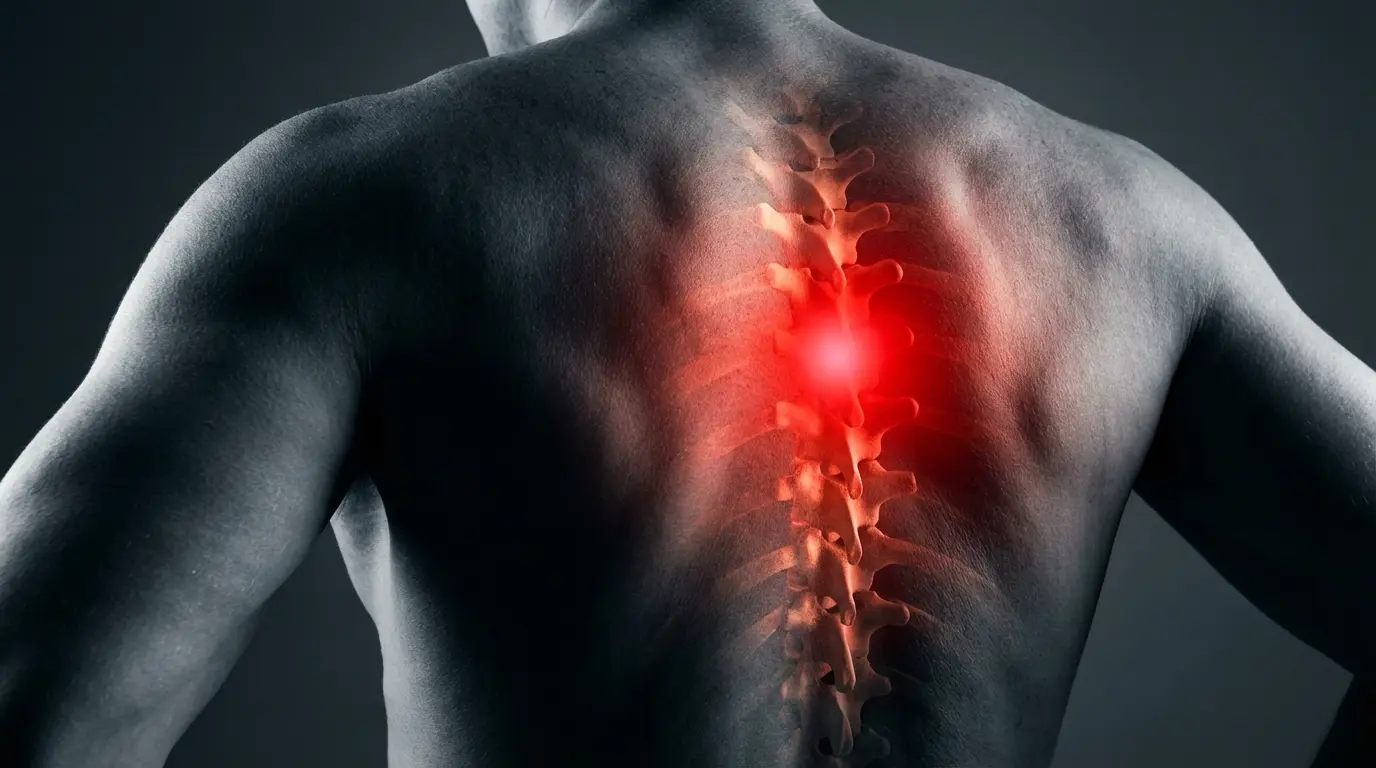
He laid down after a perfectly normal Tuesday, but suddenly a sharp, invisible knife twisted between his shoulder blades. There was no injury, no heavy lifting, yet the pain was screaming at him in the dark.
This happens to millions of people who search endlessly for mechanical causes to their sudden or chronic aches, only to find zero medical explanation. The emotional meaning of physical pain is often overlooked because we are conditioned to treat the body and the mind as two isolated rooms. The truth is, understanding this phenomenon requires us to look at the flesh as an impeccable ledger that records everything the conscious mind refuses to process. Once we decode this somatic map—translating why the neck holds entirely different data than the lower back—we can execute specific evacuation protocols to flush this trapped tension out of the nervous system for good.
The body does not malfunction when it hurts without a physical cause. It switches the language of the conversation. When cognitive processing fails, somatic manifestation begins.
The Somatic Ledger: Why Your Nervous System Translates Stress Into Ache
The cerebral cortex can only handle a specific bandwidth of distress before it initiates emergency offloading. When an emotional event is too complex, too threatening, or simply too sustained for your conscious mind to resolve, the brain does not just delete the file. It transfers it.
Your physical body becomes the hard drive for the mind’s overflow. This neurological offloading mechanism is a survival tactic. The amygdala detects a threat and primes the body for action.
Whether it is a looming deadline, a toxic relationship, or a childhood memory triggering an emotional flashback—cortisol and adrenaline flood the bloodstream. Muscle fibers contract, bracing for impact or preparing to flee.
But in modern society, we rarely flee or fight physically. We sit still at our desks. We stay in the relationship. We swallow the words. Because the physical action is never completed, the kinetic energy has nowhere to go.
The nervous system forces the local fascia—the connective tissue wrapping your muscles—to trap that kinetic charge. The emotional load crystallizes into physical tension. That perfectly healthy muscle that suddenly spasms? This is why.
The strangest part of this biological transfer is the delay. You will often notice that the severe physical ache does not happen during the peak of the crisis. It happens weeks or months later, right when you finally feel safe.
This is a threat assessment error by the nervous system. While you were in danger, the body needed all resources allocated to survival. It could not afford to feel the pain.
Only when the environment stabilizes does the brain finally allow the fascial network to drop its guard. A sudden, crashing wave of physical agony that seems to have no origin.
Sometimes the signal doesn’t come from the body at all — it comes from the objects closest to it, breaking without anyone touching them.
The Diagnostic Map: The Emotional Meaning of Physical Pain by Body Area
Location is not random. The nervous system is highly specific about where it stores different types of unprocessed data.
The body operates on a mechanical logic that mirrors psychological burdens — and the emotional meaning of physical pain changes entirely depending on where it shows up. By mapping where the ache persistently returns, you can trace the exact psychological file the brain is refusing to close.
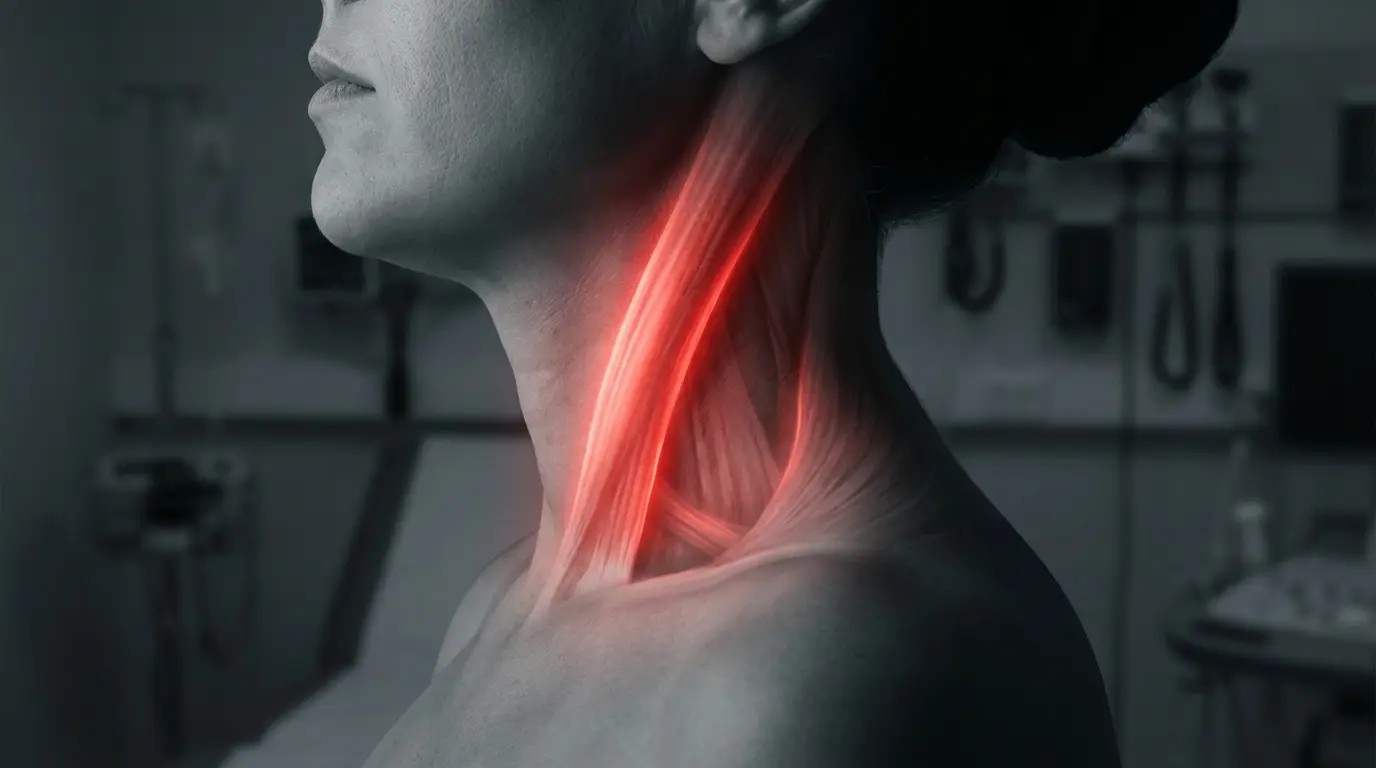
If It Is Your Shoulders and Neck: The Weight of Hypervigilance
The trapezius and cervical muscles are biologically wired to react to immediate, overhead threats. Psychologically, this area governs burden and hypervigilance. If you have chronic, unexplained pain radiating from the base of your skull down into your shoulders, your nervous system is trapped in a state of assuming external responsibilities.
This is the classic somatic manifestation of carrying the weight of the world. It affects individuals who over-manage their environments, people who constantly anticipate the failures of others, and those who feel entirely responsible for keeping their family or workplace functional. Your brain interprets this psychological burden as a literal, physical weight pressing down from above. The neck muscles remain in a permanent isometric contraction, bracing against an invisible load that you refuse to put down.
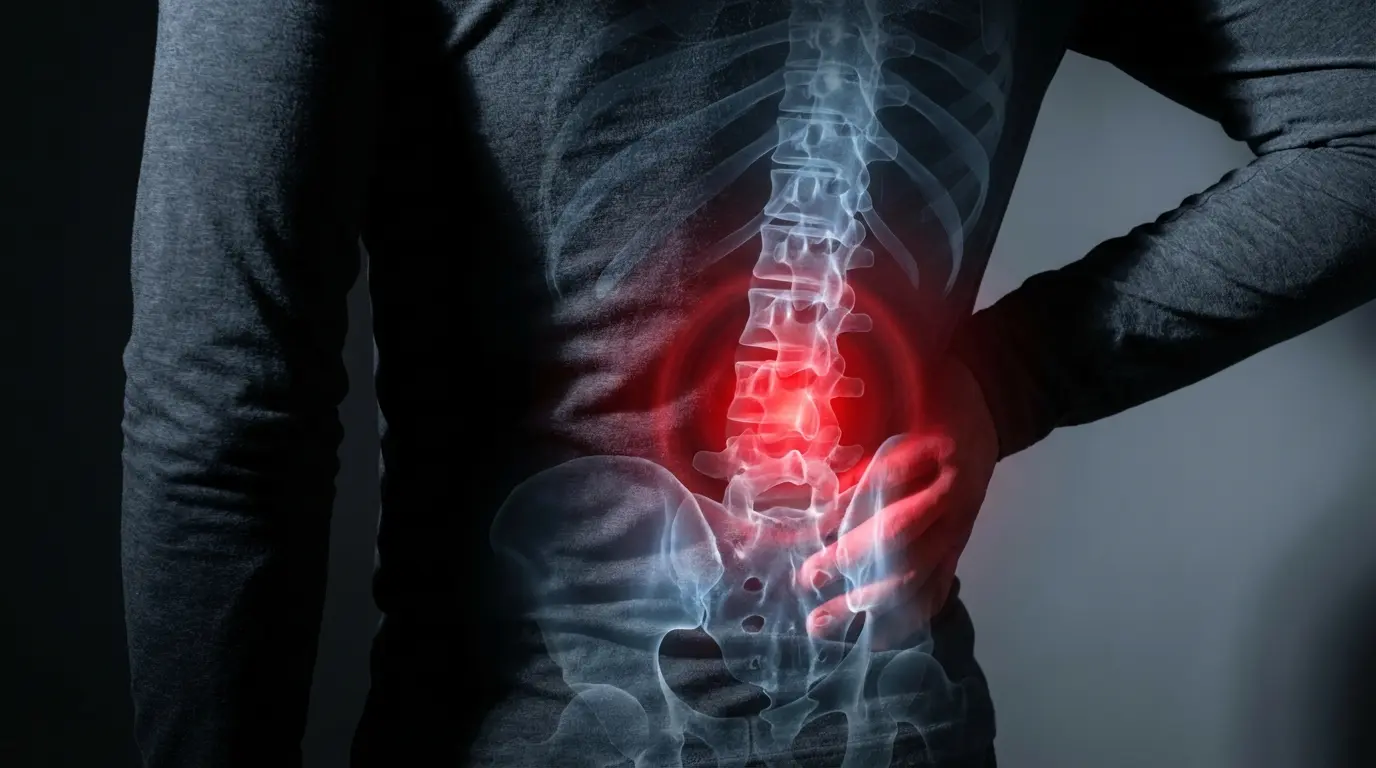
If It Is Your Lower Back: The Collapse of Structural Support
The lumbar region is the structural foundation of human bipedal movement. It carries the core of your physical weight. Therefore, when emotional pain manifests in the lower back without a slipped disc or mechanical injury, it points directly to a perceived lack of foundational support.
This area is heavily tied to survival fears. Financial instability, fear of sudden poverty, or a deep-seated belief that no one has your back will chronically inflame the lumbar fascia. When your psychological foundation feels fragile, the brain sends an emergency signal to the lower back muscles to tighten and hold the structure together. The resulting spasm is your biology screaming that it feels completely unsupported by the ground it stands on. It is the physical equivalent of waiting for the floor to drop.
If It Is Your Chest and Ribs: The Vault of Unprocessed Grief
Sudden, sharp pains in the intercostal muscles (between the ribs) or a feeling of heavy pressure sitting directly on the sternum often drive people to the emergency room fearing cardiac arrest. When the heart is cleared by doctors, the somatic reality remains. The chest cavity is the vault of unprocessed grief.
This pain occurs when intense sadness, heartbreak, or profound loss is actively suppressed to maintain daily functionality. The body creates a muscular armor around the heart space. The intercostal muscles lock up to literally restrict the depth of your breathing, because deep, diaphragmatic breaths would stimulate the vagus nerve and force the emotional dam to break. The tightness in your chest is a mechanical defense mechanism designed to keep the grief archived and prevent you from feeling the full devastation of the loss.
The Somatic Evacuation Protocol: Actions to Release the Tension
Once you understand the emotional meaning of physical pain, the next step is not thinking — it is intervening. You cannot simply think your way out of a physiological lock. Because the trauma is stored mechanically in the tissue, it requires a mechanical intervention to be released. This is not about relaxing; it is about forcing the nervous system to reboot the local area.
A similar pattern can appear as post-breakup shaking, when emotional strain seems to move through the body instead of staying only in the mind.
The Tactile Isolation Technique When the pain flares up, use two fingers to press directly and aggressively into the exact epicenter of the ache. Hold the pressure firmly. By introducing a localized, acute physical sensation, you force the brain to stop broadcasting a vague emotional alarm and focus entirely on the direct tactile input. You are giving the nervous system a tangible target. Hold the pressure for 90 seconds while keeping your eyes completely fixed on a sharp corner of the room. This visual-tactile lock halts the amygdala’s panic loop.
The Isometric Opposition Expansion Fascia releases when it is tricked into exhaustion. Identify the muscle group that hurts, and then tightly contract the exact opposite muscle group for 30 seconds. If your chest is tight, violently contract the muscles in your upper back, pulling your shoulder blades together as hard as you can. If your lower back hurts, crunch your abdominal core to its maximum limit. By exhausting the opposing muscles, the central nervous system is forced to trigger a parasympathetic relaxation response in the painful area to maintain biological equilibrium.
The Vocalized Somatic Audit The throat and vocal cords are physically connected to the vagus nerve, which dictates muscle tension. Press your hand against the painful area. Out loud, using your actual voice, speak the exact fear you are hiding in one blunt sentence. Do not elaborate. Say it coldly. “I am terrified of going broke.” “I resent carrying my family.” “I am grieving what I lost.” The vibration of the vocal cords, combined with the brutal honesty of the audit, creates a neuro-acoustic feedback loop. The brain hears the secret being spoken, realizes the threat is no longer hidden, and commands the fascia to drop the physical armor.
Frequently Asked Questions
Can emotional pain cause chronic physical pain? Yes. Psychogenic pain is a documented medical reality where emotional distress, trauma, or severe anxiety alters the way the central nervous system processes nerve signals. This causes genuine, measurable physical pain in muscles and joints, often becoming chronic if the underlying emotional trigger is continuously ignored or suppressed.
How do I know if my pain is emotional or mechanical? Mechanical pain usually has a clear origin point (an injury, a weird sleeping position, heavy lifting) and responds predictably to physical rest, ice, or anti-inflammatory medication. Emotional pain is often erratic, moves around the body, flares up during times of high stress or sudden safety, and completely resists standard physical therapies.
How long does trapped emotional tension stay in the body? It stays indefinitely until the biological loop is closed. Fascial tissue does not have an expiration date for stored kinetic energy. People can carry the somatic imprint of a specific stressful event for decades, resulting in chronic postural distortion or localized pain that only vanishes when the emotional root is finally evacuated.
Why does my body ache mostly when I finally relax? This is known as the “let-down effect.” During high-stress periods, cortisol and adrenaline act as natural painkillers, keeping you highly functional and numb to physical discomfort. When the stressful event ends and you finally relax, your stress hormones crash, unmasking the severe physical toll and muscle tension you accumulated while you were running on survival mode.
The Archive Always Gets Read Eventually
The human body operates with ruthless efficiency. It does not waste energy constructing tension without a reason.
Every unexpressed fear, every swallowed anger, and every denied grief is cataloged meticulously in the fibers of your muscles. The shoulders hold what you refuse to delegate. The lower back holds what you are terrified of losing. The chest holds what you never allowed yourself to grieve.
You can ignore the mind. You can override the thoughts. But the physical architecture will eventually force you to pay the toll.
Stop treating the pain as a mechanical failure. Treat it as an audit. Press into it. Name it. Speak it out loud.
The archive is demanding to be read. And every day you refuse, the body raises the volume. It does not negotiate. It does not forget. It just gets louder.
Clinical Disclaimer of Somatic Interpretation: The frameworks discussed in this breakdown regarding the physical translation of emotional data are observational and somatic perspectives. While the connection between the nervous system and muscular tension is biologically sound, this exploration is meant for personal diagnostic reflection, not as a substitute for medical evaluation. Severe or persistent physical pain should always be investigated by a physician to rule out structural pathology before attributing it solely to psychological archiving.