Why People Wish on Shooting Stars
A shooting star can mean good luck to someone making a wish, but in older folklore, the same streak of light could announce a birth or warn of a death. That contrast reveals something important: wishing on a shooting star is a tradition, not a universal interpretation of the night sky.
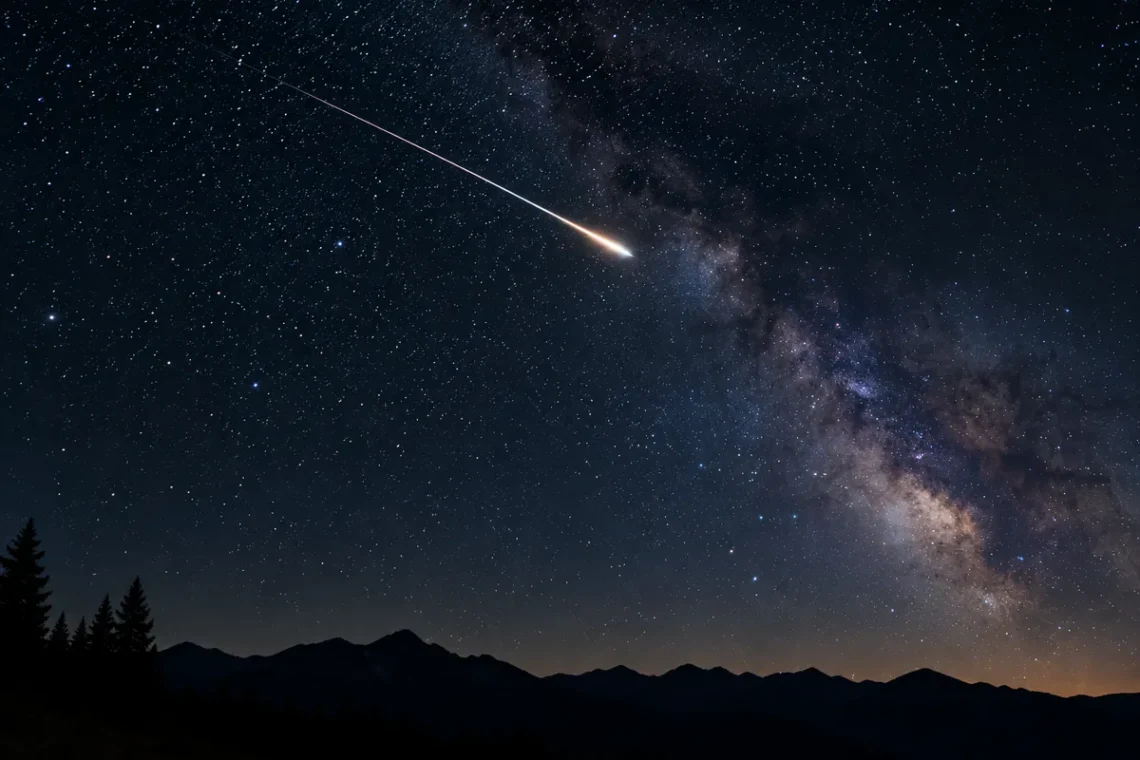
The shooting star meaning most closely associated with making a wish is good luck: the brief appearance of a meteor has become an occasion for expressing hope. One popular explanation imagines the heavens opening for a moment, allowing a wish to be heard. Its precise historical origin, however, has not been established. The actual light comes from material entering Earth’s atmosphere, not from a star falling or a promise being made.
Why Do People Make Wishes on Shooting Stars?
The custom gives a fleeting event a simple ritual: notice the light, make a wish, and let it disappear. Unlike wishing on a familiar star in the sky, wishing on a meteor depends on seeing something that lasts only a short time.
In popular versions of the tradition, a shooting star is treated as a lucky moment. The Farmers’ Almanac’s discussion of shooting-star folklore describes making a wish when a meteor appears and places the custom alongside other cultural interpretations of falling stars.
The idea of a wish being heard also differs from the broader belief that seeing a shooting star brings luck. A person might consider the sight fortunate without making a request. Wishing adds an action to the interpretation, turning a passing observation into a personal hope.
Where Did the Wishing Tradition Come From?
A frequently repeated explanation connects the custom to the Greek astronomer Claudius Ptolemy, who lived in the second century CE. According to modern retellings, shooting stars appeared when the gods opened the heavens to look toward Earth. A person who made a wish during that opening might therefore be heard.
The story appears in secondary accounts, including Madeleine D’Este’s exploration of wishing-star folklore. However, an identifiable passage establishing this explanation in Ptolemy’s own Almagest or Tetrabiblos has not been confirmed here. It would be inaccurate to present the story as a verified quotation or to credit him definitively with inventing the wishing tradition.
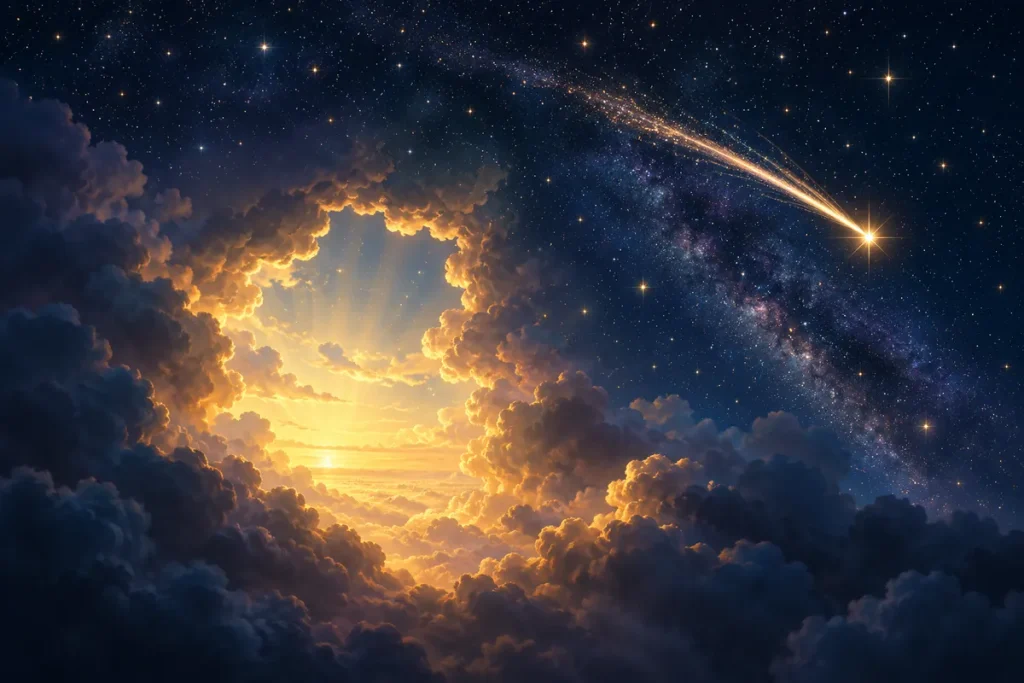
Understanding shooting star meaning also requires distinguishing two related traditions: wishing on a fixed star and wishing on a shooting star. A fixed star can serve as the focus of a wish without anything visibly changing in the sky. A shooting star makes the moment itself part of the ritual. Historical evidence for one practice does not automatically establish the origin of the other.
When Shooting Stars Meant Birth, Death, or Good Fortune
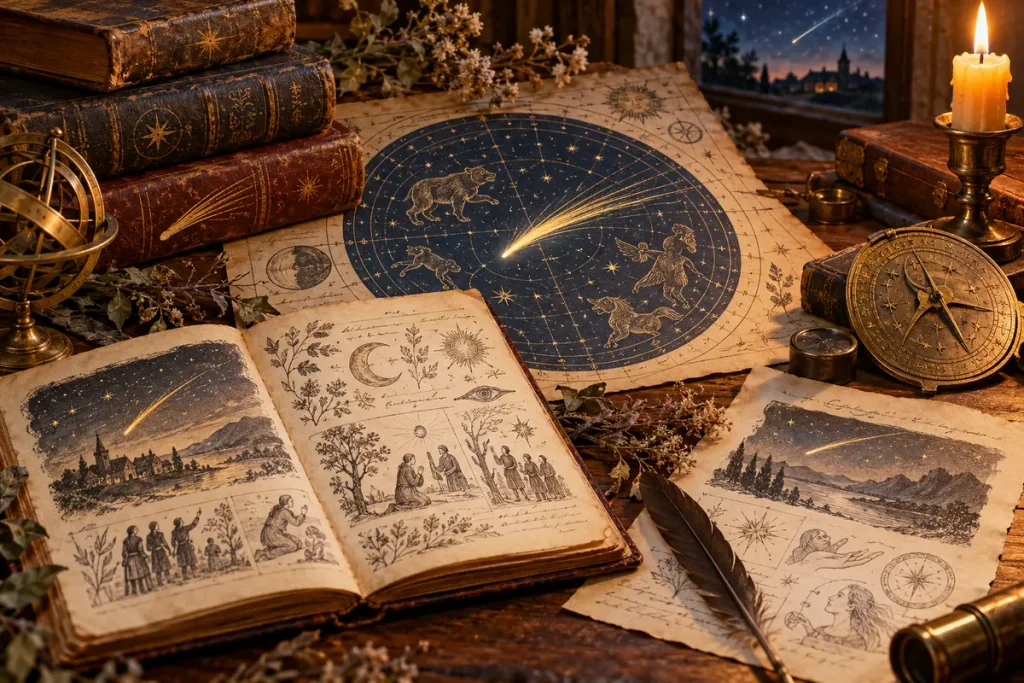
Historical British and Romanian folklore shows why shooting star meaning cannot be reduced to good luck alone. These records do not describe a single shared belief. They show different communities associating the same phenomenon with contrasting events, including birth and death.
In Yorkshire, England, an account published in 1876 associated shooting stars with the souls of babies descending from heaven. The falling light could therefore be understood in connection with the arrival of a new life, rather than misfortune.
Yet other British records gave meteors a darker meaning. In an 1836 letter, novelist Elizabeth Gaskell described seeing a shooting star as unlucky, linking that reaction to occasions when she had watched beside a sickbed. An 1866 account from Huntingdonshire recorded a woman interpreting a bright falling star as a warning before her baby’s death.
These were reports of beliefs and personal interpretations, not evidence that meteors caused or predicted the events associated with them. Their importance lies in what people understood the sight to mean.
Romanian folklore offers another distinctive explanation. In material collected by Ion Ottescu and first published in 1907, stars were imagined as heavenly candles associated with individual lives. A person’s star was lit at birth and fell when that person died. Some accounts also described fiery, dragon-like beings associated with dangerous or ominous meteors.
These traditions are discussed in the 2006 paper Meteor Beliefs Project: Birth and Death Superstitions Associated with Meteors in Romanian and British Folklore, by Andrei Dorian Gheorghe, Roy Watson, and Alastair McBeath, published in WGN, the Journal of the International Meteor Organization.
The contrast is especially revealing because the meanings were not divided neatly by country. British records included both birth associations and death omens. The sources document regional beliefs, not a rule that everyone in Britain welcomed shooting stars or everyone in Romania feared them.
A Timeline of Recorded Shooting Star Beliefs
The following timeline identifies when particular beliefs were recorded or published. These are documentary dates, not necessarily the dates when the beliefs began.
| Date | Documented belief or source | What it establishes |
|---|---|---|
| 1824 | A birth association cited from L. Hawkins’ Anecdotes | An early British record connecting a shooting star with a child’s birth. |
| 1836 | Elizabeth Gaskell’s letter | A personal account of a shooting star being regarded as unlucky. |
| 1866 | Huntingdonshire account in Notes & Queries | A recorded interpretation of a falling star as a warning of death. |
| 1876 | Yorkshire account in Notes & Queries | A belief linking shooting stars with babies’ souls descending from heaven. |
| 1907 | Ion Ottescu’s published collection of Romanian beliefs | The imagery of individual heavenly candles and stars falling at death. |
| 2006 | Gheorghe, Watson, and McBeath’s study | A scholarly comparison bringing together the British and Romanian records. |
The nineteenth-century British examples and the Romanian material are brought together in the 2006 study. The table does not show that one belief replaced another or that the wishing custom developed directly from any of them. Different meanings could exist at the same time.
Shooting Star Meaning in Astronomy
In astronomy, a shooting star is a meteor: the visible phenomenon produced when a meteoroid enters the atmosphere at high speed. The NASA guide to meteors and meteorites distinguishes three terms. A meteoroid is the object traveling through space, a meteor is the luminous event in the atmosphere, and a meteorite is material that survives the journey and reaches the ground.

This means the bright streak is not a distant star breaking loose from its position. Meteors are natural events, and several can be visible on an ordinary clear, dark night. During a meteor shower, observers may see many more as Earth passes through a stream of space debris.
None of that establishes a supernatural message, a prediction, or a mechanism through which wishes are granted. It answers a different question: what is physically happening in the sky?
Hope and good fortune belong to the symbolic interpretation of a shooting star, not to its physical cause. Someone can value the moment without treating the meteor as a prediction.
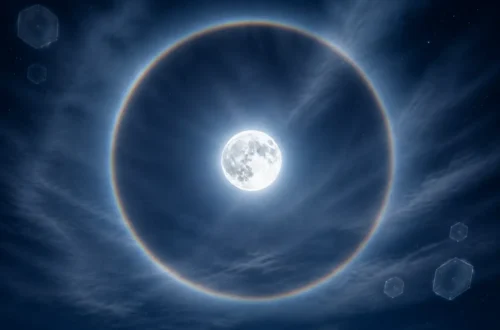
This distinction also applies to other sky phenomena. A halo around the Moon has a physical explanation alongside its weather lore and symbolic interpretations. Similarly, the question of seeing a rainbow after praying separates the appearance of a natural event from the significance someone gives its timing.
So why do people wish on shooting stars? Because a brief and memorable event has become an occasion for expressing a wish. The practice carries a familiar association with luck, but historical records show that falling lights have also represented birth, death, and warning. The meteor itself promises none of these outcomes. The wish belongs to the person watching, while the streak of light belongs to the natural sky.



Alex Turner
Alex Turner is the editorial pen name used for articles published on Signs of Universe. The website covers dreams, symbolism, and cultural interpretations for informational and reflective purposes. Alex Turner is not a medical, mental health, scientific, or spiritual authority.