Dreaming of a Black Wolf on the Road: Signs from the Universe Warning of Protection or Spiritual Danger?
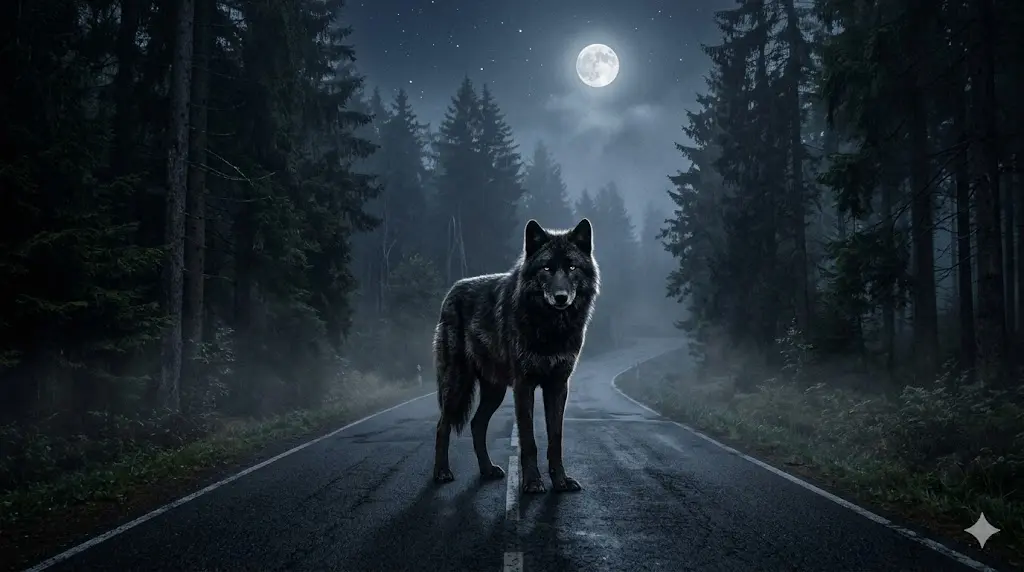
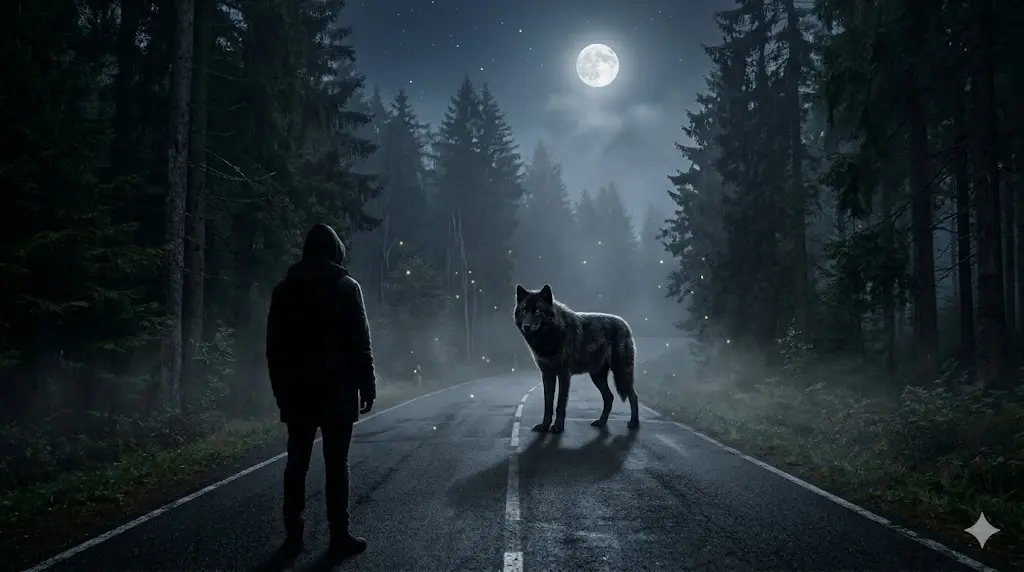
Dreaming of a black wolf on a road creates an immediate confrontation between movement and uncertainty. The road suggests that you were going somewhere; the wolf introduces another living presence with its own direction, distance, and behavior. Whether the dream felt like a warning, protection, fear, curiosity, or simple observation depends on what the wolf did and what happened to your journey.
A black wolf dream does not predict danger or prove that a guardian spirit appeared. The most reliable interpretation starts with remembered details: Were you walking or driving? Did the wolf block, cross, follow, watch, run away, or approach? Was the road familiar? Did you feel trapped, calm, responsible, or alert?
Black Wolves Are Real
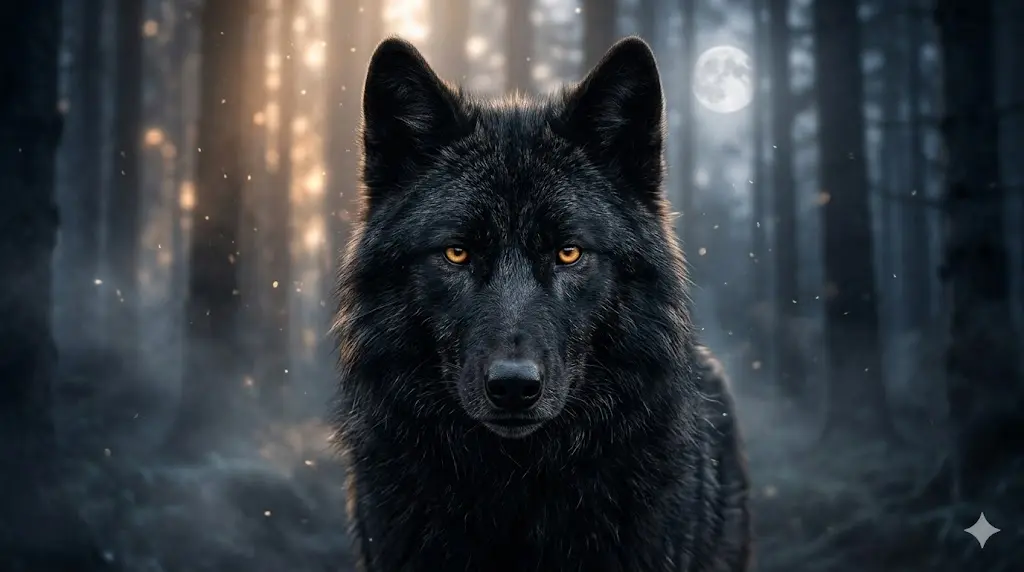
A black wolf is a gray wolf with a dark coat, not a supernatural species. Research on Yellowstone wolves has connected black coat color with a genetic variant. The U.S. National Park Service Yellowstone wolf facts identifies black and gray as common coat types in that population and explains the genetic origin researchers associate with black coloration.
The biological fact does not determine the dream’s meaning, but it prevents color from being treated as proof of evil, spiritual rank, or hidden power. A dream can make an ordinary genetic trait emotionally important because black fur changes how clearly the animal is seen against the road, forest, snow, fog, or night.
What the Wolf May Represent Personally
Wolves can evoke several different associations: a social pack, coordinated hunting, distance from people, danger, family loyalty, wildness, or an animal that is often misunderstood. Your associations may come from documentaries, local wildlife, stories, games, films, family symbols, or previous experiences. There is no single wolf meaning stored identically in every person’s subconscious.
If you admired the wolf, the dream may connect with independence, competence, or belonging. If you feared it, the animal may represent uncertainty, threat, or a situation you do not feel equipped to handle. If you felt responsible for it, the dream may focus on care for something powerful but vulnerable.
What the Black Color Adds
Black may suggest concealment, night, mourning, elegance, authority, danger, protection, or the unknown depending on context. It does not automatically mean negative energy or a “shadow self.” Ask whether the black coat made the wolf harder to see, more beautiful, more threatening, or more separate from the surroundings.
A black wolf in bright daylight produces a different contrast from one that almost disappears at night. If only its eyes or outline were visible, the dream may emphasize incomplete information. If the coat shone clearly, the color may have made the animal the most visible part of the scene rather than hidden it.
The Road Is More Than a Generic “Life Path”
A road organizes direction, access, speed, rules, and possible destinations. In a dream it may relate to an actual trip, commute, move, career decision, relationship transition, or concern about being able to continue. Calling every road a “life journey” is too broad unless the details support it.
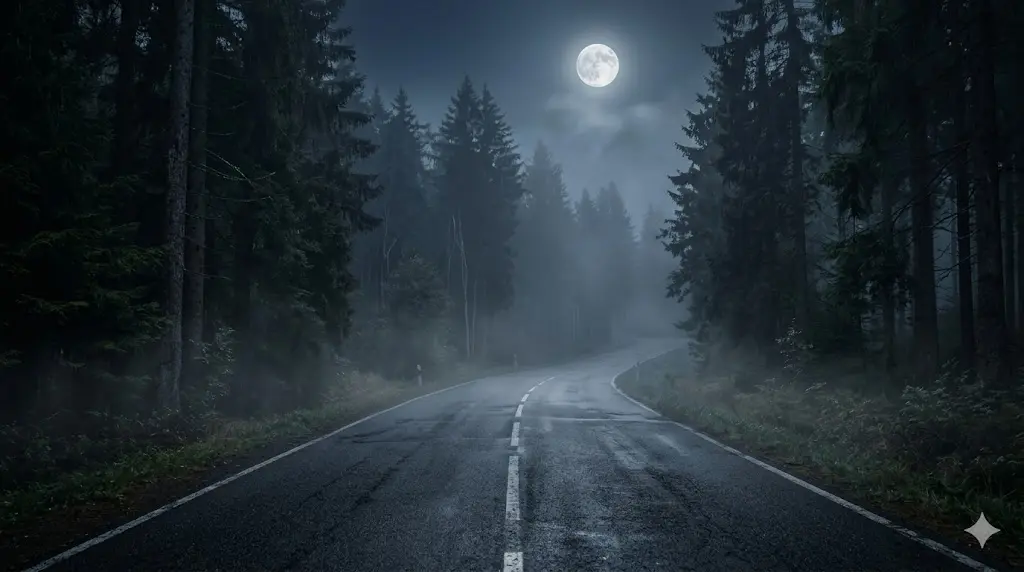
Describe the road precisely. A highway allows speed but limits stopping. A narrow forest road reduces visibility. A familiar street may connect with routine or memory. A crossroads introduces alternatives. A blocked road creates a practical obstacle. A road with no destination visible may emphasize uncertainty.
If the Wolf Blocked the Road
A wolf standing across the road may represent a pause, boundary, conflict, or piece of information you do not yet know how to pass. The meaning changes depending on whether the wolf threatened you. A calm animal that did not move may symbolize caution or respect for a limit. A charging animal may reflect fear or perceived danger. An injured wolf may make the obstacle about care rather than threat.
Ask what you did. Turning around may suggest avoidance or a sensible decision to retreat. Waiting may suggest patience. Leaving the vehicle or approaching may suggest curiosity, confidence, or risk. Waking before choosing can reflect unresolved uncertainty without telling you which waking decision is correct.
If the Wolf Crossed and Continued
A wolf crossing the road without stopping may be a brief interruption rather than a confrontation. It can symbolize the unexpected entering your attention and then leaving. If you watched it disappear, the focus may be on an opportunity, concern, or striking experience that did not require pursuit.
Do not turn the direction of travel into a guaranteed omen. Left, right, north, or south can have personal associations, but no scientifically supported system translates a dream wolf’s direction into a future event.
If the Wolf Followed You
Following can feel protective, predatory, or companionable. Distance is important. A wolf walking calmly behind you may suggest a concern or quality that remains present without taking control. A wolf gaining speed may reflect escalating pressure. A wolf staying beside you changes the image from pursuit to companionship.
Notice whether you wanted it to leave. A dream companion you welcomed may connect with confidence or a wish for protection. A presence you could not escape may connect with stress, responsibility, fear, or a recurring issue. These are hypotheses to compare with waking life, not diagnoses.
If the Wolf Watched Without Moving
A stationary wolf can make the dream feel like an evaluation. That impression comes from the scene and your response; it does not prove the animal carried a message. The gaze may focus your attention on hesitation, awareness, or a decision you know cannot be avoided forever.
Eye contact with a wild animal also carries ordinary danger in waking life, which may supply the dream with tension. The dream can use that tension to represent uncertainty without identifying a specific external threat.
Walking Versus Driving
If you were walking, you had less physical separation from the wolf and may have felt exposed, slow, or able to notice more. If you were driving, the vehicle may represent protection, control, speed, or dependence on a machine that could stop working. A closed window, locked door, broken headlights, or stalled engine can change the meaning.
Who controlled the vehicle also matters. If someone else drove, the dream may involve trust or lack of control. If you stopped voluntarily, you made space for the encounter. If the wolf forced the stop, the interruption may be the central feature.
Warning, Protection, or a Neutral Encounter?
- Warning theme: the wolf signaled danger, blocked a hazardous road, growled, or made you notice something threatening in the scene.
- Protection theme: it stayed between you and another threat, guided you, or made you feel safer.
- Boundary theme: neither attack nor rescue occurred; the wolf simply controlled access.
- Power theme: the animal drew attention to strength, restraint, leadership, or responsibility.
- Neutral encounter: the wolf crossed naturally and the dream’s meaning may lie more in your reaction than in the animal.
A warning theme does not predict an accident, betrayal, illness, or attack. Use it to identify what concerns you, then check real conditions and evidence. A protection theme does not prove you are supernaturally protected or make a risky action safe.
Cultural Interpretations Require Specific Sources
“Native American meaning” is not one tradition. Indigenous nations have distinct languages, histories, spiritual practices, and relationships with wolves. An unsourced claim that all Native American peoples see a black wolf as a guardian, teacher, or sacred-law messenger is inaccurate and should not be repeated as universal knowledge.
The same caution applies to Celtic, Norse, Roman, Asian, and other labels. Identify the specific story, community, text, period, and source before using it. If those details are unavailable, describe the idea as a modern symbolic association rather than ancient cultural fact.
Carl Jung and the “Shadow” as an Interpretive Lens
Some dream interpretations use Carl Jung’s concept of the shadow to describe qualities a person rejects, hides, or does not consciously recognize. A black wolf may be used in that framework because darkness and wildness visually suggest what is unknown or uncontrolled.
This is one psychological tradition, not a laboratory test that reveals the correct meaning of a dream. Do not assume the wolf proves you have a buried violent nature or hidden trauma. A useful shadow question is modest: “Did the wolf display a quality—anger, confidence, vigilance, independence—that I have difficulty accepting or using responsibly?”
Numerology and Astrology Do Not Determine This Dream
The number of wolves, lunar phase, or zodiac sign may be important within a personal spiritual or astrological practice, but none provides a verified code for predicting events. Three wolves do not guarantee a specific message, and a dream near a full moon does not establish that the Moon caused it.
If you use those systems, label the interpretation accurately as belief. The dream’s behavior, setting, emotion, and waking context remain more specific than a generic number or sign description.
Possible Waking-Life Sources
Dream material can draw from wildlife documentaries, social media, books, films, games, news, logos, conversations, travel planning, or an actual road encounter with an animal. A source may influence the dream even if you did not consciously think about it before sleep.
Current stress can supply the structure. A deadline may become a blocked road; uncertainty may become darkness; a strong person may become the wolf; a choice may become a crossroads. This does not reduce the dream to “nothing.” It links the image to concerns you can examine.
A Step-by-Step Interpretation
- Record the route: Road type, destination, weather, light, and who traveled with you.
- Describe the wolf: Coat, size, condition, movement, sound, and distance.
- Name your emotion before and after it appeared.
- Identify the interruption: Did you stop, change direction, accelerate, follow, or wake?
- List recent sources: Images, stories, travel, conflict, and decisions.
- Choose two possible themes: Avoid locking onto the first dramatic answer.
- Check waking evidence: The dream may highlight a concern but cannot verify it.
- Take only proportionate action: Reflection is not an order.
Compare the spatial relationship with other non-indexed dream articles. A powerful animal at the entrance of a home is explored in dreaming of a white lion, while an animal above you changes the direction of attention in dreaming of an eagle flying overhead at night.
Details That Can Reverse the Interpretation
A single overlooked detail can change the entire reading. A collar suggests a relationship with people rather than untouched wildness. Blood or injury shifts attention toward vulnerability and care. Pups bring family, responsibility, or protection into the scene. A pack changes a one-to-one encounter into a social situation involving belonging, numbers, or pressure.
Sound matters as well. Growling communicates a different emotional boundary from howling in the distance. Silence can make the animal seem watchful, but it does not prove secret knowledge. If the wolf spoke with a human voice, record the exact words and evaluate them as dream content rather than an authoritative instruction.
The ending deserves equal weight. Passing safely, turning back, waking in fear, following the wolf, or seeing the road open again produces different themes. Do not interpret only the most dramatic image while ignoring how the situation resolved.
When to Pay More Attention
A recurring wolf dream may be worth tracking for changes in the road, behavior, and ending. Repetition does not make it prophetic. It provides more examples that may reveal a connection with sleep, stress, anniversaries, media, or unresolved concerns.
Seek professional support if nightmares repeatedly disrupt sleep, cause significant distress, or affect daily functioning. A dream interpretation cannot diagnose anxiety, trauma, or another condition.
Frequently Asked Questions
Is a black wolf dream a bad omen?
No. Coat color and dream imagery do not predict misfortune. Fear may be part of the dream, but it is not evidence of a future event.
Does the wolf represent a guardian?
It may be interpreted that way if its behavior was protective. The dream cannot prove that an external guardian was present.
What if the wolf blocked my road?
Consider pause, boundary, risk, uncertainty, or a real obstacle. Your response and the road’s condition narrow the possibilities.
What if I was not afraid?
Calm may shift the meaning toward observation, respect, companionship, confidence, or curiosity rather than threat.
Does a black wolf mean my shadow self?
That is one Jungian interpretation, not a proven diagnosis or universal meaning.
A Balanced Meaning of a Black Wolf on the Road
The strongest interpretation comes from the interaction: a powerful animal met you in a place of direction and movement. The dream may help you reflect on boundaries, uncertainty, courage, threat, companionship, or whether to continue. It does not decide your route for you.
Related reading: Dreaming of a Black Snake in Bed.
This article separates documented wolf biology from symbolic dream interpretation. Meanings are offered as reflective possibilities, not facts, predictions, diagnoses, or substitutes for medical, mental-health, financial, relationship, legal, wildlife, or safety advice.


Alex Turner
Alex Turner is the editorial pen name used for articles published on Signs of Universe. The website covers dreams, symbolism, and cultural interpretations for informational and reflective purposes. Alex Turner is not a medical, mental health, scientific, or spiritual authority.