Spiritual Meaning of a Cat Staring at You: Discover the Universe’s Mysterious Signs
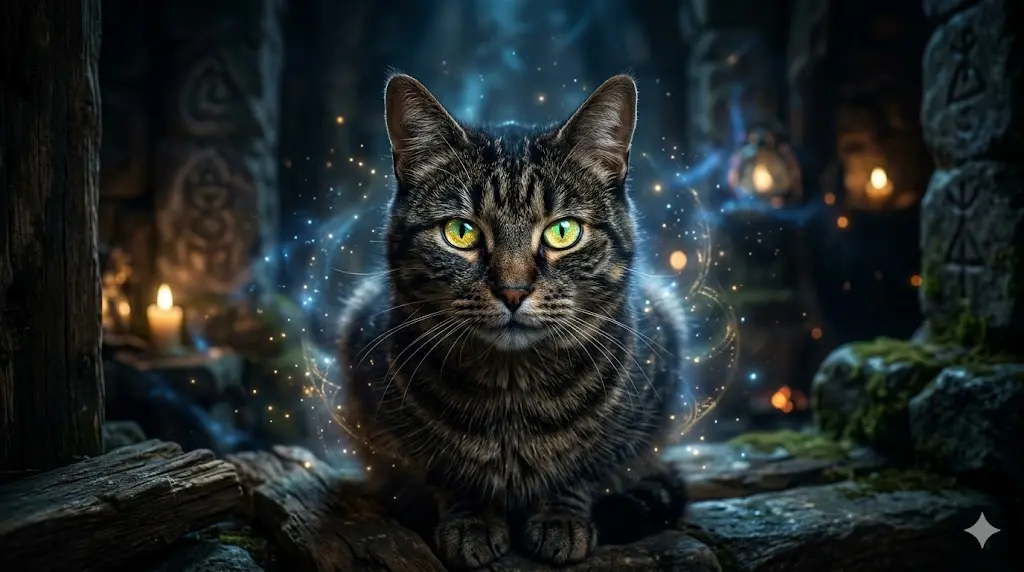
A cat staring at you can feel unusually deliberate. Cats use their eyes, ears, whiskers, posture, distance, and movement together, so the gaze should never be interpreted by itself. Before treating the moment as a spiritual sign, notice the cat’s full body language and the situation around it. A relaxed cat that slow-blinks is communicating something very different from a rigid cat with flattened ears, a lashing tail, or very large pupils.
The spiritual meaning of a cat staring at you is therefore not a single fixed message. For some people, the encounter becomes a prompt to pay attention, respect boundaries, or slow down. For others, it is simply memorable animal behavior. Both readings can coexist as long as symbolism is kept separate from claims about what the cat can literally perceive or predict.
Start With the Cat’s Body Language
A stare accompanied by soft eyes, a loose body, neutral ears, and a slow blink usually occurs in a calm context. A fixed gaze with a crouched posture, tense muscles, ears turned sideways or backward, or a rapidly moving tail can indicate vigilance, fear, irritation, or intense focus. The same eye contact can therefore mean comfort in one situation and a request for distance in another.
Context also matters. A cat may watch because it expects food, recognizes a routine, notices movement, wants access to a room, or is deciding whether it feels safe enough to approach. Looking first at ordinary explanations does not make the experience meaningless. It gives the symbolic interpretation a more honest foundation.
What Research Says About Slow Blinking
A 2020 study published in Scientific Reports examined slow-blink interactions between cats and humans. In the experiments, cats were more likely to narrow their eyes after people performed a slow-blink sequence, and they were more likely to approach an unfamiliar researcher after that researcher slow-blinked. The study supports the idea that slow eye-narrowing can be part of positive cat–human communication.
That finding does not mean every prolonged stare expresses affection. Slow blinking involves gentle narrowing and closing of the eyes; an unbroken, wide-eyed stare is a different behavior. If the cat looks tense, give it space rather than trying to force eye contact. If it appears relaxed, you can soften your gaze and blink slowly without moving closer.

Why the Moment Can Feel Spiritually Significant
A cat’s attention can interrupt an automatic moment. You may have been worried, distracted, or thinking about a decision when the animal suddenly held your gaze. The pause can feel significant because it makes you notice both the cat and your own state of mind. In a reflective spiritual reading, the value is not that the animal delivered a provable message. It is that the encounter helped you become present enough to notice what was already happening within you.
Three themes fit this kind of encounter without requiring supernatural certainty: attention, boundaries, and patience. Cats often observe before approaching, withdraw when they have had enough, and act on their own timing. If those qualities connect with something you are currently experiencing, the stare may serve as a useful personal symbol. If they do not, there is no need to force a meaning.
If It Is Your Own Cat
Your cat has learned your routines, movements, voice, and responses. It may stare because it anticipates dinner, play, an open door, or a familiar interaction. Watch what happens next. Looking toward a bowl, walking to a door, vocalizing, or approaching a favorite toy provides more information than the gaze alone.
If the behavior is new and persistent, especially when accompanied by disorientation, changes in appetite, unusual vocalizing, hiding, or altered sleep, a veterinary professional is the appropriate source of guidance. A spiritual interpretation should not replace attention to a possible health or behavior change.
If It Is a Stray or Unfamiliar Cat
An unfamiliar cat may watch while deciding whether you are safe. Avoid walking directly toward it, cornering it, or reaching over its head. Turn slightly sideways, keep your movements quiet, and allow the animal to choose whether to approach. What feels like a mysterious connection to a person may be a cautious assessment from the cat’s point of view.
Symbolically, an encounter with an unfamiliar cat is often associated with trust that develops without control. That is a reflective association, not a universal rule. The most responsible response remains the practical one: respect the animal’s distance, notice its physical condition, and contact a local rescue organization if it appears injured or in danger.
If the Cat Stares at an Empty Corner
Cats can notice small movements and faint sounds that people overlook. Reflections, insects, sounds inside a wall, shifting shadows, or movement outside a window may hold their attention. A cat looking at a place you cannot immediately explain is not evidence of a spirit or unseen presence.
If the scene still feels meaningful to you, treat that feeling as information about your response rather than proof about the room. Were you already uneasy? Did the cat’s focus make you more alert? Did the moment remind you of someone or something? Those questions preserve the personal value of the experience without presenting an unverifiable claim as fact.
If It Happens at Night
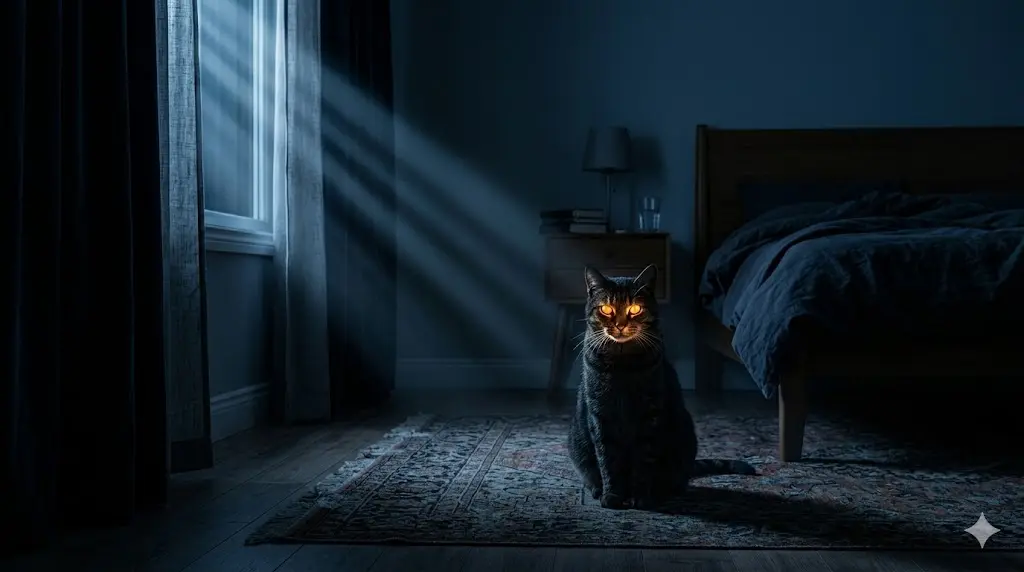
Nighttime changes how the encounter feels because the room is quieter, visual information is limited, and a cat’s reflective eyes are more noticeable. Cats also tend to be active around dawn and dusk, so watching, moving, and seeking interaction while people are resting can be part of their normal schedule.
If Your Cat Watches You Sleep
A cat may watch a sleeping person because it is awake, waiting for movement, seeking warmth, or expecting a routine to begin. Some owners experience this as protective or comforting, but protection is a personal interpretation rather than something the gaze alone can demonstrate.
The clearest way to understand the pattern is to observe what follows it over several nights. Does the cat ask for food at the same time, settle beside you, react to outdoor sounds, or leave as soon as you move? Repeated context is more reliable than a one-time assumption.
Cats in Cultural Symbolism
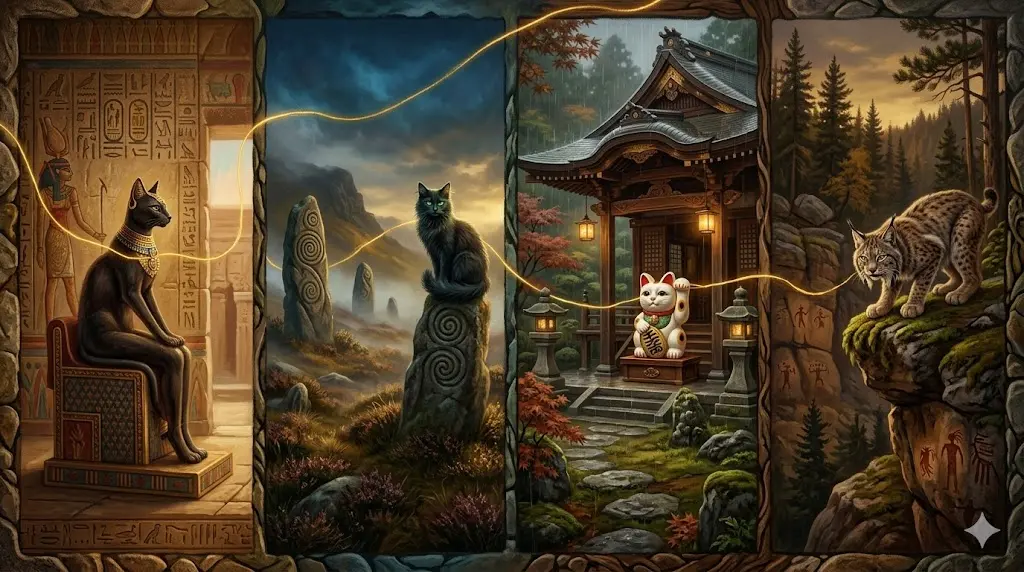
Cats have not carried one universal meaning. In ancient Egyptian religion, the goddess Bastet was represented first with leonine features and later commonly as a cat or cat-headed woman. The historical overview of Bastet in Britannica connects her with protection, fertility, music, and domestic life. That history helps explain why cats are often associated today with guardianship, but it does not establish a fixed meaning for an individual modern encounter.
Other traditions have treated cats as lucky, unsettling, independent, or connected with the unknown. These differences are important: they show that symbolism changes across time and place. Your reaction may be influenced by stories you grew up with, the cat’s color, previous experiences with animals, or the emotional setting of the moment.
How to Reflect Without Forcing an Answer
Use a short sequence instead of searching immediately for a prediction:
- Describe what happened: Where was the cat, what was its posture, and what happened next?
- Separate observation from interpretation: “The cat watched me for thirty seconds” is an observation; “it was warning me” is an interpretation.
- Notice your first emotion: Calm, curiosity, fear, comfort, and surprise lead to different personal readings.
- Check the ordinary context: Food, movement, sound, safety, and routine may explain the behavior.
- Keep only what is useful: A symbolic idea should help you reflect, not create fear or pressure you into a decision.
If you are comparing different animal encounters, the circumstances matter more than a universal symbol. A hovering insect may invite a different reflection than a watchful bird; see the discussions of the spiritual meaning of a dragonfly and a black crow at your window at night for examples of context-first interpretation. Both linked articles are currently part of the same non-indexed review group.
A Balanced Meaning of a Cat Staring at You
The most grounded spiritual interpretation is not that every stare predicts an event. It is that the encounter can call attention to awareness, consent, boundaries, and timing. First read the animal’s behavior responsibly. Then, if the moment remains personally significant, ask what it brought into focus for you.
Related reading: Butterfly Landing on You: Spiritual Meaning and Colors.
This article distinguishes observable cat behavior from symbolic reflection. Spiritual interpretations are presented as possibilities, not facts or predictions. They do not replace veterinary advice or professional support.




Alex Turner
Alex Turner is the editorial pen name used for articles published on Signs of Universe. The website covers dreams, symbolism, and cultural interpretations for informational and reflective purposes. Alex Turner is not a medical, mental health, scientific, or spiritual authority.